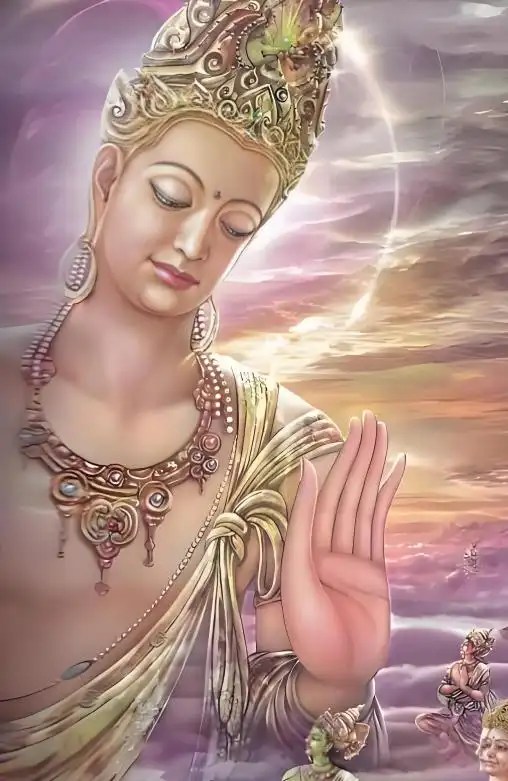
Author’s Note: Trans Rights is a battle that unfolds in the physical world – in real-time. Therefore, the battle for Trans Rights is a material battle that develops within the realm of time and space. It is a battle of wills and the arrangement of judicial and sociological viewpoint. Through debate and protest the dialectical reality is shifted, altered, and changed. Whilst all this is happening, the socio-economic development of the Western world continues (for better or worse) and this modifies the general public perception. Somethings can improve without protest – whilst other things only change after intense struggles. Asia, of course, has many countries within which gender and identity is far less concretised as it is in the modern West. Within Thailand and India, for instance, there is a long tradition of men dressing and acting as “women” – sometimes in a temple and sometimes in a brothel. These men identify as the women whose role they assume, and it is far more involved than the drag tradition seen in the West (where many men are straight, married, and have children). Of course, even in Shakespeare’s time in England – men dressed as women because women were not permitted to act on the stage. The Vinaya Discipline seeks to completely “cut-off” all sexual activity in the environment, body, and mind. This includes heterosexual, homosexual, and beastiality. This is what a Buddhist monastic is expected to follow – whilst a lay-person may get married and have children – providing there is an element of sexual control. This often comes down to use in the West as “No Adultery” – but in the old Pali Suttas, it is explained in a slightly different manner. In the time of the Buddha, a rich lay-man could marry up to four wives – and as it was the Hindu custom for a man to marry sisters – the Buddha advised that “control” in this instance was not to engage in sexual activity with anyone outside his wife’s family. Replacing this with “Adultery” is a clear example of how the bourgeois (Christian) West has tinkered with Asian Buddhism – and attempted to alter its essential nature. Adultery in the monogamous (modern) West is not the same as adultery in polygamous (ancient) India. Although lay-people can achieve enlightenment – it is generally thought that the monastic path is the quicker path. For this to be true – desire must be immediately “cut-off” at the root – so that the sexual organ becomes irrelevant. Given that this is the case, what type of sexual organ one possesses becomes irrelevant – as does any psychological or emotional identity premised upon the size, shape, or function of that sexual organ. As Buddhism seeks to cut-off all desire – Buddhism has no preference for one type of desire over any other – and is serenely tolerant of all desire. As desire is normal and just “is” – there is no reason to become angry about its presence. The Buddha has explained that desire is the driving-force behind cycles of painful existence – and it is by cutting-off desire (seeing the empty nature of it) that all suffering is overcome. In many Buddhist countries, lay-people are assumed to be on slower pathways involving many more births. It is in this dimension that Trans Rights exists and within which Trans Rights will be won. The average Buddhist monastic, whilst being “above” all this desire-driven activity will probably “bless” the movement with an indifferent mind full of loving kindness and compassion. The wisdom component should inform every trans person that it is important not to become trapped in pockets of transient identity. ACW (6.8.2026)

