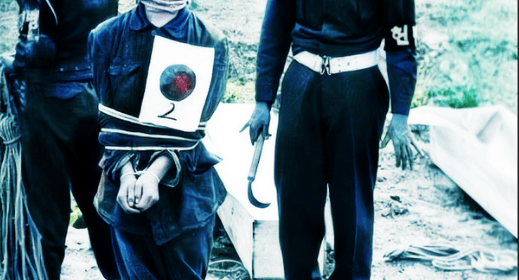
In other words, the post-1956 USSR used Orwell in exactly the same manner as the UK and US did – as an anti-Socialist device deployed against its own citizens! This is the spectre of Trotsky – acting as the puppeteer of all reaction. The US military since 1945, according to a recent US academic report, has killed around 20-30 million men, women, and children around the world in a bid to prevent a global Socialist Revolution. This is a conservative estimate – with the authors stating that the number of deaths could be double this amount. Around 6 million Vietnamese people were killed (or “disappeared”) by the US military (and its proxies). Throwing prisoners out of helicopters – over the ocean – was one method preferred of (CIA) disposal. One North Vietnamese Officer was strapped for days to a block of ice – but refused to grass on his fellow Comrades. A similar pattern of racialised mass-murder happened in Taiwan and South Korea (the British carried-out a similar pogrom in Malaya). If the mass-slaughter of ethnic Chinese and Communists by the Islamic Indonesians – the US-inspired body-count inflates to a considerable degree – with all these deaths treated with denial and indifference (because the victims are not “White”). Needless to say, those non-Whites who aid the US are eternally hated.