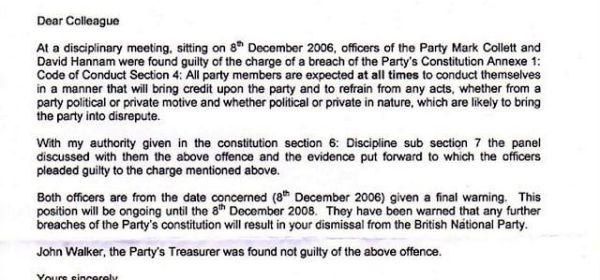
The story that has been uploaded onto the internet onto various platforms is that Mark Collett and David Hannam, supposedly drunk on the fame the then “far-right “British National Party” (BNP) was receiving from the British Establishment and maintstream media, “picked-up” two young girls (one 14 and the other 15) – and took them into a hotel-bedroom. In 2006, mobile ‘phones that could video were new and many people did not yet understand the implications of having their every move recorded. This was because uploading onto the internet was in its early days as well. However, one of the girls forwarded the video to Ken Smith – who was in-charge of BNP finance and security. Smith called an immediate meeting with the parents of the two girls – and reportedly “paid them off” not to go to the police. The BNP imploded from this point onward as its “Fuhrer” (Nick Griffin) refused to expel Collett – a person he had groomed from an early age (yes – there are rumours of homosexuality).