
Translated By Adrian Chan-Wyles PhD
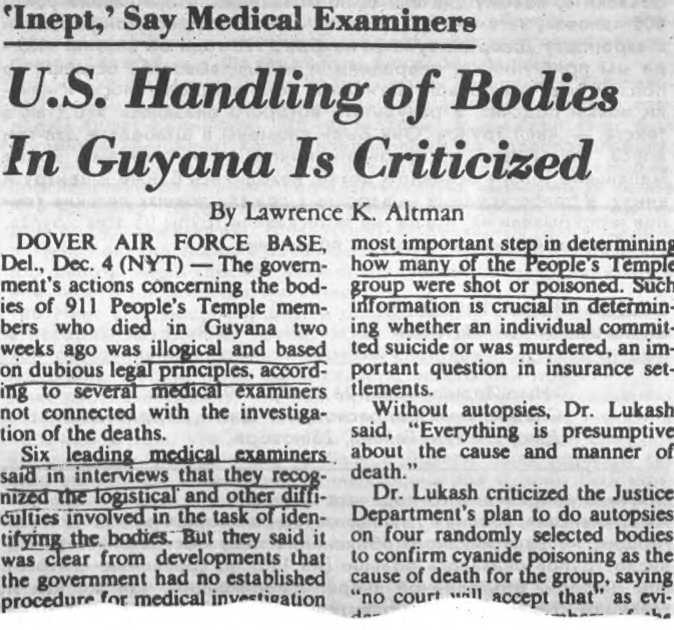
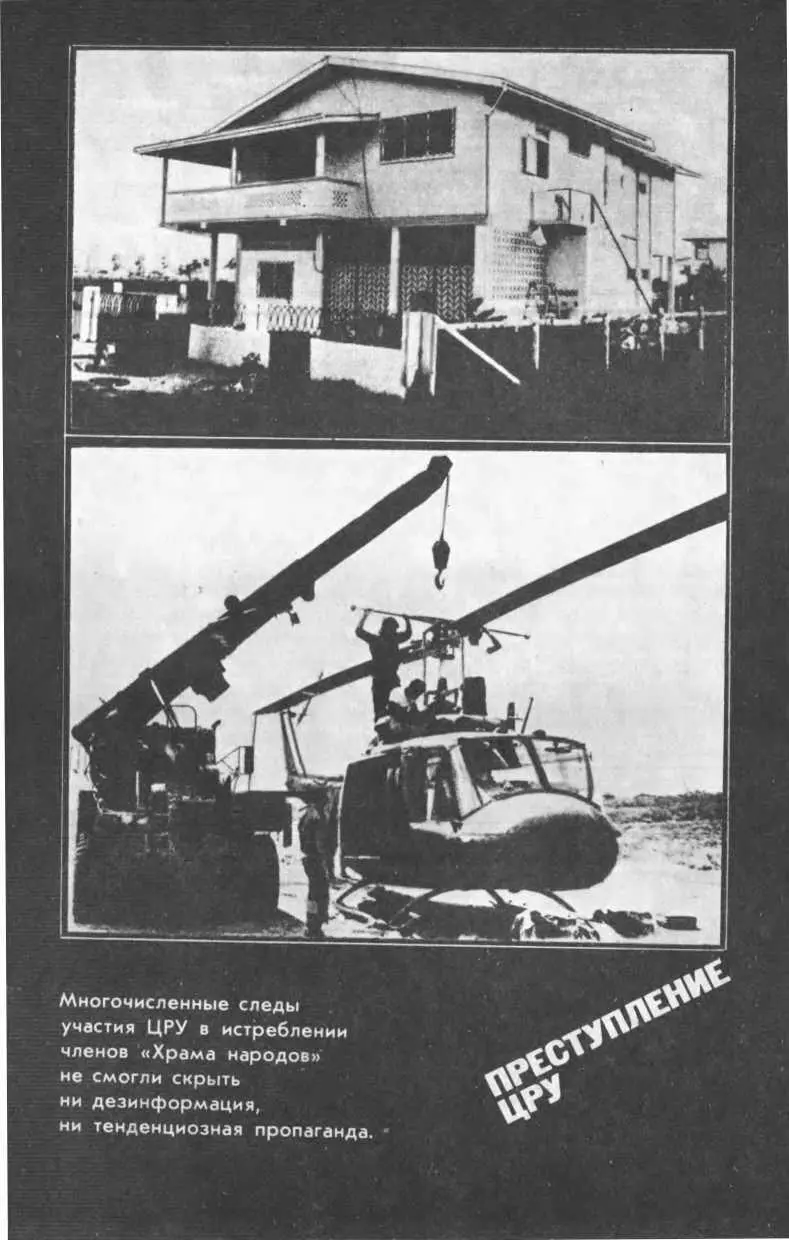
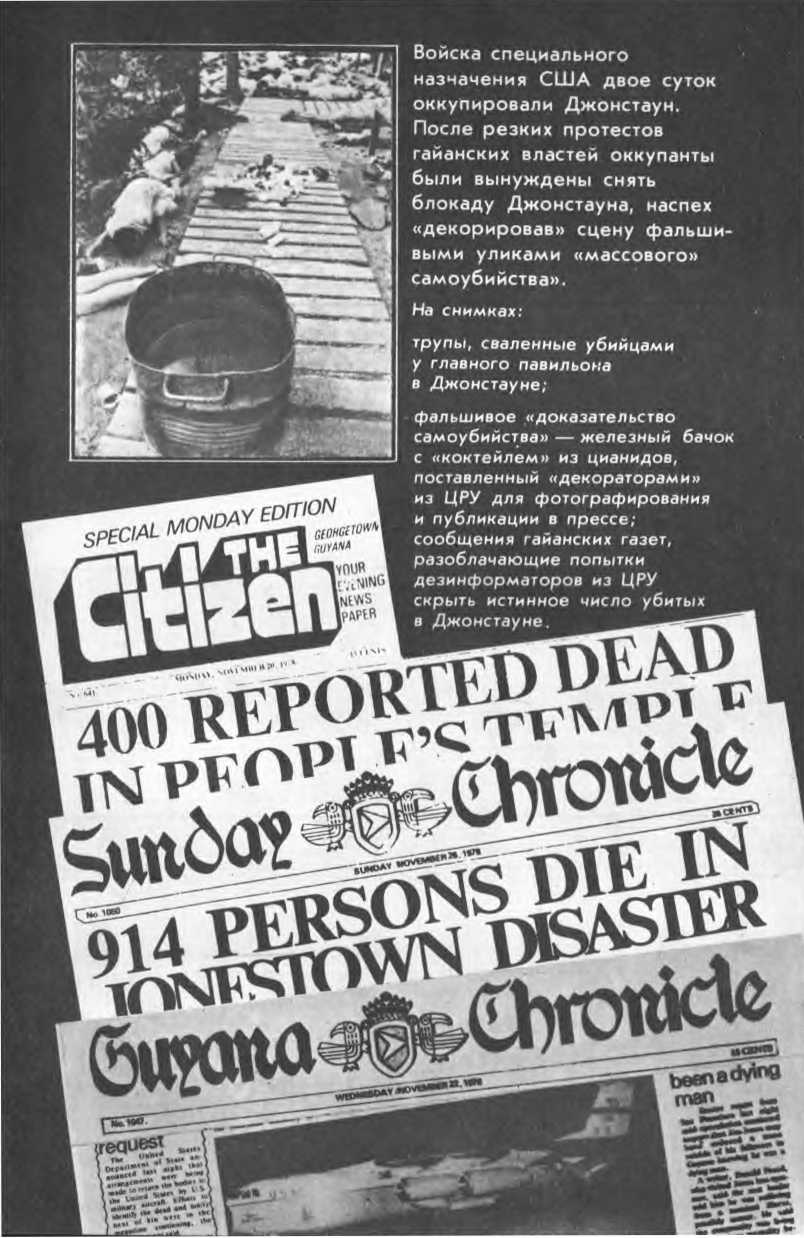
Translator’s Note: I first heard about this book a few years ago – but could not locate a copy. Recently, a Russian academic colleague managed to a) locate the Russian language text, and b) manage to transmit this text to me – despite the numerous barriers hindering the exchange of knowledge between East and West. There is something that does not sit right with the conventional story concocted by the US government. It is interesting to note just how many bad things happened during the Presidency of Jimmy Carter (his Administration developed Islamo-fascism in Afghanistan and hounded the Peoples Temple out of the US. According to this book – Carter might well be responsible for one of the most outrageous murders of US citizens ever committed – by fellow Americans. Not only this, but the Soviets were intimately involved in Guyana with the Peoples Temple during the late 1970s (when the US-backed Shah of Iran was being overthrown) – and yet their evidence is all but unknown in the West. Furthermore, it would seem that the supposed mass-poisoning was straight out of the play-book of the US military in Vietnam (entire South Vietnamese villages were eradicated by US operatives through lethal injections) – and the Zionists in the Israeli-operated Concentration Camps maintained in the Occupied Territories (again, following the US play-book – Palestinian civilians have been murdered by lethal injection). US Special Forces and CIA mercenaries encircled the encampment in Guyana and worked their way into the compound – firing as they went. Those not readily killed – were held-down and injected. The bodies were then “staged” over a few days by US Military Personnel prior to a very small and select group of “reliable” reporters being permitted – for a short-time into the area. Not only this, but Soviet sources confirm that at least 80 members of the Peoples Temple survived the massacre – and appear to have “disappeared”. The text I have used is linked – but it did not contain the photographs or footnotes (which appeared numbered in the text). Either way – I have managed to discover at least two of the included pictures featured above. ACW (27.6.2026)
The Jonestown Massacre was a CIA Crime [1987] By Boris Grigorievich Antonov – Andrey Nikolaevich Itskov & Sergey Fedorovich Alinin
Progress Publishers: Moscow (1987) – English
Гибель Джонстауна – преступление ЦРУ – Борис Григорьевич Антонов , Андрей Николаевич Ицков , Сергей Фёдорович Алинин
The book exposes the CIA’s brutal murder of 918 American citizens in the Guyanese jungle. On the basis of a comprehensive study of facts, documents, expert opinions, and witness testimony, the version developed by the CIA about the “mass suicide of religious fanatics” is refuted. In fact, the core of the political organization of American human rights activists, officially registered in the United States as the Peoples Temple religious community, was located and operated here. This group of political protesters was exterminated by the punitive authorities of the United States on November 18, 1978.
Introduction:
This book is strictly documentary. It is based on reliable facts, carefully analyzed documents, press publications, eyewitness testimonies, the conclusions of authoritative lawyers and pathologists about the murder of 918 American citizens by CIA agents on November 18, 1978: members of the Peoples Temple organization, Congressman Leo Ryan and three journalists who accompanied him during his trip to Jonestown. The Peoples Temple, an organization of disadvantaged residents of the United States, originated in the mid-1960s in the city of Indianapolis and operated mainly in California, making efforts to create human conditions for the most exploited and oppressed inhabitants of the United States. Officially registered as a religious community, this organization was active in the political arena against racial oppression, for civil rights, for peace and democratic freedoms. She was persecuted and persecuted by the secret police, persecuted in the press.
In the mid-1970s, more than a thousand people from the Peoples Temple left their homeland for political reasons, emigrated to Guyana [1] and organized a new type of agricultural commune there. They created the village of Jonestown in the jungle (named after the ideological leader of the Peoples Temple, Jim Jones), the way of life in which was radically different from the capitalist one. In this way, they challenged the poverty and lawlessness that were their lot in their abandoned homeland. This was an unprecedented act of political protest in the history of the United States, which caused an unheard-of cruelty reaction from the punitive apparatus. The materials presented in this book testify to the fact that the official version of the US government about the “suicide of religious fanatics” in Jonestown in the media, skillfully disseminated in the media, covered up a monstrous act of deliberate villainous extermination of several hundred dissident Americans by special services. From the materials published in this publication, the world community actually learns for the first time what really happened in the agricultural and medical cooperative of the “Peoples Temple”. Shortly before the tragic ending in Jonestown, the leadership of the Peoples Temple openly challenged the US authorities. On October 4, 1978, the San Francisco Examiner reported that within the next 90 days, the leadership of the Peoples Temple, located in Guyana, intended to file a multimillion-dollar lawsuit against the US government agencies – the CIA, the FBI, the Department of Posts and others – accusing them of a government-inspired plot to destroy Jonestown, which the American press itself called “a unique experiment in the practical implementation of the socialist way of life.” The lawsuit threatened to put the White House, the State Department, and the U.S. political and espionage services in an extremely difficult position.
“We have proved the utter incapacity of the capitalist system to provide for human conditions,” wrote Richard D. Tropp, general secretary of the cooperative in Johnstown, in a letter to the Soviet ambassador to Guyana. There are many people among us who can (and would passionately like) to act as witnesses. With facts from their own experience, they are ready to demonstrate this tragic and complete bankruptcy of the capitalist system, its violation of our human rights…”
Following their leader, the people of the “Temple of the Peoples” came to assert new ideals for themselves. “We are not only friends of the Soviet Union, but also consider the Soviet Union our spiritual homeland…,” the documents of the commune leadership said. — And further. – Comrade Jim Jones was a supporter of the Soviet Union from his youth. At first, he experienced emotional delight and admiration for the heroic defense of their homeland by the Soviet people in the great patriotic war. Later, as Jones became acquainted with Marxist-Leninist doctrine, he was able to comprehend more deeply the significance of the Soviet Union in the struggle for the progress of mankind. Our desire is to relocate to the Soviet Union and form a community there…” With the wholesale murder of the residents of Jonestown that followed a month and a half after the publication of the announcement of the impending lawsuit against the U.S. government and the beginning of negotiations on resettlement in the Soviet Union, all the plans of the “Peoples Temple” were thwarted. This organization was discredited, presented as a “sect of suicides”, and declared disbanded.
Page 1
Operations for the mass destruction of civilians in various countries of the world to achieve political goals have become a practice of the US CIA. In the last 20 years alone, it has carried out 900 major terrorist operations, committed several thousand assassination attempts and murders. One such operation, Operation Phoenix in Vietnam, cost the lives of an estimated 80,000 civilians. The specificity of the CIA’s crime on Guyanese soil is that the victims of mass extermination were not foreign citizens, but the Americans themselves, who left their homeland because of disagreement with the existing socio-economic system in the United States of America. Political assassinations in the United States are generally investigated, albeit with varying degrees of thoroughness, by the judiciary and, in addition, by private individuals. The death of President John F. Kennedy and his brother Robert, the death at the hands of a hired killer of the outstanding fighter for civil rights Martin Luther King Jr. became the subject of reports of special state commissions of inquiry. However, the murder of 918 Americans in Jonestown was completely uninvestigated by the US authorities, the perpetrators of the crime were not named, and they were not subjected to fair punishment.
The case of the Jonestown massacre is far from closed. The documents published here, which the tentacles of the CIA could not reach, will once again draw the attention of the world community to the monstrous massacre carried out on November 18, 1978. A fair trial of history must pass its verdict on the executioners.
First Acquaintance
On the morning of one day in December 1977, the Soviet embassy in the capital of Guyana, Georgetown, was visited by unusual visitors. They asked for a meeting with the consul of the USSR. The embassy duty officer reported on the arrivals to the consul Fyodor Mikhailovich Timofeev.
“In the reception hall,” F. M. Timofeev recalls of this meeting, “I saw two women and a man who introduced themselves as members of the commune in Jonestown The conversation was mostly led by Sharon Amos, a short, thin, red-haired young woman. The other, tall, elegant, with a white-toothed smile, was a black woman. Her name was Deborah Tushet. Both women behaved quite at ease. Very different from their companion Michael Proke, a tall, blond man who carried himself as if he had swallowed a bamboo cane. Visitors said that all the members of the commune in Jonestown were citizens of the United States, all of them had left this country for political reasons and were now building a socialist agricultural and medical cooperative in Guyana, trying to use the experience of the Soviet country. They asked for literature on the Soviet Union, they were especially interested in how national and other questions were solved under socialism, how the economy was conducted, how the culture of the peoples of the USSR developed, and so on.
The embassy was already familiar with an article published in the local newspaper the Guyana Chronicle, which said that immigrants from the United States, about a thousand people, founded in October 1974 in an inaccessible area of Guyana in the middle of the jungle an agricultural commune of the Peoples Temple, which they called Jonestown. At that time, the Guyanese government called for the cultivation of the country’s undeveloped central territories situated in the jungle areas, and most of the cities and settlements stretched along the Atlantic coast. The Government of Forbes Burnham had set the goal of providing the Guyanese people with food and clothing through the mobilization of domestic resources. The government programme announced the construction of “Cooperative Socialism”. The initiative of the settlers who arrived was in line with the general plans of the Guyanese government. An article in the Guyana Chronicle called for the study, use and development of the experience of the American commune in Johnstown.
The Consul handed over to the guests – books about the Soviet Union, the Constitution of the USSR, and copies of the newspaper “Soviet Weekly”. The guests, in turn, presented him with articles and pamphlets about the history of the Peoples Temple – and about the life of American settlers in Guyana. Here are some of the publications found in American newspapers discussing this organization.
Even before the relocation of most of the members of the Peoples Temple to Guyana, the American newspaper San Francisco Bay Guardian published an article by journalist Bob Livering, which is quoted with minor abridgements:
San Francisco Bay Guardian, March 31, 1977
Page 2
The phenomenon of the Peoples Temple, which has existed in San Francisco for less than five years, but has nevertheless become the largest political Protestant organization (over 20,000 members), is a sensation. The diverse programme of the “Temple’s” activities includes assistance to the inhabitants of the so-called International Hotel (where more than 3000 people were deprived of housing and fired from their jobs for participating in demonstrations. – Author); the publication of the monthly “People’s Forum” (from 600,000 to a million copies are sent to all neighbourhoods of San Francisco); the organization of free daily meals for the poor, etc. The Peoples Temple provides money to families who have lost their breadwinner, conducts an extensive programme of humanitarian aid for the poor, organizes its own medical and legal consultations, maintains a home for mentally retarded children, and four kindergartens.
The leader of this rather unusual group is the Honourable Jim Jones, who has been invited by the Mayor of San Francisco, Mr. Moskun, to serve on the city’s Housing Commission.
The title of an article about the “Peoples Temple” in the San Francisco Bay Guardian:
A cursory glance at a regular issue of the People’s Forum shows how broad and diverse the issues that interest Jones and his followers are: an article entitled “Laura Allende: A Woman of Courage,” which tells of a recent visit to the Peoples Temple by the sister of assassinated Chilean President Salvador Allende, and an “Open Letter to Local Nazis” denouncing “these disgusting racists,” and stories on the poverty of the elderly, and an editorial on the close relationship between unemployment and crime. calling for people to “bravely stand up to the evils of lawlessness and injustice” in the United States.
An article in the Guyana Chronicle describing the success of the construction of an agricultural and medical cooperative in the jungles of Guyana. The local press paid close attention to the experience of the settlers. The development of the territories occupied by the jungle was considered one of the most important tasks of the country.
The sermons of J. Jones in the Peoples Temple, which instill such feelings, are difficult to forget. I attended one of them in the heart of the black ghetto, the Fillmore neighbourhood in San Francisco. The Peoples Temple bought the building here in mid-1972 and began using it as its headquarters.
The service began at 8.30 p.m. The excitement at Jim’s arrival (he prefers to be called Jim rather than the Honorable Mr. Jones or Pastor Jones) was truly impressive. It reminded me of a rally of the farm workers’ union. People filled all the seats, stood along the walls and in the aisles. Three-quarters were black. Among the 3000 people gathered were representatives of all races.
Jim Jones founded the Peoples Temple in the mid-1960s. In late 1972, the organization purchased a building in Los Angeles. Nearly 200 Temple activists regularly shuttled between San Francisco and Los Angeles on 13 buses from the Temple’s own fleet.
It is simply incomprehensible how popular and widespread the activities of the Peoples Temple have become. Of its 20,000 members (to become a member, you need to attend at least five general meetings), about 9,000 live in San Francisco, 10,000 in Los Angeles, and about 1,000 in Ukiah.
Members of the “Temple” organized:
A free clinic in San Francisco, where qualified doctors and nurses serve about 80 patients daily;
A Physiotherapy department in San Francisco for the elderly and people with Physical Disabilities; a Medical Dispensary for the treatment of drug addicts in San Francisco. Over 300 people were cured there. Former drug addicts now work in areas such as printing, electronics and car repair;
Legal Advice in San Francisco, where up to 200 people apply monthly;
Four Nursing Homes. Each of them is home to 10-25 people. In addition, medical research is carried out with the money of the “Temple” by national associations for the fight against cancer, heart diseases, and cellular anemia. The Temple provides subsidies to the Telegraph Hill Medical Clinic, the American Union for Democratic Freedoms, the National Association for the
Advancement of Colored People, the Farm Workers Union, and several other organizations and institutions.m
Important decisions are usually made at open General Meetings, of which all participants are notified either by mail or by telephone. Thus, for example, it was decided to hold a demonstration in support of four reporters and editors of the local newspaper Fresno Bee. These journalists published exposés and refused to disclose their sources of information to the authorities, and they were threatened with prison. Several thousand people took part in the demonstration, which took place in the middle of the working week and lasted around the clock for several days. However, extraordinary decisions can also be made by the Board, which includes 50 elected representatives.
Page 3
The annual budget of the “Temple” for all programs is $600,000. It consists almost entirely of individual voluntary donations. The Temple does not use any private funds and does not receive any subsidies from the government. Jones’ personal income is $20,000 a year. From this amount, he bears travel expenses and expenses for the maintenance of a large family. Jones and his wife have adopted eight children of different races and have one son of their own. In addition to Jones, there are four other paid employees. They receive a salary as a means of subsistence and live in houses rented by the Temple. But hundreds of other members of the “Temple” voluntarily do their work in their spare hours without any pay.
In this respect, the Peoples Temple resembles a movement rather than an ordinary religious group. And the service itself is more like the rallies of Civil Rights fighters, led in the 60s by Martin Luther King…
Shortly after Jones’s appearance, the crowd sang the traditional hymns “Oh, Freedom!” and “We Shall Conquer!”
The main idea preached by Jones is that people should subordinate themselves, their personal desires, to the service of other people, to the creation of a better society. This idea was also contained in Jones’s speech, which I attended.
Everyone perked up when Jones asked if there were any questions.
The questions concerned social problems. Here, for example, is Jones’s answer to an elderly woman who asked, “What problem would you call the number one problem for Americans today?” And then, after a moment’s thought, he added: “Everyone is concerned only with their own problems.”
Jones sees apathy as one of the main reasons why the CIA has been able to subsidize oppressive regimes in Paraguay and Chile unhindered, and why the US Criminal Law System punishes poor defendants harshly and pardons the rich for their crimes. He sees how apathy stimulates the rise of Nazism in the United States and creates the possibility of fascism coming to power as the country’s economic situation deteriorates. Nowadays, this threat has increased significantly.
Jones then explained how he thought injustice should be addressed. “I myself participate in this struggle, and for this I can be killed or imprisoned,” he said. Jones argued that many of the poor in the United States are subject to the illusions of a consumer society. “I am at war with a system that places more value on things than on people,” he said. “The love of money is the root of all evil.” That’s why, he says, he shuns restaurants and luxurious surroundings: “I don’t feel comfortable in a restaurant when there are people who are hungry. I feel good only when I work.” “Am I acting this way out of guilt?” he asked himself. And he answered: “Yes, my guilt is great. My fault is that the taxes I pay go to support pro-fascist regimes.”
When Jones had finished, those present stood up to greet and applaud the speaker. He spoke of the political and economic injustices that most of the poor and minorities feel on a daily basis. People believed that he did what he preached. Jones is short, thickly built, with straight, smoothly combed black hair. He often wears a shirt with a starched standing collar, and on top of it is a jacket purchased in one of the thrift stores.
Jones’s eyes are covered by light-sensitive glasses, the lenses of which darken in bright light. Although Jones is generally a healthy and energetic person, his eyes reflect fatigue – the result of a harsh work schedule and a short night’s rest.
“I live by seeing people come back to life,” Jones replied when asked what he was living by. “That’s why I like to give people advice and spend so much time on it.” But, approaching the question more deeply, he asked himself: “Why should I complain about my life? What better thing than what I’m doing now can it be useful for?”
Jones admitted that he sometimes feels mentally tired. But something always restores the presence of his spirit. For example, the visit of Laura Allende, who spares no effort to talk about her country and its problems. “When she arrived,” Jones said, “I felt very tired and exhausted, but her arrival gave me strength. That’s what I’m living for. I have seen people who can be called ascetics. I think Laura Allende is one of those people. Looking at them, you ask yourself, what can I do for people?”
Jones made enemies for his political views. He was threatened many times by local Nazis and other representatives of the right. But no one accused Jim Jones of being a hypocrite.
Page 4
And it seems that it is Jones’s honesty and uncompromising attitude that motivates people to always follow him. Many members of the Temple with whom I met over the course of a month and a half told me that nothing attracted people to Jones more than his constant desire to act fully in accordance with his convictions.
HELPING SAN FRANCISCO SLUMS
San Francisco Examiner, Wednesday, January 21st, 1976
Yesterday, the Peoples Temple donated $6,000 to a programme to help the elderly living in the city’s slums.
The gift was given by the Reverend Jim Jones. The money received will allow the bills to be paid for three weeks, including salaries for workers involved in the Elderly Assistance Programme, transport for the elderly and administrative costs.
“PEOPLES TEMPLE” HELPS INDIAN LEADER REUNITE WITH HIS FAMILY
San Francisco Examiner, Saturday, February 28, 1976
The leader of the American Indian movement, Dennis Banks, who is wanted by the police, stood for a long time, unable to find words, in front of the members of the Peoples Temple. He had a four-month-old daughter in his arms, whom he saw for the first time last night.
D. Banks’ wife, Ka-Muk, who had been released on Peoples Temple money on $20,000 bail (she had been falsely charged), stood beside him, holding their eldest daughter in her arms.
Finally, Banks said quietly, “My wife was behind the iron door, and my kids were in Oklahoma. With your love, you have opened an iron door.”
More than 4,000 people in attendance followed Rev. Jim Jones in the hymn “We Shall Overcome.” Jones then declared his support for Banks and his wife by his associates and said, “We will not settle for anything less than their full acquittal!”
The extradition of Banks is requested by the South Dakota police, where he was convicted in absentia of “carrying a weapon during riots” and for “dangerous armed attack without intent to kill.” Banks’ lawyer refused to defend him. Banks was also denied a complaint about violations of the law in his “case”.
Banks said that if he was handed over to the South Dakota police, he would be killed.
Political Protestants
“A week after the first visit,” Consul F. M. Timofeev testifies, “together with the delegates of the Peoples Temple whom I already knew, Marceline Jones, the wife of Jim Jones, came to the Soviet embassy in Georgetown. She spoke about the history of the commune in detail and reported with alarm that, despite the resettlement from the United States, members of the Peoples Temple continue to be persecuted. In the United States, a real campaign of harassment has been launched against both Jones and other members of the organization. “We will be completely frank with you,” Marceline Jones said confidentially. “You need to know the whole truth about our organization.” And she handed me the text, on the first page of which it was written: “Jim Jones. A Brief Biography”, and a clipping from the newspaper “People’s Forum” with his article. Here are these texts verbatim.
JIM JONES BIOGRAPHY
Jim Jones was born in 1931. He grew up in a provincial town in the Midwest of the United States in the abject poverty of the Great Depression. His first impressions were of the tragic fate of the outcast poor. Human suffering filled the boy’s heart with the desire to fight against blatant social injustice. At a young age, he decided to devote himself to this business. According to Jones, he was deeply affected by radio reports about the heroic defense of Stalingrad. The courage shown by the Soviet people in this terrible battle awakened in him an interest in the Soviet Union and the principles on which the Soviet state was founded. Jones avidly read about Lenin’s life and struggles, and by the age of 19 he had become a Marxist, openly declaring his ideals. Being in the closed environment of rural America, he was quickly ostracized for his beliefs. By the time he graduated from high school, Jones was already an active participant in the struggle for the cause of socialism.
The McCarthy period was a particularly difficult time for Jim Jones and his associates, people as sincere as he was. Jones did not renounce his beliefs, despite persecution, surveillance, and interrogation (some of Jones’s associates were forced to leave the country). As Jones saw that the unions in America had been intimidated by Senator McCarthy’s “witch hunt” and had become another appendage of capitalism, he sought new forms of politicization of workers.
The few semi-progressive organizations that survived were also fearful and therefore inactive, or were so inundated with informants and FBI agents that they could not be helpful. In addition, these organizations consisted of intellectuals and did not meet the interests of the working class, and workers did not join their ranks.
Page 5
Then Jim Jones used the church to educate and organize people, although he himself was a convinced atheist from his youth. The church in those years still attracted a large number of workers in the United States, and Jim Jones hoped to spread his progressive views through this organization. Anyone who entered the temple thinking that he had “just come to church” often became a convinced socialist under the influence of Jones’s sermons. If the same people were invited not to church, but to political meetings, they would never agree to participate in them.
From the very beginning of his career, Jim Jones openly discussed the most burning issues of the moment. Especially important of these was the question of deep-rooted racism in America. Jones recognized that racial antagonism within the working class was a major factor in the destruction of the radical trade union movement in the United States. Thus, in the 1950s, in the terrible atmosphere of the then Midwest, Jim Jones openly denounced racism, placing all responsibility for it on the capitalists. The city of Indianapolis, where the Peoples Temple Church was first opened by Jones, was a city of rabid racism (it was in this city that the Ku Klux Klan arose). It was here that Jim Jones confidently and uncompromisingly preached racial integration and racial equality. Jones became the first director of the Indianapolis Human Rights Organization and worked to eliminate racial segregation in a number of public institutions, restaurants and hospitals in the city. Jones and his wife Marceline adopted several children of different races, including a black boy, Jim Jones Jr.
For his beliefs and activism, Jones was persecuted and abused by racists for many years. He was branded as a “spoiler of racial purity”, as a “traitor”, etc. Jones was constantly threatened; attempts were made on his own and his children.
In search of normal conditions for his work, Jones and his family moved to California in the mid-60s. Here, despite continued persecution (it turned out that this state was not as tolerant as Jones had hoped), the Peoples Temple began to expand. Thousands of people joined it. Branches were opened in several cities, where work was carried out to employ those in dire need and provide them with housing. Traveling around the state, Jones exhausted himself with frequent performances: five or six times a week, in front of thousands of people (mostly city dwellers). From time to time, he traveled throughout the United States to the cities where branches of the Peoples Temple were opening.
There was no speech in which Jim Jones would not have exposed vividly, simply and convincingly shameless corruption (that is, bribery and bribery – Author), blatant hypocrisy, and other shameful phenomena of American capitalism. The objects of his scathing criticism were the military-industrial complex, corporate money-hungry corporations, speculators, disregard for the needs of ordinary people, genocide and many other crimes committed by capitalism both in the United States and around the world. Jones founded a newspaper of sharp critical orientation, the People’s Forum, which denounced the rotten American society and the policies of American imperialism. More than half a million people received issues of this newspaper free of charge.
Jones consistently advocated socialism and admired the Soviet form of social organization. For many years, he put forward Marxism-Leninism as the only alternative to American bourgeois ideology, covering up disdain, mendacity, and corruption. Jim Jones’s worldview is that of an internationalist. Jones advocated and continues to defend the world union of workers of all races, an alliance aimed at fighting the exploiting class, with all its lackeys. And while the philanthropic activities of the Peoples Temple are staggering in scope, the movement was not conceived and was never only a “church of good works.” Jim Jones’ activities aimed at intensifying the liberation movement both in the United States and abroad expanded after the creation of the Peoples Temple organization. The Temple supported the South African liberation movement against apartheid and economic enslavement, anti-fascists in Chile, patriots in Northern Ireland, South Korea, and several other countries. The Peoples Temple helped Chilean political exiles and American Indians, strongly supported countless victims of oppression, political prisoners (such as Angela Davis), and advocated for the release of the Reverend Ben Chavis and the entire Wilmington Ten. Numerous Temple supporters have helped and are helping to organize mass demonstrations in support of liberation movements, socialism, and world peace, and are actively participating in these demonstrations, speaking out against repression and egregious violations of human rights in the United States.
Page 6
In the United States, such demonstrations are an extremely risky venture. Jim Jones became the target of organized persecution by reactionary ruling circles. Countless times he was threatened, shot, stabbed, poisoned. His family members, children, friends were terrorized: they were followed, ambushed, beaten. The houses of the “Temple of the Peoples” were vandalized, they were set on fire, and bombs exploded in them. Attempts were made to introduce provocateurs into the organization, false accusations against it were fabricated. The “Temple of the Nations” was severely persecuted. This organization became a target for the “yellow” press, it was bombarded with streams of malicious gossip and widely advertised lies. The campaign to destroy Jim Jones and the Temple is intensifying. It involves reactionaries, criminal and fascist elements of various persuasions. Similar campaigns have been and are being undertaken against other American organizations, even those that have nothing to do with socialism. The Black Panther Party was completely exterminated by FBI agents: we know from informed sources that the destruction of this batch was organized in stages and was the implementation of a carefully thought-out and frighteningly successful plan.
Listed above are some of the reasons why Jim Jones moved to Guyana and organized a community there, a socialist cooperative based on agriculture.
By creating a community outside the United States, in a developing country, we can more effectively ensure both the activities of our movement and the safety of our children, of course, in order to continue the fight for world peace, including in the United States.
A typewritten biography of Jim Jones ended with a note that said the following:
Jim Jones’s open confession of his Marxist-Leninist and atheistic beliefs is a danger to our position as adherents of the “creed” to which we have officially adhered. Therefore, if there are reports in the press about Jones’s true views, we are likely to be subjected to reprisals that could interfere with our effective work. Nevertheless, we believe that we cannot but be completely honest with you.
MARCELINE JONES.
JIM JONES: THE WAY I KNOW HIM
People Forum, No 5, October 1977
Article by Marcelina Jones, published in the newspaper “People’s Forum”
Having been the wife of Jim Jones for 28 years, I think I have some facts about his life that might be of interest to readers.
I met Jim in 1947 when I was attending nursing school at Raid Memorial Hospital in Richmond, Indiana. He worked full-time as a night orderly while attending Richmond High School. We were married on June 12, 1949. They then moved to Bloomington, Indiana, where they both attended Indiana University. In order to pay for his education, Jim continued to work. He was an excellent student, and a bright future awaited him, no matter what specialty he chose for himself.
Throughout the years I have known Jim, his first concern has been for his ruthlessly oppressed countrymen. There was not a single instance where he made a decision that could benefit him or our family at the expense of someone else. There was never a question that Jim considered “too unimportant” to pay attention to. For example, when Jim was in his freshman year of college, he walked out of the barbershop with his head half-shaved because the barber had told the Negro who walked in that he would not cut his hair! On another occasion, when Jim was driving home from university in a hitchhiking car and one of the passengers made a racist remark, Jim demanded that the car be stopped immediately and walked. One day at breakfast in a restaurant, he was indignant when he saw that a negro had been forced to wrap his breakfast in a paper bag and go out.
In the early 1950s, Jim was appointed assistant pastor of a large church in Indianapolis reserved for whites only. The pastor was preparing to retire, and Jim was to replace him. Jim went from house to house and invited Negroes to church. However, when some of the negroes arrived, he noticed that they were only sitting in the back rows. Jim asked me to invite them to sit closer. After this service, an extraordinary church council was convened, which offered Jim an alternative: to build a church where he could be a pastor, but only for blacks. Jim immediately left the church, saying, “Any church where I pastor is open to all people—all races.” He was then 22 years old.
Page 7
In the early 1960s, Jim became seriously ill and had to be admitted to the Methodist Hospital in Indianapolis. At the time, he was the head of the mayor’s special commission on civil rights. His doctor was a Negro, and when it came time to put Jim in the room, the waiting room clerk asked about him, “Is he colored or white?” It took several hours. However, despite the severe pain, Jim did not lie down in the ward until the transfer was completed. Jim has always cared about results, not advertising.
I vividly remember May 1959 when one of our children died in a car accident. Cemeteries were divided along racial lines, and our adopted daughter was Korean. Negroes and people of other non-white races were buried in the lowlands, where the water often rose higher than usual. Jim was told that we could bury our child in the “white section.” He replied, “I can’t bury our child in a place where any member of my church can’t be buried.” And so our five-year-old child was lowered into a grave, half flooded with water, in a swamp. It is a painful memory, and I cannot forget it for a single minute.
Jim had always been particularly sensitive to his elders. I remember one day in Indiana, we visited one of our parishioners in the hospital. She was dying of cancer, and there was no care for her. The woman whispered to us, “Take me out of here, please.” Jim looked at me, then turned to her and nodded. He picked her up on one side, I on the other, and we took her out of the hospital. The woman lived with us, and we took care of her until she died a few months later.
Our family was extremely troubled, but Jim stood firm in the fight for justice (I have given only a few examples of his personal resilience, which he showed almost daily). Jim’s life was constantly threatened, I was very afraid that our children would be left without a father. However, we both realized that it was possible to teach our children how and why to live only by example, living according to our convictions, regardless of the risks. Therefore, Jim was always frank and straightforward in his judgements about economic and social equality. In 1965, we decided to move to Northern California. We had children of different races, and we thought that California was the most progressive state in this regard. But our anxiety did not weaken, but intensified. The children were teased, our pets were killed, and Jim received death threats. A bomb was planted under the bus in which Jim and I went on vacation. The church that the “Temple” had in San Francisco was set on fire and destroyed (but later rebuilt by parishioners).
Jim’s life passed in full view of friends and like-minded people. We have always lived modestly: we bought second-hand clothes, used furniture, otherwise we would not have been able to support our children.
After moving to California, Jim worked as a pastor in three churches, his working day was very crowded. But against my wishes and persuasion, he refused to fly to Los Angeles and back, and insisted on traveling on one of the church buses. Despite his protests, a cabin was built in the back of one of the buses so that he could rest there. Jones never planned his vacation without taking into account the plans of all his colleagues. You will never see him sunbathing on a fashionable beach or relaxing in an expensive hotel.
During Christmas, the same amount of money was allocated for all the families of our parishioners to buy gifts for children. Jim made sure that none of the children were disadvantaged and that they all had the same Christmas.
This is just a brief sketch. I could write avolume of examples of Jim Jones’ concern for people, animals, and even plants. I want to end my essay by saying that even if I were not Jim’s wife, I would still be a member of his organization. Jim’s supremely selfless life inspires me, and I wholeheartedly support his stand in the fight for social justice, for full racial and economic equality, in order to ensure a good life for all people.
The principles proclaimed by Jim Jones turned the members of the Peoples Temple into dissident Americans, and the community into an alien social organization located at the heart of American society. This was an undesirable example. In the extremely difficult atmosphere of the racist Midwest, Jim Jones and his Peoples Temple waged an uncompromising ideological struggle against the racists.
Page 8
Jim Jones’ personal charm, selflessness and courage in the fight against injustice and racial discrimination made him a prominent figure in the political life of the West Coast of the United States. During the 1976 election campaign, the support of Jones and his supporters was sought by liberal Democrat George Moskun, who became Mayor of the city of San Francisco, and District Attorney Joe Freitas. California Governor Jerry Brown repeatedly appealed to Jones for assistance in attracting the sympathy of voters from black ghettos. As a token of gratitude for his help during the campaign, San Francisco Mayor George Moskun invited Jones to join the city’s Human Rights Commission, and then appointed him Chairman of the Housing Commission.
In the same 1976, the future Vice President of the United States from the Democratic Party, Walter Mondale, made an election trip to California. He invited Jones aboard his private plane and had a long conversation with him. At the request of the Democratic candidates, Jim Jones organized a grand meeting with the coloured population of California for the “First Lady of the United States” Rosalynn Carter in 1977. “It was a great pleasure for me to be with you during the election campaign,” Rosalynn Carter wrote to Peoples Temple founder Jones in a letter dated April 12, 1977.
“TEMPLE OF NATIONS” IN THE MIRROR OF PUBLIC OPINION
“If you are sick, we will cure you for free, if you are hungry, we will feed you without taking a cent from you, if you are humiliated and insulted, we will help you regain your faith,” the Peoples Temple proclaimed. But the main thing that attracted the disadvantaged was the ardent call to fight racial discrimination and lawlessness.
By the mid-70s, the “Temple” united more than 20,000 members in its ranks. It began to be called “one of the fastest growing religious movements in America” (the Peoples Temple was officially registered as a religious community). Many prominent Americans had to reckon with the popularity and influence of Jim Jones.
Here are excerpts from letters addressed to the members of the Peoples Temple by various socio-political and religious figures in the United States.
“The work of Venerable Jones and his congregation is a testimony to a positive and truly Christian approach to solving the myriad problems facing our society today.
Hubert H. Humphrey, Senator of the U.S. Congress.”
“Ninety-nine percent of the work carried out by the Peoples Temple is devoted to serving the elderly, poor families and disadvantaged youth. I have sent those in need to the Peoples Temple many times for help, and they have received it.
Art Agnos, Priest.”
“Your contribution to the spiritual health and well-being of our society is truly invaluable, and I am heartily pleased that we can expect the same energetic and creative activity from the Peoples Temple in the future. Through your tireless work, you have demonstrated to all San Franciscans that the unique abilities and possibilities of spiritual energy and civic devotion are limitless, and that our lives will be sadly reduced without your continued help.
George R. Moskun, Mayor of the City of San Francisco.”
“Your projects are really worthwhile, and we need a lot of organizations like yours to work with all the people who need help.
Lisa Naito, Member of the State Legislature of Hawaii.”
“As the head of an organization that works closely with the Peoples Temple, its members, and you, I greatly appreciate your positive contributions to the city of San Francisco. Your commitment and dedication to the struggle to end the suffering of the oppressed and trampled upon is unparalleled. Your education and willingness to work has been invaluable to the National Association for the Advancement of Colored People (NAAC), and we hope that you will participate in its many activities in the coming months.
Joe Knoll, president of the NAACP in San Francisco.”
“When many Indians need food, they come to us, and when we run out, we know that these people will call the Peoples Temple and their children will have food in the evening. This happens often. And so, without a doubt, it will be tomorrow.
Dennis Banks, Federal Indian Law Instructor.”
The Peoples’ Temple was one of the first forces in the city to focus on explaining the need to fight against the rise of neo-Nazism there.
Earl Raab, Council on Public Relations of Jewish Organizations in San Francisco.”
“The City Organizing Committee for Martin Luther King Jr. Day chose you as its speaker, seeing your tireless efforts in the fight for equality and social justice for all people.
Donnetter Lane, President of the Council of Churches, San Francisco.”
“Your desire to live in racial harmony and equality deserves to be emulated. You are clearly putting into practice the humane ideals that our society desperately needs.
S. B. Ethridge, Director of the Teachers’ Association.”
Page 9
“I am aware of the activities of the Venerable Jones, and I believe that he is a very complete man and has a high sense of social responsibility. He works day in and day out to help the outcasts in our society, and his work on behalf of the church does honor to our society. They (the people of the Peoples Temple and Jim Jones) are guided not by selfish political goals, but by noble principles, which, sadly, are absent in our country.
The Peoples Temple is a caring community of people of all races and classes. They carry compassion.
You are a true friend of the poor, the helpless and the oppressed.
Charles Lewis, President of the Legal Defense League.”
“With your actions, you have set an example that will be followed by all those who are interested in such a vital cause as the protection of freedom of speech. And I am sure that your protest not only had a great impact on the outcome of the case itself, but also enlightened countless people throughout the country.
Albert Kahn, writer.”
“I have known Jim for several years and worked with him in the movement for the liberation and self-determination of all peoples. Jim is a very sensitive person, a man absolutely devoted to the cause of social justice. I watched him stand up to the reactionary elements, and he never wavered in his convictions.
By far, Jim is the easiest to understand and most effective leader in the United States today. At the same time, he is a meek person who does not seek the light of the ramp.
Carlton B. Goodlett, President, National Newspaper.
It may seem contradictory that, on the one hand, the top echelon of the American administration paid lip service to the “Peoples’ Temple,” while on the other, the U.S. intelligence services terrorized it. However, everything is explained by the double game that American politicians usually play, and the rhetoric that high-ranking figures from the White House often resort to. They are happy to use popular and mass organizations for their pre-election political purposes, while at the same time instructing the special services to suppress the spread of progressive ideas and punish their followers.
Many Americans were not privy to the intricacies of the intrigues against the Peoples Temple, they supported its activities because they saw in it an organization protesting against an inhumane way of life.
“People’s Forum” is a protest newspaper
Among the surviving documents of the “Peoples Temple” is the newspaper “People’s Forum” (People’s Forum) number five, dated October 1977. It was released more than a year before the murder of all members of the community in Guyana. Even a brief review of this issue gives an idea of the political orientation of the entire publication.
The article “American Persecution” says that for more than two months there has been a fierce campaign in the local press against the Peoples Temple, which is presented as a “violent, exploitative organization.” The accusations against the Peoples Temple and Jim Jones are unsubstantiated and slanderous. “Why is this being done?” the author of the article asks and answers.
“People’s Forum”,
No 5, October 1977
For many years, Temple has supported the liberation movement in the United States and other countries. Our church has provided significant support to the struggle for the abolition of apartheid and economic exploitation in South Africa, to anti-fascists in Chile, to fighters in Northern Ireland, South Korea, and in many other countries, and to the struggle of Native Americans for their rights. The Temple helps many victims of injustice and political oppression, advocates for the release of Rev. Ben Chavis and the entire Wilmington Ten, provides opportunities for the leaders of the South African liberation movement and many others, all who come to the Peoples Temple to inform the thousands of people gathered here about human rights violations in the Philippines, Chile, South Africa and other countries. including our own. The Peoples Temple organizes delegates to travel to international conferences that oppose racism and oppression.
Recently, the Peoples Temple took an active part in the formation of a section of the World Peace Council in Northern California, which has been fighting against militarism for 25 years. Our newspaper “People’s Forum” exposes officials who are involved in harbouring Nazis guilty of mass murder; she was one of the first to post a message about the increased activity of neo-Nazis and Ku Klux Klansmen in San Francisco…
The existence of the “Peoples Temple” dispelled several myths spread by the reactionary forces of America. One is that people of different races (especially blacks and whites) cannot work together, live together, and cooperate. The Peoples Temple is a living model of complete cohesion. We try to emphasize unity and see religious, cultural and ethnic differences as factors that should enrich and broaden our worldview rather than divide them.
Page 10
The existence of this kind of community, which proves that poor people can stand together against racial and economic injustice, the education of people through their own newspaper, all pose a threat to the reactionary forces in the ruling circles.
The use of the media for the purpose of persecution is only the external side of the conspiracy. The Peoples Temple is one of many targets. The entire progressive movement is in danger. It is for this reason, in the face of the threat of racism and reaction that is now resurging in American life, that we will continue to call for unity.
The progressive political character of the newspaper “People’s Forum” is also clearly manifested in the heading “snide questions for the ambitious, inquisitive and concerned”. These questions concern topics that are usually hushed up by the bourgeois press.
How did the Rockefeller brothers get their fortune and how do they increase it daily? – the newspaper asks readers. The influence of the Rockefellers on US politics? How did Henry Kissinger manage to make the leap from the post of Secretary of State to a position on the board of the Chase Manhattan Bank? His ties to South Africa?
Newspaper “People’s Forum”
Newspaper “People’s Forum”: “snide questions for the ambitious, inquisitive and concerned”
Or, for example, questions about Chile: Has the United States admitted its share of responsibility for the overthrow and murder of Allende? How does the US perpetuate a fascist dictatorship?
Or, by what means do multinational corporations influence government decisions? Is it possible to make decisions independently of these corporations? Questions about American reality.
About schools. Why are they becoming more and more expensive, and less and less knowledge? Why are higher education institutions experiencing great financial difficulties? What awaits students in the labor market?
About prisons. What is the reason for their increasing numbers? To what extent are medical experiments conducted on prisoners? What is American psychosurgery?
About medical care. Is there a way to change the mechanism that “disconnects” everyone but the rich from broad medical care? Who is responsible for the loss of fertility among female workers at the Dow Chemical Company chemical plant in Arkansas?
About environmental pollution. What is the scale of damage to humanity from the presence of pesticides in food and other products?
No, it was not “a sect of religious fanatics preaching the cult of suicide” that published the newspaper “People’s Forum”! It was the press organ of political protest, opposing the dictatorship of the monopolists, against mass oppression, the organ of the struggle for democratic freedoms in the United States. This conclusion is eloquently confirmed by the “Letters to the Editor” section. Here are some of them.
Excerpts from the newspaper “People’s Forum” about the speech of A. Davis in support of the “Wilmington Ten” and condemning the genocide against American Indians
“Dear friends!
I am following with great indignation the slanderous and insulting attacks on the Peoples Temple.
I met Jim Jones when I acted as Dennis Banks’ lawyer. At the time of our first meeting with Banks, his wife, Ka-Muk, was incarcerated in Kansas and could be released on $20,000 bail. The defense fund was virtually non-existent, and the possibilities of releasing Ka-Muk on bail were negligible. Then you and the “Temple” intervened, and thanks to your kind heart, we managed to collect almost the entire amount of the deposit for Ka-Muk. This made it possible to secure her release and prepare for her defense. Today, July 28, 1977, we received the good news that the U.S. Court of Cassation for the Ninth Circuit in San Francisco dismissed the government’s indictment against her.
If you had not helped to collect the necessary amount of bail, then before the final acquittal, she would have had to spend about two years in prison instead of living free with her family and young children. Even if I knew nothing more about you, that alone would be enough for me to praise you in front of everyone.
Dennis Roberts, Attorney, Oakland, California.”
“I fully support your fight against the slanderous, sensational and corrupt press that disgraces our city.
It is very unfortunate that anyone who resolutely fights poverty can be subjected to such injustice (slanderous accusations in the press. – Author). I stay with you.
Jim Gonzalez, San Francisco.”
“Dear Editor!
When Jim Jones’s name flashed on the front pages of the sensational press, I was simply amazed. I must confess that the blitzkrieg that followed on the pages of the press surprised me as much as many others. Very many, like me, had no idea of the existence of the “Peoples Temple” and of its political activities.
Page 11
I began to understand the forces behind the propaganda offensive as I followed the sordid and abusive campaign that the media had launched against Jones, threatening extreme measures. When the media, which is a tool of big business and capitalist politicians, so viciously attacks an organization, I can only guess that there is more going on than what is reported in the press.
And now, when I see the poor, the Negroes, the whites, the trade unions, the progressive organizations grouping around you, the picture becomes clear.
“People’s Forum” exposes the activities of the Ku Klux Klan
Our media can suddenly unleash torrents of slander against an organization or movement. In the 1950s, we witnessed McCarthyism, and in the 1960s, we witnessed the genocide of the Black Panthers. The press is becoming a weapon that threatens the people, especially because it plants lies and fear instead of giving truthful information. And now, because of its devotion to the poor and oppressed, the Peoples’ Temple has also become a target for reactionaries and for their means of propaganda.
Steve Hellman, Santa Rosa.”
The article “Legacy of Shame”, which chronicles the crimes of racists in the United States
Letters to the editor
“Dear Editor!
Jim Jones’ only fault is that he has brought together poor people of different religious, racial, and ethnic backgrounds…
J. Whiteman, San Francisco.”
But there were other letters, of a different nature, addressed to Jim Jones. Here is one example of such messages.
“Editor!
Now that your leader, the Rev. J. J. Nigger [8] left the country, we would like all the rest of you to follow him.
Assuming that every one of you savages can read, you might notice that 83 percent of America (the author of the letter believes that so many whites live in the United States) do not want to have anything to do with you.
All you have to do is go back to your “ancestors,” i.e., Africa, and create your own nation. You’d be happier, and we’d be happier too.
White organizations were formed throughout the country, such as the National Socialist Labor Party, the Aryan Brotherhood, the National State Rights Party, the National Youth Alliance, the Birch Society, and Young Americans for Freedom.
These young white Americans are creating their own National Front.
There is a National Front in England, and thousands of its members take to the streets to beat up English blacks and drive them out of the country.
It will soon happen here as well. So why not save us all a lot of trouble and take care of returning to Africa – and immediately!
At your service from White America – and immediately!
(unsigned)”.
The fury of the racists and the intrigues of the Ku Klux Klan were by no means spontaneous. Special services, primarily the FBI, dealt heavy blows to the Peoples Temple through their agents, terrorized its activists, initiated legal proceedings against members of this organization through figureheads, and harassed the press. This forced the leadership of the community to emigrate politically: it decided to relocate to Guyana, whose government was implementing a program of building “cooperative socialism”. [9]
Jonestown is a Social Experiment
The Government of Guyana has allocated 3,824 acres of land near Port Kaitum for the Peoples Temple agricultural programme. At the same time, the first 30 acres of land were cleared near the place where 11 members of the “Temple” settled in a small house.
The settlers found themselves in a beautiful country – a country of outlandish nature, hospitable and friendly people of different nationalities.
Guyana, which belongs to the developing countries, provided the Peoples Temple with the opportunity not only to implement an agricultural program, but also to put into practice the principles of racial and economic equality and service to the human being, which are dear to its heart. Responding to the call of the government of Guyana to provide the population of the country with food, clothing and housing, members of the community, while still in the United States, a few years before resettlement, began to improve their professions, study tropical medicine, construction, and agriculture.
The population of Jonestown grew rapidly and soon reached a thousand people. Who moved from the United States to the virgin jungles of Guyana? Who are these people who do not believe in the vaunted American way of life? What is their social affiliation? What are their professions?
This is illustrated by a list drawn up by the Commune Steering Committee in Johnstown. It is given in full [10].
Agriculture
138 Agricultural Workers
2 Agronomists
7 Banana Growers
4 Citrus Specialists
23 Managers and Specialists in the Organization of Agricultural Work
2 Herbal Specialists
4 Gardeners
5 Pest Control Specialists
Page 12
5 Specialists in Intensive Cultivation of Vegetables and Fruits
4 Kennel Specialists
8 Organic Fertilizer Application Specialists
1 Peanut Grower
Animal husbandry
36 Specialists in Breeding Domestic Animals (Pigs, Cows, Horses, Small Ruminants) and Poultry
Art
15 Artists
1 Orchestra Conductor
1 Composer
6 Dancers
3 Dramatic Actors
1 Musical Instrument Tuner
21 Musicians
14 Actors
8 Singers
Jurisprudence
2 Attorneys
14 Employees of Law Firms
2 Notaries
Construction and Related Areas
1 Boilermaker
1 Bricklayer
3 Cabinetmakers, 30 Carpenters
2 Carpet Laying Specialists
1 Concrete Worker
55 Construction Workers
24 Electricians and Apprentices of Electricians
1 Fiberglass Worker
3 Handymen
1 Qualified Machinist
2 Assistant Drivers
1 Stonecutter
1 Foundry Worker
9 Painters
10 Plumbers
1 Power Generator Operator
1 Sandblaster
7 Sawmill Workers
8 Lumberjacks
1 Soldering Iron
2 Steelworkers
2 Tilers
1 Toolmaker
13 Welders
1 Radio Installer
11 Wood Turners
Engineering and Related Majors
1 Architect
2 Draftsmen
3 Engineers
4 Irrigation Specialists
7 Landscaping Specialists
2 Surveyors
Avtodelo
20 Bus Drivers
8 Diesel Mechanics
3 Forklift Operators
3 Car Mechanics
1 Grader Driver
22 Heavy Equipment Operators
2 Light Crane Operators
14 All-Rounder Mechanics
24 Mechanics
16 Tractor Drivers
8 Truck Drivers
Catering
15 Bakers
4 Butchers
10 Food Preservation Specialists
4 Caterers
83 Chefs
11 Diet & Nutrition Specialists
24 Food Preparation and Storage Specialists
1 Housekeeper
6 Restaurant Management Specialists
6 Waitresses
Mass media
1 Artist
1 Video Technician
3 Bookbinders
1 Darkroom Operator
3 Editors
2 Graphic Artists
1 Amateur Radio Operator
1 Journalist
2 Projectionists
1 Newspaper Distributor
1 Printer on Offset Presses
8 Photographers
7 Printers
2 Proofreaders
3 Specialists in Organizing Public Speaking
2 Radio Engineers
2 Signage Specialists
6 Technicians on Video Recording
4 Writers
Medicine
1 Anaesthesiologist
43 Home Care Professionals
1 Dental Technician
1 Doctor
5 ECG Technicians
2 First Aid Specialists
2 Nannies
45 Elderly Care Professionals
1 Obstetrician-Gynecologist
1 Respiratory Specialist
1 Apprentice of a Respiratory Specialist
3 Laboratory Assistants
2 Qualified Pharmacists
3 Masseurs
14 Skin Specialists
7 Medical Assistants
2 medical receptionists
3 Medical Secretaries
2 Medicine Supply Specialists
1 Paramedical Specialist
1 Pathologist
1 Paediatric Nurse
1 Pharmacist
1 Pharmacist’s Assistant
44 Nurses
1 Phthisiatrician
1 Physiotherapist
2 Operating Room Technique
3 Radiology Technicians
Repair Services
6 Appliance Repairmen
1 Eyeglass Repairman
1 Musical Instrument Repairman
3 Refrigerator Repairmen
1 TV Repairman
2 Typewriter Repairmen
1 Watchmaker
Housekeeping Services
7 Accountants
1 Inspector
6 Bank Clerks and Secretaries
19 Accountants
2 Cashiers
16 Clerical Staff
1 Programmer
2 Statistical Data Processors
1 Performance Expert
10 Document Accounting Specialists
71 General Secretaries
5 Computer Operators
2 Computer Programmers
9 Librarians
4 Heads of Chancellery
2 Postal Employees
4 Employees for Receiving Correspondence
5 Telephone Switchboard Operators
16 Stenographers
18 Typists
Social Sciences
52 Specialists Working with Children
2 Play Therapy Specialists
10 Social Welfare Workers
37 Youth Professionals
4 Youth Organizers
Supply & Consumer Services
1 Beekeeper
8 Procurers
3 Candle Makers
1 Charcoal Miner
5 Designers
3 Upholsterer Designers
1 Embroidery Specialist
1 Furniture Craftsman
18 Handicraftsmen of Various Crafts
10 Interior Decorators
3 Jewelers
3 Inventors
1 Plastics Master
17 Blanket Craftsmen
9 Sellers
44 Seamstresses
2 Cobblers
3 Soap Specialists
2 Tailors
2 Toy Craftsmen
4 Upholsterers
5 Warehouse Workers
13 Weavers
School Staff
6 School Administrators
6 Music Teachers
27 Teachers in Different Subjects and Specialties
8 Tutors-Mentors
Different Specialties
14 Administrators
2 Coopers
3 Aircraft Mechanics
1 Apartment Caretaker
16 Specialists with Knowledge of Spanish, French, Swahili, Russian, German, Chinese, and Portuguese
6 Sailors — Crew of the Boat
1 Counting Machine Operator
1 Chemist
5 Cosmology Specialists
2 General Research Specialists
2 Factory Masters
7 Fishermen
13 Garbage Collection Workers
1 Manicurist
1 Marine Biologist
3 Real Estate Brokers
1 Sailor
Page 13
4 Specialists in Sending and Receiving Goods
1 Vacuum Packing Specialist
“People left for Jonestown with hope born of a loss of hope in the United States,” John Moore, a minister of the United Methodist Church, wrote in a statement to the House Foreign Affairs Committee. “Without realizing that these people have lost hope, you can’t understand the essence of movements like the Peoples Temple and Jonestown People emigrated because they had lost hope that the American government or Congress would put an end to racial discrimination and injustice. They have lost faith in the ability of the individual and the legislature to deal humanely and fairly with the problems of the poor. The elderly went to Jonestown to get rid of robberies, attacks, and the harsh urban environment. Some young people wanted to learn new crafts or escape from the influence of criminals and drug addicts. The poor sought to go to Jonestown to gain freedom, to get rid of the humiliations to which our [American] society subjects them. They hoped for a simple, quiet life… They believed that they were leaving a society of cleanliness, where things are valued more than people. Many went to Jonestown as pioneers to create a new kind of community in the jungle. Some saw in Jonestown a prototype of a new society, a glimpse of the future.”
The jungle retreated. They began to frame softly spreading fields, gardens and plantations. The settlers began to experiment with the cultivation of new crops in the tropical conditions of Guyana. And they succeeded in many things.
Here is a list of crops that the members of the Peoples Temple collectively grew on their communal plantations: sweet potatoes, cucumbers, cabbage, beans, pineapples, bananas, coffee, beans, corn, melon, tomatoes, papaya, asparagus, eggplant, black beans, soybeans, breadfruit, sugar cane, pumpkin, gooseberries, cashew nuts, cherries, almonds, black plums, avocados, etc.
In Jonestown, there was a sawmill, a furniture workshop, a school, a club, a nursery and a kindergarten were built. Children’s laughter always rang in the air, coming from the playground, where rings, sports logs and other equipment were installed. In the new school, each child could gain the necessary knowledge.
The extent to which the education system in Jonestown differed from that generally accepted in the United States is evidenced by the materials of the prospectus published in the Peoples Temple.
“Johnstown School
Education at Jonestown is his way of life. We strive to ensure that it determines the physical, spiritual, social, intellectual and aesthetic development of each child, helps in the acquisition of various skills, the improvement of abilities that allow everyone to take an active part in the life of the team…
Preschool Education
In the crèche and kindergarten, children are specially taught to participate in various community activities under the supervision of staff. They are instilled with hygienic skills, taught the basics of counting and reading, rhythmics with the help of various toys, equipment for physical exercises located on the playground.
Primary Education
Currently, the school has classes from the first to the seventh. They are organized not according to the years of study, but depending on the abilities shown by the children. Each child moves on to the next class as soon as the teacher determines his readiness to study in this class. For example, there is an eight-year-old boy who studies on an equal basis with two 13-year-old children…
The following subjects are taught: language (reading, spelling, phonetics and composition), mathematics, physics, geography, social studies (with an emphasis on the history and culture of Guyana), political science, art, crafts, music.
Much attention is paid to educational games. For example, various puzzles are very popular, making items useful to a person from local materials at hand.
The Concept of Work and Study
Schoolchildren do not just learn, they actively participate in the working life of the community. Each of them is taught to take care of their clothes, keep them clean and tidy, clean their bed and living quarters, help in cleaning the territory, take care of flower beds and vegetable beds. As an encouragement, they are allowed to participate in the work of adults…
Medical Care
We are dedicated to building an effective health care system in Jonestown. We have a therapist, neurosurgeon, pediatrician, nutritionist at our disposal. We also have six registered nurses and a pharmacist with teaching experience.
The clinic is open around the clock. Its equipment allows you to take an ECG, do tests, fluorography, fluoroscopy, etc.
Page 14
Great importance is attached to preventive medical care. Every six months, members of the community undergo medical examinations. Particular attention is paid to newborns (examination every two months), pregnant women, chronic patients (for example, diabetes). A nutritionist supervises the preparation of food in the kitchen. The nurse who helps him is engaged in compiling a diet menu, monitors the quality of the food being prepared.
All children who have arrived in Jonestown and who have previously suffered from malnutrition receive vitamins. Patients with anemia are treated with appropriate drugs. This treatment has proven to be very effective for many children. The clinic is constantly replenished with the necessary equipment and is able to provide first aid at any time…”
Articles published in the U.S. press by American citizens who visited Johnstown in July-August 1977
After consulting with a gynecologist in the United States by radio, the community physician Larry Schacht performed a surgical operation on the spot, about which one American doctor said that if such an operation were performed somewhere in New York, it would require the involvement of five or six high-class specialists and the use of the most modern equipment. The case was reported by the San Francisco Chronicle.
CAESAREAN SECTION AT A DISTANCE
San Francisco Chronicle, 18 February 1978
This week, Dr. Albert Greenfield helped perform a cesarean section on twins, even though the patient was more than 2,000 miles away in a village lost in the Guyanese jungle.
Greenfield, an obstetrician by training, was at home on the outskirts of Bethesda, Maryland, on Monday night when a neighbor, an amateur radio operator, informed him that a storm in Johnstown had prevented a woman from being sent by plane to a special hospital and that a doctor at the local hospital needed consultation.
Both doctors began to consult from a distance. According to Greenfield, the next day he was informed that the mother and children were doing well.
In Jonestown, many settlers learned for the first time what it was like not to live on poverty unemployment benefits and receive a bowl of liquid soup a day, but to have a high-calorie and healthy four meals a day. About the organization of the food system is told:
“Public Kitchen
The first building that opens up to the eyes of those who enter Jonestown is the kitchen, where food is prepared for all residents of the community…
Menu. It is drawn up in advance so that the staff can provide the kitchen with the necessary products, and the medical staff can control the quality and calorie content of the dishes being prepared. The bulk of the products are our own. The kitchen is open almost all 24 hours, as the kitchen staff prepares meals for the next day or for those who will have to work far from the settlement. Work in the kitchen is organized on the principle of shift teams, which ensures its most efficient functioning and maximum use of all products, creates opportunities for staff recreation.
Nutrition. The canteen works according to a clear schedule. Breakfast is served in three shifts. In the first shift, those who will have to work in a pigsty, at a sawmill, etc., have breakfast; Their time is from 5.40 to 6.30. In the second shift from 7.00 to 7.30 all other adults have breakfast, in the third shift from 7.30 to 8.00 – children. The breakfast menu includes: eggs obtained from our poultry farm, cereals, homemade syrups, various fruits. Buns, biscuits and bread are baked in the kitchen…
An article in the Washington Star newspaper about the operation at the Jonestown Clinic
During the lench, people get sandwiches, peanut butter, egg salad, omelets, eggplant, pork products. For dessert – nuts, fruits, cakes, cookies.
The kitchen staff includes a cook (who once ran an Italian restaurant) and other very experienced people of various ages. By the dishes they cook it is possible to determine their nationality, but they widely use all kinds of local products, from which they learned to cook from the local population…”
Stories about the commune in Jonestown have been published in the Guyanese press on several occasions. With the approval of the Ministry of Information, it gave detailed coverage to the Peoples Temple’s experience in the development of the jungle and the establishment of profitable agricultural production on reclaimed land in an effort to spread it towards the construction of “cooperative socialism”.
The following commentary appeared in the December 1977 issue of the Guyana Chronicle. Its author is dental surgeon Dr. Nga Fuk, who spent several days in Jonestown.
THE “TEMPLE OF THE PEOPLES” IS A FIRST-CLASS EXAMPLE OF COMMUNITY LIFE
Guyana Chronicle, December 1977
Page 15
About 800 people who are members of the Peoples Temple live in a huge agricultural community in Jonestown, the purpose of which is to help Guyana grow crops, as well as to provide food and shelter for the inhabitants of Jonestown.
The founder of the settlement, Jim Jones, is under attack from reactionary forces in the United States, who believe that a thriving agricultural community and communal way of life of its inhabitants “threaten the established order in the United States.”
However, there is more and more evidence of support for the Temple and its highly humane activities in Jonestown. A very senior elected official from the state of California described the organization as “the most significant force of our time in the field of human rights, social change and concrete achievement”. American lawyer Charles Garry, who visited Jonestown on November 6th, 1977, told a journalist from the San Francisco Sun Reporter upon his return to the United States:
“I have been to paradise. I have seen a community where there is no such thing as racism. No one feels the colour of their skin, whether it is black, brown, yellow, red or white. I have not seen any discrimination against women; no one considers himself superior to others. At present, I do not know of a single community in the world where the problem of eliminating male supremacy could be solved. This problem does not exist in Jonestown.” [11]
The success of the Peoples Temple Cooperative constantly attracted visitors to Jonestown Members of the community received representatives from various ministries of Guyana, many famous personalities, officials and tourists from different parts of the world. The guests unanimously admired and appreciated the life of this united multinational family. A guest from Africa said, “This is a model that should be applied everywhere.”
The age of the inhabitants of the community is very different. Among them are people of many races and nations. People of the older generation were confident that, if necessary, they would be provided with comprehensive assistance. They lived in an atmosphere of warmth and security. Medical examinations, physiotherapeutic procedures were carried out constantly. The oldest residents of the community who made the long journey from the United States to Jonestown were “Papa” Johnson, 106, and Mrs. Jackson, 103.
The community in Jonestown was connected to California by many connections, where relatives of those who had moved to Guyana lived, and semi-legal groups of like-minded people told the disadvantaged about the wonderful experience of a new life in the Guyanese jungle. They took this information from letters, from the publications of the Khram Printing House, and especially from the broadcasts of its radio station, organized in February 1978. It should be noted that Special Services repeatedly tried to create technical interference with Jonestown radio communications with the United States and repeatedly interrupted it.
US Government’s Threat to Ban the Peoples Temple from Radio Communications
Newspapers in the United States published reports about the life of the commune in Johnstown, which were broadcast from Guyana by the radio station “Peoples Temple”
Below is one of the newspaper reports about the Peoples Temple radio station.
“TEMPLE OF THE PEOPLES” GOES ON THE AIR
San Francisco San Reporter, August 24th, 1978
At the Peoples Temple Agricultural Cooperative in Guyana, the Rev. Jim Jones began a remarkable undertaking using the Temple’s amateur radio station. In just the past few weeks, Reverend Jones and a group of experienced radio operators have established more than 2,000 friendly contacts with amateur radio operators in the United States and other countries.
Jones is leading this new undertaking with great energy and perseverance. “Amateur radio can be great ambassadors,” he said.
Copies of the call signs of the radio stations with which the Temple has established contact through its Guyanese radio station are being sent to President Carter and many members of the US Congress.
the Peoples Temple vessel, which delivered cargo to Jonestown purchased by members of the organization in California
Free Peoples Temple Hospital for the Poor
By the mid-70s, the “Peoples Temple” united more than 20 thousand members in its ranks.
It has been called “one of the fastest-growing social organizations in the United States.”
Members of the “Temple” provided material assistance to the poor, gave shelter to the homeless, maintained canteens for the hungry, treated the sick free of charge, and raised homeless children. The settlement in the jungles of Guyana became a new residence for members of an organization that actively opposed the evils of the American way of life. The community in Jonestown was connected with California by many threads: relatives and friends of those who had left for Guyana lived there, and there were groups of like-minded people who told the disadvantaged about the wonderful experience of a new life in the Guyanese jungle.
Loading of Peoples Temple property at the Port of San Francisco for delivery to Johnstown
Poultry Farm
Such trees grew on the site of the village
It is not easy to reconquer the land from the jungle with fire in the tropical heat, the ashes of burnt plants are good fertilizer
The jungle parted.
Page 16
Gardens blossomed, fields and plantations spread out among them. The settlers brought seeds with them, which took root here, and the commune began to receive abundant harvests of casava, cucumbers, cabbage, tomatoes, beans, soybeans, pumpkins, asparagus, and eggplants…
A Powerful Bulldozer Uproots Centuries-Old and Ploughs Virgin Land
Jungle Clearing
Unloading of Fuel Barrels Delivered to Johnstown from California
At the Jonestown Radio Station
Everything indicated that people decided to settle here seriously and for a long time. Modern technology, delivered a thousand miles from the United States, helped to reconquer land from the jungle. Jonestown was fully electrified. The current was provided by diesel engines. The radio station “Temple of the Peoples” was regularly aired.
Her callsign is WB6 MID/8R3 | this was known in many countries of the world. “Our amateur radio operators,” said Jim Jones, “are excellent ambassadors. They have established more than 2,000 friendly radio contacts with their counterparts in the United States and other countries.”
Crop Treatment
Deborah Tushet, a member of the leadership of the Peoples Temple, worked in the field on an equal basis with everyone else.
In the School Workshop
The net income of the Peoples Temple cooperative in Guyana was a quarter of a million dollars a year. A profitable, highly productive economy on land reclaimed from the jungle was the material basis for achieving the main goal of the commune—”the practical implementation of the socialist way of life.”
Jim Jones and Other Members of the Commune Leadership at a Livestock Farm
Vegetable Farm
Irrigation of Land Reclaimed from the Jungle
Free work, conscious work. Never before had these people felt such enthusiasm for their work. For the first time in their lives, the people of Jonestown knew the joy of a common cause, when the fruits of it were the property of everyone, when one for all and all for one. Here they found their happiness.
A Truck Takes the Residents of Jonestown to Work
People of many races and ages lived in peace and harmony in Jonestown. The joy of a free and full-blooded existence shone with smiles on the faces of old people and children. “Papa” Johnson was 106 years old, Mrs. Jackson was 103 years old (top right), and the youngest member of the commune was one year and two months old (bottom left).
Since the summer of 1977, 30 babies have been born in the commune of Johnstown. The children were surrounded by the attention, love and care of the entire team, which based the education of the younger generation on socialist principles, using the experience of the Soviet System.
In Pictures: The Nursery and Kindergarten of Jonestown High School – Students in the Temple of Peoples school”
“Free,” reads a Poster in the Hands of a Negro Boy
Classes at the School for Adults
The Jonestown people lived in an atmosphere of friendship, equality, and mutual respect. Everyone received spiritual, physical, intellectual and aesthetic development, actively participating in the life of the whole team.
Dance Club
Son of Peoples Temple Activist Sharon Amos
What fate awaited these children in the United States? According to the testimony of the well-known American lawyer Kenneth Wooden, 300 thousand children and adolescents are kept in US prisons. Their guilt is not a criminal offense. They are simply homeless and orphans, whose childhood was distorted by capitalism. The commune in Jonestown provided its young generation with a cloudless and happy childhood.
Children’s Favourite Monkey Maggi
During the Game “Indians”
Children of Jonestown
“Our desire to resettle in the Soviet Union remains as firm as it has always been, and we hope that this desire will be fulfilled in the near future. We have experienced bourgeois life, and it is not to our liking” (From the document “The Temple of the Nations”).
The Head of the Peoples Temple – Jim Jones
Dr. Larry Schacht at the Electron Microscope
More than 200 medical workers of various profiles and specialties worked in Jonestown. The outpatient clinic, the clinic, the laboratory, and the physiotherapy room were equipped with the latest technology. The cooperative provided extensive assistance to the local population.
A nurse provides medical care to a child from a Guyanese village
Physiotherapy Room Equipment
Mark Lane: The Plot Against the “Temple”
Page 17
Mark Lane is an American lawyer, the author of a number of works in which he refutes the conclusions of the Official Report on the investigation of the assassination of American President John F. Kennedy and claims the existence of a conspiracy involving the CIA. Lane personally knew Jim Jones, visited Jonestown and provided legal assistance to its residents. When, after their extermination on November 18th, 1978, the media spread the CIA’s version of the “Suicide of Religious Fanatics,” Mark Lane expressed deep doubts about its veracity. He wrote a book, The Most Powerful Poison, [13] in which he suggested the existence of a government conspiracy against the Peoples Temple. Lane claimed that Congressman Leo Ryan, who was killed on the airfield near Jonestown was “misled by the State Department” and public opinion was deliberately misinformed to hide the truth. Of course, Lane could not publish in his book the most striking evidence of the CIA’s crime in Guyana, because all those who testified to it were killed under various circumstances. Nevertheless, the facts cited by Lane strongly suggest that in fact the community in Jonestown had nothing to do with the way it was portrayed by CIA falsifiers through the media.
FROM MARK LANE’S BOOK “THE STRONGEST POISON”
… It was the most racially harmonious, integrated community (a kind of splinter of all humanity) that I had ever seen or heard of. In the community, there was a completely different system of values, based on care for people and respect for them. And the progress in this direction was amazing, although there were a large number of so-called losers and outcasts in the community. Children were taught to share with everyone and to care for the well-being of others as if it were their own.
My time in the community has allowed me to look within myself as much as I have the courage to (I know the same can be said of others, for I have heard them make similar statements). In addition, I got a clear idea (as clearly as a white person can get) of what it means to be black in America. I also had a unique opportunity to gain a deep and full understanding of the nature of the American system and how it functions.
I admit that some of my antipathy to Jones is purely subjective, and I do not want this feeling to colour his portrait. I could not help respecting Jones, for he put into practice what he preached. Whatever may be said of him, he did not place himself above men.
Jones was quite serious when he said, “Everyone has the right to education. This right is sacred.” At one of the meetings, I saw a large number of people – children, the elderly, teachers – who had gathered in the open air to study the Russian language. Later, I found out why the community paid so much attention to this language.
I talked to those members of the community who had spent their entire lives in the ghetto, and along the way I asked them about the great impression that I thought they must have been under when they arrived in this community. I asked one black woman who used to live in Watts, a black community in Los Angeles, what brought her to Johnstown. She replied: “I have three children. The youngest child should already be in high school, and the eldest gave me this grandson. I realized that if we stayed in Watts, a suburb of Los Angeles, my kids would never graduate from high school. Given that drugs are prevalent in Watts, and that there is a high rate of crime and unemployment, it would be a miracle if my children could finish school. And if that had happened, it would have been an even greater miracle that, with a high school diploma, they would have been able to read and write.” Her words are confirmed by the most recent research conducted in US schools where poor children from the urban outskirts study. Then she said, “Here in Jonestown, my children go to a school like we’ll never get better. Teachers really care about them. Guyana’s Ministry of Education has officially registered the Jonestown school system. I am sure that Jonestown schools are better than schools located in the center of large cities in the United States.”
Page 18
Jones’s speeches were like history lessons. He described in detail how national minorities, especially blacks, became victims of racism and capitalist exploitation. Jones gave relevant examples and statistics. For many blacks who were uneducated, who often blamed themselves for their own miserable existence, the reasons for which they did not understand, who had little self-esteem and felt that they were truly inferior beings, Jones’s sermons were a revelation, an eye-opening. What Jones was doing was not brainwashing, but rather peer-to-peer conversations. Jones was engaged in educational activities that had a kind of therapeutic effect on thousands of listeners who were lost from the realization that they were not free in a society that they were told was free. He helped many overcome this sense of confusion by explaining why there are huge ghettos in every large American city and why they are mostly inhabited by black people. Jones blamed white supremacists and the US socioeconomic system, which puts profit above human values and prevents the black population from integrating into the mainstream of American life. Jones did not resort to demagoguery. He knew the essence of the matter too deeply, went into too much detail, and such an approach is alien to a demagogue. This is not to say that Jones was devoid of emotion – he was emotional. But his emotions were complemented by impressive facts, statistics, and documents collected through intensive reading. No one could counter the arguments that Jones had to say about the social ills of American society and the oppression of black people. The effectiveness of Jones’s speeches was given by their intelligibility – he said logical things, could convincingly prove for hours that the system was to blame for the situation of blacks in the United States…
Persecution and repression
In Georgetown, the Peoples Temple community rented a house that was located two kilometres from the Soviet embassy. It was, in fact, a small hotel. It accommodated guests from the United States traveling to Johnstown. There was also a kind of headquarters that coordinated the life of the community with Guyanese government agencies, and a radio station. Marceline Jones invited Consul F. M. Timofeev to visit their home, saying that many members of the Peoples Temple would be present during the meeting. F. M. Timofeev tells about this visit.
“A few days after the invitation, after calling Marceline Jones on the phone, I arrived in the area of new buildings, where the headquarters of the Peoples Temple was located. In the vicinity of it was a large Guyanese training center “Safaya”, where various exhibitions and social events were often held. The two-story wooden mansion of the “Temple of the Peoples”, neatly painted white, was built quite recently. Several children, black and white, were playing in the yard. I was met by Marceline Jones and led to the second floor to the guest hall. It was furnished with mahogany furniture of Guyanese production, the coffee tables are made of the so-called crab wood, the wood of which has a very beautiful black and white color. This is not a luxury. It’s just that pine, spruce, or oak are rare in Guyana.
In the hall, I saw about ten people of different ages. An elderly black woman introduced herself to me, Virginia Taylor, and invited me to the table, on which there were dishes with sandwiches, pieces of chicken strung on miniature skewers, salted nuts, and soft drinks. It was a hot, sunny day in December in the tropics. Twilight was rapidly gathering over the city, and by half past eight in the evening it was already dark.
Each of those present told me how he had entered the Peoples Temple. People spoke candidly about their lives in the United States, how and why they moved to Guyana.
Here are some of the most typical biographies that I managed to record.
RICHARD D. TROPP was born in Brooklyn, New York, in 1940. As a student, he showed great promise, became an excellent teacher; he had excellent musical abilities. Tropp was the principal of a high school in Johnstown and taught English.
Page 19
Tropp is a descendant of Jewish immigrants from Eastern Europe. He grew up in a petty-bourgeois family on Long Island. At the University of Rochester, he studied literature and English. He was interested in philosophy and drama. He graduated from the university with honors, traveled to Europe as one of its best graduates as a scholarship holder. In 1965-1966, Tropp taught at the University of Berkeley, but was disappointed in his academic career and, after receiving a master’s degree, began to study a new social phenomenon in the United States — hippies. In 1967, Tropp returned to teaching, already at Fisk University in Nashville, and became interested in radical political ideas. In the spring of 1970, Tropp met Jim Jones, in whom he saw the ideal of a leader who devoted himself to the defense of the oppressed and the fight against lawlessness.
VIRGINIA TAYLOR (“Mom Dean”) was born in Cincinnati, Ohio, in 1886. When she was 17 years old, she ran away from home with the Holliday Indixy troupe, with which she performed for two years. She later married a man named Harrison Taylor. Virginia worked as a nurse, and her husband was an employee of the Pittsburgh Coal mining company. Many years after her husband’s death, Virginia Taylor moved to Los Angeles. There she met Jim Jones. At first, she was extremely prejudiced against him, but then quickly turned into his active follower; together with Jones, Virginia Taylor moved to Guyana.
TOM Grubbs was born in Bremerton, Washington, in 1941. At the age of 12, Grubbs and his family moved to Wyoming. There he lived in extremely difficult conditions. The Grubbs family then settled in Texas. His mother brought him up in fear of God. Only after meeting Jim Jones, Grubbs felt spiritual relief, faith in the strength of man. In 1973, Tom Grubbs began teaching at a school for children with congenital disabilities. By 1976, he had become a recognized expert in this field. Grubbs was a friend of Jones. After moving to Guyana, he became the principal of an elementary school in Johnstown.
HENRY MERCER was born in Jessup, Georgia, in 1885. From an early age, he was forced to work. At the age of 16, he joined revolutionary activities. In 1929, he became a member of the Philadelphia Unemployed Movement. He participated in the “March of the Hungry”, was an activist. During the McCarthy years, Mercer was persecuted; In those years, he was arrested on charges of “subversive activities”. He was an employee of the Department of Education, a trade unionist – he organized strikes. In 1973, Mercer met Jim Jones. Together with him, he left for Guyana.
SHARON AMOS was born in San Francisco in 1936. In the 50s, she became a “beatnik”, preached nihilistic ideas, ideas of political leftism. Sharon dropped out of college, got married, but unsuccessfully. At the same time, she became more seriously involved in politics, attended the California School of the Trade Union Movement, which was then closed during the McCarthy period. Sharon Amos herself was threatened by the FBI. Despite this, she continued her activities, participated in protest demonstrations. Sociologist Ben Zablotsky told Sharon about the “Peoples Temple”. Sharon attended one of the meetings, and she loved it. Later, during a demonstration in Ukiah, she met in person with Jim Jones. Sharon Amos became an active member of the Peoples Temple, devoting herself to work in this organization.
FORREST RAY JONES was born in Kentucky in 1931. He was a talented musician. After graduating from high school, Forrest worked at a sheet rolling mill as a handyman, but because he was more interested in music, he became a member of the Kentucky Boys and moved to Alabama. After long wanderings with the ensemble, in 1963, Forrest returned to his homeland in Manticello, where he worked first in a hardware store, and then for a year and a half as an insurance agent. In 1969, Forrest married Agnes Jones, the adopted daughter of Jim and Marcelina Jones, and moved with her to Ukiah, California. In Jonestown, he founded the Jonestown Express Band.
“All these people told me in detail that the struggle of the secret services against the Peoples Temple in the United States took on threatening proportions: a number of members of the Temple were physically killed, many were arrested. The FBI and CIA are involved in the persecution of the community, acting through diplomatic missions in Georgetown. All the correspondence of the “Temple” is read; the delivery of pensions paid through the consulate to elderly members of the organization has been blocked; US Customs detains shipments from the US to Jonestown without reason. Economic leverage is being used to pressure the Guyanese government to force the repatriation of community members to the United States.
Page 20
In his sermons and speeches, Jones stated that he was “at war with the government of the United States on issues of civil rights, racial justice, and peace.” Therefore, Jones was declared unreliable, and his organization was constantly monitored.
Shortly after an explosion and case of arson at a meeting room in San Francisco, officially registered as a church, Jones’s closest assistant and bodyguard, Lewis, was killed. The $1000 that Lewis had with him did not interest the killers – the money remained untouched. Attempts were made to bribe people to bear false witness against Jones and his organization, whom they sought to accuse of financial fraud and illegal profits. The fact of an attempt by a certain David Conn, an informant for one of the government agencies, to obtain false testimony compromising Jones from the leader of the American Indian movement, Dennis Banks, was revealed and made public.
At the time Conn approached Banks, the state of South Dakota was seeking his extradition, or extradition, “as a criminal” for protesting the oppression of American Indians. Prior to that, Banks had repeatedly stated that if he returned to South Dakota, he would be killed by racists. Banks was promised help to avoid extradition in exchange for a harsh public condemnation of Jim Jones. In case of refusal, Banks was threatened with extradition to the authorities.
David Conn, who had brazenly tried to trade the life and safety of Dennis Banks for perjury, had already been active in the Peoples Temple conspiracy for several years. He told Banks that “very powerful people” were interested in perjury against Jones. However, Banks did not succumb to blackmail and threats. He made a notarized statement exposing this action. Here is its text, published in the newspaper “People’s Forum”.
DENNIS BANKS STATEMENT
“I, Dennis Banks, report that I am a citizen of the United States and that I am 44 years old.
Dennis Banks’ statement published in the newspaper “People’s Forum”
A few months ago, in May 1977, my friend Lehman (Lee) Brightman received a phone call from a man who identified himself as George Cocker. He wanted Lee to arrange a meeting between me and a certain David Conn about my extradition to the state of South Dakota. Naturally, I was alarmed when I was told about the call. During the following days, the calls were repeated.
Lee called David Conn and asked him for more details about my extradition. Conn told Lee that he wanted to talk to me about the Peoples Temple and Jim Jones. Lee asked Conn what Jim Jones was going to do about my extradition. Conn did not want to answer him, but said that this was a confidential matter and that he would talk about it personally with him and me. So in El Cerrito, at his home, Lee arranged a meeting between me and David Conn.
Conn came to the meeting with a folder of materials. He read some of them. I noticed that they were on the stamped paper of the Standard Oil Company of California. Conn said he is working with the US Treasury Department, with officials from the Inland Revenue Administration, and with two San Francisco Police Department officials. He gave me the name of a man in the Treasury Department (Jim) with whom he was secretly cooperating. However, Conn did not talk about the problem of my extradition. He began to read material defaming Jim Jones. After a while I stopped him and asked him what all this nonsense about Jim Jones had to do with my fate. Conn countered with me, “You took money from the church, didn’t you?” My cooperation with the Peoples Temple, Conn argued, could have a very negative impact on my extradition. He then asked me to make a public statement exposing Jim Jones. Conn assured me that if I did that, I wouldn’t be extradited to the South Dakota authorities. I asked him how a statement against Jim Jones could help me. Conn replied that it would be a major factor for people like the Governor and for the government agencies that were deciding on my extradition. Conn assured me that if I made a statement against Jim Jones, a decision in my favour could be greatly accelerated.
It was obvious that Conn was trying to make a deal with me and was blackmailing me. He made it clear to me that, in addition to working with Treasury officials and other government officials, he had contacts with former Peoples Temple members such as Grace Stoen, and that he had people who would oppose Jim Jones. He said Treasury officials had already spoken with Grace Stoen.
Page 21
As Conn said, and emphasized it, he did not want anyone to know about our meeting. He is afraid that this will “tear the mask off them” and that there will be no possibility of a meeting between me and an agent of the Ministry of Finance. He continued to insist on this meeting… I refused to speak to a man from the Treasury Department without my lawyer, Dennis Roberts. Conn wanted me to go to the meeting alone.
Leman Brightman then asked Conn to come out.
The next evening, Conn came to see me at the University of California and told me that I had to meet with a representative of the Treasury Department that night. I confirmed to Conn that I would not do this without my lawyer.
All representatives of state bodies knew how serious the charges against me were. In addition to extradition (which is undoubtedly a matter of life and death for me), I was involved in federal court in a case involving the Treasury Department. I have repeatedly stated that if I am extradited to the South Dakota authorities, it will be tantamount to a death sentence, because I am sure that I will be killed there.
So what I was offered was definitely a deal. The point of all this was not Conn’s promises that if I agreed to cooperate, everything would turn out well for me, but that my refusal would have bad consequences for me. It was a threat and obvious blackmail. I declare, under penalty of perjury, that all of the above is true. Written on the 6th, in the month of September 1977, in Davis, California.
Dennis Banks”
The persecution of the “Peoples Temple” and provocations against it became known to many Americans. Below are copies of letters in which they expressed their solidarity with the victims of repression and condemned the persecutors.
August 2nd, 1977, San Francisco, CA, 94115 P.O. Box 15023 “Peoples Temple”
Dear members of the “Peoples Temple”!
For many people in this country and around the world, your church and your cause are synonymous with hope and justice. More importantly, hope has become a reality.
For my part, I had the opportunity to observe the fruits of your labors and saw how your teaching is put into practice. I have no doubt that when you have faced injustice or human rights violations, you have done everything you can to help the victims. I would like to say that, although I am outraged by the attacks of our media, I am not surprised by them.
Throughout my life, I’ve seen us pitted against each other—religion versus religion, Negroes versus Hispanics, Latinos versus Negroes. Everything is done to ensure that racial minorities and working people blame each other for their failures, for the problems they face, because in this way we can be divided and prevent us from seeing the antagonism that exists between the poor and the rich.
I would like to offer you the services of our organization. We will do everything in our power to show all those who try to discredit you that we will not support those who seek to destroy any of our honest leaders who are persistently fighting for our rights.
Sincerely yours, Cristina Vazquez, representative of the Council for Equal Rights,
San Francisco
Chicago, IL, 60690, Loop Station, P.O. Box 2488.
Equal Rights Council
San Francisco.
San Francisco, CA,
94110, 22nd Street, 2990 415-285-0660
August 3, 1977
South America, Guyana Georgetown Brickdam Government Seat
To the Prime Minister, The Honourable Forbes Burnham
Dear Mr. Prime Minister,
It is not surprising that the press of our city chose the “Temple of the Peoples” as an object of sharp attacks. This vicious attack on the Peoples Temple is deeply troubling. Nevertheless, I am pleased to report that those of us who have witnessed the great work carried out by Jim Jones remain fully committed to this man. My former colleague in the state legislature, Mayor George Moskun of San Francisco, who was a great supporter of the Peoples Temple, still has confidence in Rev. Jones, who is chairman of the San Francisco Housing Commission. The “Peoples Temple” is fully supported by the chairman and members of the Legislative Black Assembly, as well as the president of the National Association of Newspaper Publishers (the “black” press of America) Carlton Goodlett.
This attack is no different from the recent attempts of the US press to discredit Guyana and Jamaica (in connection with the anti-American statements of the leaders of these countries. – Author). Today we see that the same is being done with regard to the Peoples Temple. The reasons for this phenomenon are obvious.
Letters of solidarity with the people of Jonestown
We hope that you will continue to support the mission. Once again, I would like to express to you my deep gratitude and my admiration for your services in support of the Peoples Temple.
Page 22
Yours sincerely, Mervyn M. DimaLee, Lieutenant Governor, State of California, USA.
THE QUESTION OF RESETTLEMENT IN THE SOVIET UNION
During a conversation with the Soviet Consul, Marceline Jones said that the funds of the “Peoples Temple” consisted of voluntary contributions and all personal savings of the settlers. In addition, this included charitable donations from various individuals and organizations, as well as pensions for elderly members of the Temple. Most of its members are located in the United States: there are about 20 thousand of them. So said Marceline. San Francisco has a headquarters, and members of the organization living in the United States raise funds, purchase agricultural machinery, medical equipment and other goods, which are sent to Guyana for the village of Jonestown, where a new life is being built.
Then Marceline moved on to the main question:
“How would the Soviet authorities react if the members of the Peoples Temple asked the Soviet Embassy in Guyana to allow all of them to resettle in the Soviet Union?”
“This question of Marceline was unexpected for me,” recalls F. M. Timofeev. I said that I could not give an answer to it immediately, but I would inform the USSR Foreign Ministry about it. At the same time, I stressed that if such an intention is serious, it is customary to make such a request in writing. Marceline said that the management of the “Temple” will do this. She invited me and other members of the Soviet Embassy to visit Jonestown.
Several weeks have passed since the meeting with Marceline Jones. Members of the Peoples Temple regularly came to the Soviet Embassy in Guyana, bringing brochures and clippings from American newspapers about the activities of the Temple in the United States.
Sharon Amos came more often than others. One day, she brought her son, a five-year-old cute black toddler. He reminded me very much of the little hero of the famous Soviet film “Circus”. My son Amos played together with my son Sergei. When a children’s matinee was held at our embassy, we invited him, and he felt at home with us.
Amos brought me several invitations to their concert, which took place at the Guyana Cultural Centre. The concert was attended by five people from the Soviet Embassy, Guyanese statesmen, including Deputy Prime Minister Ptolemy Reed, Minister of Culture Shirley Field Ridley and her husband, Minister of Cooperation Hamilton Greene, and Home Secretary Wimbert Mingo, who was in charge of the Jonestown settlement in the Guyanese government.
The hall, which could accommodate 5000 people, was overcrowded. We were sitting in the box of the diplomatic corps in the dress circle. There were also employees of the American consulate Daniel Weber, the second secretary of the US embassy Peter Landone, and others (later the American press leaked reports that they took part in operations against the “Temple” and were involved in the extermination of all its members in Jonestown). The concert was an unprecedented success for Guyana. Songs composed by the communards themselves were performed, including a song called “Socialism is the only way for humanity.” I have a tape recording of these songs.
At two o’clock in the afternoon of March 20th, 1978, Sharon Amos, Michael Proke and Deborah Tushet came to the Soviet embassy, as they said, on a very important matter. On behalf of the leadership of the “Temple of the Peoples”, they officially stated that they wanted to transfer all their funds to a Soviet bank, and also intended to apply for the admission of all members of the “Temple” to Soviet citizenship and, after receiving consent to do so, to leave for the Soviet Union. They handed me the following document.
PEOPLES TEMPLE AGRICULTURAL MISSION, JONESTOWN, PORT KAITUMA, NORTH-WEST REGION, GUYANA,
P.O. BOX 893
Georgetown, Guyana, South America 17 March 1978
To His Excellency the Ambassador of the Soviet Union
URGENT REQUEST
The Peoples Temple, a Soviet-style socialist agricultural cooperative of more than 1,000 US émigrés living in Guyana, is being brutally persecuted by American reactionaries determined to destroy it. Our funds are at risk. We appeal to the Soviet Union, through Your Excellency, with an urgent request to help us open a special bank account for the agricultural cooperative “Temple of the Peoples” in a Soviet bank in order to ensure the safety of our funds and, in the event of our organization’s destruction, to leave them under Soviet control.
Dear Mr. Ambassador and all those who may be concerned! In the remote northwestern region of the young developing state, more than 1,000 Americans are forming a socialist cooperative. Our project is being implemented with the beneficial assistance of the Government of Guyana. Under the leadership of Jim Jones, the Peoples Temple has been fighting against injustice and advocating for civil rights in the United States for nearly 25 years.
Page 23
The commune here is an attempt to create a society free from the economic and racial oppression to which millions of people in the United States are subjected. It is made up of ordinary people of all races and ages, from infants to venerable old men, most of them former residents of American ghettos. Here, in this commune, based on artisanal agriculture and without any external financial assistance, the great fraternal fellowship of people under the leadership of Jim Jones is building a new life based on pooled resources, determination and tireless work.
The “Temple of the Peoples” and the Soviet Union
The “Temple of Peoples” has always had deep sympathy for the heroic people of the Soviet Union. Your remarkable successes achieved during the 60 years of building socialism, the dedication of the Soviet people who defended their homeland (and the whole world) from Nazism, the resolute and consistent support of the Soviet Union for liberation movements throughout the world are a constant source of inspiration for us. As Marxist-Leninists and internationalists, we are not only friends of the Soviet Union, but also, as the director of the American Russian Institute in San Francisco, California, wrote in a report recently (in February 1978) published in the journal Novoye Vremya, we consider the Soviet Union to be our spiritual homeland. The report also stated that the Peoples Temple was actively working among the poor of all races in an attempt to extricate them from the abyss of despair in the ghetto, from drug addiction and physical and social ills caused by capitalism, and that the Peoples Temple had established close contact with the American Russian Institute and was providing it with invaluable material support and assistance in its work. The motives for this support are as follows: The Peoples Temple wants to help create the conditions for détente and peace between the United States and the Soviet Union. The Peoples Temple supports all progressive movements and organizations.
Reactionary US Plot to Destroy the “Peoples Temple”
Throughout his career, Jim Jones has been one of the leaders in the fight against racism and economic injustice, for peace, civil rights and international cooperation. Therefore, it was constantly attacked by reactionary and fanatical elements in the United States, who sought to stop its activities. Recently, a broad, well-coordinated, and lavishly funded conspiracy has been organized against Jim Jones and the Peoples Temple. The US media disseminated slanderous articles to disguise all sorts of cunning ploys by government agencies, including the US Treasury Department, to thwart the activities of Jim Jones and the Peoples Temple.
FBI agents offered bribes to various individuals to make accusations and defamatory statements against Jim Jones and the Peoples Temple.
Attempts were made to cut pensions and other payments to elderly members of the Peoples Temple.
The US Post Office willingly participated in these efforts, creating various obstacles to the sending and receiving of mail.
The Federal Communications Commission tried to undermine amateur radio contacts between the commune in Guyana and the headquarters of the Temple in the United States, as well as with the outside world, in order to put our commune in a particularly vulnerable position.
Important cargo intended for us was searched by American customs officers (to which they openly admitted).
Recently, the Internal Revenue Administration of the US Department of the Treasury has been trying to violate our fundamental rights and freedoms through various schemes aimed at depriving the organization of its funds.
Agents known for their connections with the Nazis and criminal elements, operating under semi-legal cover, were used (and exposed) against us.
In the process of the conspiracy, dubious legal maneuvers were undertaken with the aim of “kidnapping” children, including the child of Jim Jones himself.
A campaign of terror was unleashed, which included threats and acts of violence, assassination attempts, infiltration of the commune by various swindlers, armed smugglers and hired agents to commit treacherous acts.
A few weeks ago, a member of our organization was brutally murdered in the United States. Everything suggests that this murder was committed by the police authorities, who, as you know, took part in the conspiracy.
The press published articles, letters and other messages that spread slander and sowed distrust in our organization and our leader. All of this was very similar to the methods used by the FBI in Cointelpro’s operations in the 1960s against progressive and liberation movements in the United States.
Hidden Reasons for the Conspiracy
Page 24
The neo-McCarthyites have again begun their vicious attacks on us because we are a prosperous socialist group, uniting thousands of poor people, workers and intellectuals of all races, who have friendly feelings for the Soviet Union. By our example, we have demonstrated the utter incapacity of the capitalist system to provide the masses with human conditions of life and work. There are many hundreds of people among us who have personally experienced this inability of the capitalist system, its impotence.
In addition, Jim Jones is an open, uncompromising enemy of US imperialism. Addressing thousands of people in all cities of the United States, he publicly and repeatedly promoted the achievements of the Soviet Union; His efforts in the struggle for world peace and his assistance to the liberation movement are tireless. Our members are veterans of the struggles they have begun since the so-called “Great Depression” of the 1930s. Some have played leading roles in unemployed councils, labor unions, strikes and demonstrations, protests against the suppression of civil rights, and have been active in the struggle for peace over the years. The Peoples Temple participated in numerous campaigns in defense of justice in the United States itself (for example, the movement in defense of American Indians and in defense of the “Wilmington Ten”), for the release of political prisoners, and also provided material and moral support (in the latter case through the newspaper “People’s Forum”) to revolutionary forces in Angola, Zimbabwe, Ethiopia, South Africa, Vietnam and Chile. The Temple exposed the crimes of American imperialism and complicity with tyranny. The high appreciation of Cuba’s achievements, which Jim Jones visited in early 1977, was another reason for the attacks on the part of the reactionaries.
Recent attempts at a conspiracy against the Peoples Temple threatening our Guyanese commune
One of the most recent attempts was to destroy the Guyanese commune by seizing the funds of our organization. If such an attempt had succeeded, it would not have been the first time in American history that an interracial, fraternal organization of workers and national minorities has been destroyed. Having experienced the viciousness of the reactionary forces in the United States, we do not close our eyes here in a remote area to the possibility that we can literally be physically destroyed. We are also aware of the possibility that, although most of our funds are in Guyana, the United States may not allow the socialist government here to follow its own path. Reactionary circles in the United States may already be trying to create the conditions for drawing Guyana into their sphere of economic domination. The crash that struck a Cuban plane in 1976 is a grim reminder of the possibilities of sabotage. While we hope that such a fate will pass by a country that is struggling for a better life for its people and in which we have proudly established our commune, the reactionary forces in the United States and in the Western Hemisphere should not be underestimated. Experience convinced us of this.
Our Call for Help
It is for this reason that we are trying to transfer our endangered funds to some bank in the Soviet Union. Then we would at least be sure that, if our community should be destroyed in any way, our hard-earned and carefully preserved funds would not be confiscated or expropriated by the enemies of the people and used against their interests, but would be saved and dedicated to the great cause for which we are fighting, to which we are fully devoted, and for which these funds are primarily intended. namely, the cause of the people and socialism.
We hope that the placement of our funds in some Soviet banking institution will preserve them in the execution of our project, as well as for the purposes aforesaid in the event that we are unable to function. Of course, we cannot survive if we are deprived of these means. We emphatically declare that under no circumstances will we return to the United States or live under capitalism, even if we continue to be threatened with annihilation. Dear comrades, we have found here in Jonestown something worth living for and, if necessary, dying!
We earnestly and sincerely ask you to pay attention to our call. We are sure that after many thousands of miles it will reach your hearts. We are ready to perform any necessary procedures to successfully protect our funds collected over the years of work and as a result of savings. We are ready to send a special delegation of our representatives to the USSR in order to arrange a meeting with the appropriate officials as soon as possible.
Page 25
We are not just a group of people who are ready for rash, hasty or desperate actions and decisions. If this were the case, we would not survive and prosper as convinced socialists fighting for so many years in the midst of an ocean of their opponents. We have carefully considered our course of action, and we are pursuing this course out of urgency, anxiety, and great conviction.
We are a people under siege. And yet, despite the war being waged against us, and despite the very real threat to our existence, we hope that we will be able to weather the storms and attacks and continue to build our community as a model of socialist cooperation, providing its members with a life that they have never had in the oppressive conditions of the United States.
We would like to be able to withdraw funds from any account we have opened in the Soviet Union in order to preserve and further develop our project in Guyana and to render, as we have done on many occasions, assistance to political refugees from capitalist states. Such a solution to the problem would provide us with peace of mind, for as we develop our community, we would know that in the event of the cessation of our work, the resources whose accumulation has cost us so much hard and many years of work under the most difficult conditions would be saved for the people who are building under the banner of Marxism-Leninism.
We thank you in advance for considering this call. With all the best fraternal wishes for peace, universal brotherhood and socialist progress, and greetings from our leader and from all the members of the beautiful community in this tropical country.
I Stay – Your Leonora M. Perkins – in a Fraternal Way.
PS I enclose additional material on our work and on Jim Jones’s struggle against the conspiracy to destroy himself and the work to which he devoted his entire life. On his behalf, we also send an invitation to the USSR to visit our agricultural community in this country. It would be our greatest honour to welcome representatives from your country, given the extent of our progress and the nature of our community, and to forge stronger bonds of brotherhood and friendship with you. For all of us, this would be an extremely significant and inspiring event. And, perhaps, the Soviet people, in turn, would have received from us a certain amount of inspiration.
The next day, another appeal came from Jonestown regarding the opening of a commune money account in a Soviet bank. Here is the text of this document.
PEOPLES’ TEMPLE AGRICULTURAL MISSION
JONESTOWN, PORT KAITUMA, NORTH-WEST REGION, GUYANA
March 19th, 1978
To: His Excellency the Ambassador of the Soviet Union Georgetown, Guyana
My dear Mr. Ambassador,
We beg you to pay attention to this urgent appeal!
The Peoples’ Temple, a Soviet-oriented socialist agricultural cooperative of over 1,000 US immigrants now living in Guyana, is being brutally persecuted by American reactionaries bent on destroying us. What is under threat is our possessions, which rightfully belong to us and are earned by our sweat. We are making this appeal in order that the USSR may help to open a bank account for the Peoples’ Temple in some Soviet banking institution and thus protect the property which is the very foundation of our life, and in the event that we are destroyed as an organization, to leave it under Soviet control.
Of course, we would like to use the account that we will open in the Soviet Union to continue to support and develop our community here and to help political refugees, as we have done many times before.
As a result, we would have gained confidence and peace of mind, because we would know that if our work was stopped, the resources we had accumulated through years of hard work would go to the people who are building under the banner of Marxism-Leninism. We will be pleased to inform you of the details of the actions being taken against our organization, as well as to prove our deep feelings of friendship and solidarity with the Soviet Union.
With all the best fraternal wishes for Peace, universal brotherhood and socialist progress, and greetings from our leader, Jim Jones, and the people of this beautiful community.
I remain sincere, yours, Leonora M. Perkins
PS Additional informational materials are attached to this letter. Our mailing address in George Town is: P.O. Box 893 (George Town, Guyana); Local Address: 74 Lamaha Gardens; Phone 68787 or 71924.
“OUR ASPIRATION IS TO RELOCATE TO THE SOVIET UNION”
Page 26
Two months before the murder of all the members of the commune by American punishers, a message was sent to the Soviet ambassador in Georgetown, signed by Richard D. Tropp, general secretary of the Peoples Temple agricultural community. It is permeated with extreme sincerity, faith in the righteousness of one’s cause and at the same time concern for its fate and readiness to resist by any means the criminal plans for the liquidation of the community. The full text of the document is reproduced below.
PEOPLES TEMPLE AGRICULTURAL MISSION,
P.O. BOX 893, GEORGETOWN, GUYANA (SOUTH AMERICA)
September 18, 1978
To: His Excellency the Ambassador of the Soviet Union Georgetown, Guyana, South America
Dear Sir,
In the interests of the security of our co-operative, which is threatened by American reactionaries, because it is a successfully developing socialist collective with a Marxist-Leninist perspective and fully supports the Soviet Union, we declare on behalf of the community (a group of Americans who have come to Guyana to help in the construction of socialism) our desire to send a delegation of members of our leadership to the Soviet Union to discuss the question of the relocation of our people to your country as political emigrants.
Cooperative population information: Total population: 1200 (including 200 US residents who are due to arrive in Guyana soon) Under 18 years old: 450 people 18 and older: 750 people.
Period of stay in the USSR: permanent, until conditions in the United States allow him to return in order to be useful in the process of social transformation in this country.
Conditions of stay: any acceptable for the USSR – either a socialist cooperative, or the settlement of families separately. We are used to collective life. We could create a model that might have been useful to the Soviet Union. Our approach is quite flexible. We would prefer a warmer climate, for our elderly members of the community are accustomed to it, but we would be grateful if we could be allowed to settle anywhere.
Funding: we have been raising the necessary funds for a long time. Some people (for example, Jim Jones) donated all their personal funds to the needs of the collective.
Reasons for this request: Under the leadership of Comrade Jim Jones, the Peoples Temple has been actively fighting against injustice, for civil rights for 25 years in the United States.
The community that Comrade Jones has organized here in Guyana is a successful attempt to create a commune free from the economic and racial oppression that afflicts millions of people of all races and ages, from children to the very old. The “Temple of the Peoples” has always had a deep respect for the Soviet Union. Your impressive successes during the 60 years of building socialism, the victory in the war full of sacrifices that the Soviet people endured to defend the Motherland (and thus the whole world) from fascism, the resolute and constant support of the Soviet Union for the liberation struggle throughout the world have been an inexhaustible source of great inspiration for us. In all his public speeches, Comrade Jones declares his complete solidarity with the Soviet Union.” At each rally, the Anthem of the USSR is performed.
Comrade. Jim Jones has always been a leader in the fight against racism and economic injustice, for peace; civil rights and international cooperation. Many great battles on this path passed under his leadership. As a result, he became a constant target of attacks by reactionary and far-right elements in the United States, who were determined to put an end to his work. In recent months, a broad, well-coordinated conspiracy against Jim Jones and the Peoples Temple has begun.
The slanderous articles spread by the media have been used to cover up countless diabolical intrigues by government agencies. We are sure that CIA agents were involved in all of these operations.
For years, and especially after the Peoples Temple donated several thousand dollars to the Angela Davis Defense Fund, we were harassed by agents of government agencies, especially the intelligence services. We managed to find out then that the Federal Bureau of Investigation (FBI) decided to punish the “Peoples Temple” and planned to do away with Comrade Jones, as it did with Martin Luther King.
The vile wave of attacks against us was conceived because we had become a successful socialist organization composed of thousands of working people, mostly poor, of all races, expressing deep feelings of friendship and support for the Soviet Union.
We have proved the utter incapacity of the capitalist system to provide for human conditions.
Page 27
There are many people among us who can (and would passionately like) to act as witnesses. With facts from their own experience, they are ready to demonstrate this tragic and complete bankruptcy of the capitalist system, its violation of our human rights.
Jim Jones is an open opponent of American imperialism.
Actions aimed at undermining our organization pose a security problem for us. We know from long experience the insidiousness of the reactionary forces in the United States, and here, isolated in a relatively remote area, we do not close our eyes to the possibility of our complete destruction without much effort, a possibility that we are seriously aware of.
We also understand the possibility that the United States may prevent the local Government from staying the course it has taken (even though Guyana is a non-aligned State).
We do not see how our community can avoid conflict situations in conditions when it, being a collective fully oriented towards the USSR, is trying to exist within a society whose leadership includes individual pro-American figures. Various forces in the United States may already be using these people to bring Guyana into their sphere of economic (and thus political) domination, which could ultimately lead to the defeat of our organization.
We are concerned about the future of our children and the safety of our elderly. We are also concerned about the safety of our finances, which are threatened by the ongoing attempts to undermine our community, which may well continue. A war is being waged against us. We hope that we can overcome the attacks on us and continue to build our community as a model of socialist cooperation, providing a life for its members that under the oppression that prevails in the United States we could never have created.
And yet we are not so naïve as not to realize that there is a real possibility of destroying our movement. In the Soviet Union, we would be safe. Our children there would be provided with a bright future. We all wish to work with enthusiasm in the Soviet Union in the interests of socialism. We are hardworking, disciplined and agree with the idea of a collective structure of society. Our own democratic, voluntary structure functions well, focusing on exemplary achievements in the work of community members and enterprising workers, which allows us to achieve success, as many of our guests attest. Our ambition is to relocate to the Soviet Union and form a community there that you can be proud of; It will shine like an ideal, it will be an example that you can show to the world and which, we hope, will help in the continuation of the cause of socialism. Our desire is first and foremost to be useful. We are humanists and want peace in the world, but we are not so naïve as not to understand that armed struggle is still needed in different parts of the world. If the people of our community are needed in this fight, we will be proud and more than willing to allow them to take part in it.
Comrade Jim Jones was a supporter of the Soviet Union from his youth. At first, he experienced emotional delight and admiration for the heroic defense of their homeland by the Soviet people in the great patriotic war. Later, as Jones became acquainted with Marxist-Leninist teachings, he was able to comprehend more deeply the significance of the Soviet Union in the struggle for human progress.
Final remarks: We thank you in advance for considering this document. We hope that we will be able to continue discussing the issues raised here when you deem it possible, and that an agreement can be reached as soon as possible.
On behalf of Comrade Jim Jones and all the inhabitants of the Peoples Temple Agricultural Community (Jonestown), I send you my best wishes for peace, universal brotherhood and socialist progress.
With fraternal greetings, Richard D. Tropp, General Secretary. The Peoples Temple is an agricultural community in Johnstown.
All the above messages were received by the Soviet side with deep sympathy and interest.
Page 28
In late September and early October 1978, the Soviet consul in Guyana, F. M. Timofeev, and the doctor of the Soviet embassy, N. M. Fedorovsky, visited the commune in Jonestown and discussed in detail all the issues raised in the above documents. At the same time, an agreement was reached with Jim Jones on a trip by a delegation of the leadership of the “Peoples Temple” to the Soviet Union to determine specific practical ways of resettling members of the commune in the USSR. This visit was scheduled for late November – early December 1978. But on November 18, all the residents of Jonestown were killed. This operation was carefully prepared by the US intelligence services for a long time.
The Intrigues of the CIA
On June 22, 1978, a San Francisco resident, James Cobb, Jr., filed a criminal complaint with the Peoples Temple and Jim Jones in the US Supreme Court, alleging that the organization had published on March 14th of that year “an open letter threatening mass suicide by members of the community under Jones’s control in Johnstown, Guyana.” Cobb claimed that on April 18th 1978, the Peoples Temple, in a statement to the press, reported on the unanimous decision of members of the community in Guyana to die. This information, writes lawyer Mark Lane in the book “The Strongest Poison”, was communicated to the State Department, all members of the US Senate, the House of Representatives and news agencies. It should also be noted that this information was FALSE – for there was no “Open Letter” or Declaration” as referred to in Cobb’s statement.
Naturally, Cobb’s actions and the hype raised around them in the American press were extremely alarming to Jones and members of his organization, confirming their fears about the reality of the plan of the American intelligence services to completely destroy Jonestown and pass it off as suicide.
Soon, even more alarming signals came from the United States. Lawyer Timothy Stone accused Jones of allegedly forcibly preventing members of the community in Guyana from leaving it by using various forms of physical and mental pressure against them.
Who is Stone? For a number of years, this man worked closely with Jones, accompanied him to Guyana, and served as a legal adviser to the community. As it turned out later, Stone had been a CIA agent since his student years, at one time he carried out its tasks in West Berlin. In 1977, Stone’s connection to the CIA was exposed, and he was expelled from Jonestown. Now this provocateur, carrying out the task of his masters, organized and headed an association of “concerned relatives” in the United States, that is, relatives of persons allegedly forcibly detained in Jonestown. This association demanded the abolition of Jonestown.
In addition, Washington exerted strong pressure on the Guyanese government to expel the residents of Jonestown from the country. In 1977-1978, the economy of Guyana experienced an acute crisis due to the actions of transnational monopolies, which artificially inflated the prices of petroleum products, which this country fully imported, and sharply lowered the prices of traditional Guyanese exports – sugar cane, bauxite and rice. The Guyanese Government had hoped to find a solution to the economic crisis through loans from international monetary institutions such as the International Monetary Fund, the International Bank for Reconstruction and Development and the International Development Bank. These financial authorities are controlled by United States monopolies, and the ability of Guyanese to obtain loans was largely determined by the position of the United States government. It is no coincidence that in 1977-1978 Guyana was visited by several delegations headed by high-ranking officials from the US State Department. In the course of negotiations with the Guyanese side, discussing the issues of providing economic and financial assistance, the American side increasingly set one of the conditions for the expulsion of the Peoples Temple from Guyana and the complete cessation of its activities in this country. Nevertheless, although there were some opponents of the organization in the cabinet of then-Prime Minister Burnham of Guyana, many liberal and progressive leaders of the country continued to firmly support the Peoples Temple. And until the last day of the “Temple”, the government of Guyana never officially raised the issue of the forced departure of members of the commune from their country.
Through CIA agents in Jonestown the American embassy became aware of the plans of the Peoples Temple to resettle in the USSR, as well as that members of this organization studied the Russian language, watched Soviet films that they requested and received through official channels from the Soviet embassy in Georgetown. The US Chargé d’Affaires in Guyana, Dick Dwyer, [18] and Consul Richard McCoy, [19] informed the US State Department, but the CIA station chief in Georgetown provided more detailed information and recommendations.
Page 29
Mark Lane writes bluntly in his book “The Most Powerful Poison”: “The State Department was well aware of the plans of the Peoples Temple to move (to the Soviet Union. — Author); he was aware of Sharon Amos’s regular visits to the Soviet Embassy. The Georgetown headquarters of the Peoples Temple received a call from the U.S. Embassy asking why they were visiting the Soviet Embassy. Deborah Blakey, who later defected, also informed the U.S. Embassy and State Department of the Temple’s plans.
On the main street of the Guyanese capital, Main Street, there is a white three-story mansion with a stars and stripes flag flying over it. This is the US Embassy. In 1977, it was headed by John Berg, a former scientist and college professor who had joined the US State Department [20]. The second person in the American embassy was Dick Dwyer. Not only diplomats worked at the embassy, but also those who used their diplomatic status to cover up espionage and subversive activities. Their names are known from the book by former CIA officer Philip Agee “The CIA’s Dirty Work in Latin America”, the materials of which were reprinted by the Guyanese newspaper “Mirror” on December 6, 1981.
Agee’s book includes the names of Vice-Consuls Daniel Weber and Dennis Rees, who played an unseemly role in the tragic events at Jonestown The activities of these spies are closely connected with the infiltration of CIA agents into the “Peoples Temple”.
The CIA has long carried out its subversive actions in Guyana. He was interested in political parties and the armed forces, the office of the Prime Minister of Guyana, F. Burnham, and the Ministry of National Development of Guyana. The CIA carried out subversive work in such a way as to interfere with the construction of “cooperative socialism” in Guyana, which was announced by the country’s Prime Minister. The dirtiest means were used: bribing ministry officials, bribing politicians, smear campaigns against the Guyanese State in the press.
Most of the CIA agents who infiltrated the Peoples Temple were former US military personnel trained in the Marine Corps, and some had participated in the killing of civilians in Vietnam.
The Peoples Temple was located in Guyana and under its jurisdiction, and American institutions could only interfere to a limited extent in the affairs of the community. Therefore, the United States authorities made persistent attempts to spoil the friendly attitude of the Guyanese towards the Jones community by transmitting deliberately false negative information about this community to various government departments of Guyana. However, all these intrigues were unsuccessful. The government of sovereign Guyana did not want to look at Jonestown through Washington’s glasses.
A year before the total extermination of the population of Jonestown, the CIA tried to carry out sabotage against the “Peoples Temple”, which became known from a former agent of the office Mazor. He led a special detachment equipped with modern American weapons. This group was financed through a former member of the Peoples Temple, Timothy Stone, who was personally involved in its formation.
The mercenaries, led by Mazor, refused to carry out the operation and confessed everything to the leadership of the Peoples Temple, which hospitably invited them to visit the commune.
According to the records of the members of the Peoples Temple, which they passed on to the Soviet embassy, Maisor and his accomplices were amazed when, instead of the “concentration camp surrounded by barbed wire and guarded by armed men” that their masters had told them about when they were sent on a mission, they saw a kindergarten, a school, peaceful fields of casava and citrus crops, workshops where happy people worked. When they made their way to Jonestown they heard optimistic American folk songs, Negro hymns sung in chorus by the settlers. Maisor’s people saw how parents took their children to kindergarten and nursery, to school, and they themselves went to work in the fields, farms, and workshops. As Maisor told the members of the community, these paintings so impressed him and his “companions” that they were unable to fulfill the mission entrusted to them, came to the village and frankly confessed what they planned to do.
FROM MARK LANE’S BOOK “THE STRONGEST POISON”
Page 30
… While in Jonestown, Mazor informed the upset and gullible Jim Jones, Caroline Leighton, Lee Ingram, Charles Garry, Terry Buford, Eugene Chaikin, and others that he had already been to their village. Those present exchanged frightened questioning glances. Maisor explained that not long ago he had received an assignment to kidnap all the children from Jonestown He declined to name the person on whose behalf he agreed to act. Much of what Maisor told Jones that night he corroborated in an interview with me that I taped (with Maisor’s permission) in San Francisco after his return from Guyana. In January 1979, he also gave an interview to a reporter from the Los Angeles Times. Mazor said that in September 1977 he led a group of people armed with rifles and bazookas (rocket-propelled grenade launchers. – Author). He said that a huge jet plane was waiting for them, which was supposed to take all the children back to America. In Jonestown the mercenaries found about ten buildings and a cleared patch of wood—no barbed wire, no guards armed with automatic weapons—nothing they had been trained for. For two days, the invaders monitored the village and tried to understand what was happening there. The only guns they saw were shotguns to fight snakes…
Further, M. Lane writes about some additional details of the first failed conspiracy:
… I think Timothy Stone was a CIA operative, if not from the beginning, then certainly long before the Jonestown tragedy. Where did the money come from for him to devote all his time to work against the Peoples Temple, to maintain an office for this purpose, to hire a private detective (Masor) and a well-known San Francisco firm (a law firm that fabricated lawsuits and accusations against the Temple – Author)? Where did the money come from to send relatives of the John Townians and lawyers to Guyana and put them up in the best hotels while they did their dirty work? There was too much money associated with Timothy Stone of mysterious origin…
Stone stated that his goal was to destroy Jim Jones and the Peoples Temple. Through so-called “concerned relatives,” Stone continued to exert pressure, exploiting what was most vulnerable to Jones: his loyalty to the members of the Temple. Jones promised never to leave those who did not want to leave. And so, all these “concerned relatives” show up in Guyana with Congressman Ryan (ostensibly for various reasons) – some of them were so “interested” in the fate of their Jonestown relatives that they did not visit them for many years or even write to them.
On March 10th, 1961, Rotary International [21] awarded Timothy Stone a fellowship for “Strengthening Understanding among Peoples” (according to a six-page letter to Stone from George R. Means, the organization’s secretary general). Stone was on his way to study in England at the University of Birmingham. Attached to the letter was a nine-page list of individuals who had received Rotary awards between 1961 and 1962. As can be seen from the list, Stone was the only awardee sent to the University of Birmingham. One of the newspapers said that for a semester, Stone studied at the American University in Washington, D.C. The documents in question (a letter from Rotary, a list, and newspaper clippings) were found by Terry Buford while she was sorting through boxes of documents that had been transported to Johnstown from the San Francisco branch of the Peoples Temple. This material was among the documents found in a building belonging to the “Temple” in the city of Yukiah. In the late spring of 1977, in Georgetown, Buford had the opportunity to review all the papers for the first time. Along with the letter and its appendix, there was a newspaper article describing Stone’s arrest in the GDR and many handwritten notes about the arrest by Stone himself. The article reported that before returning to the United States, Stone spoke to members of the Rotary Club. The article does not explain how Stone, an anti-communist who was supposed to study in England, ended up in Berlin. There is only his statement: “I thought that I should go to Berlin and see life behind the Iron Curtain.
Stone told Rotary members that he was arrested while photographing “a sign placed near a newly built wall.” Stone and his fellow traveler, whom he called his “new friend” in conversations with the press, were detained by the police. Stone said he spent 15 hours in the cell and then was released.
In his personal notes, however, Stone refers to his fellow traveler not as a “new friend” but as a “source.” He writes that he received from him “information about the internal situation of the GDR.”
Page 31
Stone noted that even in personal notes he did not have the right to name his “source”, because he could endanger the life of the latter. He also wrote that the “source” had accompanied him in Berlin and had been with him when photographed in an area where, as the “source” knew, it was forbidden to take pictures.
Having received such information about Stone, Buford flew to Port Kaituma to share information with Jones. As Buford said, Jones concluded that Stone was most likely an agent of the government police or an espionage organization…
CONFESSIONS OF A SECRET AGENT
Another secret CIA agent was Michael Prox. Here is what Mark Lane writes about him:
… Michael James Prokes was born in Modesto, California in 1947 and died at a motel on Kansas Avenue in Modesto, just off Highway 99, on March 13th, 1979. He was a seemingly kind and gentle young man with a quiet voice, Mark Lane recalls in his book. Proquet studied journalism at a two-year college in Modesto, and was a good quarterback on the college football team, despite his weak physique. Prokes graduated from the University of California, Fullerton, with a degree in Information Science. In 1970, he worked as a television reporter in Sacramento and ran one of the bureaus there.
In October 1972, Michael Prokes became a member of the Peoples Temple in Ukiah, California. He quit his job in television and thus gave up the benefits that are often enjoyed by the middle class in the United States: his own house near the club, his more than average income, his expensive car, and all the respectability that is a symbol of the American way of life. Soon Proke became the representative of the “Peoples Temple” for contacts with the media. In 1975, he moved to San Francisco with a group of members of the organization… I met Michael Prokes in Johnstown around mid-September 1978. He was eager to show me the results of an agricultural experiment and told me that he was proud of the society that was fighting to eliminate racism.
On November 17th, I met with Prokes again in Jonestown when Congressman Leo Ryan arrived to investigate. It was the day before the massacre began. Proke told me at the time that he viewed Ryan’s visit as an attempt to prevent the Jonestown commune from emigrating to the Soviet Union. When I began to assure him that the investigation, as far as I knew, had nothing to do with the question of emigration, he replied that it was a mistake to underestimate the duplicity and cunning of American secret agents. Just before the destruction of the commune, Prokes said, “I wouldn’t be surprised if they’ve already planted agents here and in San Francisco.”
Four months later, on March 13th, 1979, Prokes organized his press conference at 7 p.m. in Room 106 of Motel 6, located on Kansas Avenue. To the many reporters who filled the room, he handed out a 42-page statement, part of which he read out to radio and television representatives. After that, Michael silently got up and went into the bathroom, which was behind him. He closed the door, and suddenly a shot from a revolver sounded. At 7:43 p.m., Prox was taken with a bullet wound to the Modesto hospital, where he died three hours later.
Next to his body, reporters found a note that read: “If my death doesn’t trigger a new book about the end of Jonestown, then I’ve wasted my life.”
Both Prokes’ oral and written statements to the press read:
“The truth about Jonestown is being concealed because the US government agencies were very actively involved in its destruction. I am sure of this because when I joined the ranks of the Peoples Temple, I was a secret informant myself.”
Proquet attached a four-page document to his written statement detailing his activities as a CIA agent. He wrote about his salary and his assignment, the name of the recruiter, and the methods he used to compile regular reports to the CIA.
All this information was presented at the press conference to many journalists. Michael also sent a copy of his statement to the New York Times, Newsweek and Time magazines. However, not a word of this statement was printed. Not a single national newspaper in the United States, not a single magazine, not a single radio or television company, or news agency has informed the public what Michael Procke wrote in the last moments of his life…
Here is the text of Prokes dying statement:
Page 32
“In October 1972, I went to Jim Jones’ house in Redwood Valley to try to arrange a press interview with him. I was talking to an elderly woman, Esther Mueller, whom Jones had taken in. I told her that I was very interested in the Peoples Temple, and she advised me to go to San Francisco, where Jones was at the time. I did so, but I was asked to visit him again during the weekend. A few days later, an unknown person called me at the office and asked if I would like to meet him and talk about the Peoples Temple. This seemed very strange to me. I agreed, and we met the next day at a Stockton restaurant. The man said that his name was Harry Jackson. I tried to find out what he was doing, but he said he worked for a government department; I could not get anything more concrete from him. Jackson asked why I was interested in the Peoples Temple, and I asked him how he knew about my interest. Jackson paused, and then said something like this: “Come to think of it, there are ways to find out.” The answer was unequivocal – Jones’s phone was tapped. I noticed that a series of articles in the San Francisco Examiner had piqued my interest. And he added that he wanted to know more about Jones and the Peoples Temple, and if he could be sure that the articles were telling the truth, he would prepare an exposé for our television news program. Jackson (I somehow doubt that this is his real name) said that the newspaper did not know much about the Peoples Temple, that it was a revolutionary organization headed by a dangerous man and aimed at destroying the existing system of government. He talked to me a little longer, telling me what Jones had said or done. He then suggested that if I could become a full member of the Peoples Temple and regularly report on what was going on within the organization, I would receive two hundred dollars a week.
Thinking about all of this now, I believe that I was “tested” and considered a good candidate, since I was a sincere Christian, a college student in conservative Orange County, and had not been involved in any “questionable” organization or activity. I told Jackson that I was interested in his suggestion, but that I had to visit the Peoples Temple first. He agreed, saying that during my first visit I would not be able to become a member of this organization anyway. But he added that I would not be able to get a more or less complete picture of this organization until I became a member. By arrangement, I attended a meeting at which Jones spoke. Later, I had a private conversation with him and was surprised to hear him openly criticize the American system in my presence. I was fascinated by his reasoning and thought that his work could be a wonderful topic for a book or script that I might write in the future. Jones and I talked for at least two hours. I asked if he needed more employees. Jones replied that he could employ an unlimited number of volunteer workers, but would only pay for their housing. I wanted to think it all over seriously, and he said he would be very happy to have my help.
Two days later, Jackson called me. I told him that I was going to quit my job and accept his offer, and that I wanted to write a book about the Peoples Temple. We discussed my reward (the money was left for me hidden in specific (and different) places, always in the form of cash, in simple envelopes). I reported what I found out only by public telephone, because it was too risky to put the reports in writing: the Peoples Temple was very suspicious (as might be expected) of a reporter who had quit his prestigious job as a bureau chief to join an organization where he was not paid.
Page 33
Over time, I began to feel the contradictions of my role as an informant, even though I did not provide any valuable or secret information. I began to identify my problems with the problems and sufferings of the members of the community. When I saw how her program helped various people, the feeling of contradiction was replaced by guilt. I had been watching Jones closely for some time, getting as close to him as possible, but without drawing attention to myself. His activities were incredibly intensive: telephone calls, consultations, reports, contacts with all parts of the organization. It was obvious that Jones worked harder than anyone else, but I still had doubts about his motives. During the few months that I was in the Temple, I formed a negative opinion of this man. But I was aware that it was caused by subjective reasons: I did not want them to affect my opinion about the nature of his activities. I saw that he was always the first to notice if someone needed something, whether it was an old man who had nothing to sit on in a crowded hall or a lonely sick person. He was always concerned with someone’s needs—needs that were often invisible to others. He seemed to be an unusually sensitive person. Whenever I saw him, he always cared about someone, did something for someone, or asked others to help this or that person. He did not limit himself to this. He always kept track of whether what he asked for was done. Still, I didn’t want to have any doubts about him. I had to be sure.
One day I brought letters to his apartment in the San Francisco branch of the Peoples Temple. Jones was just going out, he was late for the meeting and asked me to put the letters on the table. I followed him. But on the way, I decided to go down and drink water from a drinking fountain. At the end of the hall I saw Jones stop, watching an old woman slowly climb another staircase. Jones didn’t see me—he wasn’t looking in my direction. There was no one else around. Although Jones was late for the meeting, he hurried up the stairs and began to help her, but I intervened and said that he had to go to the meeting.
Jones’s good deed decided everything for me. I was really convinced of his sincerity.”
Shortly before the tragic end in Jonestown, the leadership of the Peoples Temple openly challenged the authorities of the United States. On October 4th, 1978, the San Francisco Examiner and the next day the San Francisco Sun Reporter reported that within the next 90 days, the leadership of the Peoples Temple, located in Guyana, intended to file a multimillion-dollar lawsuit against the US government agencies – the CIA, the FBI, the Department of Posts, etc. – accusing them of a government-inspired conspiracy to destroy Jonestown – “this unique experiment in the practical implementation of the socialist way of life.” The lawsuit threatened to put the White House, the State Department, and the U.S. political and espionage services in an extremely difficult position. After all, among the members of the “Temple” there were many people who could (and longed) to act as witnesses. With facts from their own experience, they were ready to denounce the capitalist system and the specific bearers of evil in the highest echelons of the United States state apparatus.
With the wholesale murder of Jonestown residents, which followed a month and a half after the publication in the San Francisco Sun Reporter, the issue of the lawsuit was removed from the agenda. Here is the text of this publication.
“TEMPLE OF THE PEOPLES” STRIKES BACK
CHARGE OF CONSPIRACY TO DESTROY JONESTOWN
San Francisco Sun Reporter, October 5th, 1978
The Peoples Temple settlement in Jonestown, Guyana, has been described as an “armed camp” where its inhabitants are allegedly held against their will and held under severe discipline. According to lawyer Mark Lane, he investigated these accusations and found that they were false and part of a government-inspired conspiracy to destroy this unique experiment in the practical implementation of the socialist way of life.
The Peoples Temple intends to open a large multi-million-dollar lawsuit against various government agencies that the Temple believes have conspired to undermine and destroy it.
According to Lane, the commission he heads has collected evidence that the “intelligence community” in the United States is involved in “a deliberate effort to destroy the Peoples Temple, Jim Jones and Jonestown.” He said the lawsuit is likely to be filed within the next 90 days and will name the CIA, the FBI, the Post Office, the Federal Communications Commission and the Internal Revenue Service as agencies that tried to disrupt the Temple.
Page 34
Hundreds of thousands of dollars have been withdrawn from the accounts of a Central American bank and used to finance some of the lobbying activities and lawsuits, many of which have recently been organized against the Temple. Lane said the lawsuit will name the person who took the money from the bank and gave it to lobbyists and plaintiffs.
Lane also said that the Federal Communications Commission had tried to revoke the Temple’s license for a shortwave radio station used by doctors in Guyana to consult with doctors in the United States when treating seriously ill patients. The Federal Communications Commission is concerned that Khram is using the radio station for business purposes. “The things they are doing are about saving Americans and local people in Guyana,” Lane said.
According to Lane, the US administration targeted the Peoples Temple because its experience in “cultivating a socialist way of life” puts the government in a “difficult position.” “1,200 Americans fled to the jungles of Guyana in search of human rights and the opportunity to lead a full life, that is, in search of what they were deprived of in the ghettos of America,” Lane said.
Lane described Jonestown as a “model community” whose visits gave him “a glimpse into the future.” Lane added that the Government of Guyana is particularly pleased with the success of the Peoples Temple, as it provides a model for other Caribbean countries.
The Government of Guyana encourages its citizens to move to the interior of the country, thus counteracting the trend towards concentration of the population in crowded cities. However, to date, only the settlers of the Peoples Temple have supported this initiative.
According to Lane, during his visits to Jonestown he was deeply impressed by the fact that people who had previously vegetated in poverty lived together happily, without crime, drugs and despair.
Lane noted that the education of young people in Jonestown is much better and more effective than in American schools, that children are well aware of a variety of issues.
“There is no money in Jonestown, and there is no need for it,” he added. Lane said he was particularly impressed with the quality of medical care in Jonestown. Local residents are also provided with free medical care. Lane compared the medical service of the Temple to the famous Albert Schweitzer Hospital in Africa.
According to Lane, during one of his visits to Jonestown he underwent a two-hour medical examination, which was the most thorough in many years.
Lane denied that anyone was placed in a rigid “disciplinary” framework or imprisoned in Jonestown He accused the media, especially in the San Francisco Bay area, of playing into the hands of those who want to destroy the Peoples Temple through “absolutely horrific and completely irresponsible” coverage of the Jonestown experiment.
The activities of the Peoples Temple were closely monitored by the staff of the American Embassy in Guyana. Jones’s organization was closely watched by consuls Richard McCoy and Douglas Elises, [23] as well as CIA officers Weber, Rhys and Hartman, who worked under diplomatic cover. They led the agents abandoned in Jonestown and participated in the preparation of the operation to liquidate the “Peoples Temple”. As US State Department spokesman Thomas Reston said after its horrific conclusion, “Indeed, we can say that the United States government has paid more attention to this group of Americans living abroad over the past 18 months than to any other group of US citizens abroad.”
On December 6th, 1981, the Guyana newspaper The Mirror provided a list of CIA employees who had been operating in that country since 1970.
The Mirror – December 6th, 1981
List of CIA Officers in Guyana: Lee James Adkins, Leonard Barrett, James William Bourney, Constance Brown, Alice Brunners, Gloria Clement, Leimont Dumschroder, John William Davis, Aubrey Daker, Timothy Desmond, Thomas Doolittle, John Encoe, Bernard Fitzgerald, Comer Wiley Gilstrap, Samuel Greenfield, Joseph Hartman, Charles Kabel, Francis Cote MacDonald, John Mathier, Gerald McManus, Linwood Miner, David Napierkowski, Kenneth Page, Gerald Pascal, William Randolph, Robert Reifle, John Sapp, John Thomas.
Most of these CIA officers were working in Guyana during the preparation and implementation of the operation to destroy the commune in Jonestown. Journalist Günther Neuberger, who published the above list, stressed that most of the information obtained by these agents was used by the CIA for subversive actions, which included disinforming and manipulating the press, political and economic destabilization, and assassinating political leaders who were not desirable to Washington.
Representatives of the US State Department were also frequent visitors to Johnstown. Here are their impressions.
FROM THE REPORT OF THE US DEPARTMENT OF STATE
(Sent to the House Foreign Affairs Committee)
Page 35
Visits to Jonestown
The five visits made in 1977 and 1978 to Johnstown had the purpose of ascertaining the welfare and whereabouts of its inhabitants. They were used both to provide regular consular services to the villagers and to familiarize non-consular officials (the Deputy Chief of Mission and the State Department official for Guyana) with a settlement about which they knew only second-hand. These visits allowed all official guests to observe the settlement with a certain regularity. They also provided an opportunity to interview Guyanese government officials working in the district about their impressions.
It was a consistent practice at the US Embassy in Guyana for visitors to Jonestown to disclose their visits to the Ambassador, the Deputy Chief of Mission, and sometimes other embassy staff immediately after returning from Jonestown. Official reports of visits that took place on August 30, 1977, January 11th, 1978, and November 7th, 1978, were prepared and sent to Washington for those interested in this information. (The report of the visit on November 7th, 1978, was written and transmitted after the events of November 18.) Oral reports of the visits on February 2nd, 1978, and May 10th, 1978, were made to certain concerned State Department officials by the relevant Guyana officer and the Embassy Consul, who came to the State Department for a consular conference shortly after the May visit.
The increased attention of the Embassy and the State Department to the possible interpretation (by the leadership of the “Peoples Temple” of the reasons for the visits was reflected in the exchange of telegrams in January 1978 regarding the frequency of these visits. At the end of the consul’s report on the first two visits (in August 1977 and January 1978), the embassy expressed the opinion that constant visits to Jonestown “to investigate the accusation that the Americans were being detained against their will” (quoted from the embassy report) could be a pretext for reproaching the embassy and the state department for “harassing actions.” The embassy then reported that, unless otherwise directed by the State Department, it planned to send a consular officer to Jonestown on a quarterly basis to perform routine consular work. During these visits, the officer could inquire about the well-being and whereabouts of the residents of Jonestown and convey greetings from relatives, etc. In its immediate response, the State Department agreed to visits to Jonestown once a quarter, subject to a legitimate consular need for travel. The State Department added that it does not want to create the impression that the US government is “checking Jones or the Peoples Temple” (quoted by the State Department cable). As stated in the cable, visits carried out without any apparent purpose would only serve to increase suspicions that Jones was already under surveillance. During these two visits, Jones expressed an opinion (well known to the Embassy and the State Department) that there was a conspiracy against him and that there were fabricated false accusations of the same type as those contained in the inquiries received from relatives. On his first visit, Jones described the consul’s presence as a direct consequence of false libels and questioned whether the US government had really asked the Guyana government to expel the Peoples Temple.
In general, the impressions and opinions of official visitors were favorable to the Peoples Temple in Johnstown. In other words, they did not confirm the dramatic accusations made by some interested parties in the United States.
In September 1977, an American official, an employee of the Office for International Development (IDD) for agriculture, visited Jonestown. In his report, this employee wrote, in particular, the following: “Agricultural work is well organized. All local crops are grown and harvested, industrial processing and storage of food are well established. The level of operations performed, the quality of field work and the results obtained can serve as a model for similar development of deep areas.” Until 1977, three American officials visited the village: the vice-consul in July 1974, the ambassador in March 1975, and the deputy chief of mission in May 1976. They recall that their impressions at that time were favorable.
Visit of the US Consul on August 30th, 1977.
In his telegraphic account of the visit, sent shortly after his return to Georgetown, the consul said that he believed that the inhabitants of the village had made remarkable progress in clearing the surrounding jungle and in erecting houses in three years.
Page 36
… A young woman interviewed by the consul about her family’s concerns that she was being held in the US said she had not been physically or psychologically intimidated to stay in Jonestown. The Consul informed her that, if she wished, she could leave immediately with the Guyanese official who had accompanied him, and that no one would stop her. The woman replied that she did not want to leave, that she did not live in fear and that she was very happy.
Visit of the Consul on January 11th, 1978.
A week after his second visit, the consul sent a telegram to the State Department about the conditions at Jonestown and his impressions of the two trips.
Here are extracts related to the essence of the case:
“On the basis of his personal observations and conversations with members of the Peoples Temple and Guyanese government officials, the Consul is convinced of the improbability of reports that anyone is being held in Jonestown against his will. In his conversations with members of the Peoples Temple, he never once felt that people were afraid, coerced, or oppressed. They looked quite well-fed and expressed satisfaction with their lives. Some were doing hard physical work, repairing machinery and clearing fields, but this is a common job on farms… The consul was on the lookout for possible attempts to embellish reality specifically for his visit, but judging by the situation in the village, he does not believe that such attempts have been made. Everything looked normal. The people he spoke to privately (some of whom were allegedly being held against their will) freely and naturally conversed and answered his questions. Local government officials, often visiting the village without prior notice, told the consul that they had never noticed any strange phenomena in the village.” The consul, as usual, interviewed 12 members of the Temple, in respect of whom there were specific statements (from “concerned relatives” – Author) that the Temple was holding them against their will. All answers were negative. The consul asked similar general questions to other members of the Temple, which he approached on his own initiative. Jones seemed somewhat disturbed by these spontaneous contacts, but on no occasion did the consul get the impression that the negative answers he had received had been rehearsed beforehand. All the elderly people with whom the consul discussed social welfare were neatly dressed and expressed their satisfaction with life in Jonestown The consul never had the feeling that the older members of the Temple with whom he was talking were in the least afraid to talk to him…
On the basis of his observations, the consul considered it improbable that someone in Jonestown was being held against his will. The consul did not believe that any of the inhabitants (especially young people) could not simply find an opportunity to go into the jungle, get to Port Kaitum or Matthews Ridge and ask for help in further travel.
Visit of the Deputy Chief of Mission (Blacken) [24] and State Department official in charge of Guyana, February 2nd, 1978
The Deputy Chief of Mission had the following impressions: the children he saw looked healthy and normal; the village was clean and tidy; He didn’t notice any signs of a bad attitude towards people… The neat appearance of the village and the hard work done to clear and develop a 600-acre jungle area made a great impression…
Visit of the Deputy Chief of Mission (Dwyer) and the Consul [25] on May 10th, 1978
All six persons interviewed separately by the Consul in connection with inquiries from their relatives replied in the negative when asked whether they were being held against their will and ill-treated. Three confirmed that they had received letters given to them by the consul through the headquarters of the Peoples Temple in Georgetown.
Again, the consul had the general impression that the village was living a full life: new areas of jungle had been cleared, and new houses had been built.
After the plane took off from Port Kaitum, the Deputy Chief of Mission and the Consul asked the pilot to fly slowly around the village so that the Deputy Chief of Mission could photograph it from an angle that would allow him to see any roads or buildings outside the village that were not visible from the jungle from an aircraft flying directly above them. When the films were developed, such structures were not visible on them (but the places of future landing of military helicopters for the landing of marines were clearly visible. – Author).
Page 37
As the May visit was the last for Consul R. McCoy, it is appropriate to note some of his general impressions of all three visits he made to Jonestown: he always met with the people he wanted to see; never noticed any signs of physical violence; in each case, his interlocutors said that they were not being held against their will or mistreated; although he was very suspicious of the truthfulness of the answers, he could not prove the opposite; it is difficult to believe that his visits were specially “arranged”, because he had free access to any place and he was never prevented from inspecting any parts of the territory of the village; Not once did I get the impression that the answers to the questions asked of the people to whom he unexpectedly approached were insincere… The Department of State authorized the Embassy to make the following statement to members of the media and concerned relatives (a draft of which was proposed by the US Ambassador to reduce the possibility of conflicts with members of the press and interested relatives regarding the limits of the Embassy’s authority): “The Peoples Temple Community in Johnstown is a group of private American citizens who have decided to move to Guyana in as permanent or temporary residents. Like private Americans living elsewhere abroad, they are subject to the laws and customs of the host country, in this case Guyana. The US Embassy in Georgetown has no official contact with the Peoples Temple, other than providing normal consular services to individual members of the community on a regular basis. These services include passport renewals, registration of newborns, etc. The embassy has no official authority over the community or its individual members. Except as provided in the Vienna Convention on Consular Relations and in the Bilateral Consular Convention in force between our two countries, the Embassy has no legal right to insist on access to any private American citizen in Guyana. In this regard, the embassy has no right to demand contacts between members of the Peoples Temple and persons whom they do not want to receive. Temple members, like all American citizens, are protected by the Privacy Act of 1974.”
On November 15th, 1978, the ambassador and key embassy officials met with Congressman Ryan and his aides to discuss the overall situation at Jonestown and the still unresolved issue of obtaining the Temple’s consent to receive the delegation at Jonestown. Colour transparencies taken by Dwyer during a visit to Jonestown in May 1978 were shown. The ambassador introduced Consulate staff Elises and Rees, noting that they had visited Jonestown as recently as November 7th. They were hardly asked questions. There was a general discussion of the restrictive provisions of the Right to Privacy Act as it applied to Jonestown, during which Speier [26] stated her disagreement with the State Department and the Embassy’s interpretation of the law. A meeting with Dwyer was then arranged for her to discuss the matter. The main topic of discussion was the text of a press statement issued by the Peoples Temple that day, which said that it did not agree to the visit of Congressman Ryan, since he did not fulfill the three conditions put forward by the Temple. The statement said that the inclusion of media representatives and “concerned relatives” in Ryan’s group would turn the visit into a noisy “performance designed to be malicious to the community in Jonestown.” During the conversation, the ambassador suggested that the delegation act directly through the representatives of the Peoples Temple in Georgetown to persuade them to accept the group in Jonestown Immediately after the conversation, Congressman Ryan instructed Schollert [27] to establish contact with the Temple representation… Late on the morning of November 17th, Congressman Ryan decided to fly to Jonestown despite the fact that the Temple did not agree to the visit. Upon arrival in Port Kaituma, the group was met by six representatives of the Temple, who arrived in a large truck. After a brief meeting with Lane and Harry, representatives of the Temple announced that they would travel to Jonestown to consult with Jones regarding permission for the group to enter. They soon returned in a truck and announced that Congressman Ryan, Speier, and Dwyer could drive to Jonestown. Upon arrival, after a conversation with Jones, it was decided that the rest of the group, except Lindsay of the National Inquirer, could also come to Jonestown (Lindsay had previously published a slanderous article against the Temple and was therefore declared persona non grata by the Jonestown authorities).
Page 38
With the arrival of the entire group (with the exception of Lindsay), the embassy’s contact with it was maintained through Dwyer through a short-wave link established with the Temple office in Georgetown and through occasional telephone messages from the Guyanese district official in Port Kaituma. On the evening of November 17th, 1978, a US Embassy official was seconded to the Temple office in Georgetown to assist in the transmission of communications between Jonestown and the Embassy. By November 18th, 1978, this officer, having learned the frequency on which shortwave radio communication was maintained, could use the radio receiver in his home to monitor the broadcast on the day of the Jonestown murder to verify the accuracy of the messages coming in and out of the embassy.
By the evening of November 18th, the radio station in Johnstown began to broadcast in code…
This phrase is worth detaining the attention of readers especially, since it is perhaps the key to explaining many seemingly inexplicable moments in the last hours or even minutes of the lives of several hundred Americans in Jonestown “BY THE EVENING OF NOVEMBER 18th, THE RADIO STATION IN JONESTOWN BEGAN TO BROADCAST IN CODE…” Think about these words!
Why? Why did the radio station of the Peoples Temple, which had always communicated with its listeners in various parts of the globe in plain text (its call signs were: WB6MID/8R3) — either with a request for urgent medical help for a woman in labour, or with a story about the work of a music club in a local school — suddenly began to splash out machine-gun bursts of coded texts on the air? Were there secrets in the Peoples Temple, information that had to be hidden? No! And this is evidenced by the materials of the report of the US Department of State cited above. This means that other people operated the transmitter key that evening. It was they who needed a secret code to covertly inform someone about the situation, to receive the necessary instructions. The world learned about what followed a little later…
The purpose of the report, as you can see, is to show that the State Department took the right position, took all necessary measures to resolve the issues that arose, and did not bear any responsibility for the tragedy in Jonestown.
The report repeatedly emphasizes that the US Embassy did not have “serious evidence” that would indicate any alarming moments and actions on the part of Jones or the community as a whole: physical punishment, the regime of a “concentration camp,” large stockpiles of weapons, etc. On the contrary, the report cites correspondence between the American Embassy and the State Department, from which it is clear that the Commune made great strides in the realization of its ideals. and its members looked “healthy and cheerful.”
The State Department report refuted the claim that the Peoples Temple smuggled weapons into Jonestown In September 1977, the US Customs and Customs Administration investigated the matter, inspecting the community’s shipments in Miami. In Georgetown, the same goods were inspected by the Guyana customs authorities. However, the weapon was not found. A second inspection in January 1978 by the Guyana authorities also revealed that the Peoples Temple accusation of smuggling weapons was unfounded. As a result, many Jonestown residents who died as a result of bullet wounds caused by automatic firearms were killed by weapons that did not belong to the commune. It was delivered by assassins from the CIA, which landed troops in Jonestown on November 18th, 1978.
Subsequently, after the murder of the residents of Jonestown and Ryan himself, the Christian Science Monitor reported that the innumerable slanders against the Peoples Temple, which Congressman Ryan was investigating in Guyana, did not find any confirmation during the meetings of consular officers of the US Embassy in Georgetown with the residents of Jonestown. As the newspaper reported on November 21st, 1978, “Deputy Assistant Secretary of State John Bushnell told reporters that employees of the American consulate (in Guyana. — Author.) regularly visited the commune in Jonestown prior to Ryan’s visit in order to investigate reports from various individuals in the United States about people being detained in Jonestown against their will. Bushnell said that consular interviews with those mentioned in such reports did not reveal a single person who would confirm that he was forcibly detained.
Visiting the Commune
Page 39
In the American press there were many insinuations, fabrications, fakes about the connections of the “Peoples’ Temple” with the Soviet embassy. It should be emphasized that the contacts of the members of Jonestown with Soviet diplomats were not of any “special” nature. These were ordinary business visits to the Soviet embassy of foreign citizens during hours specially designated for receiving visitors. The Embassy of the USSR officially informed the Ministry of Foreign Affairs and the Ministry of Internal Affairs of Guyana that the organization “Peoples Temple” had invited Soviet representatives to visit Jonestown to give lectures and talks. The Minister of Internal Affairs of Guyana, V. Mingo, personally gave permission for such a trip to the employees of the Soviet embassy. Below is what the Soviet consul Fyodor Mikhailovich Timofeev told the authors of this book about this trip.
“Early in the morning of September 27, 1978, Dr. Fedorovsky and I left Georgetown for Timery Airport. It was six o’clock, the sun was shining, but it was still cool, a fresh ocean wind was blowing, which knocked down the growing heat. At the airport, Sharon Amos, Paula Adams from the management of the “Temple” and an elderly unknown woman with a five-year-old grandson were waiting for us. The latter two, we were told, were returning from a trip to the United States, where they were visiting relatives. The elderly woman said that she was looking forward to meeting her children in Jonestown, talked about the life difficulties that her sister and brother endure in California.
Letter signed by Johnny Jones, a member of the leadership of the commune, to Consul F. M. Timofeev, inviting him to visit Jonestown and give a lecture on the Soviet Constitution and to explain some of its articles
We flew to Jonestown in a twin-engine Cessna plane, the same one that brought Congressman Ryan and his entourage to Jonestown a month and a half later. The flight lasted about an hour at a low altitude. Below you could see a solid thicket of jungle, small rivers. We landed at Matthews Ridge, as the Port Kaituma airfield, closest to Jonestown was under repair.
Our visit to the community was authorized by the Ministry of Foreign Affairs and the Ministry of Home Affairs of Guyana. The Minister of the Interior, W. Mingo, had telephoned the Soviet Embassy the day before, confirming his permission for our visit to Jonestown for the purpose of which was to familiarize oneself with the life of the agricultural commune and to give lectures on the Soviet Union. Preparing for a meeting with the residents of Jonestown I had selected materials for a lecture on culture, agriculture, and medicine in the USSR, and I also wanted to give a lecture on religion. But it had to be canceled on the spot, as it turned out that none of the members of the agricultural cooperative were interested in this topic, because they did not believe in God! Rank-and-file members of the Peoples Temple, with whom I had to talk later, explained that many of them joined the organization as deeply religious. And Jones was a preacher in the early 70s, but seeing how in the United States atrocities were committed in the name of God – people were killed in Vietnam, innocent people were sentenced to death, they began to look for another way to spiritual happiness. I was quoted as saying Jones: “In the name of God crimes are committed. The true creator of happiness can only be man himself, if he frees himself from capitalist evil.” In Matthews Ridge, instead of the airport building, there was a wooden barrack. We got off the plane. After 10-15 minutes, a truck appeared. Several Guyanese got into it with us, whom Amos agreed to give a ride to Port Kaitum. Grandmother and grandson sat in the cab, and we sat in the back. It was a two-and-a-half-hour dirt road ride to Jonestown I was amazed by the beauty of the jungle. Huge green butterflies, with a wingspan of up to 30 centimeters, circled above us. Once the driver did not have time to brake, and our truck ran over a large boa constrictor crawling across the road. We all jumped up to see what had happened to the boa. It turned out to be nothing. As if nothing had happened, he continued his way and disappeared into the grass.
On the way, Sharon and Paula talked about their relationship with the local population, the basis of which is made up of Indians. The members of the “Temple” and these people lived in peace and friendship. Doctor Schacht treated adults and children of Indians, shared food with them, saved them from wounds, from bites of poisonous snakes.
An hour and a half after leaving the airport, a heavy tropical downpour began. We covered ourselves with a tarpaulin, but it did not help: the rain poured down like from a bucket. We were soaked to the skin, but this did not spoil our mood. Soon we drove up to a mahogany arch that read, “Welcome to Johnstown, Model Agricultural and Medical Cooperative.” Next to the arch was a small wooden booth in which two members of the commune were on duty. There was no fence.
Instead, there was a jungle on both sides of the road. I asked Sharon Amos if those on duty had weapons. She replied that no, but in general there were 10-15 hunting rifles and two pistols in the settlement. But our main weapons, Sharon said, are crossbows for hunting game, wild boars – peccaries, as they are called here.
Page 40
Ten minutes after we passed the arch, the scene changed: the jungle parted, and we saw casava crops, vegetable gardens and orange orchards. Sharon said clearing the jungle and preserving the crops is very hard work. If you do not monitor it every day, then in a week or two, all the space won from the jungle will again be covered with vines and impenetrable shrubs. In memory of the battle with the jungle, as a result of which a plot of land was reconquered, a huge trunk of sawn mahogany with a diameter of about two meters lay by the road. The rain intensified, and in a few minutes our truck finally skidded. The driver offered to transfer to a nearby Caterpillar tractor with a trailer. We got on the platform and drove into Johnstown. The rain stopped. We, wet to the skin, were met by about ten people. Among them, I saw familiar faces: Michael Prokes, Deborah Tushet, and others who came to see me at the embassy in Georgetown. Jones himself was not there. We were taken to one of the houses, where dry clothes were brought. I got shabby but clean jeans and a short jack, a Guyanese national shirt with short sleeves and patch pockets. Fedorovsky also changed his clothes. Ours was taken away, saying that it would be washed in the public laundry and returned in the morning.
Half an hour later, Jones’s adopted son, Johnny, came and told us that his father was waiting for us in the pavilion. Wooden tables and chairs stood along its walls. Some of them were occupied by elderly women. Some were engaged in knitting, others sewed clothes on electric sewing machines. In the corner, I saw a group of people in front of whom were notebooks and books. A teacher was standing at the blackboard. There was a Russian language lesson.
Jones greeted us warmly. He was wearing sunglasses and a blue shirt with white piping. Jones proposed the following program: first to get acquainted with the settlement, and then to organize conversations with whomever we wished. Jones, Amos, Johnny Jones, and Michael Prokes accompanied us on our tour of the commune. We went to the children’s complex, where babies from toddlers to seven years old lived. He was very clean. All nannies are in white coats. The children are joyful and well-groomed. I saw them playing with the toys that were on display in Georgetown. Then we were shown the boxes for newborns, they were told that more than 30 little citizens of the commune had already been born here. Only one died. About 15 metres from the children’s complex was the grave of Jones’ mother, surrounded by a wooden fence. We honored her memory.
Then we went to the mechanical workshops, where teenagers repaired tractors together with adults. They made devices for artificial irrigation of fields, various products for living quarters. The teenagers underwent practical training. We were told that they were at school from 8am in the morning to 2pm, and from 6pm-7pm they were trained in a trade, preparing to become mechanics, and locksmiths. Diana Wilkinson came up to us in overalls and an oiled cap. Her face seemed familiar to me. I asked Diana how I could have known her. She replied that she had met me at the Cultural Centre in Georgetown during a concert. I remembered this negro woman and her surprisingly strong voice. She sang then in Georgetown with great success. It turned out that Diana worked as a senior mechanic in the commune, knew how to drive tractors and bulldozers, and taught this business to the guys. Jones told me that Diana, before joining the Peoples Temple, had suffered greatly because her face had been burned by a fire. With the money of the “Temple”, she underwent plastic surgery, returning her attractiveness and beauty.
We went to carpentry workshops, where we made furniture, made planks for the construction of houses. Jones said that housing is still tight. But the foundation for a hundred new houses has already been laid. Then it will be more spacious.
We were shown a dormitory in which single young men lived. The beds stood in two tiers. There was no one in the room. Everyone was in the field, in the workshops, clearing the jungle. The tour could have gone on for a long time, but I said that Fedorovsky and I were a little tired and would like to rest. Johnny Jones took it upon himself to see us off. On the way to one of the houses, we met members of the “Temple”. They greeted us in a friendly way, saying that they were glad to see us in Jonestown Many greeted us in Russian: “Hello, comrades!” I asked how they knew Russian. Johnny Jones replied that after the members of the commune unanimously decided to move to the Soviet Union, everyone, without exception, began to study the Russian language intensively. “Tomorrow you will visit the school and will be able to talk to our students in Russian,” Jones Jr. promised. I asked how the Russian language is taught. It turned out that the teachers at the school wrote Russian language courses from the United States, as well as 20 textbooks for English-speaking students. We learned that in Jonestown they also study Spanish, Portuguese, and Hindi.
Page 41
I learned how the training was organized the next day, when I attended classes at the “Temple” school. It was located about a hundred metres from the main pavilion. It was a rather impressive building of ten rooms. In one of the classes, children aged 14-15 studied. There was a Russian language lesson. When Fedorovsky and I entered, the students stood up and, with a little squawk, said: “Hello, comrades.” I responded to their greeting and asked in Russian what they were studying now. In a discordant chorus, the students answered: “We are engaged in Russian literature.” Then everyone sat down. At first, I did not know what questions to ask these guys, mulattoes, Indians and blacks, who greeted us so amicably and affably. I asked what Russian and Soviet writers they knew. About ten people raised their hands. The teacher gave the floor to a black boy in a white T-shirt. He answered: “We are now reading Pushkin’s poems, an exposition of the novel “War and Peace” by Leo Tolstoy. We used to study Mayakovsky, but his poems are very difficult, although very revolutionary.”
Then Jones himself addressed the children in English: “Tell Comrade Timofeev what do you know about the principles of Soviet foreign policy?” It supports the struggle for the liberation of the African peoples, together with Cuba helps Angola and Mozambique, and stands for the friendship of peoples.”
Jones asked the teacher to translate the schoolgirl’s answer to him and nodded his head approvingly. Apologizing, she said: “Our children have more time to learn Russian than adults. Unfortunately, I know only twenty or thirty phrases. And turning to the students, Jones asked: “What do you think, guys?”
Among the documents of the Peoples Temple, I have preserved a list of questions and answers on typewritten sheets about current political events for discussion at school classes and meetings of the members of the commune. These are the questions.
On fascism: what fascist dictatorships exist in the world today? What is the situation in Chile? In which country was fascism born, what does the word “Nazism” mean? What is Zionism?
On Brzezinski and the Trilateral Commission: Who is Brzezinski? Who came up with the idea of organizing a tripartite commission? For what? Who are the members of this commission? How does it affect the US government?
On Soviet films watched in Jonestown: where and when did the socialist revolution take place? Why did the Nazis attack the USSR? How many Soviet people died in the war? How is foreign students treated in the Soviet Union? How are wild animals and the environment protected in the USSR? What is the education system in the USSR?
On current events in the world: How did President Carter expose his hypocrisy by supporting Nicaraguan dictator Samosa when he ranted about human rights? How does Carter’s hypocrisy manifest itself in his domestic policy?
Here is the answer to the last question:
“Political prisoners are kept behind bars, despite the outrage of the general international community, the Wilmington Ten, thousands of blacks, the Chicano Movement, Indians, Puerto Ricans. Money intended for the poor is cut and spent on military needs. Poverty and unemployment are violations of human rights in the United States. There are no unemployed in the Soviet Union, the right to work – the basic human right – is guaranteed in this country.”
What are the latest actions of the US working class against oppression?
The answer to this question tells about the strike of railway workers.
What happened to the congressional committee investigating the assassination attempts?
Answer: “He is curtailing his work. They don’t even mention the involvement of organizations like the FBI and CIA in the killings.” What are the main principles of the USSR’s foreign policy? Answer: “To ensure the unity of the socialist community, to develop trade with the socialist countries, to fight for peace, against the arms race, for the relaxation of international tension, to support the peoples fighting against imperialism…
Page 42
At 7pm in the evening, Jimmy Jones came to pick us up and led us into the pavilion. The tables were still being laid, they were arranged in the pavilion in the shape of the letter “P”. On the tables there were aluminum spoons, forks, plates, plastic cups. Apparently, dinner was late. Children and some of the adults were playing lotto and another game similar to billiards while waiting for dinner. A boy of about ten came up to me and asked quite boldly: “Are you our guest from the Soviet embassy?” He asked again: “Is it true that all Russians are excellent chess players?” And the world champion is a representative of our country.” He agreed: “I know, Karpov. Do you play chess?” I replied that I did, and we sat down at the table. Fans immediately gathered around, the teenager’s mother appeared and whispered something reproachfully in his ear. After that, the boy asked me: “Maybe you don’t want to?” The boy played very well for his age. And I quickly felt that I was in trouble. The victory of my opponent was greeted with universal delight. But then Jim Jones came up. Everyone sat down at the table. Dinner was plentiful. First, green bean salad with sauce, then fish with fried casava. This is something similar to our potatoes. I asked where they got fish. Jones replied that it was exchanged for food and clothing from the fishermen of Port Kaitum. Fish in the village is considered a delicacy. But local cooks have learned to cook sharks perfectly, which are cheap here. We also ate snapper, a salmon-type fish, one of the most expensive fish in Guyana. Jones explained that the fish had been served that day on the occasion of a visit to Johnstown by Soviet representatives.
People took their time to come to the table and put what they wanted on their plates: chicken, meat, fish. There was an abundance of food. The meat and chickens were well fried and poured with spicy sauce. However, the food was brought to us on a platter. I jokingly remarked to Jones that this was undemocratic. He laughed and said, “Today we can afford it.” Around us sat the entire leadership of the “Peoples Temple” – its central committee. Two-thirds of the committee were blacks. The rest are white.
After dinner, the concert began. The program was the same one I had already seen at the cultural center in Georgetown. Before the start of the concert, the local orchestra performed the “Internationale”. And the evening ended with the singing of the Anthem of the Soviet Union. I recorded an unforgettable rendition of our Anthem in the remote jungles of Guyana on a tape recorder, and I still have it as one of my dearest relics. I asked Jones about the program for the next day. He replied that after breakfast we would continue to explore Jonestown. And after lunch, he wanted Dr. Fedorovsky to consult him and a few others.
We slept in a guest house, about a hundred meters from the pavilion. A path lined with gladiolus, ornamental pineapples with red foliage, led to the house. The house was wooden and consisted of two rooms. In our room there were two beds with snow-white sheets.
In the morning we were woken up at seven. Usually in Jonestown we got up at six and had breakfast at seven. Therefore, when we came to the pavilion, most of the people had already left for work. Cups of coffee with milk, bread with scrambled eggs, sweet buns were prepared for us on the table.
After breakfast, we continued to explore the kindergarten. We were shown children’s drawings: a river, the sun, a jungle. Next to the kindergarten there was a small zoo, where the monkey Maggi, a crocodile and a python lived. And a little further in the enclosure – an anteater, a tapir, several parrots, a toucan, wild pigs. Each of the animals had its own “patrons” – animal lovers. I saw one of the boys walking an anteater down the street of Johnstown, leading it on a chain.
Then we looked around a small poultry farm that was served by children. They helped raise chickens. You should have seen how the children were messing with yellow lumps, feeding and watering the young. Adults taught children to love all living things.
Jones said that since the establishment of the settlement, it has been visited by more than 500 people – Guyanese and foreign citizens, employees of the US Embassy, representatives of other embassies in Guyana, state and public and political figures, journalists. We were shown a guest book, in which many of them made entries. In this album with a rich leather binding, there were five hundred pages. I read a few entries. They were both short and lengthy, but all testified to the admiration of the people who saw the unique agricultural commune thriving in the middle of the wild Guyanese jungle. I noticed that the word “paradise” was often used in these notes—people wrote about the impression that they had been to paradise and seen happy, spiritual people living in harmony with each other and with wild, pristine nature.
Fedorovsky and I also made an entry in the commune’s visitors’ book. Where is this book now? Apparently, it was captured by American special forces that landed in Jonestown.
Page 43
I have every reason to believe that the special services involved in the extermination of the members of the Peoples Temple have taken possession of its documents and archives. For example, the text of my conversation with the delegation of the “Temple”, a conversation that took place on March 23rd, 1978, at the Soviet embassy and which was known only to the Soviet side and the leadership of the commune, was published in the United States three days after the murder in the jungle and distributed by American agencies throughout the world. Jones and I dined together. They drank onion soup poured into wooden cups, and ate salad, and fried chicken.
I thought that for those Americans who were used to dining in restaurants on Fifth Avenue or on Broadway in New York, perhaps such a lunch would seem modest, but for people who in the United States starved for weeks, rummaged through garbage dumps and garbage cans for food, stood in line for many hours for a bowl of soup, for these people to receive three free high-calorie meals a day, undoubtedly a great blessing. The dishes served in the commune were prepared with traditional Guyanese products. The compilation of the menu and the quality of food were closely monitored not only by the leadership of the commune, but also by the doctor.
After lunch, Dr. Fedorovsky and I were shown two films recorded on videotape. One of the tapes told about Angela Davis’ performance at the headquarters of the Peoples Temple in California on the occasion of the 200th anniversary of the United States. On the other, a feature film about Martin Luther King was recorded. In her speech, Angela Davis thanked the members of the Peoples Temple for the moral and material support they gave her when the American authorities threw her behind bars. I remember Angela’s words: “I was born in America, which is celebrating its 200th anniversary. But millions of Negroes do not feel this holiday – they have no rights. I may be asked if I am happy. Because now millions of my brothers and sisters — blacks, Chicano Movement, Puerto Ricans — are coming together to end racial oppression.”
After watching the films, we visited the commune’s library. It contained more than ten thousand books. “Books received from your embassy about the Soviet Union, about the art and culture of your country are popular with readers,” said Jones, who accompanied us. I was shown the complete works of Karl Marx and Vladimir Ilyich Lenin in English. I presented the library with several illustrated albums about the USSR.
In the evening, we participated in a political forum, which was attended by everyone. Only 30-40 elderly people went to rest after dinner, while most remained in the pavilion. The hosts of this political meeting took the stage. They reminded everyone that the Jonestown Radio Network had been broadcasting a variety of political topics over the past week. The hosts proposed to discuss the attitude of the settlers to these programs at the general meeting. From the stage, they began to ask questions to those sitting in the hall. One microphone was in the hands of the presenters, and among the listeners at different ends of the hall there were five or six more microphones. Anyone who wanted to answer or ask could come to the microphone and speak. As a rule, there were many people who wanted to speak on each of the issues. I judged by the hands raised. Sometimes dialogues began between listeners, disputes arose, in which both teenagers and the elderly participated.
The forum ended at 11pm. Nikolai Fedorovsky went to rest, and Jones invited me to talk to the members of the leadership of the “Temple of the Peoples”. Among them were Sharon Amos, Catherine Katsaris, Rosa Muller, the commune’s chief treasurer, and Paula Adams, a teacher from California.
The first question that was asked concerned the possibility of resettlement of all members of the Peoples Temple organization to the Soviet Union. First of all, they talked about sending children. I spoke in detail about the procedure for admitting foreigners to Soviet citizenship, listed the documents that must be submitted for registration. As for the children, I asked if they were all native to the adult settlers of the commune. Jones replied that more than 50 boys and girls were adopted.
Page 44
But all of the adoptions were properly documented by US Consular Officials. Jones said that almost every month, representatives of the American Consulate in Guyana come to Jonestown to monitor compliance with the law in these matters, participate in the legal procedures for adoption, and also decide on the legal capacity of Peoples Temple members. “We always show the American Consul everything he wants to see, he talks freely with the people in the village with whom he wants to talk,” Jones said. “From the point of view of American law, Consul Richard McCoy has no claims against us.” Jones also inquired about the possibility of transferring the commune’s funds to the Soviet Foreign Trade Bank from a branch of a Swiss bank in one of the developing countries. I asked why there was such a need. After all, from the point of view of ensuring the safety and secrecy of deposits, Swiss banks enjoy a solid reputation. Jones replied that he had accurate information about secret agreements between the FBI and the CIA with a number of Swiss banks, and at the request of these services, the secrecy of deposits could be revealed. American intelligence agencies concluded such agreements under the pretext of “combating the international mafia and drug trafficking.” In reality, however, they use these agreements to obtain information about all the contributions they are interested in, which are not related to the criminal underworld. Jones said that the management of the “Temple” now had about one million US dollars in cash and was ready to transfer this amount to any of the branches of the Vneshtorgbank of the USSR. And the rest of the funds, which amount to about 10 million US dollars which are in Swiss banks, they would like to transfer to a Soviet bank at the beginning of the next year, 1979, when the term of interest on the term deposit expires. I replied that I would inform Vneshtorgbank about these intentions of the “Temple of the Peoples”. “If members of its leadership want to meet with representatives of this bank, I am ready to issue visas for travel to the Soviet Union,” I told Jones.
Jones replied that they would like to make such a trip in late November or early December 1978.
Jones expressed some ideas about possible practical ways of resettling members of the People’s Temple in the USSR, if consent was obtained. As one of the options, he proposed, for example, to use the two ships available to the “Temple” to transport the residents of Jonestown to the USSR. They were assigned to the port at Georgetown, one called the Marceline, after Jones’s wife, the other the Albatross. Jones said that in one voyage, both ships could transport a thousand people from Guyana to the Soviet Union, along with their personal belongings and the most valuable equipment available in the settlement.
Our conversation ended at 2am in the morning. I said that it was the first time that Fedorovsky and I had come to such exotic places and therefore we would like to visit the jungle tomorrow morning.
Jones readily agreed to our request and informed us that we would be accompanied on the trip by two people, his adopted son, Johnny Jones, and Evgeny Chaikin, a member of the commune.
The next morning at 7am we had breakfast and, taking spinning rods, went in a truck in the direction of Matthews Ridge, to the river, located 10 kilometres from Johnstown.
A number of Guyanese got into a truck near the gates of the village. They told us about the friendly relations that the local population had established with the members of the commune. We understood each other well, although in their English speech there were often words of the local dialect.
The day was very hot and sunny. But we were prepared: before leaving on this little journey, Johnny Jones took us to a house that he called “our free shop” (it should be mentioned here that in Jonestown there was no monetary relationship between the members of the commune: food, clothing, medical care, education – everything was free). The fruits of the labour of the members of the commune were freely enjoyed by everyone. But there was a store where everyone could get the personal belongings they needed. That’s where Johnny brought us. The store was run by a negro woman in her sixties. I asked how her “outlet” worked. She replied that the store received mainly goods purchased in the United States, as well as purchased with common money in Guyana – jeans, shirts, shoes, boots, skirts, swimsuits, etc. Here we also saw tape recorders, cassettes, records, photographic accessories. A card was created for each member of the commune, where applications for certain goods were recorded. The store manager showed us several of these cards. Johnny asked, “Maybe you should have cards like that, too.” As the first “purchase” we were given white and blue sun hats with visors. We have seen such on many members of the commune. These hats saved from the scorching sun.
Page 45
About 20 minutes after leaving Jonestown we saw a river 50 metres wide. Our truck stopped in the shade of a coconut tree. We rushed to the water, unwinding the spinning rods as we went. Fedorovsky was immediately happy. From the first cast, he caught a large fish like bream. But the next casts forced us to change the rig: large piranhas bit the bait along with the hook. We replaced the line with a thin steel wire and immediately both caught a piranha 30 centimetres long each. The teeth of this fish are known – they are like a razor. I couldn’t get out of my mind when one of the diplomats accredited to Guyana touched the head of a piranha caught more than an hour ago and lying in the sun. The fish moved its jaws and… cut off two phalanxes from the index finger of an unwary fisherman. Fortunately, no trouble happened to us. In a little over an hour we caught, not counting piranhas, about 30 fish, called here “silverdollars”. They are almost circular in shape, and unlike piranhas, they have no teeth at all.
In the evening, when the heat subsided and the residents of Jonestown gathered in the pavilion, I gave them a lecture on the Soviet way of life and the development of health care in the USSR. The audience warmly welcomed me and listened attentively. I was asked a lot of questions. After the lecture, Jones took the floor. He thanked us for coming, said that the examination conducted by the Soviet doctor gave him confidence, and this alone strengthened his health. Jones noted that all our conversations were very useful, that they gave the members of the People’s Temple hope and strength to withstand the fight against their persecutors. At the end of the evening, all the members of the commune stood up to sing the anthem of the Soviet Union in chorus.
Jones gave Fedorovsky and me paintings by a local artist as a souvenir of Jonestown. They depicted scenes from the life of the commune.
At the end of our visit to Johnstown, Jones said that he would like to invite a special delegation from the USSR to the settlement, with the participation of journalists, who would familiarize themselves with the life of the commune, with the goals and objectives of its activities. With these words he handed me an official letter inviting members of the Soviet public to visit Jonestown.
Here is this document.
INVITATION
To: MINISTRY OF FOREIGN AFFAIRS OF THE USSR, THROUGH THE USSR EMBASSY IN GEORGETOWN, GUYANA.
From: AGRICULTURAL AND MEDICAL COOPERATIVE “TEMPLE OF PEOPLES”.
On the issue: REQUEST FOR A DELEGATION FROM THE USSR TO VISIT THE PEOPLES TEMPLE AGRICULTURAL AND MEDICAL COOPERATIVE IN JOHNSTOWN, GUYANA.
Dear comrades!
In accordance with our discussions on the question of the relocation of the agricultural and medical cooperative “Peoples Temple” from Jonestown to the USSR, we request that a delegation from the USSR be sent to Jonestown
A delegation of three to five people could, during their stay in our community, get to know the cooperative with their own eyes and determine the best way to accommodate our group in the Soviet Union. The delegation could also discuss in detail our planned move with Comrade Jim Jones and with our administrative leaders, as well as with the rank and file of the cooperative.
Our desire to resettle in the Soviet Union remains as firm as it has always been, and we hope that this desire will be fulfilled in the near future. We lead a simple communist lifestyle. We have experienced bourgeois life, and we do not like it. Of course, we intend to transfer to the Soviet Union all our funds: savings, checks, pensions, etc. Comrade Jones himself does not need money. All of his possessions consist of a pair of pants and a pair of shoes. On the other hand, we provide everyone who turns to mothers with free medical care on an absolutely equal basis. Just this week, we received several more children suffering from tuberculosis. These children were almost lifeless, and now they are on the road to recovery. They will be with us until they are well and then they will return to their parents. We are incapable of giving preference to some people over others, and so far we have not driven anyone away from us. Often, entire families stay at our headquarters in Georgetown for treatment, all of which is provided to them free of charge.
We hope that you will be able to send a delegation to us as soon as possible.
“Having handed over the invitation, Jones promised to discuss in detail with the leadership of his organization the legal issues of registering the members of the Peoples Temple with Soviet citizenship and in November-December 1978 to fill out questionnaires and other necessary documentation for leaving for the USSR. I invited Jones to a reception at the Soviet embassy on the occasion of the October holidays. He apologized, saying that he was unlikely to be able to take advantage of my invitation, thanked me warmly, and assured me that representatives of the Peoples Temple, whom he would personally send, would definitely come to this reception.
Page 46
After a warm parting, accompanied by Sharon Amos, we left for Port Kaituma and from there set off on the return trip to the capital of Guyana on the ship “Albatross” – the same ship on which Jones dreamed of transporting his like-minded people to the Soviet Union.
The boat ride down the river in the jungle was unforgettable. It lasted about a day among the luxurious rainforests. On the shores I saw huts standing on stilts, the Indians sailed up to us in canoes – offering homemade souvenirs and fish. In the evening we came to a small pier, where there were warehouses and an Indian settlement. On the shore, we were met by the eldest daughter, Sharon Amos. She taught at an Indian school here.
TESTIMONIES OF DR. N. M. FEDOROVSKY
For the first time I heard about the agricultural community “Temple of the Peoples” from the consul F. M. Timofeev. According to him, a large group of American citizens settled in the completely wild jungle, who founded a village, engaged in cultivating the land and producing agricultural products. Who these American citizens were, the consul did not say, but I understood that they were disadvantaged people who decided to leave their country and seek their fortune abroad. And I also caught the word “commune”, but, to be honest, I did not ask why this word was used in relation to the community of the “Peoples Temple”.
The second time I heard about the “Peoples Temple” was at Georgetown’s Mercy Hospital, where I had gone to negotiate with the administration about the delivery of a Soviet citizen from our embassy. I went out of the maternity ward into the corridor for a smoke, and a blonde girl came up to me. We talked about it once. She said that she has a mother in this hospital who has an inoperable stage of lung cancer. The girl also said that both she and her mother were members of the Peoples Temple community, that they were immigrants from Germany, that after the war they were forced to leave her and move to the United States. The girl invited me to the community at parting and made a promise to come there.
The summer of 1978 turned out to be very troublesome for me. I had not been to Georgetown for a long time, and when I returned, just a few days later, Consul Fyodor Mikhailovich Timofeev invited me to his place and told me that an official invitation had come from the Peoples Temple community to visit Johnstown, and at the same time to consult Jim Jones himself about his health complaints. I remember then I was surprised: don’t they have their own doctors? “They,” Fyodor Mikhailovich told me, “have their own medical personnel, but they would like to hear the opinion of a Soviet specialist.”
So Fyodor Mikhailovich and I found ourselves in a small, sporty-looking plane – very similar to the one that was later pierced by the bullets of professional killers. But that was later, and then… Then we calmly landed at the airfield in Matthews Ridge on a dirt track without concrete pavement. Soon a truck with a trailer came up to us, and the same blonde girl with whom I had talked in the hospital jumped out of it. She happily rushed to meet us and immediately said that it was her idea to invite a Russian doctor to the community. “Jim Jones supported me, and here you are,” the girl exclaimed cheerfully. We sat in the back of the truck that brought us to the village. The first thing that caught our eye was the playgrounds filled with playing children. At first they paid no attention to us, they were so absorbed in their own affairs, and then they rushed to us, subjecting us to such a hail of amusing questions that we hardly had time to laugh it off. Jim Jones received us in the pavilion. He greeted “dear Soviet guests on behalf of a thousand of the freest, happiest Americans. Welcome to our commune (this is the second time I heard this word). Look at how we live here, how we rest, work…” Then Jones invited me to see the village. We left the pavilion and walked along the street. I could not believe my eyes when I read the words clearly drawn in oil paint on one of the pillars; “Lenin Street”. I gave Fyodor Mikhailovich a little nudge and pointed to the sign. But it turned out that he had noticed the name of the street even before me, and at the moment when we were passing by a post with a sign, he asked Jones: “Tell me, why did you call this street that? You know that Lenin was a great revolutionary, and his attitude to religion was, to put it mildly, negative…” Jones laughed and answered; “I understand perfectly well what you mean by this! But we are not a religious, but a completely secular organization. Moreover, we are a new social phenomenon on the American continent – we are an agricultural commune. And the word “sect” is not applicable to us. We used it to disguise our activities when we were in the States. Without it, we simply could not exist, let alone leave the United States together.”
Fyodor Mikhailovich, I and the members of the community were photographed at the sign with the inscription “Lenin Street”, and this photo is kept by me in memory of my visit to Jonestown.
Page 47
Accompanied by a mischievous, restless crowd of children, Jim Jones and I walked a little further along the wooden sidewalks and examined the kindergarten with well-equipped playgrounds, a club and a canteen. Everywhere was clean, electric wires were stretched along the sidewalks on poles. We were explained that there are several generators in the village that provide current. In the club building, we saw a stage, benches and a platform for a jazz orchestra. There was also an installation for viewing video recordings. A group of women was working a little farther away. They made soft toys and greeted us very warmly. Opposite the club there were service rooms. In one of them, as we were explained, there was a local radio station, and further on there were residential buildings, relatively small houses surrounded by a fence. Everything is extremely compact on a small plot of land. Later, looking at the photographs of the place where the tragedy occurred, I kept asking myself: how was it possible to place such a huge number of corpses on such a small site? And how could you make a mistake in the calculation? After all, at first they called the figure “more than 400 dead” and only later, “more than 900”! It was very strange.
After examining the club, and then the utility rooms, we went to the houses where mostly elderly people lived. I looked into one of them and was pleasantly surprised when I saw cleanliness and order there. No one was waiting for us, and Jim Jones lingered with the residents of the house for a while, explaining to the elderly women and men who we were and why we had come.
A few steps from these buildings there were completely new, uninhabited houses of a standard type. “We are waiting for new settlers,” Jim Jones explained. “Soon, more than a hundred Americans will come from the States, ready to exchange the American paradise for the Guyanese jungle. But I don’t know if they will break through here or not. Some people in the States hate us too much! Even books, tools, materials come here in a spoiled, distorted form. We receive medicines and medical instruments in the same condition. It’s all the work of people from the CIA,” and immediately deciphered: “From the Central Intelligence Agency.”
We examined the house for new settlers, of course, empty. The house was well planned. All the amenities awaited the new owners. Suddenly, a dog suddenly ran into the house, and this brought excitement. She ran through the empty rooms, barking loudly at strangers, and jumped out into the street. Then, a few months later, I recognized the poor animal. The dog lay dead among the corpses of people, remaining faithful to them in their last hour. I saw this terrible photograph, and I, a doctor, it involuntarily took my breath away.
We were taken to the dining room. Each was given a tray with cells where food lay. In each cell there is a dish: vegetables, salad, meat, and spices. I noticed that everyone in the dining room had the same food—no better, no worse, no more, no less. Members of the community dined in two wooden pavilions. In one – the young, in the other – the elderly. Dr. Schacht, a young, handsome, somewhat shy man, explained the reason for this division: “You see, the old people do not always eat neatly, and some of them follow a certain diet, so they eat separately, they do not want to embarrass the younger ones.”
“But everyone eats enough, both young and old, and no one is denied supplements,” Jones explained. “Really, guys?” he said good-naturedly to a group of teenagers who had just finished their meal. We did not hear the answer, for each answered in his own way, but it was evident from the happy faces of the boys that Jones was telling the truth, and the radiant and sly eyes of the boys and girls testified better than any indicator of the spirit of serene happiness and joy that reigned here. As a doctor, I can say with all certainty: such cheerful faces are found only in well-to-do children who are not overwhelmed by a sense of fear. At the entrance to the dining room, we were surrounded by a new group of people, and each of them and all of them at once decided to communicate with us in Russian. They even reproduced some dialogue, claiming that he was from Chekhov. The delight of the guys knew no bounds when Jim Jones began to introduce the most “outstanding” of them. “This one,” he nodded at the curly-haired boy with freckles, “is our rising pop star. He sings beautifully, and in the evening you can listen to his singing. And this one plays the banjo perfectly! As if he had been playing this instrument since birth,” and patted the head of the black rascal, whose eyes were shining with delight. “And this girl embroiders beautifully, I’ll show you her work,” Jones promised.
It was unbearably hot, droplets of moisture warmed by the sun were felt in the air. Jones was tired. We were tired too. He apologized to us and honestly said that he would like to rest. We, of course, did not object and agreed to see him the next day, conduct a medical examination and consultations. “Be sure to go to our concert,” Jim Jones told us at parting. “Good night!”
Page 48
The next day Dr. Schacht took me to see Jim Jones, and together we went to the house where the dispensary was located. Dr. Schacht, apologizing, immediately went to the next room, where the patients were waiting for an appointment. Jones explained to me that there was only one certified physician in the commune, Schacht, and a few professional nurses. “We teach the rest ourselves,” he said. “Dr. Schacht has seen me several times already,” Jones went on, “now it’s your turn.” One mind, as they say, is good, but two are better!” – this is how F. M. Timofeev translated his words.
Jones did not make any special complaints. He only said that when walking for a long time, he sometimes suffocated, felt a lack of air, palpitations, complained of slight swelling of the lower extremities. I proceeded to inspect him. Jones watched my actions and the expression on my face as I listened to him. I told him that I had found dry, scattered crackles in my lungs, and Jones breathed a sigh of relief. I asked if there were any other complaints, but he shrugged his shoulders and replied that his main concern was shortness of breath. I continued my inspection. I paid attention to the liver. It was slightly enlarged, by about two fingers. I regarded this as a consequence of moderate pulmonary heart failure, which did not contradict the general diagnosis.
Continuing to question the patient, I tried to talk to him in order to get a more complete picture of the disease. His mental state did not cause me the slightest doubt. He was cheerful, friendly, all the time making fun of himself and his ailments. He spoke a little slowly, measuredly, clearly formulating his thoughts. I was very grateful to him for this, as I could understand him better.
The examination was coming to an end when my patient suddenly stated that he had recently developed an aversion to certain types of foods and that this was alarming him. “I will tell you more: I am annoyed by the smell of alcohol! Jones admitted. “Dr. Schacht sometimes prescribes me a glass of cognac when a cough appears, and I drink it with disgust, although I have not noticed it before.”
It was my turn to ask a “snide” question: maybe this is because your community is generally forbidden to drink alcohol and smoke? Jones smiled: “Oh, no! Smoke and drink as much as you want. We are neither prudish nor fanatics!” Schacht came up, drew back the curtain, and I saw several boxes of excellent Camus. “We usually use Camus only for medicinal purposes,” Dr. Schacht seriously remarked. “In general, indeed, we don’t drink or smoke here. Some residents of our village are people from the street. Former drug addicts, alcoholics. Now they have started a new life and have forgotten about their vices. Why should I remind them?”
I finished examining Jim Jones — he had pneumosclerosis and prostate adenoma — and gave him my recommendations. Dr. Schacht took Jones’s card from the drawer and read the same conclusion. Then Schacht invited me to his, so to speak, “professional domain”.
The doctor’s outpatient clinic, where there was an office for receiving patients, and his room were located in the same house. Downstairs is an outpatient clinic, at the top is a small mezzanine fenced off by a curtain. There was Larry Schacht’s bed, a nightstand, shelves of books, and lots of books. “Now this room is more than enough for me,” laughed the young doctor, “but if I get married, what between us is going to happen soon, then the whole room, you see, will not be enough! We will have to move to a new house.” We went down to the dispensary—there was no one there—and Dr. Schacht began to show me the equipment. I was especially interested in the device with an attachment for the study of the upper respiratory tract. It was an original device. A device for examining the fundus of the eye, portable kits for biochemical tests were also good. The abundance of medical literature was noteworthy – on the shelves, on the window, on the tables. I went to the shelf and pulled out at random one of the beautifully illustrated books, Skin Diseases. I began to look at it with interest. Noticing, Larry Schacht immediately took it from me and made a dedicatory inscription. I still keep the book as a memory dear to my memory of an amazingly sweet and pleasant person.
Page 49
“Let’s take a look at my pharmacy,” Larry suggested, and we went there. To be honest, the pharmacy did not make much of an impression on me. Everything is like in a regular hospital. After the terrible events in Jonestown I tried to force myself to remember if there was anything unusual about it. Cyanides. No, I did not see. Tranquilizers and sedatives in tablets? Yes, I did see! But in quantities that do not arouse any suspicion. How many of these drugs did you need to have to kill almost a thousand people? All this did not fit in my head. And another absurdity is where the huge number of disposable syringes could come from, with which, according to American newspapers, the victims of the Guyanese tragedy injected themselves with a deadly poison into the vascular beds. But why, the question arises, inject potassium cyanide through the vascular bed, when there is an easier way to die – just drink poison? But it is known that traces of injections with syringes were found on a large number of corpses! No, in all these newspaper reports, the end did not meet the means, and in general there is very little logic. Well, for example, how to explain the combination of potassium cyanide – a hemoglobin poison – with tranquilizers and sedatives? Tranquilizers and sedatives are sedatives, such as our seduxen, and elenium. They act slowly, and rather large doses are needed to obtain the effect of loss of consciousness, dulling of will, etc. For “suicides”, people who allegedly “voluntarily” took poison, such an effect was hardly required. Yes, there were simply not so many tranquilizers and sedatives in Dr. Schacht’s pharmacy.
And how to explain the fact that the Guyanese experts drew attention to: one of the bottles with medicines labeled “Valium” also contained potassium cyanide? This means that the deadly “cocktail” was delivered in a disguised package.
And the use of cyanides and tranquilizers in combination for suicide is not at all clear. After taking potassium cyanide, death occurs almost instantly. Why then get an analgesic effect? Nonsense! In addition, if we assume that tranquilizers were taken in advance in order to suppress the will and consciousness of the members of the community, then in this case one could expect the actions of the toxic agent to be far from adequate. The fact is that the effect of tranquilizers and sedatives affects people differently. It depends on the amount of the drug taken, as well as on body weight, individual sensitivity, etc. This means that someone could just fall asleep, someone could die, and someone would go into a state of neurolepsy. Also the ends do not meet! Obvious absurdity and invention. No, my new acquaintances from the agricultural cooperative “Temple of Peoples” did not think about death. I saw it when I met them, when I talked to Dr. Schacht, when I inspected their treatment centre.
In one of the rooms of the village polyclinic, there were several neat beds on which the patients were lying. “This is our office of folk medicine,” Dr. Schacht said, not without pride. “We treat various peptic ulcers quite successfully with decoctions and tinctures of wild herbs,” he explained. “And in some cases, we successfully use bandages with papaya pulp. Papaya is a great analogue of vitamin A, and we use its juice and pulp gruel to heal wounds, cuts and other injuries.”
We finished our rounds of Dr. Schacht’s property and went out into the street again. “Aren’t you afraid here, in the thick of the Guyanese jungle, far from other villages and inhabited places?” – I asked a young man named Lee, who came up to us to invite us to take part in fishing. “Who? Animals? A snake?” – not understanding my question, our new acquaintance asked. I said nothing. “No! We have sticks for hunting snakes and some hunting rifles against large predators. Yes, now there are not so many of them in these places! Well, our personal safety is provided to us by our guards,” and Lee reminded us of the wooden booth at the entrance to the village, which was associated with a funny episode. As we drove into Jonestown past this booth, a flushed pair of “guards” jumped out of it, a young man and a girl. It was obvious that the security of the village at that moment interested them much less than personal affairs. Everyone laughed together. “Say la vie!” I said, and my companions nodded in agreement.
Page 50
I do not remember many of the names of the members of the Peoples Temple community and all the stories I heard in this remote corner of the land reclaimed from the jungle. But I really liked these people – cheerful, persistent, and hardworking. I took a lot of photographs then, and all of them seem to be in front of my eyes. One of them depicts a member of the Chicano commune. How many amazing, interesting stories he told about the life and habits of the local birds and animals! He seemed to know everything: the names of plants and the habits of animals. He even spoke warmly about piranhas – the scourge of local reservoirs. He spoke enthusiastically about the life of the inhabitants of the village and about the time when it would grow into a city; invited them to come more often, to communicate more with the members of the agricultural cooperative “Peoples Temple”, in which he saw “a model of a new social structure for the disadvantaged people of America”. And we had to come to Jonestown again. Again an invitation came from Jim Jones and his friends. We were preparing for the journey. It was in mid-November 1978 – immediately after the November holidays. But, alas, we were not destined to see each other again. On November 18th, Jim Jones and hundreds of like-minded people passed away.
Why did this happen, what happened? Everything that has been written about Jim Jones and his community in the American press and then reprinted in the pages of many other Western newspapers is a complete and malicious fiction. “Suicides”, “religious fanatics”, “sectarians”, “depressive maniacs” – these are the labels that Western propagandists have very diligently tried to stick on enthusiastic dreamers who began to build in the jungles of Guyana a somewhat naïve, but honest, selfless and noble world for all disadvantaged and distorted Americans. And this is exactly what “someone” could not and did not want to forgive them. I am a doctor. I bring people back to life, and in this I see happiness and the meaning of my existence. In a society without poverty and violence, in a society of equal and free people, hundreds of people from the “Peoples’ Temple” community saw their meaning of life. They fought for their ideals and were ready to work and feat to make their dream come true. I remember Jim Jones telling me that the members of the cooperative had two ships that could accommodate all the members of the commune with their chattels. Jim Jones wanted to embark on a long voyage on these steamers and get to our country, which became his ideal, together with his like-minded people. He felt that the clouds were gathering over the community, that “someone” was planning a conspiracy and was ready to carry it out at any moment. And so it happened.
I am not a politician and, perhaps, I do not judge some events very professionally. But it is clear even to a person who is not sufficiently versed in the intricacies of politics that the simultaneous deaths of members of an agricultural cooperative, or rather a commune (I myself use this word now), the murders in Jonestown and Georgetown, the fatal shooting of the mayor of San Francisco, who was a friend of Jim Jones, are links in the same criminal chain of political assassinations. And I think that the murder of hundreds of people in Jonestown is as much like “suicide” as the deaths of the inhabitants of the Vietnamese village of Song My or the victims of the Zionists in the Palestinian camps of Sabra and Shagil are similar to “suicide”.
RETURN VISIT
CONSUL F. M. TIMOFEEV TELLS
– On November 7th, 1978, a reception was held at the Soviet Embassy in honor of the anniversary of the Great October Revolution. Among the 300 guests were 6 people from the leadership of the “Peoples Temple”. Their presence at the reception caused excitement among American diplomats. Minister-Counsellor Dick Dwyer asked me: “What are these people doing here? I replied that they had been sent official invitations, as well as employees of various embassies, government and social organizations in Guyana. This shocked Dwyer. He tried to convince me that such people had no place at a diplomatic reception. He was supported by Dennis Rees, the Vice-Consul at the US Embassy. He vilified the Peoples Temple in every possible way and told me in “confidentiality” that the US Congress was investigating the organization. Dwyer added that the Peoples Temple is a “headache” for the entire American embassy. And although he, Consul Richard McCoy, and other embassy staff have repeatedly visited Jonestown, there is a flood of anonymous letters and letters from “concerned relatives” from the United States, demanding an investigation into the activities of the Peoples Temple.
Page 51
During the reception, which was attended by a delegation of the Peoples Temple, American diplomats tried to probe questions about the intention of the leadership of the community in Jonestown to resettle in the Soviet Union. The tone in which the diplomats discussed these issues indicated their clear concern about the prospect of the resettlement of thousands of American citizens from Guyana to the USSR. I asked how the US administration’s policy of “protecting” human rights and the Helsinki Final Act could be reconciled with the obstacles it placed on those who wanted to leave the United States for political reasons. My question took Dwyer by surprise, he mumbled something about allegedly not political, but religious motives in the actions of the members of the Peoples Temple and avoided a direct answer. In the meantime, members of the Peoples Temple talked with Guyanese ministers and diplomats. It was felt that they had known each other well for a long time. At the end of the reception, Sharon Amos said that she was truly happy to be present for the first time at the celebration of the anniversary of the socialist revolution carried out in the country that may become her new homeland.
The delegation of the “Peoples Temple” gave me an official message from the residents of Jonestown addressed to the Soviet people in connection with the holiday of the Great October. Here is the text of this message.
AGRICULTURAL AND MEDICAL COOPERATIVE “TEMPLE OF PEOPLES”
P.O. Box 893, Georgetown, Guyana (South America)
October 25th, 1978
To: To the people of the Soviet Union.
Through: Embassy of the Soviet Union, Georgetown, Guyana
Dear friends and comrades!
On the eve of the 61st anniversary of the Great October Revolution, all the inhabitants of the Peoples Temple Community (Jonestown) in the North-West District of Guyana send you their heartfelt congratulations and expressions of support and solidarity.
We are a collective of more than a thousand Americans that is creating a socialist society in the jungle, fully organized according to Marxist-Leninist principles.
Under the leadership of our founder, Comrade Jim Jones, we have fought for more than 25 years against racism and economic exploitation in the United States, for social and racial justice. We are encouraged and inspired by the valiant heroic efforts of the Soviet people in the struggle for peace, for the defeat of fascism and imperialism, for the victory of the liberation movement of the oppressed peoples. We consider the Soviet Union to be our symbolic homeland.
Under the banner of Proletarian Internationalism, we strive by labour to hasten the day when socialism will triumph throughout the world and lead mankind into a new era of peace, progress and fraternity.
Central Committee of the Peoples Temple Agricultural and Medical Collective Cooperative (Johnstown)
(signatures)
Johnny Jones as Assistant General Manager
Lee Ineram as Assistant General Manager
Michael Prokes as Assistant General Manager
Stéphane Jean – Chair of the Steering Committee (legislative)
Janice Wilsey – Co-Chair of the Steering Committee
Burnetta Brown is the Secretary of the Steering Committee.
“Four days later, on the evening of November 11th, Sharon Amos arrived at the Soviet embassy in a car I knew, a dark green Lancer, which the Peoples Temple rented to travel around the Guyanese capital. In a voice broken with excitement, she said that trouble was expected from the visit of Ryan and “concerned relatives” in Jonestown. The strange behavior of some employees of the American embassy, who were known to work for the CIA, was alarming. These people sought meetings with a number of members of the Peoples Temple, and insisted that the meetings take place in secret from its leadership in the premises of the US embassy. According to Amos, Jones suspected that they were briefing CIA agents embedded in Jonestown before a new provocation, the nature and scale of which could only be guessed at.
The most frequent encounters with US embassy staff Daniel Weber, Peter Landone, and Dennis Rees were community members Michael Prokes and Tim Carter. Sharon told me that before Congressman Ryan arrived in Jonestown Tim Carter, for unknown reasons and without the knowledge of the leadership of the Temple, he traveled to the United States. He said then that he went allegedly to collect information about Ryan’s upcoming arrival.
Sharon Amos was very excited. I tried to calm her down. She asked if I had sent to Moscow their request for resettlement in the USSR. I said that I had done so immediately after I had received her. In order to speed up the case, I handed Sharon Amos a stack of application forms for visas and personal applications for Soviet citizenship, since according to Soviet laws there is no collective admission to Soviet citizenship. It is carried out on an individual basis. Sharon left reassured.
On Friday, November 17th, during a new visit to the embassy, Sharon was happy that the first day of Ryan’s visit to Jonestown went very well. The congressman, speaking to the members of the Peoples Temple, said publicly that he had never seen happier people than here in the jungles of Guyana.
Page 52
Amos said that together with Ryan in Jonestown there are correspondents of newspapers and television, several relatives of the residents of the village – a total of 18 people. But, in addition to them, another group from the United States arrived in Guyana – about 50-60 people. They were accommodated in the Park Hotel and the Tower Hotel. These are men from 20 to 30 years old, of good physical build. The Temple’s headquarters in Georgetown have learned that they are trying to lease Guyanese planes for some purpose. It was not possible to establish a direct connection with Ryan’s visit and the actions of these people, but it is known that Timothy Stone, a CIA agent, met with them. What they were talking about, Amos did not know. She reported all this by radio to Jonestown, where Congressman Ryan was being received.
Assassination of Congressman Leo Ryan
The last visitor to the Peoples Temple in Jonestown was US Congressman Leo Ryan. He was born in Nebraska. After graduating from school, he chose the profession of a teacher in the small town of San Bruno, and in the mid-50s, when the United States was overwhelmed by McCarthyism, rampant reaction, anti-communism, and war hysteria, he began a career as a politician.
In 1961, Ryan, an English teacher at Cappuccino High School, was chosen to attend the swearing-in ceremony of President John F. Kennedy. In Washington, he found himself in the same hotel room with a certain Sammy Houston, a photojournalist for the Associated Press. They became friends, and the photographer subsequently published photographs of the future congressman on the pages of American newspapers more than once. When Houston’s grandchildren went to Guyana as members of the Peoples Temple against his will, he decided to turn to his old friend Ryan for help. So the Peoples Temple community in Guyana attracted the attention of the congressman.
By that time, Ryan had noticeably climbed the ladder of his political career. In 1962, he was elected to the House of Representatives of the California State Legislature and gained a reputation as a man who cared about everything, in other words, a “dirt raker and whistleblower,” as it is customary in the American lexicon.
In 1978, Leo Ryan turned 53 years old. On November 7th, he was re-elected to the US Congress for the fourth time as a representative of the Democratic Party from California. American journalist and correspondent for the Washington Post, Charles Krause, characterizes Ryan in his book “The Guyana Massacre” [30]: “Ryan wanted to advance, to acquire, as they say, political capital, participating in the affairs related to the Temple.
Leave them,” Congressman Don Edwards warned Ryan, “don’t get mixed up with these people.”
But Ryan was “confused”. When residents of the black ghetto in Watts rioted in Los Angeles in 1965, Ryan went there, settled with a black family and began working at the school there as a teacher under an assumed name. He wanted to get to the bottom of the causes of the riot himself, personally.
In 1970, he spent eight days in Folsom Prison under a false name in handcuffs, investigating reports of bullying in California penitentiaries. Ryan wrote a play about his experiences there, which was never published. “The most important thing I took away from there was not to be afraid of anything anymore,” he told his friends.
The CIA was unhappy with Ryan for proposing an amendment to the Foreign Assistance Act in December 1974 with Senator Harold Hughes that would have limited CIA operations abroad. According to the amendment, “no funds appropriated under this or any other law may be spent by or on behalf of the CIA on operations in foreign countries (except for activities intended only to obtain necessary intelligence information) unless and unless the President determines that each such operation is important to national security and reports in a timely manner the nature and extent of such operation to the appropriate congressional committees.”
Krause called Ryan “a knight without fear or reproach”, considering him an adherent of left-wing liberal positions.
According to Krause, in conflict situations, Ryan was assertive and uncompromising. When he was fined $5 for improper parking at the Sacramento airport on December 7th, 1976, he demanded a trial. “Such was the man who undertook to check the slanders against the Peoples’ Temple, firm, tireless in his search for the truth,” Krause wrote.
Page 53
Not surprisingly, those who slandered the Peoples Temple were not interested in the meticulous and principled investigation that Ryan could conduct. He would have discovered the lie and exposed it before Congress and named the organizers of the slander against the Temple. They dissuaded him, tried to intimidate him, but Ryan’s determination was firm. His mother, 80-year-old Otum Mead Ryan, said after the tragedy in the jungle: “Leo told me that he had received at least 100 letters warning him not to fly and investigate the Peoples Temple case. But Leo said he couldn’t give in to fear at work.” Residents of Jonestown were very suspicious of the visit of the American congressman, accompanied by journalists and representatives of the organization of “concerned relatives”. They were waiting, and not without reason, for some new intrigues against their commune. This is evidenced by two press releases issued by the Peoples Temple on the eve of the arrival of the uninvited guests.
The first press release is called: “On the Question of the Visit of Leo Ryan and Members of the Organization “Concerned Relatives”. It said: “This organization, specially created for activities directed against the Peoples Temple, has intensified its vicious continuous campaign aimed at slandering and disturbing the members and supporters of the Temple. Now she has enlisted the support of a California congressman named Leo Ryan. Mr. Ryan is coming to Guyana with the intention of visiting our agricultural community in Jonestown, ostensibly to investigate complaints and allegations made by Concerned Relatives. He will be accompanied by 40 members of this group and representatives of the media, who are also involved in the persecution of Jim Jones.
The visit is practically conceived as a spectacle for the media. It is organized with the aim of creating a negative image of the community in Jonestown, in the hope of provoking some kind of incident. This ostentatious investigation is one of a long series of schemes resorted to by the opponents of the Temple, including threats to assemble a group of mercenaries, illegally transfer them to Guyana and invade Jonestown.”
The Jonestown people were fully aware of the activities and intentions of the notorious organization of “concerned relatives.” They agreed to meet with Congressman Ryan, but only on the condition that: (1) Mr. Ryan and his staff would be accompanied by other members of Congress who were more representative of the interests of the US people of color (residents of the district from which Mr. Ryan was elected, mostly white and well-to-do); 2) Lawyer Mark Lane will arrive with him; 3) there will be no representatives of the media and the organization “concerned relatives”. These conditions were rejected by Congressman Ryan.
A second press release, issued on the day of Ryan’s arrival in Jonestown testified to the readiness of the leadership of the Peoples Temple to receive a congressman if he honestly and objectively told the truth in the US Congress:
November 16th, 1978
Johnstown, North West Region, Guyana
CONGRESSMAN LEO RYAN ARRIVES TO VISIT JONESTOWN
Congressman Leo Ryan (Democrat from California) arrived in Guyana to visit Jonestown. He is making his visit because a group consisting mainly of former members of the Peoples Temple has launched a campaign of slander and gross distortion of life in Jonestown there.
The Peoples Temple and the settlement of Jonestown reserve the right not to receive Congressman Ryan (and his entourage), especially under these questionable circumstances. However, we believe that Mr. Ryan, if he is an honest and objective man, will easily see through the lies and vain that are being built against Jonestown during his visit here. We wonder why the testimony of U.S. State Department officials, who have visited Jonestown several times and interviewed dozens of its residents, is not enough for Ryan to expose the utter falsity of the accusations against the settlement and to appease the congressman himself.
Hundreds of visitors, including Guyanese officials, relatives, and dignitaries and other interested persons from Guyana and many other countries, visited Jonestown and praised the life and achievements of the cooperative community.
What Ryan and the journalists accompanying him saw in Jonestown is recounted by Charles Krause, who was with the congressman until the last minute of his life, in his book “The Guyana Massacre”:
Page 54
… On a twin-engine Havilland aircraft hired in Guyana, Ryan’s group took off from George Town at 230pm. on Friday, November 17th. Among the passengers, in addition to Ryan and his assistant, were Richard Dwyer, eight journalists, Neville Anniborn, a Guyana information worker, and four “concerned relatives” who hoped to persuade their loved ones to leave Jonestown what they believed to be a concentration camp. However, if it really was a “concentration camp”, then it would hardly take persuasion to leave it.
Cover of Charles Krause’s book “The Guyana Massacre”
Correspondents represented the Washington Post, NBC, the San Francisco Chronicle, the San Francisco Examiner, and Gordon Lindsay’s private Los Angeles news agency.
Throughout the flight to Port Kaituma (an airfield near Johnstown), I sat next to Mark Lane, who had made a career out of defying the official versions of the assassination attempts on John F. Kennedy and Martin Luther King. He considered these murders to be a conspiracy.
Contrary to what I had heard and read about him; Lane was a sensible and intelligent man. He is full of admiration for “Father” Jones and his socialist commune. But he admitted that maybe there were those who wanted to, ten percent who wanted to leave Jonestown. Lane said that he had been here a month ago and was full of impressions. He called Jonestown a truly socialist commune, interracial and believing in its own way: “A supremely wonderful society in the jungle.” Lane was particularly impressed by the medical service. “In Jonestown, I had the best medical examination than anywhere else,” he said.
… At six o’clock in the evening, a tractor approached the landing strip from Johnstown. And the woman behind the wheel announced that everyone was allowed to visit the commune except Gordon Lindsay, who was to return by plane to Georgetown. It turns out that Lindsay was declared persona non grata for writing an article defaming the Peoples Temple for the National Inquirer.
As we drove through the village, we could see old women baking bread in the bakery, people in the laundry doing laundry, black and white children playing with each other in a small park, and people waiting for dinner outside the dining room. Everything was so calm and orderly, it looked so idyllic. Mrs. Jones greeted us warmly and informed us that our dinner was ready in the central outdoor pavilion, where her husband, the man we had heard so much about, was waiting for us.
I immediately noticed that contrary to the claims of the “concerned relatives,” no one here seemed to be starving. Everyone looked perfectly healthy. I went for a walk alone to the main building in downtown Jonestown. This little corner is quite nice, someone might like to live here. As I was walking, a guy of about 26-27 introduced himself to me as Tim Carter and joined me. He asked my name, and when I answered, he smiled: “Mark Lake told us about you, he said that the reporter from the Washington Post seemed sympathetic and honest. It’s good that you’re here.”
When I returned to the pavilion, I saw that at a table that sat 30 people: Tim Rieterman of the San Francisco Chronicle, Ron Javers of the San Francisco Chronicle, Greg Robinson, a photographer of the Examiner, and Don Harris of the NBC. Mark Lane and Charles Gerry were talking to a black-haired man in his 40s wearing glasses who sat at the head of the table. Carter introduced me to him, and he leaned across the table and shook my hand. It was “father” Jim Jones. I sat down, too, talking to Carter. Javers and Rieterman had already interviewed Jones while Robinson was taking pictures. Don Harris and his “team” were unloading their television equipment next to the pavilion. Not far from them, Ryan was talking to some of the people he wanted to see…
The Jonestown people turned out to be extremely hospitable. I couldn’t understand why there was so much fuss about them. The houses left a good impression, the people looked healthy, intelligent and friendly.
As plastic trays of hot pork sandwiches, herbs, and potato-like roots were served, more and more Jonestown residents quietly took up seats in the pavilion. Flickering candles were lit, and the Jonestown orchestra began to play. First the Guyanese anthem, and then “Beautiful America”. The music and singers were at a professional level. The performance began.
Page 55
I finished my meal and decided to walk over to Ryan, who was smoking to the side. Here in Jonestown it was not customary to smoke at the table. I asked Ryan how he was doing, and if he had learned anything to support the suspicions. He replied that there was nothing significant. Then he pointed to a white man in overalls, about forty-five, with short-cropped graying hair. He was almost in a trance, clapping to the beat of “spiritual” (Negro folk songs. – Author). Everyone present, maybe only 700 people, like this man, stood and clapped rhythmically. “Funny, isn’t it? Ryan asked. “Young people may not react to this kind of music, but middle-aged men and 70-year-old women?”
This scene made a great impression on Ryan. While the music was playing, people from the “Temple” came up to talk to him. After a while, Ryan stood up, took the microphone, and declared, “I have to tell you right now — for some of the people I’ve talked to, and maybe for most of you, Jonestown is the best thing you’ve ever had in your life.”
The crowd applauded enthusiastically for about 20 minutes…
Many of the oldest and poorest Negroes, having gladly given up life in the urban ghettos of America, moved to a society where there was no crime, no oppression, and where everyone cared for each other. Veterans of the anti-war movement, for social rights, found here a society that they could never find at home, in America…
Anthony Katsaris, one of the “concerned relatives”, had his sister Maria living in the settlement. I asked him how the meeting with her went. He replied that his sister had shown no desire to leave Jonestown. It was 3 a.m., and we went to bed. By the end of that long, tiring day, I had become skeptical of the accusations against Jones and Jonestown that I had heard. The village made a favorable impression on me, as did the members of the “Temple” with whom I spoke. I was not prepared to conclude that Jonestown was a “concentration camp in the jungle.”
The next day, Marceline Jones showed public buildings, a nursery and a kindergarten. She was a professional nanny, and at one time an inspector of kindergartens in the state of California. The childcare at Jonestown was amazing. The large wooden building shone clean, it had bedrooms, a magnificent playroom, a department for nannies, oxygen and other modern equipment. Since the summer of 1977, 30 babies have been born in the commune.
Then we visited a class for children with developmental disabilities. A teacher with special education explained that she has the ability to give individual attention to each child, not like in California, in the schools where she taught. Again, I was amazed.
Then we visited a home for elderly women, mostly black women. The room was clean. The women looked quite well groomed and rested…
Among those Krause interviewed at Jonestown was Richard Troll, a high school teacher.
… Richard Tropp told what attracts him to the “Peoples Temple”: “This strange church, which has its own swimming pool, unites whites and blacks. I was struck by the fact that Jones adopted seven children, including a Korean and a Negro. Jones dreamed of building a multiracial, peaceful, free society. Here in Jonestown, we have the opportunity to shape authentically human relationships by influencing people literally from the cradle to the grave. Social change is our real goal. We feel that conservative elements are putting up tremendous resistance to us.”
Richard Tropp participated in the civil rights movement, against the Vietnam War, became a convinced socialist and saw the Peoples Temple as a living and working experiment in the proper structure of society. “I think it’s a tragedy that we can’t do it in the United States,” he said.
I asked him why the Peoples Temple was being persecuted in the United States. “We know that there is a certain group, certain forces that are conducting subversive work and agitation against our organization as against a progressive socialist institution,” Tropp replied.
Ryan asked members of the Temple who wanted to return to the United States. Ultimately, only two families—the Al Simons and the children and the Parks family—decided to leave Jonestown. And even then, Patricka, Parks’ wife, resisted for a long time, refusing to go, but she was persuaded. Larry Leighton also went, because, as he said, Jones was crazy – he wanted to kill the members of the expedition (it was Leighton who turned out to be a hired killer, a CIA agent. – Author).
Just before Ryan’s departure from Jonestown there was an unexpected incident, essentially a provocation, which was needed only by those who wanted to discredit the Peoples Temple in the eyes of the American congressman. This is how this episode is described by Mark Lane, who was standing next to Ryan at that moment.
Page 56
… As we talked, a tall, well-built man came up behind Ryan and wrapped his right arm around his neck. Cursing foully, he shouted that he was going to kill him… At first, the congressman thought it was a joke and said, “Okay, well, okay, we’re joking, that’s enough.” But the stranger pressed him even harder. Then, in a more serious tone, Ryan remarked: “Don’t you think it’s time to stop joking like this?”
Ryan then glanced at the stranger’s hand and saw a knife held to his chest. “Help!” he shouted. I rushed to help. Two more arrived in time – members of the “Peoples Temple”.
The knife was snatched from the hand of the assassin, cut it, blood sprinkled abundantly on Ryan’s shirt, although the congressman himself did not even receive a scratch.
Jim Jones came up to the noise and asked if this senseless incident would affect Ryan’s overall impression of Jonestown Although Ryan was naturally excited, he replied, “No, it doesn’t change everything, only the details.” Jones ordered to detain the assassin and immediately report the incident to the police station in Port Kaituma. The journalists who ran up rushed to interview eyewitnesses, trying to find out the details…
M. Lane notes in his book that Charles Krause and Dick Dwyer described this episode in completely different ways, although neither of them was an eyewitness to it. The US State Department report says that the congressman was attacked by a certain Don Sly. The further fate of this provocateur is unknown. He may have joined the CIA mercenaries as they massacred the population of Jonestown a few hours later.
Krause summarized the investigation into the defamatory fabrications about Jonestown and his personal impressions in his book:
… 16 more people returned: the Parkes and Boggs families, Vernon Gosney, Monica Bugbee and Larry Leighton. Jones gave those who wanted to return passports (they were all stored together in a special safe. – Author) and 5 thousand Guyanese dollars for travel home.
Anthony Katsaris was unable to persuade his sister Maria to return to the United States, although he was given the opportunity to try to do so. He and his father did not recognize the tales of terror and violence in Jonestown. They just wanted Maria to come home.
I admired Jim Jones’s goals rather than criticized them. The “Temple of the Nations” did not make an impression on me as an organization of fanatics. It seemed to me that he pursued legitimate and noble goals.
Not a single resident of the village, including returnees, has provided any evidence that 900 or about 900 residents of Jonestown are starving, suffering from ill-treatment or being held there against their will.
Edith Parks, one of those who left with us, even told me that she would probably return to Jonestown after visiting her family in California. Hundreds of people who voluntarily stayed in Jonestown looked very satisfied with their lives… (emphasis added. — Author).
So neither Ryan nor his entourage found any evidence to support the Peoples Temple slander that was circulating in the United States. Moreover, Ryan reported publicly in Jonestown that he had seen how many members of the delegation admired life in the commune. He was going to report this to Congress with all his usual frankness. So, with Ryan’s return to Washington, the organizers of the campaign against the Peoples Temple were in for a complete exposure. The opponents of the Temple could not allow the meticulous congressman to nullify all attempts to defame Jonestown and discredit its leader. And they found nothing better than to kill Ryan and those who, together with him, could expose the slanders against the “Temple”. What happened on the airfield of Port Kaitum was told by an eyewitness to the events, Charles Krause.
Page 57
..”Hey, look!” someone exclaimed, pointing into the distance. A truck and a tractor with a platform drove through the runway about three hundred meters away. Meanwhile, three unknown people were approaching the plane through the runway. They looked aggressive. I thought they were going to start a fist fight. But I wasn’t too worried, because the local police were here. I thought these people would go to Ryan first, maybe give him a message. They came closer and closer. I got out of the way and headed for the door of the plane with Jackie Spear. Bob Brown and Steve Sung aimed their cameras at three approaching men who pushed several Guyanese to the edge of the runway, snatched a rifle from a dumbfounded Guyanese policeman. The tractor pulling the platform was already moving between the two planes. And then the shooting began. Screams rang out. I dropped my notebook and ran around the tail of the plane, passed the NBC group that was filming and hid behind the wheel so that it was between me and the shooters. Someone fell on me and rolled down. Shots thundered from the side and behind. I saw that the shooters had bypassed the plane and were on the same side as me. Suddenly my left thigh was burned. I realized that I was wounded. Another body fell on me and rolled down. Helplessly, I lay beside the wheel of the plane, which no longer protected me. He lay quietly, without moving. He was waiting for a shot in the back. The shooters did their job well, finishing off the wounded at point-blank range. A few seconds passed. The shots stopped. How I escaped death I will never understand. My thigh was slightly scratched, but I was alive.
It should be noted that there was another plane on the runway of Port Kaitum, which was supposed to take “concerned relatives” and those who had left the commune to Georgetown. After the start of shooting, this plane tried to take off. But Leighton opened fire in the cabin. He killed Monica Bugbee and Vernon Gosney. Then the gun jammed, and Parks was able to knock it out of Leighton’s hands…
It is noteworthy that it was Leighton who defamed Jonestown when, on the way to the airfield, he informed Charles Krause that he had decided to leave the commune “because terrible things are happening there.” But no one believed him.
It would seem that Leighton, in order to confirm his words, should have called as witnesses those who lived with him in Jonestown and are now heading to the United States. They could have confirmed his report, of course, if he was telling the truth. But Leyton killed just those people. He killed because he was afraid of exposure, “removed” those who would testify in favor of the “Peoples Temple”. Leighton was one of the CIA agents in this organization and participated in operations against it. The fact that people from the CIA participated in the commission of a crime in Guyana became known during a hearing in the Subcommittee on International Operations of the House of Representatives Committee on Foreign Affairs of the US Congress.
At the second session of the 96th Congress, on February 20th and March 4th, 1980, Joseph Holsinger, the administrative assistant to the assassinated Congressman Ryan, stated the following.
“Our government had intelligence from its people in Guyana before Leo Ryan arrived. I know that at least one member of the Central Intelligence Agency witnessed his death. On the afternoon of November 18th, 1978, I received two ‘phone calls in California from Washington. The first call was from the State Department’s Caribbean office. A State Department official who called me told me that they had just received a report from the US Embassy in Georgetown about a shooting incident on the runway of Port Kaituma airfield. The report said that three people were killed and fifteen wounded, and that Rep. Ryan was among the dead.
Within the next 15 minutes, I received another call. This time it was a White House staff member with whom I know personally. He told me that five people had been killed, including Leo. When I told him that his information was different from what I had just received from the State Department, he replied, “Joe, our information is correct. We received a CIA report from the scene.” Since a CIA agent was present at the assassination of Congressman Ryan, it seems reasonable to assume that our government has received reports about the Peoples Temple before.
Further confirmation of CIA activities in Guyana is contained in a report in The San Mateo Times dated December 14th, 1979, entitled “CIA Officer Witnesses Mass Suicide (sic. — Author.) in Jonestown.” I have been informed that House rules prohibit the making of specific allegations against certain individuals in public sitting, but I am prepared to make such allegations against more than one person in closed sittings if the committee wishes to hear those allegations.”
Page 58
Title page of the Proceedings of the Foreign Affairs Committee’s Subcommittee on Foreign Operations hearings on the death of Congressman L. Ryan (96th U.S. Congress, second session)
On March 28th, 1980, a group of staff members of the US House of Representatives tasked with examining the records of the Jonestown hearings that had taken place. February 20th and March 4th, 1980, recommended that the question of CIA involvement in the assassinations in Guyana be referred to the House Standing Select Committee on Intelligence. The commission was to examine, inter alia, the following:
“(a) The allegation that the CIA carried out a variety of ‘activities’ in Guyana;
(b) the allegation that a CIA officer witnessed the murder of Rep. Ryan;
(c) the allegation that the CIA may have broken the law by failing to report to Congress on its covert operation in Guyana;
(d) the allegation that the CIA consciously decided to withhold all details of the tragic event of November 18, 1978, in order to avoid divulging information about its clandestine activities in Guyana;
e) the allegation that this alleged cover-up was deliberate and deliberate because Rep. Ryan was a co-author of the Hughes-Ryan Act (i.e., the man who turned the CIA against him).
(e) The allegation that the CIA was used to promote and protect American commercial interests in Guyana.” Neither the Commission on Intelligence nor any other U.S. government agency has yet provided an answer to these questions.
Together with Congressman L. Ryan, three American journalists who accompanied him on a trip to Johnstown were shot dead at the airfield in Port Kaituma. They were the ones who documented everything they saw in Jonestown with their own eyes. Their testimony would undoubtedly help to refute the false accusations fabricated by American intelligence agencies against Jones and his supporters. But the CIA did not need such witnesses and their documents… Who of the journalists who accompanied L. Ryan died?
Don Harris is a correspondent for NBC News, Greg Robinson is a photographer for the San Francisco Examiner, and Bob Brown is a cameraman for NBC News. They were killed by point-blank shots by CIA mercenaries.
How did American journalists react to the heinous murder of their colleagues? No one even tried to recreate the picture of the deaths of Harris, Robinson and Brown. Who exactly shot at them? After all, all this is captured on photo and videotape. Were they killed with snake shotguns or U.S. Army battle rifles?
The Last Hours of the Peoples Temple
FAKE EVIDENCE
Charles Krause was perhaps the only witness (not counting the actual killers) who saw with his own eyes the tragic death of Congressman Ryan and the immediate results of the “bacchanalia of death” in Jonestown. He spoke about this in detail in the book “The Guyana Massacre”, which went around many countries of the world.
Krause’s book makes an ambivalent impression. The information about the events in which the author himself participated, and about the people with whom he personally met and talked to, does not contain any confirmation of the version of the mass suicide of the members of the “Peoples Temple”. Rather, on the contrary, Krause’s reportage notes testify to the complete improbability of the monstrous self-destruction of all the inhabitants of Jonestown. At the same time, like a foreign body, Krause’s narrative contains the idea of a “mass suicide” of members of the Peoples Temple community. The origins of this dual approach to the topic are easy to find if we take into account that Krause’s manuscript was completely rewritten before its publication… by CIA officer Peter Osnos, who at that time was officially working as the editor of the international department of the Washington Post. “It’s common for the Washington Post to do this,” Krause explains in his book. “A reporter who was present at the scene gives his report to the editor for correspondence so that personal impressions and emotions do not damage the objectivity of the presentation.”
It is also noteworthy that Osnos was the person who instructed Krause to join Congressman Ryan’s group and go with it to Georgetown. Krause writes about this assignment: “Osnos told me about a delegation that was going to Guyana to investigate the activities of the Peoples Temple and Jim Jones. Osnos wanted me to go the next day and join Ryan’s band in Georgetown.”
After visiting Jonestown Krause returned from Port Kaitum to the Guyanese capital. Peter Osnos called him at his hotel and told him that the Washington Post had sent several more correspondents to Guyana, including its best photographer, Frank Johnston. Osnos kept his finger on the pulse of events in Jonestown. He interpreted these events for the media in a way that the CIA wanted.
Page 59
It should be noted that only three foreign journalists (including Krause and Washington Post photographer Johnston) were allowed to the scene of the tragedy, and not immediately, but only two days after the murder! Krause writes: “Unable to get to Jonestown or even to Port Kaituma, one hundred and fifty miles from Georgetown, the correspondents hung around the Guyanese capital, interviewed each other, collected rumors and vague hints from officials in order to create in their correspondence the impression of being present on the scene. One of the reporters, who was lucky enough to fly around the jungle settlement of Jonestown by plane, wrote a sold-out essay: “Jonestown, Guyana.” One of the central newspapers filled its pages with detailed descriptions of the extermination of people in Johnstown, although its correspondents were in Georgetown and were content with second- or third-hand information.”
All the correspondents in Georgetown had one goal: to get to Johnstown. On Monday, November 20th, the Guyanese Minister of Information, Field Ridley, announced at a press conference that a pool of three correspondents could accompany the Guyanese authorities who are flying to Jonestown by plane. Peter Osnos and his CIA people made sure that Charles Krause and Washington Post photographer Frank Johnston were included in this pool.
The fact remains that the first journalists arrived at the scene only two days later, during which units of the US Army and Special Forces operated here, preparing “scenery” and “material evidence” for journalists to confirm the version developed by the CIA about the suicide of all residents of Jonestown. Among the attributes were a galvanized tank with a “poisonous cocktail”, syringes and ampoules with poison. Photographs of these simple “material evidence” subsequently appeared in numerous newspapers and magazines in the United States. But no one wondered how all these items got to Jonestown – before or after the death of its inhabitants! Members of the media did not immediately gain access to Johnstown. During the first two days, they were forced to be content with confusing and contradictory reports from the command of the US Army units. The landing of US Special Forces began on the evening of November 18th, at the same time as the beginning of the operation to exterminate the inhabitants of Jonestown. From Timery Airport, American soldiers were transferred to Port Kaituma and the village of Jonestown by helicopters. For two days, the Americans did not allow anyone to enter Jonestown, covering up the traces of the crime.
MASS MURDER
What happened in Jonestown on November 18th, 1978?
The CIA and other US Special Forces carried out two terrorist operations that day: the assassination of Congressman Leo Ryan and several of his fellow journalists, and then the total murder of members of the commune in Jonestown. Let us recall some facts of the conspiracy that was being prepared against the “Temple of the Peoples”.
As early as 1977, United States intelligence agencies were planning an invasion of Jonestown to forcibly seize and remove the children of settlers. CIA agent Mazor and his accomplices refused to do so at the time.
A group of CIA agents embedded in Jonestown kept Langley informed of events at the Peoples Temple.
The intention of the members of the Peoples Temple to collectively move to the Soviet Union caused serious concern in the Washington administration, which feared serious political consequences for such a step.
On the eve of Congressman Ryan’s trip to Jonestown, several dozen Americans arrived in Guyana.
In early October 1978, the Peoples Temple, through its lawyer Mark Lane, announced that it would sue the US government agencies, including the CIA, FBI, the Department of Post, and other agencies, for subversive activities against the Peoples Temple within 90 days. This lawsuit would undoubtedly put the US government and the “intelligence community” in an extremely difficult position. The total murder of members of the “Peoples Temple” (which took place a month and a half after Lane’s statement about the impending lawsuit) and the discrediting of this organization as a “sect of suicides” eliminated the very possibility of raising the question of such a lawsuit. Congressman Leo Ryan received information in Jonestown that debunked the slander against the Peoples Temple and testified in favour of this organization. The journalists who accompanied Ryan – photographers and cameramen – documented all the information in recordings, photographs and filming. The Peoples Temple and its leadership had a vested interest in ensuring that all these materials reached Congress and the general public in the United States. The special services that carried out the persecution of the “Temple of the Peoples” wanted to achieve the opposite. Who benefited from Ryan’s death? Certainly not Jones or the members of the Peoples Temple. Ryan was killed by those who misinformed Americans about the life of the commune in Jonestown and slandered it.
Page 60
Recall also that Leo Ryan, journalists and several members of the Peoples Temple, who wished to return to the United States, left Jonestown around 5pm local time. At the last moment, Larry Leighton, a CIA agent who took part in the Port Kaituma murders, joined the departing people.
Four hours earlier, at 1pm, a plane of the Guyanese airline “Otter” took off from Georgetown, rented by unknown Americans, allegedly for a tourist tour of Port Kaitum. This aircraft arrived in Port Kaituma at 2pm. According to eyewitnesses, 20 Americans (young men) got off the plane and went to “explore the surroundings.” No Guyanese aircraft transported the group back to George Town from here. Some of these people were involved in the attack on Leo Ryan and members of the press in Port Kaituma. Journalists photographed and videotaped the attackers at point-blank range. But neither Congress nor the FBI could name these killers. Those members of the community who wished to return to the United States and were in Port Kaituma at that time could not identify the shooters either. But the residents of Jonestown knew each other by sight and could not hesitate to identify any member of the commune. The fact of the matter is that the people who left Jonestown saw these killers for the first time in their lives.
How did events develop in Jonestown itself after the departure of the congressman and journalists? The true picture of events can be reproduced by the testimonies of the surviving eyewitnesses of the massacre who managed to escape through the jungle. These people hid from the CIA and managed to testify to establish the truth. Jim Jones announced a general gathering of members of the organization in order to inform them about Ryan’s visit and its possible consequences. It was necessary to outline further collective actions. In the alarming situation that had arisen in Jonestown CIA agents who had infiltrated the community and lived in it for a long time tried to stir up panic and disorder. At the same time, at about 6 p.m., C-141 military transport aircraft took off from the airfields of the US military bases in Panama and Dover (Delaware) and headed for Guyana. The estimated flight time was 3 hours 40 minutes. The airborne troops were supposed to land in the Port Kaitum area. Two hours later, without the knowledge of the local authorities, three helicopters took off from the territory of Venezuela, from the area where the American private missions “Nuevos Tribos” and “Resistencia” (which served as a cover for bases for covert operations of the CIA) took off. The flight time from Venezuela to Jonestown by helicopter was 1 hour and 10 minutes. The landing units were supposed to interact with a group of mercenaries who had previously arrived in the Jonestown area to eliminate the Peoples Temple organization. The task of the internal agents was to create panic in Jonestown and ensure the secrecy of the approach of mercenaries and army units to the settlement.
Meanwhile, the ring of mercenaries preparing to attack was narrowing around Jonestown. All had weapons and gas masks. The total number of mercenaries who participated in the operation was about 120 people.
At 730pm, Johnny Jones, Jim Jones’s adopted son, arrived in Jonestown and had been sent to Port Kaituma to see Ryan and the journalists off. The excited guy ran into his father’s house, where at that moment the entire leadership of the “Temple of the Peoples” was located. The news of the killings on the airfield of Port Kaitum shocked everyone. And then the siren howled. The men rushed to the warehouse where hunting rifles and crossbows were stored. But on the outskirts of Jonestown automatic bursts were already heard. It was CIA mercenaries who were shooting at defenseless residents.
A special “Capture Team” broke through to Jim Jones’ house – but killed him. Then the mass extermination of people began. When the last shots subsided, about 400 people were still alive, mostly women, children and the elderly. They were gathered around the central pavilion, and then divided into groups of 30 people and dispersed under escort around the settlement. Each group was lined up to take a “sedative”, which was a mixture of tranquilizers with potassium cyanide. However, the formulators of the potion did not take into account one circumstance – tranquilizers did not postpone the instant death caused by potassium cyanide. The effect of the poisonous “cocktail” manifested itself almost instantly. Those who took it immediately collapsed in convulsions and died. Everyone understood what kind of remedy the killers were offering them. Some began to fight off the mugs of poison. Such people were killed by shots at point-blank range. Others were poured poison by force. Women were grabbed by the throat, and their teeth were unclenched with dagger blades. It was easier with children. They were picked up and pinched with their fingers over their noses, pouring poison directly into their throats when they began to suffocate. Disposable syringes were also used. People were forced to lie on the ground face down and were given injections right through their clothes. Those who tried to escape were killed with firearms. The corpses were then stacked for supposed mass burning. This “work” was carried out for two days.
GEORGETOWN, NOVEMBER 18th
Page 61
On the evening of Saturday, November 18th, Consul F. M. Timofeev was at the club, which had recently been acquired by the embassy. Here is his account of the events of the evening.
“At about 8pm, an embassy employee called me out of the hall, saying that some woman from the Peoples Temple needed me. As I left the club, I saw the familiar Lan-Ser not far from the gate, in which Deborah Tushet and Paula Adams were sitting. With them was a man, a Negro, whom I had not seen before. I asked the Guyanese police officer to allow visitors to enter the station. Everyone was extremely excited. Rushing toward me, Deborah said she had received a message from Jonestown: “Something terrible is going on there. I don’t know the details, but the lives of all the members of the commune are in danger. The village is surrounded by armed people. Something had happened to Ryan. He was attacked by unknown people as he was returning to Georgetown. I ask you to take it for safekeeping.”
And Deborah handed me a weighty case. I asked what was in it? “Here are very important documents of our “Temple”, money and recordings on tape cassettes,” she answered. I asked how much money? She replied that she did not know for sure, because there were cash in Guyanese dollars, cheques, financial guarantees, and other monetary documents. Tushet and Adams assured me that this was an official request from the leadership of the Peoples Temple, and as for the money, I could not fear any misunderstandings, since even earlier they had reported in their official letters to the Soviet authorities that they wanted to transfer all the money of the Temple, both cash and stored in banks, to the Soviet Vneshtorgbank. Now, in view of the extraordinary circumstances, they asked for the case to be taken into custody, as it was possible that the headquarters in Georgetown would be attacked, perhaps it had already been destroyed. I could not refuse these people and took what they brought. The case, with all its contents, was later handed over to the Guyanese Government for the benefit of the investigation it was about to conduct.
Deborah said she would contact me on Sunday or Monday and give me all the details of what happened in Jonestown Then all three left.
When I got back to my apartment, my wife, who hadn’t gone to the club that night, said she had called from Sharon Amos’ Temple headquarters. It was about the time that Paula and Deborah found me. Sharon cried and said that Jonestown was cordoned off by armed men. Despite the interference, she received a radiogram that military helicopters were circling over the village. “Help, Jonestown is dying! she shouted. “They won’t spare anyone!” Someone is breaking into my apartment. Do everything to save us!” The all-clear signal was heard. My wife immediately called the Guyanese police, who told her that a reinforced police squad had already been sent to Amos’s house. But Amos and her three children died. They were stabbed to death by a CIA agent, a former Marine named Blakey, who had been infiltrated into Jones’ organization. Later, he was declared insane and disappeared from sight. And so, on this terrible night of November 18th-19th, a monstrous massacre took place in Jonestown. The United States committed one of its most terrible crimes – it shot, stabbed and poisoned 918 American citizens.
On November 19, all the newspapers in Guyana reported the assassination of Congressman Ryan on the airstrip of Port Kaitum. On the same day I went on business to the Timeri airport. There was an unusual bustle at the airport. It was packed with American military personnel. On the runway there was a huge “C-141” of the US Air Force, from which the Americans unloaded disassembled helicopters, jeeps and some weapons. The Guyanese soldiers were cordoned off. I asked an airport employee I knew what was going on, why there was an American military aircraft at the Guyanese civilian airfield. The Gayanese replied that this was a mystery to him too. No one knows why he landed here. This is not the first aircraft today, he said. Airport officials told me that this had not been the case since the Atkin-Sonfield Treaty, which gave the US Air Force the right to use the Georgetown airfield, was canceled. The Guyanese government denounced the treaty after CIA agents blew up a Cuban airliner flying from Guyana over Barbados in 1977.
This is how they covered their tracks
In the United States, as in most other countries, the body of the deceased is usually subjected to an autopsy if the cause of death is not clear enough. Many prosecutors consider the forensic pathologist’s report to be the primary document in a murder trial.
Page 62
Following reports that hundreds of Americans had died under mysterious circumstances in Jonestown Johnstown, leading US forensic experts, among them Dr. Sidney B. Weinberg, medical examiner for Suffolk County, New York, Dr. Cyril Wecht, medical examiner for Allegheny County, Pennsylvania, and Dr. Leslie I. Lukash, medical examiner for Nassau County, New York, demanded autopsies for those killed in Jonestown. Dr. Lukash said the autopsy would be the most important step in determining how many Peoples Temple members died voluntarily and how many were killed. He stressed that before the autopsy; one can only make assumptions about the causes of death and how it occurred.
Dr. Weinberg confirmed that autopsy was absolutely necessary and that organic tissue samples should be preserved for toxicological tests before the bodies were embalmed.
Wecht said a number of pathologists suggested that the US government send a forensic team to Jonestown immediately after the deaths were reported. The team had to photograph the victims as they were discovered, collect organic tissue samples, and begin performing autopsies. Doctors suggested that the bodies be immediately sent by plane to the military morgue in Oakland, California. They explained that the proximity of relatives (after all, most of the victims were from California) will be invaluable to the medical investigation.
This is how M. Lane describes his meeting with one of the American specialists.
… In early 1979, I met with Dr. Wecht, a forensic pathologist, lawyer, and member of the commission of inquiry into the death of President J. F. Kennedy. I asked him to explain what he would do if he had been entrusted with a medical investigation into the deaths that had taken place at Jonestown. Wecht said: “The first thing I would do is make sure that every body is photographed. Large photographs of the faces were needed, as well as photographs that would capture the position of each body in relation to the other bodies. It was necessary to prepare diagrams and drawings of entire areas of the earth’s surface and mark the contours of bodies in drawings and diagrams with numbers. This would make it possible to record the place of death and the relative position of the bodies.
In addition, I would stick posts in the ground with numbers corresponding to the numbers of the victims. These posts would mark the position of the bodies after they had been removed, which would make it easier to examine the place of death. After such preliminary measures, and before the corpses had been removed, forensic experts had to be assigned for a superficial examination of each corpse.
I do not believe that a full autopsy could have been performed in the field, but certain steps had to be taken from the beginning. A member of the group could dictate a full description of the corpse into a tape recorder in order to record its condition at the moment. It was necessary to try to take blood for toxicological analysis. This would require needles at least 50 centimetres long with large holes. This operation should be carried out in the field and quickly, until the corpses decompose.
In the field, it was necessary to determine whether there were traces of injections and whether such traces were visible. It was necessary to cut off a section of skin, subcutaneous fat and muscles and put it in special bags without fixative. Formalin could not be used to preserve tissues – they had to be frozen for toxicological analysis. In this way, it was possible to establish the nature of the substance injected into the body through biological and chemical research. Portable X-ray machines had to be brought to the scene of death to witness any injuries, such as bullet wounds, beatings, or others. I don’t think it was possible to take ordinary X-ray machines there, but X-rays of suspicious areas would be extremely useful.”
… I asked Dr. Wecht if experts could be assigned to such a study. He replied: “The Institute of Pathology of the Armed Forces has several forensic pathologists. In addition, there are pathologists in the US armed forces themselves – in the Air Force, ground forces and at some naval bases. It was only necessary to involve a few forensic pathologists to direct the actions of other pathologists. Non-judicial pathologists would undoubtedly be qualified enough to perform autopsies and collect the necessary materials. They are able to perform this in the same way as forensic pathologists. The US government, I think, could provide the necessary number of military and civilian forensic pathologists, photographers and other specialists almost immediately.”
Page 63
As I knew that in the jungle the decomposition of corpses was faster than usual, I asked Dr. Wecht how long it would take the group of experts to complete the task. Here is how he answered: “I believe that in a very short period of time 25-30 groups of experts could be created. Each of them was able to review 30 to 35 cases using the preliminary examinations I mentioned. I think that all of them could be completed in a few hours. I don’t mean toxicological analysis, but in this short period of time, the corpses could be photographed and described, they could be externally examined, the first incisions made, and tissue and fluid samples taken. This would make it possible, of course, to determine whether the death was caused by potassium cyanide poisoning, or gunshot wounds, or injections of potassium cyanide, or any other poison other than oral administration.”
… I expressed my admiration for the rapidity, skill, and thoroughness with which Dr. Wecht described the procedures necessary for the preservation of evidence. Dr. Wecht replied, “What I have told you is not comprehensive or original; This is a common practice. While the deaths of so many Americans at Jonestown were unique, there have been other disasters, including aviation disasters, in which large numbers of casualties were scattered across the ground. Sometimes they fell to the ground in the jungle, where decomposition proceeds faster than usual. Therefore, forensic pathologists all over the world know and have developed simple procedures to quickly resolve such issues.”
WHAT DID THE US GOVERNMENT DO?
Almost immediately after the US government learned of the events at Jonestown it was decided to send Colonel William Gordon, the commander of operations of the US Army’s Southern Command. In November 1978, she was in the Panama Canal Zone and was responsible for all US activities in South America. He was also fully responsible for US activities in Guyana.
At first, the United States Government decided to ask the Guyanese Government to bury all the bodies of the dead in a large – specially dug – ditch. The State Department and the US Embassy in Georgetown, which supported such a decision, did not even raise the question of an attempt to identify the corpses or take tissue samples before the mass grave. The Guyanese Government has stated that it will not do so. The US government did nothing to remove the bodies of the dead from the jungle. After a few days, the corpses began to decompose, and their identification became impossible.
Three days after the bloody events, on November 21st, 1978, the Associated Press reported: “Douglas Davidson, an employee of the American embassy, said that the corpses had already decomposed enough that the authorities were considering burying them in Jonestown.”
When the US authorities refused to conduct post-mortem examinations, the Guyanese police arranged for the corpses to be identified by those members of the Peoples Temple who had survived (among them Tim Carter). Those identified were laid down on a family basis, if possible.
A number of autopsies were performed by Dr. S. Leslie Mutu, Guyana’s chief medical examiner. Although he was in contact with Dr. Robert Stein, a medical examiner in Chicago, and asked for help from American forensic pathologists, no such help came.
After the corpses had lain in the tropical sun for four days, the United States government took action. Forty (of the poorly preserved) corpses were placed in plastic bags and transported by military helicopters from Jonestown to Georgetown. They were held in the waiting area of Timery Airport until military transport aircraft were provided for their delivery to Dover Air Force Base (Delaware). Despite the tropical climate of Georgetown, neither Colonel Gordon nor his subordinates made any attempt to preserve the corpses by freezing or any other means. Many of them were delivered to Dover Air Base only ten days after the bloody events. During this time, American specialists did not take a single tissue sample, did not perform a single autopsy and did not make any attempts to identify the corpses. Of all the California bases, Dover Air Force Base was chosen because the US government (as they claimed) wanted the dead to be as far away from their relatives as possible, but why? As the New York Times reported Nov. 26, “Pathologists said in interviews that embalming corpses prior to autopsy would make it very difficult to determine potassium cyanide and other toxins.” In the same issue of the New York Times, it was written: “Pathologists who have taken part in the investigation of other accidents of this magnitude have stated that legal problems may arise in the coming years if the causes are not precisely established.”
Page 64
After many days of delay, the US government finally ordered the autopsy of the body of Jones and six other members of the Peoples Temple. The autopsies were performed by military pathologists under the direction of Colonel William Cowan, deputy director of the Armed Forces Institute of Pathology, and civilian pathologist Dr. Rudiger Breitenecker of the Baltimore Medical Center. In the March 1979 issue of Lab World, a respected publication for laboratory directors and forensic pathologists in the United States, Dr. Breitenecker stated that “the investigation was to proceed along two main lines: (1) identification and (2) clarification of the causes of death and how it occurred.” Breitenecker also emphasized: “The following procedures, which are followed by all qualified medical experts in the investigation, could be of considerable help: identifying bodies, tagging the positions of bodies, and fixing the positions of bodies on a family basis. In this case, when family members died together, we would have made great progress in the investigation by identifying at least one family member. The rest would have been easier to identify. Rapid procurement and preservation of toxicological samples would allow for faster and more accurate determination of the causes of death.”
In the same article in Lab World, Lieutenant Colonel Brigham Schuler, a public relations officer at the Department of Defense, admitted that “samples were not taken.”
When Lab World asked Dr. Crook why he had not taken samples of the body fragments, Dr. Crook replied, “I did not even have a pocket knife with me, let alone special equipment and means for the preservation of tissue samples.” It is possible that Dr. Crook really showed the truth, but… It should be remembered that in Jonestown there was a well-equipped medical clinic, where there was everything necessary, including X-ray machines, scalpels, medicines, etc.
Lab World conducted athorough study of the various medical miscalculations in the actions of the United States authorities in relation to the murder in Guyana. A related article, authored by Associate Editor Manly Whitten, asked, “Why did a professional [Dr. Crook] who traveled hundreds of miles to treat his fellow citizens not have the equipment to do his job?” Whitten reported that, according to Colonel Gordon, “in Guyana, the need to preserve toxicological samples was not even mentioned.”
Gordon declared; “Nobody told me that taking them was very important or necessary.” Colonel Cowan, who was responsible for the preservation of the bodies at Dover, reported that the embalming of the corpses had been carried out by contractors and that no samples of any liquids had been taken. “We raised the issue of taking samples of liquids, but we were told that no one authorized us to do this,” Cowen explained.
It is quite obvious that behind the feigned soldier diligence of Colonel Gordon lies exactly what the American intelligence services sought – to eliminate all evidence of the crime committed by the CIA in Jonestown.
Breitenecker was one of the most critical of the autopsy procedure. He said: “Embalming a body before an autopsy is a serious blow to any medical investigation. Embalming the body before its examination is a serious miscalculation in the medical and legal investigation. It destroys large quantities of toxic substances and poisons and often renders chemical analysis meaningless.” He further added: “I do not recall making a serious inquiry in a case of national importance, or in any other case with less information than in this case. It is regrettable that the Dover team has received so little information from the experts who conducted the investigation on the ground. We have received very little information.”
Naïve Dr. Breitenecker! He did not even admit the idea that the government agencies of his country were doing everything possible to ensure that there was no information at all, much less such information that would cast doubt on the version of suicide.
Page 65
Only seven autopias were performed on December 15th, 1978, that is, almost a month after the murder. More than two months later, Dr. Mutu gave a speech at a meeting of the American Academy of Forensic Sciences in Atlanta, Georgia, where he demonstrated the results of his medical investigation. According to the New York Times, his one-hour report stunned many of the 900 experts in attendance, including members of a team of specialists from the Washington-based Institute of Pathology of the Armed Forces. The Justice Department asked the team to conduct an autopsy of seven corpses brought to the U.S. from Jonestown last December. At the meeting, Dr Breitenecker said: “Those of us who were ‘on the front lines’ after the bloody event did not know anything about the results of Dr Mutu’s investigation until today. We felt sick when we heard about how everything was done wrong.” After examining only a small number of corpses in Jonestown, Mutu said he found that 83 of the dead had been given injections of potassium cyanide. He added that he could not continue the examination due to fatigue, insufficient equipment and a complete lack of assistance. Summing up the work done by the US military, Lab World wrote:
“Contradictions, inconsistencies and doubts, the presence of which became evident as a result of these interviews, leave many questions unanswered. In fact, this episode points to the poor organization of all operations by the US government or its deliberate concealment of real facts.”
Statements made by various government officials confirm the accusations made by Mark Lane that the United States organized a plot to destroy the Peoples Temple. The completely unprofessional treatment of the bodies of the dead, the failure to establish the cause of death and how it occurred, does not contradict the accusations made by Lane. His accusations are all the more impressive because there is little evidence of what really happened. Professional doctors could not do what a college graduate is able to do, only who has not entered a job in a clinical medical laboratory.
The US government, contrary to logic, chose Dover Air Force Base for the following reasons: it was located far from the families of the victims living in California and on federally owned land, so the military could ensure complete secrecy. Reporters were denied access to the base, and civilians did not know what was happening in what the military called the “base morgue.” However, the contract in force required the government to use the services of Andrew W. Nix’s funeral home in Philadelphia, Pennsylvania, to embalm the corpses. FBI agents and a large number of high-ranking military officials were present when the corpses were brought to the base investigations.
Nevertheless, Mark Lane was able to interview Theophilus Nix, Jr., who was a student at Ithaca College in New York. Prior to college, Nix was a student at the Cincinnati College of Health Sciences and later an employee at the Nix Funeral Home in Philadelphia. Subsequently, he received the appropriate license from the state of Pennsylvania, which allowed him to be a funeral master and embalm the bodies of the deceased. When his uncle, Andrew W. Nix, was assigned to organize a group of embalmers to work at Dover Air Force Base, he included his nephew, Theo Nix.
Theo Nix described to Mark Lane the condition of the corpses as follows: “They were really in bad condition, swollen, and the top layer of skin was lagging behind the other layers. You couldn’t even tell what gender they were.”
Nyx told Lane that he had been instructed on the security measures in place and had been ordered not to talk to anyone about what he had seen. Nevertheless, Nix said the following: “The security measures at the Dover base have been taken very seriously. A lot of the security officers had a checklist, and if your name wasn’t on the list, or if you didn’t have proof that you were a funeral home or intelligence officer, you couldn’t get into the base.”
M. Lane asked Nix to give an approximate number of corpses that were preserved enough to identify the dead. He replied that in more than 75 percent of cases he would not have been able to identify the deceased, even if he had known him before. Nyx described to him the method used to deliver the bodies of the dead: in special black bags closed with a zipper; lightning opened, and the corpses were sprayed with gasoline. All the corpses were burned in the strictest secrecy at Dover Air Force Base.
A TANGLE OF CONTRADICTIONS
Page 66
The first Washington reporter to arrive at the scene of the bloody event was Charles Krause, a correspondent for the Washington Post. Here is what he said: “From the air, it (the place of death) looked like a dump on which someone threw a bunch of rag dolls… The corpses, apparently, lay where the dying fell, and no one moved them.”
Captain John Moscatelli of the US Army Special Forces Group completely refutes Krause’s words. Trying to explain why it was first announced that 400 people had been killed in Guyana, then 800, and then 918, at a press conference at Georgetown Airport on November 26th, 1978, he said: “When we began operations and began to remove the remains, we realized that there were more dead than expected, and we started a new count, which turned out to be 910 (sic). — Author.) corpses. They were stacked in two or three tiers. The corpses were arranged in circles or rings. Smaller bodies, mostly children, were closer to the center and below, while larger adult bodies lay on top of children’s corpses and covered them. When we pulled the corpses out of these circles, we found new corpses underneath.”
THE TOTAL DEATH TOLL IS 120 MORE
The New York Times, November 26th, 1978, Special Correspondent John Nordheimer Georgetown, Guyana, November 25th
The reason for the incorrect calculation is unclear.
The US military team removing the bodies gave no explanation for the fact that the number of bodies was 120 higher than the final figure announced yesterday. The Americans, as well as the Guyanese (there were no Guyanese representatives in the count. – Author), apparently found it difficult to make an accurate count because of the strong decomposition of the corpses, as a result of which it became difficult to lift the corpses to find out if others were lying under them.
OPINION OF SOVIET EXPERTS
Soviet experts in the field of forensic medicine expressed deep doubts that the version of the death of the population in Jonestown spread by the American press was true. The head of the Bureau of Forensic Examination of the Main Directorate of the Ministry of Health of the RSFSR, L. S. Velisheva, believes that in Jonestown there was not a mass suicide, but a cold-blooded extermination of people. This is confirmed by a study carried out by Guyana’s chief pathologist, Dr. Leslie Mutu, who found injection marks on many corpses in places inaccessible to injections by his own hand.
Short notes from the American press that leaked information not authorized by the CIA
Forensic medical practice does not know cases of simultaneous “voluntary suicide” of such a large number of sensible people, different in age (among the dead are about 200 children under the age of 15), character, origin, etc.
The same position of the majority of corpses is striking, face down, the same arrangement of corpses in the rows, which is impossible with self-poisoning with any substance, especially cyanides, after taking which death occurs almost instantly.
In case of instant death, if we proceed from the official version of self-poisoning with potassium cyanide, the dishes from which the poison was allegedly voluntarily taken should have been in the immediate vicinity of the corpses. Meanwhile, it is not visible in the photos.
The postures of the corpses and their location were changed by someone after the death of the people.
It is advisable to note that giving the corpse the desired posture is possible only in the first 2-4 hours after death (that is, before the development of rigor mortis).
The available materials do not contain information about the forensic medical examination of the corpses of persons who died from gunshot injuries, and there are also no photographs of them, emphasizes the head of the physical and technical department of the Bureau of Forensic Medical Examination of the Main Directorate of the Ministry of Health of the RSFSR, M. V. Rozinov. The lack of a forensic medical examination of these victims can be regarded as a reluctance to obtain objective evidence that would make it possible to restore the true picture of the tragedy that occurred.
CRITICISM OF THE U.S. INVESTIGATION
The New York Times, December 12th, 1978
Providence, Rhode Island. December 11th (UPI). The head of the National Association of Medical Examiners said the US government had poorly conducted initial investigations into deaths in Guyana and called for a new system to investigate mass deaths abroad.
Page 67
Rhode Island’s chief medical examiner, Dr. Sturner, said at the end of the week that the government’s investigation was chaotic because, according to the Justice Department, it did not have the legal authority to conduct autopsies. “Family members will never know how their loved ones died, and the questions that remain unanswered will torment them for many years. Insurance claims and other court cases will drag on for many years.” Among the “errors,” Dr. Turner noted, were “the lack of an organized examination of the scene, supported by photographic documents,” and “the lack of a complete examination by autopsy.”
NEW JERSEY PROTESTS JONES’ CREMATION
The New York Times, December 21st, 1978
Clarksboro, New Jersey, December 20th. Serious questions are being raised about the legality of cremation of Jim Jones’ body, the state’s deputy attorney general said today. “It is not clear from the information to date who ordered Mr. Jones’s cremation,” said Charles Maysack, legal adviser to the board of funeral regulations.
Mr. Maysack added that New Jersey authorities will launch an investigation into the case. “We have to look at what type of funeral permit he has,” he said, referring to an official at the cemetery where the head of the Peoples Temple was cremated yesterday.
To cremate a body in New Jersey, the consent of immediate family or other legal representatives is required, Mr. Maysack said. For cremation in their state, a death certificate and a special permit are required.
But the death certificates were issued in Guyana, and as the cemetery workers explained, they did not know that special permission was required and did not receive one.
Jones’ body was cremated after it was brought from Dover, Delaware. Today, the ashes will be removed from a locked safe and returned to Delaware.
For George Smith, the graveyard superintendent, as he put it, returning the ashes is like taking a stone off your shoulders. The owners of the family crypts are adamant, they ask: “Are you going to bury him here?” – “Of course, we are not going to bury him here”1.
The bodies of 12 other Jonestown victims were cremated in the cemetery. The ashes of 8 members of the sect (sic. – Author) were sent to their closest relatives.
Mr Smith said William Torbert, the director of Dover’s funeral home, had contacted him about the cremation of several more Jonestown victims, including Jones’ wife and adopted child.
Whether the bodies will be brought here remains to be seen. “We will no longer accept until we have fully weighed the situation,” Mr. Smith said.
FROM GREGORIO CELSER’S ARTICLE “THE GUYANA TRAGEDY: AFTER THREE YEARS, MYSTERIES REMAIN”
El Dia, November 15th ,1981
To this day, the events of 18 November 1978 remain shrouded in mystery. Three years later, the mystery surrounding this terrible ceremony of “self-destruction” has not dissipated at all. American justice only opened a criminal case against Larry Leighton, who was found not guilty by a jury on September 27: he was accused of the death of a member of the House of Representatives Leo Rayon and his entourage, who were shot dead in Port Kaituma near Jonestown while boarding a small plane departing on a return flight to the international airport of George Town, the capital of Guyana. The New York Times (in the article “A New Visit to Jonestown of November 8, 1981”) reports that one of the federal judges has reopened a case against Leighton on charges of these murders. However, the remaining 914 people who died on the same day have not yet been prosecuted, as if the two facts were completely separate from each other and in no way related.
RIDDLES
Rigor mortis occurs four hours after death. During this period of time, they can be placed and rearranged to destroy the appearance of a violent or unnatural death. In the case of Jonestown the arrangement of the corpses in a row and their identical postures immediately give reason to assume that they were laid in such a way after death as to give the impression of a ritual act corresponding to the “religious beliefs” of the inhabitants of the commune.
The strangest fact is the fate of Jim Jones himself, who died from a bullet…
Page 68
Why did the leader not set an example for his flock by taking poison himself, and had to die from a bullet? Why have dogs and other pets been poisoned with potassium cyanide? Did they also drink it of their own free will? Is it true that precisely because of the rapid decomposition of the corpses under the influence of the tropical climate, a large part of them were not examined by forensic experts, many of the dead were rushed to the United States without the express permission of their parents or brothers in the “Temple”, they were not buried, but hastily burned in the presence and under the protection of security agents? Is it possible, on the contrary, to assume the existence of a criminal conspiracy and that there could have been a “forced suicide”? In the US, there was no shortage of articles suggesting that this near-simultaneous mass death was caused by some toxic substance sprayed in the form of an aerosol cloud, and that those who were not killed by this deadly cloud had to be finished off by bullet or injection. The version of aerosols is also used to explain the complete disappearance of the instinctive desire for life in victims; In this case, it could well be an experiment with some kind of poison from among those created by some government departments for future chemical warfare. What happened in November 1978 in Jonestown, Guyana, now, a few years later, remains a mystery to us.
FROM THE ARTICLE “WHAT REALLY HAPPENED IN JONESTOWN?”
Daily World, November 20th, 1978
The number of victims of the massacre in Guyana to date stands at 912-914, of whom 260 are children. According to the New York Amsterdam News, at least half of the victims are black US citizens. In any case, this is the most horrific mass murder of American citizens in the twentieth century, and it requires a full investigation.
The story that was reported to the American population about the Jonestown massacre does not stand up to criticism. It is riddled with gaps and urges that all corpses be autopsied to determine the cause of death. But in spite of this, not a single autopsy has been performed, and they are not even foreseen.
At first, we were told that 409 people had died in a mass suicide in Jonestown on November 18th, and that the rest, about 400 to 600, had not been reported at all. As the days passed, no trace of their disappearance was found—anxiety and suspicion grew. And then it turned out that all this time they were lying under other bodies, and therefore they were “not noticed”.
How convenient! It is now believed that another 503 bodies are hidden under the previously reported 409. That’s the answer to all the embarrassing questions about the missing residents of Jonestown. But Captain John Moscatelli, who was in Guyana, stunned many by saying that “someone may have laid the bodies in a new way,” as reported in the New York Daily News on November 2th6. “Blankets were placed between some rows of bodies,” he added.
From the outset, it was clear that the people who had allegedly ingested cyanide, a strong, stinging poison that causes painful convulsions, could not have died in neat rows, as shown in early photographs in the newspapers. Lawyer Mark Lane, who was there, said at a press conference in Jonestown (Guyana, November 20th) that he personally counted 85 shots from semi-automatic guns, while Jones’ men are believed to have gathered for a mass suicide in Jonestown. “Jones shouted, ‘Oh, Mom, Mom, Mom!'” said Lane. Then the first shot was fired. Running with lawyer Charles Garry into the jungle, we heard a lot of shots and screams of people, including children, behind us.”
FROM THE ARTICLE “JOHNSTOWN AND THE CIA”
Daily World, July 22nd, 1981
The more Joseph Holsinger analyzed the deaths of 911 men, women, and children in Jonestown, the more he became convinced that they were victims of a CIA operation.
Holsinger set out to find out the truth about the horrific events that took place on November 18, 1978, in Guyana, after his boss, Rep. Leo Ryan of California, a Democrat, died that day after being hit by rifle fire on a remote airstrip. This happened a few minutes after he had completed an on-the-spot investigation into the life of a settlement organized in the jungle by the Reverend Jim Jones.
The State Department’s version of the massacre boils down to the fact that the residents of the settlement voluntarily took potassium cyanide, committing an act of mass “revolutionary suicide.”
Page 69
However, Ryan’s administrative assistant Holsinger disagrees with this version. In testimony last year before the House Foreign Affairs Committee’s Subcommittee on Foreign Affairs, Holsinger implicated the CIA in Jonestown events. Holsinger claimed that the Jonestown security squad “acted as a terrorist organization.”
Holsinger asked the subcommittee to hold a closed-door meeting to name “more than one employee” of the CIA who he said were present at the horrific Jonestown massacre. Holsinger’s testimony behind closed doors that day was never made public. But in a telephone interview from his home in California with World Magazine, Holsinger said his first suspicions came after reading the results of an investigation by Guyana’s chief pathologist, Dr. Leslie Mutu. The latter found that most of the victims had blistered puncture marks with hypodermic needles, and these punctures were on the backs or forearms, i.e., where people could not inject themselves. They were undoubtedly victims of murder, not suicide. If we add to the number of deaths 83 infants and dozens more children who were killed, the result is more than 700 killed. The State Department’s claim of “mass suicide” is presented as a hoax. Even those who ingested potassium cyanide in a sweet wafer did so in obedience to threats.
Holsinger said at least four employees at the US Embassy in Guyana were undercover CIA agents.
MASSIVE DISINFORMATION
Despite the fact that absolutely all the facts testified to the murder of people in Jonestown, the mainstream US media called the tragedy a “mass suicide”.
On November 21st, 1978, the New York Times wrote in an editorial about the “apparent ritual of mass suicide.” The next day, November 22nd, one of its headlines read: “Mass Suicide Explained by Fanaticism and Fear.” The Associated Press reported from Guyana about the “Jonestown cult of suicide.”
Nearly a month after the massacre, US Attorney General Griffin Bell announced that the Federal Bureau of Investigation was in possession of the last tape recording made in Jonestown. He said, intriguing the press, that this “evidence” should not become public, because, in his opinion, it would not bring any benefit. The chief prosecutor said that he came to this conclusion without studying the recording. “I don’t suffer from morbid curiosity,” Bell said. The Washington Post published an article about the tape recording on December 9th, 1978, calling the events of November 18th a “mass suicide.” On December 16th, 1978, the Los Angeles Times wrote, “Bell prohibits the publication of tapes of mass suicide in Guyana.” The New York Times published excerpts from the “banned” tapes only in May 1979: they rehashed the same, old, version of the “suicide”.
Newspapers in the United States, as if on command, in the same expressions inked the “Peoples Temple”. The press slandered Jones, trying by all means to shield the true perpetrators of the tragedy in Jonestown Just as then, after the assassination of President Kennedy, his brother Robert and Martin Luther King, Jr., the US press drummed into people’s minds the version of a lone murderer, so now, after the liquidation of the “Peoples Temple”, the version of “ritual suicide” was invented and spread throughout the world.
A whole series of books and films is devoted to the tragedy in Jonestown in which the CIA had a hand. It encouraged the authors of all these misinforming materials and generously subsidized them.
Among the films created according to the script and with the money of the American intelligence services, an “action movie” called “Guyana: The Cult of the Devil Worshipers!” was widely advertised. “This film,” wrote the Guyana Chronicle on February 20th, 1980, “is an example of a work that has nothing to do with reality, which denigrates the ideas of the Peoples Temple and its director, Jim Jones.”
In lieu of an epilogue [33]
International Herald Tribune, December 18th, 1978
Among those who, according to some former followers of Jones, received political support from him were San Francisco Mayor George Moskun and city government official Harvey Milk. They were both shot dead in their offices three weeks ago by “unknown persons”. Police said the murder had nothing to do with the events in Jonestown.
International Herald Tribune, January 29th, 1979
Officially, the death of the Peoples Temple came at the end of a short court hearing in a crowded hall of the San Francisco City Hall.
After a thirty-minute hearing, Judge Ira Brown read out the decision to disband the organization…
Pahe 70
The state of California was represented at the trial by Deputy Attorney General Norris Apallas, who did not object to the dissolution of the Peoples Temple.
International Herald Tribune, November 6th, 1981
Citing legal complications, a special committee of the House of Representatives canceled a planned public inquiry into the activities of State Department officials in the case of mass suicide that took place in Jonestown (Guyana) on November 18th, 1978.
Rep. Dante B. Fuschell of Florida, a Democrat who is chairman of the House Foreign Affairs Committee, said the special commission hoped to continue investigating the events in Jonestown. However, he said, the hearing in the part of it that concerns the tragedy in Jonestown will be postponed indefinitely…
And the US legislators had, perhaps, their own “good” reasons for this step. “Why wake sleeping dogs?” says an English proverb. Why stir up facts that American intelligence would like to erase forever from the memory of peoples. We are talking about the materials of the CIA investigation, which contained facts very consonant with what the American intelligence services did in the jungles of Guyana.
The Senate Committee on Foreign Relations of the US Congress, headed by Senator Frank Church, which investigated the subversive activities of the CIA, stated in its report that in the early 60s it created a special unit to prepare and carry out political assassinations. This program was given the code name ZR/RIFLE. Former CIA Deputy Director Richard Bissell, in his testimony before the commission on June 9th and 11th, 1975, claimed that it was the White House that required him to create a “always ready” group of professional assassins. In this regard, the Washington Post wrote that accusations against the Central Intelligence Agency of assassinating many political leaders of developing countries “were often very well-founded.” The newspaper emphasized that the CIA and other US secret services were often mentioned in some major political assassinations in the United States itself.
From the point of view of the American intelligence services, the CIA and the FBI had more than enough “grounds” for their citizens to “keep the powder dry” for their citizens. The U.S. government, the report of the Senate committee said, with the help of spy agencies, eavesdropped on telephone conversations, opened and looked through the postal correspondence of citizens, and broke into premises. Thus, a huge amount of information was collected about the personal life, views and affiliation with various organizations of many Americans. Surveillance of groups of people deemed “potentially dangerous” (and even groups suspected of having links to “potentially dangerous” organizations) continued for decades, despite the fact that these groups did not engage in illegal activities. Entire groups and individuals were persecuted and persecuted because of their political views and way of life. FBI headquarters maintained more than half a million classified dossiers, each containing the names of more than one individual or organization. All these names or titles could be easily found with the help of a card index encoded in a computer. One and a half million senders of private letters opened and photographed by the CIA were put on a special account. Military intelligence kept dossiers on 100,000 Americans, including anti-war protesters, disarmament and peace movements. The lives of many persons put on the “special register” were in danger. Returning to the ZR/RIFLE program, it should be said that this misanthropic terrorist program was a kind of legal basis for the training of potential agents and the choice of methods of murder “convenient for carrying out in a particular case”.
Since the adoption of the ZR/RIFLE programme, the CIA has diligently nurtured “legally” a cadre of professional killers and terrorists, for which special bases and camps have been created in the United States, and subsequently abroad. These “training centers” trained CIA career officers from the Special Operations Division, foreign agents, and mercenaries used in the so-called paramilitary operations or in the implementation of other “delicate” tasks of American intelligence, American authors Marchetti and Marx wrote in their book “The CIA and the Cult of Intelligence”.
Page 71
Quite noteworthy in this regard is the testimony of a former career officer of the Central Intelligence Agency, Philip Agee, who studied in one of these camps and spoke about him in the pages of the book “Behind the Scenes of the CIA.” … The training center is located in a dense forest and is surrounded by a high fence with barbed wire and conspicuous warning signs: “Government Reservation. No outsiders are allowed.” At Camp Peary (which we are talking about. – Author), special areas along the York River are used for training in the landing of agents from the sea, for practicing the landing from the air. Having safely penetrated a given area, an agent or a group of agents can perform a variety of tasks…” The number and variety of these tasks can be judged by the number of CIA officers who worked in Guyana and neighboring countries. Here is an article from the Guyanese newspaper The Mirror of December 6, 1981, about the dominance of CIA officers in some Latin American countries.
AFTERWORD
So, in the United States, the case of the “Peoples Temple” was closed, sending it to the archive of “irrational events of the world of madness.” A thousand political protesters were declared admirers of a certain “cult of death”, madmen who committed an unprecedented mass suicide. This version, developed long before the massacre in Jonestown not only made it possible to hide the crime for a long time, but also served as the basis for the complete discrediting of the Peoples Temple: it was labeled a “suicide sect” and declared disbanded.
In the wake of horrific newspaper articles about “mad fanatics” in the jungles of Guyana, many thousands of Peoples Temple supporters living in California were forced to flee their homes to hide their former association with the outlawed organization. After all, the mere mention of sympathy or belonging to it is now fraught with reprisals without delay: either murder from around the corner, or life imprisonment in a psychiatric hospital for “adherence to an insane cult.”
The case of the crime of the century, which thundered with a biting shot from the newspaper headline “Guyana Massacre!”, is hushed up. Plantations and vegetable gardens, so hard-won from the jungle, once ringing with children’s voices, dilapidated houses of Jonestown were overgrown with lush greenery of the tropics.
Despite the clear evidence of the violent extermination of the commune in Jonestown, the Washington authorities, who are ready to take care of their citizens in words, did not lift a finger to objectively investigate the circumstances of the tragic death of several hundred of their compatriots. On the contrary, everything was done to hide the ends in the water. Just think of how crudely concocted and how unceremoniously the big lies of the CIA disinformers have spread around the world! Intending to burn the corpses on the spot and stacking them for this purpose, the Americans told the press that 400 people had died. Then, when the authorities of Guyana categorically opposed the cremation in the jungle and ensured that they were finally allowed to enter the scene, the stacks began to be dismantled, the deception became completely obvious and it had to be admitted that the number of corpses was underestimated by more than half! At the same time, it was silent who put the corpses in several tiers. An obvious absurdity was asserted: people allegedly managed to do it themselves in the process of “mass suicide”.
Two days later, during which soldiers and officers of special units of the US Army were preparing the failed cremation, two reporters from the capital’s American newspaper “Washington Post” were brought to the scene. For publication in the press, they photographed a tin can with purple liquid, saying that, they say, this is the so-called “Jonestown cocktail”, which everyone took voluntarily. This picture was printed as “strong evidence.”
Operation Death was carried out according to a scenario that has already been encountered more than once in American history: a villainous murder, the destruction of evidence, the physical elimination of witnesses, and mass disinformation of public opinion. True, in the case of the massacre in Jonestown this established practice underwent changes in its sequence: at first, lies about the existence of sectarian fanatics were spread throughout the world, then they were physically exterminated and finally “taken out of the game” by witnesses.
Page 72
Indeed, after November 18th, 1978, about 80 people remained alive – residents of the commune. But where are they? There is no information about them. The executioners of Jim Jones and members of the Peoples Temple are at large. The killers of Congressman Ryan and three journalists have not been punished either. Moreover, the names of the killers are carefully hidden, while correspondents photographed the killers in close-up on photo and film when they shot the congressman and those accompanying him at point-blank range on the field of the airfield in Port Kaituma. Photos of the killers are hidden behind seven seals in the safes of the CIA and FBI. After all, if these are people from Jim Jones’ entourage, then their names are no secret. If the killers are CIA agents, then it’s a different matter. So there is every reason to conclude that those who operated in Port Kaitum were CIA men specially sent to Jonestown on purpose.
Why did the “elected representatives of the people” – American congressmen – take water into their mouths? After all, it was their colleague who was riddled with bullets when he was carrying out a mission entrusted to him by Congress. Questions, questions, questions… The vaunted American press, which claims to publish everything “worthy of publication”, has a place to prove itself! But she is silent. The tragedy in Jonestown is no longer written. Moreover, no one is recommended to write. Everything is done to hide the truth, which is that it was not religious fanatics who were killed, but political immigrants in today’s America, where at least 30 million people live in poverty and disenfranchisement.
The first thousand dissident Americans in the jungles of Guyana were only the head detachment of a huge army of potential political refugees from the United States. The residents of Jonestown intended to settle in Guyana seriously and for a long time, raise new generations, build a joyful, happy life. They were building houses, many houses, going to receive their like-minded people from the United States. Such a mass exodus from the citadel of the “capitalist paradise” was not expected by the Washington authorities, and “extraordinary means” were needed to stop this progressive process, to intimidate potential emigrants, so that in the future, as they say, it would not be tolerated.
The Jonestown massacre was part of a large set of measures taken by the US punitive agencies (Operation Chaos, etc.), the purpose of which was to eliminate political protest movements: the Black Panthers, the Weathermen, the New Left, and others. The executors were given the right to track, arrest, kidnap and kill people.
As a result of the punitive actions, hundreds of people have been killed, thousands have been injured and tens of thousands have been arrested. Members of the Black Panthers and Weathermen, declared “terrorist” organizations, were killed right on the streets and in apartments, opening fire without warning. In this way, the radical movements of political protest were completely crushed. Despite the fact that the leadership of the Peoples Temple disguised its organization as a religious one, trying to save it from a similar fate, it also became the object of punitive operations, since it fought against the war in Vietnam, for racial justice, for the release of the communist Angela Davis from prison, and advocated for the recognition of Cuba by the US government.
It was no secret to the secret police that Jones, the head of the Peoples Temple, had declared that he felt deeply guilty that the taxes paid by his organization had been used to help reactionary regimes: the Shah of Iran and the Chilean junta. After emigrating from the United States, Jim Jones repeatedly stated that he was “at war with the United States government on issues of civil rights, racial justice, peace.”
The intention of the leadership of the “Peoples Temple” to initiate a “multimillion-dollar lawsuit” against the US government and the beginning of negotiations on the relocation of the commune from Jonestown to the Soviet Union prompted the American authorities to begin implementing a pre-developed plan for a monstrous massacre. As a “propaganda support” for this operation, the US media published a version developed by the CIA about the “suicide of religious fanatics”, hostility to which had long been fueled by slanderous materials against the “Peoples Temple” in the American press.
Page 73
But there is nothing secret that would not be revealed. This book contains irrefutable evidence, unique documents, testimonies, facts that fully expose the criminals. The authors comprehensively studied the events – in political, historical, legal, social and other aspects. Very valuable is the testimony of the former Soviet consul in Guyana, F. M. Timofeev, who for several months communicated with members of the Peoples Temple, visited Jonestown, met and talked with the leadership of the commune. From this Soviet diplomat we learned first-hand about the atmosphere of equality, respect for the individual, friendliness and optimism that reigned in Jonestown mercilessly destroyed by the executioners. Extremely important is the information about this commune, which was reported by the doctor N. M. Fedorovsky. Now everyone has learned what an atrocity American imperialism has committed to suppress dissent, to punish those who have decided to build a new life, free from the omnipotence of capital. The CIA’s crime exposed the monstrous hypocrisy of the Washington administration, which only pays lip service to defending human rights. After all, with her approval, people for whom human rights had previously been a chimera and became a reality only after the break with the American system were exterminated in the jungles of Guyana. Political refugees from the United States were killed for their challenge to lawlessness and arbitrariness.
I. R. GRIGULEVICH Corresponding Member of the USSR Academy of Sciences, Professor
Page 74
Russian Language Text:

