Honouring Richard Hunn – My Finished Translation of Book of Change!
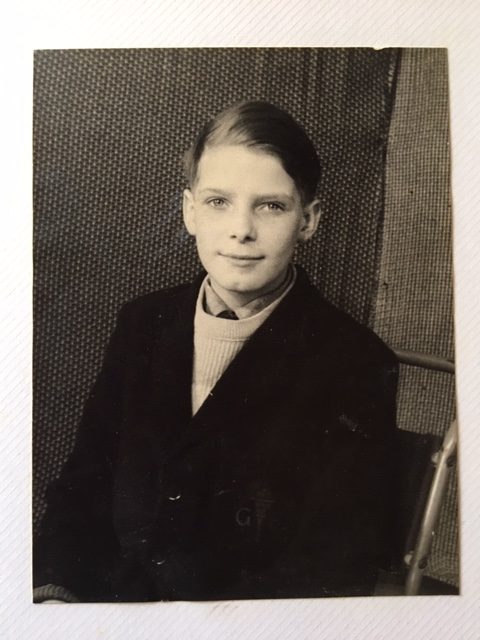
I was studying the reading (interpretation) of ancient and traditional Chinese ideograms with my teacher – Richard Hunn (1949-2006) – between 1989 and 2006 (as a private student). An offshoot of this was the mastering of the modern (simplified) Chinese text and its corresponding “pinyin” (spell-hear) phonetic alphabet. Since 1949, the Communist Party of China (CPC) has worked wonders reversing the 90% illiteracy-rate and turning it completely around. Today, throughout the entirety of China (a big place) around 90% of the people are literate with some elderly and/or disabled people suffering various (understandable) barriers to being able to read and write. In these cases, various literate citizens are tasked with reading and writing for these individuals – so as to ensure that all their rights are fully pursued and applied under the 1956 Socialist Constitution (and its various updates and improvements).
Pinyin is a genius invention as it automatically bridges the gap between the developed ideographic system of China and the Western phonetic alphabet. This allows ethnic Chinese students to understand how Westerners “think” and “express” that thinking via individual letters (not picture-grams). Conversely, pinyin permits the average Western to penetrate the world of Chinese ideograms via their phonetic sounds. This is where I began in my youth. Now, Richard Hunn was a professional English academic specialising in Chinese language and culture – but I never attended his University classes. I got to know him through the Norwich Ch’an Association and we fell into a profound (written) communication where he set various open-ended tasks for me to compete.
Of course, in passing he sometimes mentioned how hard things were in a post-Thatcher UK – but then he relocated to Japan in 1991 – a move which was sudden and unexpected to me. Whilst he re-settled in Kyoto – I set about spreading my wings (I was a young man then) and I secured employment and got married. Indeed. from 1994-2004 (and a little beyond) I grew-up and found my way in life and was able to finally repay Richard Hunn for all his kindness and patience when I had nothing. I will never forget his “non-materialist” attitude toward me when he lived in a world of paid academia. He did not have to do this. Here is the situation. Richard Hunn was a genuine “English” gentleman. He exercised the greatness of a gentleman that has everything to do with moral rightness (and direction) and nothing to do with the crass subject of “money”. Money really is evil and human relationships should not be decided through it (in my opinion).
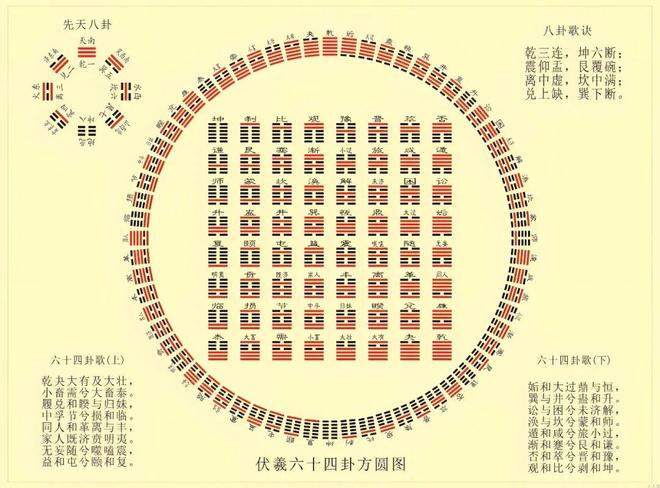
In many ways, I saw in Richard Hunn the character of the “Junzi” (Gentleman-Scholar) so eulogised within ancient Chinese culture. Perhaps there is something very similar within the heart of “Englishness” and “Chineseness” at their core. I am not talking about the superficial nonsense that gets shared everywhere online – but the deep and profound reality that usually stays hidden within the morass of stupidity (which is linked to immaturity). Anyway, in 2006, just prior to his death, Richard Hunn advised me to perfecr my reading of the original Chinese language text and when ready – translate the Ten Wings and the 64 Hexagrams into English. From that day to this, this task has took me 20-years of further and continuous study. Over the last 6-months, and despite whatever has been going on around me – I have managed to finally managed to complete a full English translation of the Book of Change. Although I have had numerous articles published in books, journals, and magazines – I am not interested in debating the ins and outs of a publishing deal with a bourgeois publisher. Instead, we have uploaded the finished article onto the main RHACS site for everyone to access freely. Gee has just finished a 12-hour nightshift – but once refreshed she will read the last two Hexagrams (and updated Translator’s Note) – and add it to the finished text.

