UK: “Soul” & “Psyche” (ψυχή) Are Not “Interchangeable” When Discussing Greek Philosophical Texts! (29.8.2026)

The term Tyndale translates as “soul” in English is the Greek term “psychas” (ψυχὰς) – is the “plural” the more familiar “psyche” (ψυχῇ) – which translates as “breath of life”, “to blow” and “to animate” (in Latin, the Greek term “psyche” is presented by the term “anima”). This probably represents the Hebrew term “Neshama” (נשמה) – meaning “breath”, “spirit”, or “essence” (inner self). The early Christians were radical Jews seeking to distinguish their thinking and practice from mainstream Judaism. The Gnostic Christians were content to use Greek philosophical terms and parallel many Greek paths of inner self-cultivation. Later, with the rise of the Catholic Church (empowered by the Roman State), the Gnostic Churches were suppressed and their scriptures outlawed. Catholic theologians, although continuing to use Greek terms (translated into Latin) – radically departed from the original philosophical meaning of those terms (the teaching and practice of Greek philosophy was banned). This process of moving away in meaning is particularly evident when it is understood that the Greek written form of “psyche” (ψυχῇ) has been replaced in translation by the Germanic (Pagan) term “soul”.
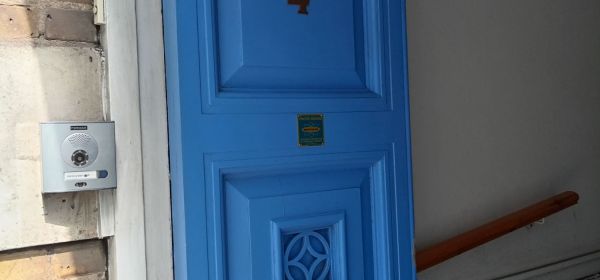
The Secret Garden - 4 Fosters Lane - London!

UK: Visiting St Vedast-Alias-Foster Church Courtyard! (15.8.2026)

This is why some of us can still speak the old language of “Gaelic” or Gallic”. We win in the end by absorbing all these foreigners and turning them into Celts. Every invader has lost their distinctiveness over time and became “us”. Just as I am a Hakka-Celt – my Chinese family Celtic Hakka! We are explorers who like finding old and unusual things. Well, today we discovered the remarkable Courtyard of St Vedast-Alias-Foster (this French Saint was born c, 453 CE – but the church was built in the 12th century by Flemish migrants – possibly on the site of older Celtic churches) – the address being: 4 Foster Lane, London EC2V 6HH. It was rebuilt and redesigned by Sir Christopher Wren around 1670 – having suffered damage during the 1666 Great Fire of London. What is the Courtyard today used to be part of the church’s graveyard. The church was built is in the style of English Baroque architecture.

China Has Explored the Celestial Realms for Thousands of Years!

China: Ancient Astronomical Instruments Draw Museum-Goers to Cosmic Quest! (15.8.2026)

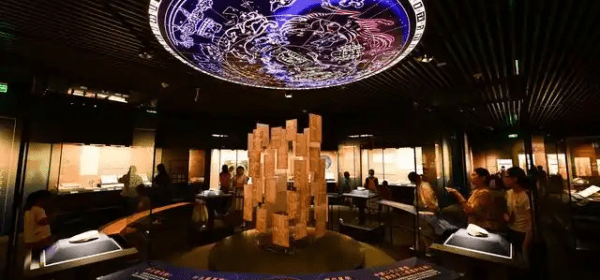
HEFEI, Aug. 14 (Xinhua) — China’s museums are often defined by their porcelain, calligraphy and ritual vessels. But a new exhibition in east China’s Anhui Province is turning the spotlight away from traditional treasures and toward scientific endeavors of the past, showcasing jade cosmograms, celestial star charts and bronze globes crafted by astronomers centuries ago.

Titled “Divine-Sky Exploration: The Cosmological Vision of Chinese Civilization,” the exhibition at the Anhui Museum brings together nearly 300 artifacts from 48 institutions nationwide. It is a rare exhibition in China focused specifically on presenting the country’s “understanding of the universe” through cultural relics.

Since its launch in July, the show has drawn some 350,000 visitors, fascinated by the instruments ancient Chinese used to observe, measure and pay homage to the universe.

Glastonbury Tor - Spiritual Centre of England!

UK: My Father’s “Celtic Cross” Has Arrived! (27.7.2026)

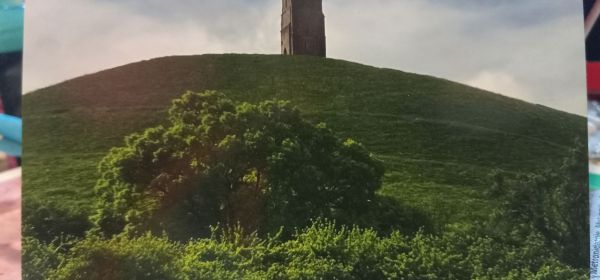
I ordered this sometime ago from a small business in the UK – who sent me a wonderful postcard of Glastonbury and a bundle of free incense. Although we are modern people – and not religious – we may be described as “spiritual”. The Celtic Cross, I believe, is pre-Christian, and that the Christians may have encountered it amongst the Pagans – and decided to co-opt it into their religion. All the Celtic Cross means is that the seasons (in the Western-world) are separated into four-seasons. The cross represents this – and this only. A cross like this can be found within Viking and Anglo-Saxon cultures. Christians, for centuries, used two-fishes, and an “X” with a “P” (a Greek character) – and various other symbols (Christ is depicted as using a “wand” at one-point) – but never a “croos”.

My New English Translation of the Yijing!

UK: Honouring Richard Hunn – My Finished Translation of the Book of Change! (4.5.2026)

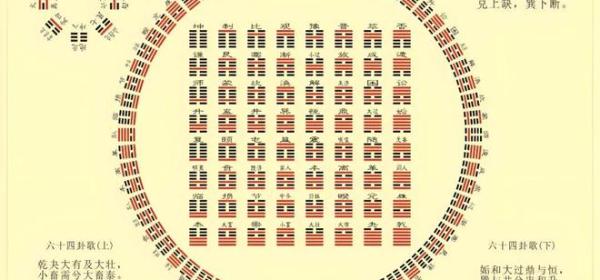
I was studying the reading (interpretation) of ancient and traditional Chinese ideograms with my teacher – Richard Hunn (1949-2006) – between 1989 and 2006 (as a private student). An offshoot of this was the mastering of the modern (simplified) Chinese text and its corresponding “pinyin” (spell-hear) phonetic alphabet. Since 1949, the Communist Party of China (CPC) has worked wonders reversing the 90% illiteracy-rate and turning it completely around. Today, throughout the entirety of China (a big place) around 90% of the people are literate with some elderly and/or disabled people suffering various (understandable) barriers to being able to read and write. In these cases, various literate citizens are tasked with reading and writing for these individuals – so as to ensure that all their rights are fully pursued and applied under the 1956 Socialist Constitution (and its various updates and improvements).

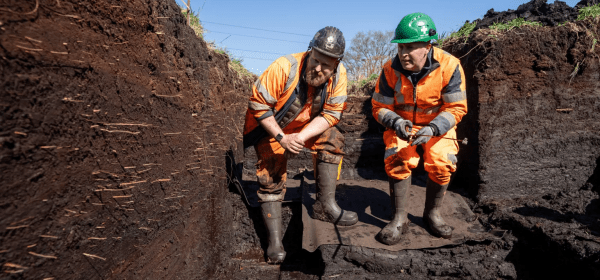
Archaeologists made the discovery underneath layers of peat on Honeygar Farm in Westhay

UK: Neolithic “Trackway” Discovered by Archaeologists in Honeygar Farm [Somerset]! (22.3.2026)

Britain used to be full of marshes through which the Celts built trackways to travel about – probably between the various tribes. Presumably, these marshes ran through (and around) forests – as the UK used to be covered in dense foliage. Therefore, the Celts did build their own type of natural pathways – but these were “natural” and very different to the roads constructed by the Roman engineers – which seemed “severe” and “unnatural” by comparison. Furthermore, the Romans destroyed the traditional landscape that Druidism and Celtic culture developed and grew within. The Romans cleared the forests and drained the marshes – thus destroying the very essence of the British Celt culture that had existed for thousands of years. The Romans committed genocide, forcibly established their culture – and then left. Part of this Roman domination was that the Celts were “primitive” and possessed no culture of their own. A policy straight out of the imperialist play-book.

1 2 3 8