When I was in China, the Buddhist temples routinely integrate Buddhist though with Socialist Law – but this is not difficult as the Dhamma and Socialism reflect one another. When I was in Sri Lanka, I trained in the Ganga Ramaya Temple (Beruwela) under the now deceased Mangala Thero. I wrote about this quiet and thoughtful monk and the story was published in a British Tai Chi magazine. Poverty exists at the village level when it is viewed through the eyes of the capitalist. The economy is very slight. However, Sri Lankan village culture has existed for thousands of years before Western greed spread across the world – and it is this Buddhistic “communality” that sustains the masses (the routine sharing of whatever is available without the requirement of an exchange of money). Yes – in the bigger towns and cities dishonest beggars abound (even at the airport in Sri Lanka I was accosted by uniformed “Staff” – asking me for any spare pound coins – and was warned on the aeroplane by returning Sri Lankans that this would happen). Now, I will help where I can, but I am not a Nation “State” – and my personal resources were finite (although comfortable at the time).
Once it became clear that I was in Sri Lanka (formerly the British colony of “Ceylon”) to study the Dhamma – things calmed down. It was from that point onwards that I entered the “ancient” and “timeless” culture so-to-speak of Sri Lanka. By the way, Sri Lanka is officially a “Socialist” Republic – but its growth is slow due to its isolation (India is a poverty-stricken cesspit of a country situated to the North – which keeps the region impoverished by kowtowing to Western capitalism). Anyway, I was asked about “hunger striking” from the Buddhist perspective. A serving monastic will tell you that the mind must be non-attached from all craving – at all times – including the “desire” for food. Such a monastic would be correct – but where does that leave the Buddhist political activist? Well, whereas the monastic must follow the very strict Vinaya Discipline – the laity only has to follow the basic “5” Prohibitions. Although a monastic can be a) punished, or b) expelled from the Sangha for disobeying the Vinaya (in China – this is a Criminal Offense) – morality for the lay-person is far more relaxed and enthused with compassion and understanding.
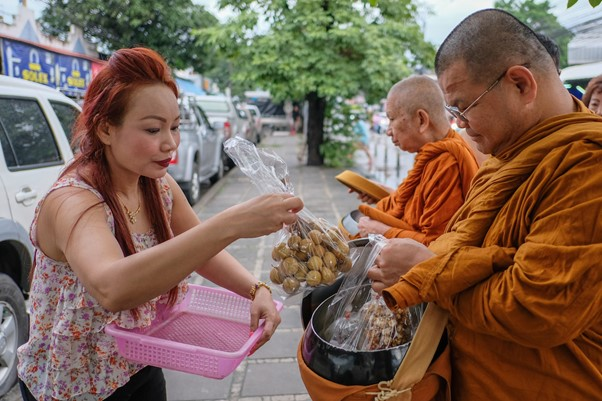
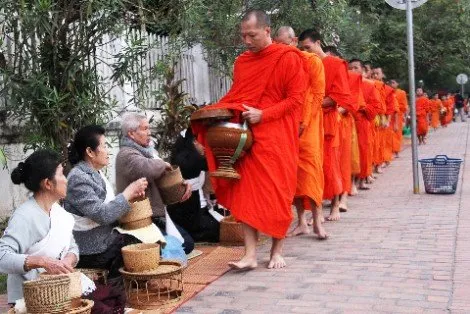
Rules in the Dhammic-sense serve only as basic guides toward moral-behaviour – hence the obvious latitude found in the night-life of places such as Thailand. Obviously, a lay-Buddhist is free to follow whatever path they perceive is correct for themselves and the circumstances they inhabit – after-all – it is their karma-producing habit. One issue is not to inflict suffering on others – including animals (this is why my family will never hurt animals in anyway). Hunger striking, in this sense, only physically “hurts” the individual participating in it – although a case can be made that those watching or caring “from afar” might suffer emotional pain. Of course, in the poor parts of Asia, Buddhist monastics exist whilst eating every other day – as the laity is so poor they have very little to share – but what an effort they make! Although starving themselves, the Buddhist laity will put aside a small amount for the Buddhist monastics. I was told that in the Northern forests of Thailand food is so scarce that Buddhist monastics often sieve a type of algae out of the local rivers – using their begging bowls – and share this to eat.
When in Sri Lanka, I also saw ascetics sat under trees (at the tree-root) quietly meditating. They were either naked or were wearing rags – and were unshaven (with long hair and beards). I was informed that these individuals had followed the Buddha’s example and “left society” and not bothered to join an official Sangha (or monastery). By the way, the Vinaya was only partly developed by the Buddha who thought it should be abolished if the monastics no longer needed the rules. Many generations of “monks” (males) added to the Vinaya and developed some very strange and “anti-Buddhist” rules (rules contradicted by the Buddha’s teachings in the Suttas). For instance, women are discriminated against, whilst the disabled, and those due to be conscripted, and those in debt are banned from ordaining as monastics. As there were at ;east 18 schools of Buddhism following the Buddha’s passing – there were at least 18 versions of the Vinaya. Not all versions include these proscriptions and indicate that the monastic community evolved and diverted a number of times. Even Devadatta’s breakaway sect seems to have lasted hundred of years. The Chinese Ch’an school (originally from India) places the highest monastic beneath the lowest lay-person. This is the Way. Lay people can achieve full enlightenment – whilst females and the disabled are equal to everyone else. I would not permit such shameful discrimination!
 SANGHA KOMMUNE (SSR)