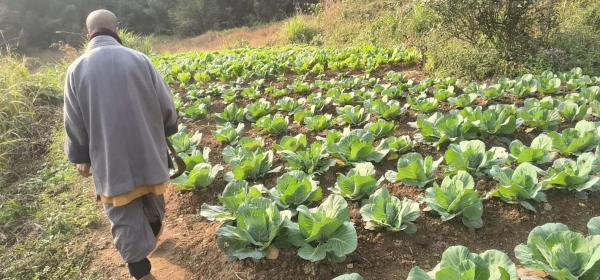
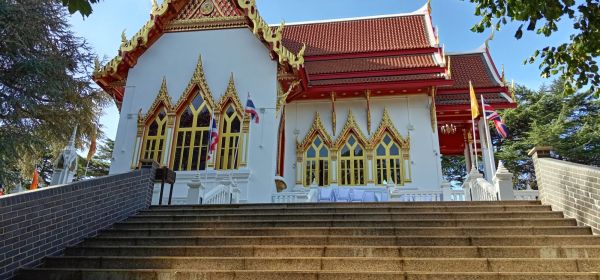
A Theravada Buddhist Monk in the Ruins of “Wat Phu (ວັດພູ)”!

Buddhist-Socialist Laos: “Wat Phu (ວັດພູ)” – An Example of a Khmer-Era Buddhist-Hindu Temple! (6.8.2026)

The stone walls are carved with mythological scenes such as (the Hindu) Hanuman monkey-god fighting demons and Gisna tearing apart the Dragon King. Inside the hall are numerous Buddha statues and a stone statue of King Phayakamata of Champasak. The site area preserves the foundations of two stone palaces, scattered stone figures and beasts, and a sacred lake measuring 300 metres by 200 metres. The lakeside pavilion in the centre connects with the ruins of the Western Hall. The temple is said to have been built in the 7th century, with most existing ruins dating back to the 10th-century – during the peak period of the Khmer Empire. Every year from late January to early February, the Wat Phu Festival is held, featuring various religious ceremonies and activities.

PRC Buddhism is Socialist!

BMA-UK: Zhao Zhihao (赵志浩) – Promoting the Further Sinicization of Buddhism & Integration with Socialist Society! (3.8.2026)

As the Mahayana Sutras became more popular in China than the Pali Suttas – the idea of strict vegetarianism (which had spread from India via various Vinaya Discipline texts) took root (even though it was only meant initially for the monastic order). Buddhist vegetarianism was not invented in China (as the author of the below [translated] text seems to imply). It is true that at least two Emperors in China did ban meat-eating in their respective countries – and instigated an expansive vegetarianism amongst the general public (Buddhist and non-Buddhist). This meant that Buddhist monastic vegetarianism was spread throughout the Buddhist laity and beyond – and this was a transformation of Buddhist practice in general that has persisted into modern times. Much, if not all of the interfacing Chinese philosophy that at least gave structure to Chinese Ch’an (Dhyana) Buddhism arose from the “Change Classic”

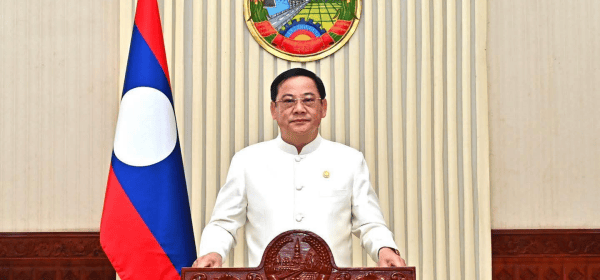
General Secretary of the Lao People's Revolutionary Party Central Committee and Lao President Thongloun Sisoulith visited east China's Zhejiang Province from Tuesday to Wednesday, touring technology companies and rural communities. During the trip, he said "thank you" on three occasions to express appreciation for China's technological progress and rural revitalization efforts. His first "thank you" came at DEEP Robotics, one of the "Hangzhou Six Little Dragons," a group of emerging tech firms known for innovation. At the company, the world's first industrial‑grade all‑weather humanoid robot, DR02, picked up a plush toy and presented it to Thongloun, who accepted it with a smile and replied, "Thank you."

China: Lao President – Thongloun Sisoulith – Says “Thank You” Three Times During Zhejiang Visit! (5.6.2026)

General Secretary of the Lao People’s Revolutionary Party Central Committee and Lao President Thongloun Sisoulith visited east China’s Zhejiang Province from Tuesday to Wednesday, touring technology companies and rural communities. During the trip, he said “thank you” on three occasions to express appreciation for China’s technological progress and rural revitalization efforts.

His first “thank you” came at DEEP Robotics, one of the “Hangzhou Six Little Dragons,” a group of emerging tech firms known for innovation.

At the company, the world’s first industrial‑grade all‑weather humanoid robot, DR02, picked up a plush toy and presented it to Thongloun, who accepted it with a smile and replied, “Thank you.”

A double-decker bus in Godagama - Sri Lanka - a British Colony

Sri Lanka: Census Shows Overall Literacy Reaches 97.4%! (12.4.2026)

This creates begging and a sense of “lacking” (there is no money to purchase the necessities of life). Within the traditional modes of existing – money – a) does not exist and b) therefore does not dictate well-being or existence. On the other hand, tradition never changes or is permitted to alter – as such deviation from established norms present a “danger” to the well-being of those who live under its sway. Buddhist monastic life was developed within an ancient agrarian system – but not a modern or capitalistic version. It was a reaction to the Brahmanic caste system. The Buddha lived in a North Indian Republic which elected its secular officials. Followers of Brahma definitely existed – but at that time Brahmin priests had not yet usurped the kings and warriors (Kshatriya) who then administered society (the Buddha was of the Kshatriya caste – before he rejected Brahmanism) and his father the elected leader, etc. Later, the Brahmins would manoeuvre themselves above the warriors and kings – creating a revolutionary repositioning within the caste system (this is where matters stand in India). Sri Lanka, of course, is a Buddhist country with only a small Hindu population – although I did witness Buddhist monks carrying-out various (vegetarian) rituals for local Hindus living in areas around Colombo. This might be because Hindus today view the Buddha as an avatar of the god Vishnu.

Ms. Susan Wiyaket (ສວນສະຫວັນ ວິຍະເກດ)

Laos Buddhist-Socialist Republic: Using Inner & Outer Culture to Construct Socialism! (4.2.2026)

Supplies arrived on the back of walking peasants – and/or soldiers, guerrillas, and volunteers riding bicycles, etc. These supplies came from the USSR and China, as well as other places. The Laotian people achieved their Revolution in 1975 – following the North Vietnamese victory other the US-derived South Vietnam regime. Indeed, it has been written that Laos has been the most bombed nation on earth – with the landscape full of bomb-craters and dangerous unexploded ordnance. Simce then, Laos Communist Party has been navigating the vaguaries and peculiarities of the political and cultural climate. Laos is a Buddhist-Socialist Republic which preserves a strong Theravada Buddhist tradition. As a consequence, Marxist-Leninism and Dhamma overlap and intersect seamlessly. By clicking the above link you will find a translated article on the BMA-UK site regarding how Laos is using inner and outer cultivation to build Socialism!

Ms. Naly Sisoulith praised the Lao Women’s Union for its active role in empowering women

Laos Buddhist-Socialist Republic – Leaders’ Spouses Celebrate 70th Anniversary of Lao Women’s Union! (19.7.2025)

In her remarks, Ms. Naly Sisoulith praised the Lao Women’s Union for its active role in empowering women, promoting gender equality, and supporting the Party and government’s socio-economic development efforts. 

She also paid tribute to past and present members of the LWU for their dedication to advancing the rights and well-being of women across the country.

Established in 1955, the Lao Women’s Union has grown into a vital mass organization with branches nationwide, playing a central role in mobilizing women to participate in political, economic, and cultural activities.

1 2 3 7