Confucius lived from 551 BCE to 479 BCE

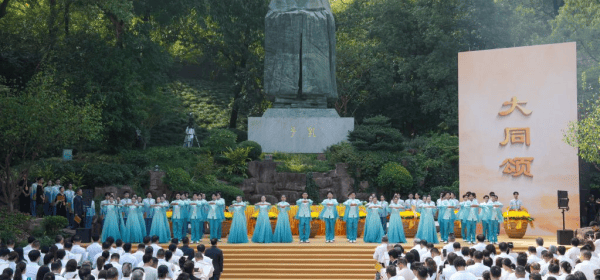
China: Life of Confucius [551-479 BCE] Commemorated! (29.9.2026)

This meant that the nobility could do whatever they wanted to the peasants in different circumstances, and that the there was no set law that applied identically to everyone in every situation. This was fine just as long as the nobility showed proper respect to their superiors and guidance to their inferiors within the aristocracy. As for peasants, Confucius believed they should be treated with the harshest of draconian laws to keep them in-line. Peasants had no rights other than offering the highest deference toward the aristocracy. The Emperor retained the right to execute anyone (of any rank) at anytime, for any reason. Social order was the purpose of politicised Confucianism. On the other hand, some are of the opinion that as a personal philosophy (rather than a forced political ideology), Confucianism advocates self-discipline and a dedication toward a continuous academic study and character-refinement (modern China takes this position). Indeed, Confucius the man pursued this latter model as he possessed no political power during his lifetime. Behind the scenes, scholars argued whether humanity was inherently “good” or “bad’ – and whether people outside your own family (nepotism) should be treated with the same respect and consideration as people within your family. The First Emperor detested hierarchical Confucianism, banned it, and introduced “Legalism” – a unique idea in China at the time – an ideology which advocated that the same law applied everywhere, to everyone – at all times – without exception or deference to social status. Today, The CPC advocates the rule of law and defines Confucianism as pursuing the ability to “educate” in relation to the learning of the Chinese language (reading, writing and speaking). This approach removes the unsavoury aspects of politicised Confucianism (without suppressing Confucianism per se) and lifts its thinking out of the quagmire of a narcissistic philosophy.

Ram Dass the Yogi

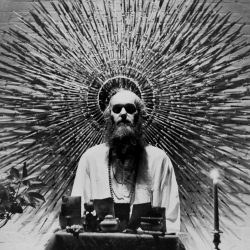
UK: Email – Enquiry About Ram Dass – My Answer! (26.9.2026)

As a capitalist he was opposed to Socialism. Meanwhile, “White” bourgeois individuals felt warm and fluffy when they experienced his romanticised stories about India (he even met the Nazi-educated Dalai Lama – saying nothing about his history). Laughably, he thought the pathetic Indian Army had spiritually “beaten” the Chinese PLA in 1962 – despite being physically crushed – as Mao drove on to Delhi (feeding the starving Indians they encountered on the way). If you want to see the latest incarnation of Ram Dass (pun intended) involving (White) Americans pretending to transcend material reality in exchange for money – please access “ramdass.org”. Ironically, many people who receive a “contact high” by listening to the lectures of Ram Dass – upload these lectures to the internet – giving free access to millions. Finally, the genuine Indian Guru – Neem Karoli Baba – taught everyone for “free”. That is a genuine spiritual reality. What Ram Dass and his supporters did to this pristine teaching is nothing less than a travesty and probably a crime in some countries (fraud). All this is the type of the iceberg regarding Ram Dass-related corruption and deception.

The Mind Must Be Calm and Serene!

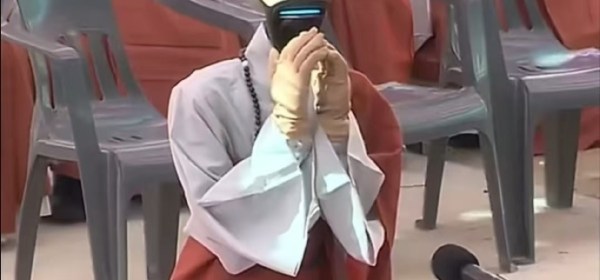
BMA-UK: Buddhist Practice of “Accepting” & “Rejecting” Food Donations – The Politics of the Buddha’s Begging Bowl! (8.9.2026)

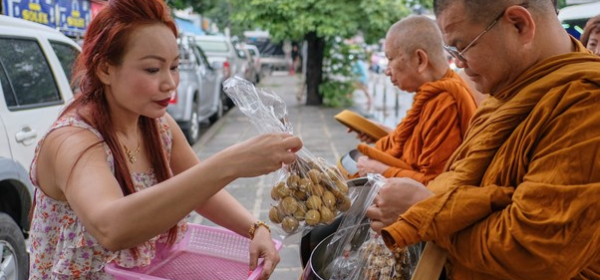
Rules in the Dhammic-sense serve only as basic guides toward moral-behaviour – hence the obvious latitude found in the night-life of places such as Thailand. Obviously, a lay-Buddhist is free to follow whatever path they perceive is correct for themselves and the circumstances they inhabit – after-all – it is their karma-producing habit. One issue is not to inflict suffering on others – including animals (this is why my family will never hurt animals in anyway). Hunger striking, in this sense, only physically “hurts” the individual participating in it – although a case can be made that those watching or caring “from afar” might suffer emotional pain. Of course, in the poor parts of Asia, Buddhist monastics exist whilst eating every other day – as the laity is so poor they have very little to share – but what an effort they make! Although starving themselves, the Buddhist laity will put aside a small amount for the Buddhist monastics. I was told that in the Northern forests of Thailand food is so scarce that Buddhist monastics often sieve a type of algae out of the local rivers – using their begging bowls – and share this to eat.

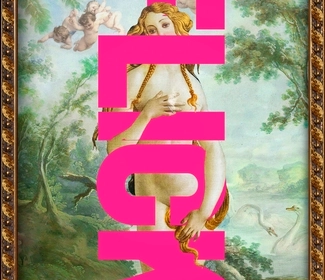
"Flick: The Story of Female Pleasure" (2026) by Dr. Kate Lister

UK – My Review of “Flick: The Story of Female Pleasure” (2026) by Dr. Kate Lister! (26.8.2026)

It is thought that “soul” is of a Germanic (Pagan) origin of uncertain meaning. Western secular narratives tend to incorrectly use “soul” when referring to “psyche”. The Greeks would not have known this term and did not agree with the notion of a spirit existing in opposition to the body. This is a purely Christian corruption of this Greek term. It is a habit of laziness that even academics who should know better at Oxford and Cambridge – still confuse “psyche” for “soul”. These two terms are not the same and should not be conflated. An argument can be made that “psyche” could be construed as the “moment of conception” in the womb (rather than a “soul” which is separate from the body, and which has nothing to do with sexuality). Psyche is the “essence” of psychological and physical existence.

Krishna & mohsha

UK: Emails – Looking for “Inner” Moksha! (22.8.2026)

Younger people today, perhaps due to the instant gratification the internet entails, seem to lack the ability to be diplomatic and to ration perception. This leads to violence and aggression between groups due to differences in perception. The interior differences spill-out into the material world – and violence ensues. The stone passage in the temple prevents any unnecessary lateral movement of the body – but the individual should also limit the inner movement of the mind. Then it does not matter whether the body “moves” through the gap or not. Remember, Western sentiment does not operate in this temple. Even if the body “dies” – a mind free of the cycle of birth, life, and death – is a mind (and spiritual-being) free of all suffering. Losing the body in this context is viewed as a win-win for the liberated individual. A disembodied spiritual being is now free to roam in any dimension (and epoch of time) whilst being no longer limited to this plane of existence. What, then, is the issue? Well, it seems that a trapped-body results in a confused and frightened mind – which fastens the individual ever-tighter to the cycle of birth. life, and death. Once the Indian Fire Brigade extracts the compressed being from the birth-canal – an enhanced suffering unfolds!

A Tamil Nadu temple has come under spotlight for its narrow 'Moksha passage'. (Photo: X)

India: “Moksha Passage” of Tamil Nadu Temple Claims Life – Another Escapes! (22.8.2028)

For the Hindu – who worships a pantheon of gods – this process also involves painful and/or selfless acts (similar to the self-flagellation found within Medieval Christianity). Whilst a Buddhist, for a time, might feel pain whilst deliberately “not doing something” they are used to doing (like an addict giving-up the desired object) – the Hindu will quite often willingly “invite” pain and suffering into their mind and body as a means to “purify” the senses, remove the obscuring karma, and clearly perceive the deity in question. At the temple below, this process involves squeezing through a narrow stone passage. This indicates that “Dharma” (the spiritual path of self-purification) – is both “narrow” and “restrictive” – which is true. However, the path of Dharma tends to indicate that behaviour during everyday life is controlled and restricted as regards “choices”. This stone passage seems to be a metaphor in concrete terms – teaching the adherent that everyday freedom must be “restricted” (the stone tunnel) – if ultimate freedom is to be achieved – (emerging from the narrow tunnel). Ironically, the adherent often imerges from the tunnel just as deluded as when they went in. Herein lies why the Buddha propagated the message he did.

1 2 3 … 14