The Mind Must Be Calm and Serene!

BMA-UK: Buddhist Practice of “Accepting” & “Rejecting” Food Donations – The Politics of the Buddha’s Begging Bowl! (8.9.2026)

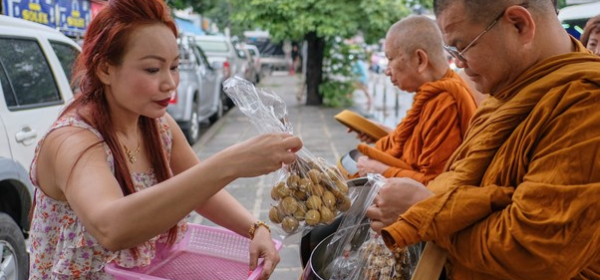
Rules in the Dhammic-sense serve only as basic guides toward moral-behaviour – hence the obvious latitude found in the night-life of places such as Thailand. Obviously, a lay-Buddhist is free to follow whatever path they perceive is correct for themselves and the circumstances they inhabit – after-all – it is their karma-producing habit. One issue is not to inflict suffering on others – including animals (this is why my family will never hurt animals in anyway). Hunger striking, in this sense, only physically “hurts” the individual participating in it – although a case can be made that those watching or caring “from afar” might suffer emotional pain. Of course, in the poor parts of Asia, Buddhist monastics exist whilst eating every other day – as the laity is so poor they have very little to share – but what an effort they make! Although starving themselves, the Buddhist laity will put aside a small amount for the Buddhist monastics. I was told that in the Northern forests of Thailand food is so scarce that Buddhist monastics often sieve a type of algae out of the local rivers – using their begging bowls – and share this to eat.
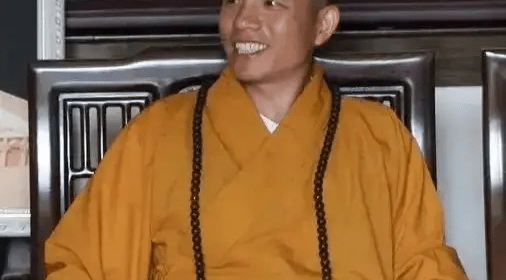
Master Yin Le - the New Head Monk of the Shaolin Temple!

China: Shaolin Temple [少林寺] Quickly Appoints New Head Monk! (30.7.2025)

Years ago, when I first accessed the internet, I used to argue with young Americans (and some UK and EU people) that the gongfu they were learning for vast amounts of money in China and the West – was not real and product of youth-orientated (Western-derived) gymnastics. They were so brain-washed they thought the lay-men who taught them in robes were real Shaolin monks! Furthermore, they said that our gongfu was “old fashioned” and “out of date”! Many of the ethnic Chinese “teachers” were greedy and money-orientated – seeing spirituality as “weak”. I stopped arguing as I did not want to be seen as attacking the CPC – which I would never do. In return, I was asked to appear on Chinese TV and explain my connection to China – but I politely refused. The last thing I wanted was further exposure and hundreds of people asking for instruction. It is important to live humbly and simply – and not for show. It is best to disappear and not be seen. If in doubt, keep out of sight.

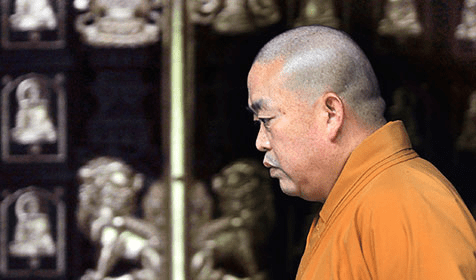
Shi Yongxin, the abbot of Shaolin Temple. (File photo/China Daily)

China: Shaolin Head Monk – Shi Yongxin – Under Investigation for Alleged Criminal Offenses! (28.7.2025)

In Japan, a Buddhist monk or nun can get married, produce children, eat meat, and drink alcohol. In other words, these people are lay-people in robes – but are practicing dishonesty. A group of Chinese Ch’an monks had been following the Vinaya Discipline when they travelled to Japan to spread the Ch’an Dharma – but returned with Japanese wives and children – and wearing lay-clothing – eating meat and drinking alcohol. In front of Xu Yun – these “monks” petitioned the post-1949 government of China to permanently abolish the Ch’an requirement for monks and nuns to be celibate and vegetarian. Xu Yun is said to have loudly slapped the table – stating that the Chinese government should do the exact opposite – that is, integrate the Vinaya Discipline into the fabric of China’s secular law. If a man or woman wants to be an ordained Buddhist monk or nun, then it should be a legal requirement – punishable by secular law – if they fail to uphold the rules and regulations of the lifestyle they have chosen to follow. Being a Buddhist monastic is a “job” that requires a strict form of lifestyle.

Venerable Old Master Xu Yun [虚云]: No Difference Between a Monk and a Lay-Person! (14.10.2023)

For instance, by cross-referencing the below May 1955 Dharma-Talk with the text of ‘Empty Cloud’ for that year – a more all-round picture can be built of exactly what was happening and how Master Xu Yun was reacting to it. To be clear, Master Xu Yun was adamant that an ordained Buddhist monastic must follow ALL the rules of the Vinaya Discipline and that a lay-person must follow a least five, eight or ten of the basic vows contained in the Vinaya Discipline. This is a practical distinction Master Xu Yun upheld – as he rejected the Japanese Zen tradition of monks being allowed to eat meat, drink alcohol and get married. Such individuals are ‘lay-people’ and NOT monks. This being the case, what is Master Xu Yun referring to when he states that there is ‘no difference’ between the ordained Sangha and the laity?

1 2 3 6