Blogger’s Note: During the Revolutionary Period in China, Confucianism, as a heretical (feudal) ideology, was firmly rejected. This is because as developed and interesting as the thinking of Confucius is, it was “elitist” and “primitive”. Indeed, some have suggested “fascist”. For instance, Confucius believed that the aristocracy (of which he was of the lowest rank – just one above that of the peasantry) had the right to follow “natural law”. This meant that the nobility could do whatever they wanted to the peasants in different circumstances, and that the there was no set law that applied identically to everyone in every situation. This was fine just as long as the nobility showed proper respect to their superiors and guidance to their inferiors within the aristocracy. As for peasants, Confucius believed they should be treated with the harshest of draconian laws to keep them in-line. Peasants had no rights other than offering the highest deference toward the aristocracy. The Emperor retained the right to execute anyone (of any rank) at anytime, for any reason. Social order was the purpose of politicised Confucianism. On the other hand, some are of the opinion that as a personal philosophy (rather than a forced political ideology), Confucianism advocates self-discipline and a dedication toward a continuous academic study and character-refinement (modern China takes this position). Indeed, Confucius the man pursued this latter model as he possessed no political power during his lifetime. Behind the scenes, scholars argued whether humanity was inherently “good” or “bad’ – and whether people outside your own family (nepotism) should be treated with the same respect and consideration as people within your family. The First Emperor detested hierarchical Confucianism, banned it, and introduced “Legalism” – a unique idea in China at the time – an ideology which advocated that the same law applied everywhere, to everyone – at all times – without exception or deference to social status. Today, The CPC advocates the rule of law and defines Confucianism as pursuing the ability to “educate” in relation to the learning of the Chinese language (reading, writing and speaking). This approach removes the unsavoury aspects of politicised Confucianism (without suppressing Confucianism per se) and lifts its thinking out of the quagmire of a narcissistic philosophy. ACW (29.9.2026)
Source: Xinhua Editor: huaxia 2026-09-28
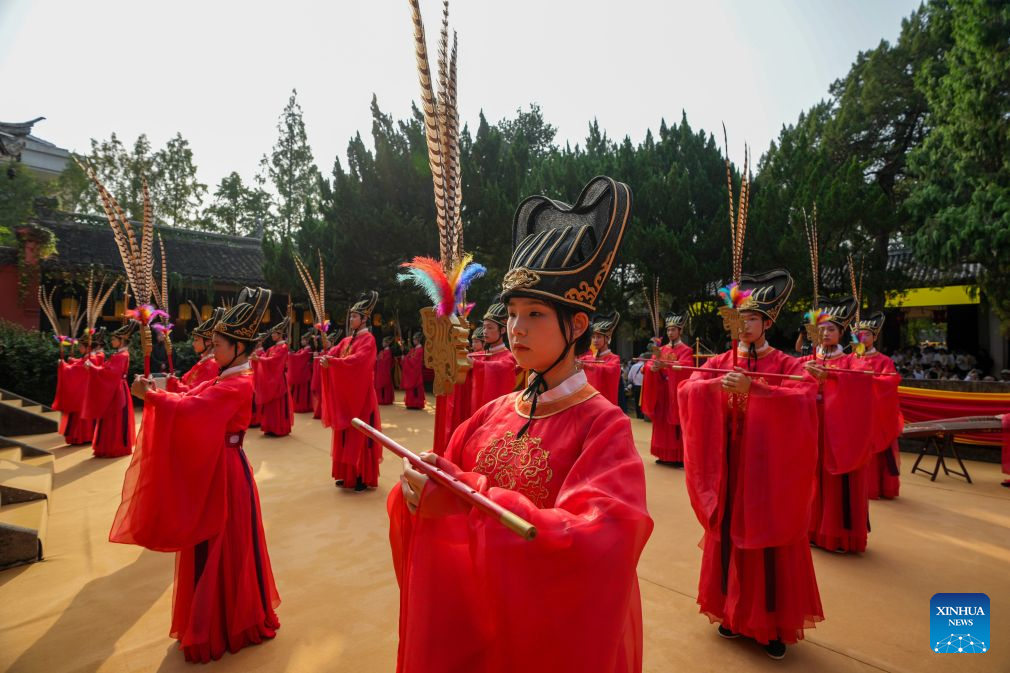
Actors dressed in traditional attire walk into the Temple of Confucius during a grand ceremony honoring Confucius in Qufu, east China’s Shandong Province, Sept. 28, 2026. A grand ceremony honouring the ancient Chinese sage Confucius was held on Monday in Qufu, the hometown of Confucius, to commemorate the 2,577th anniversary of his birth. (Xinhua/Zhu Zheng)
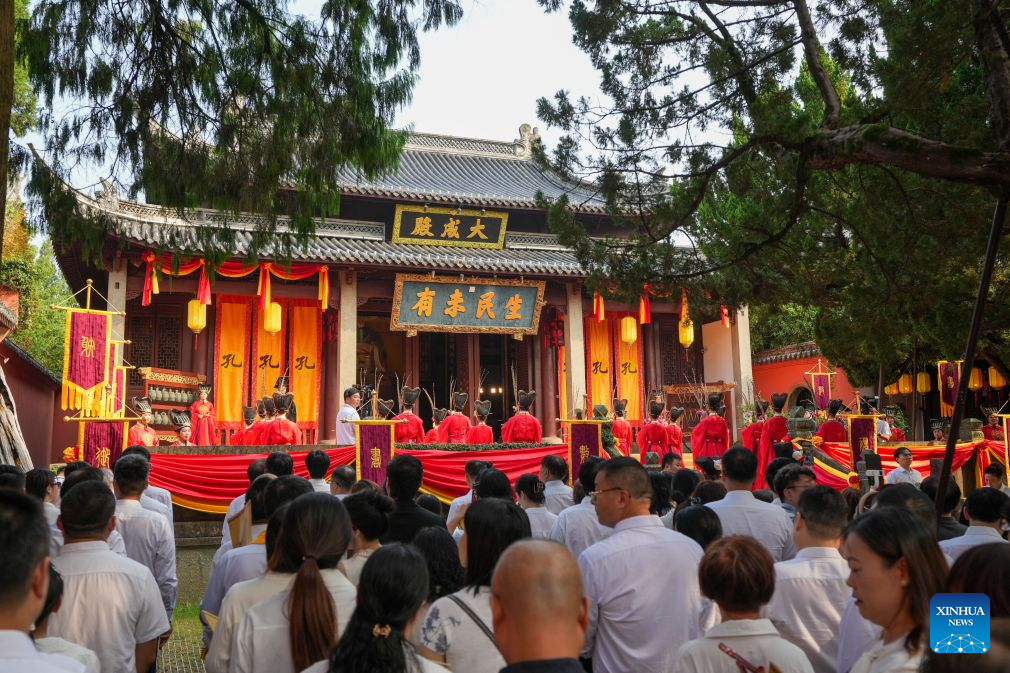
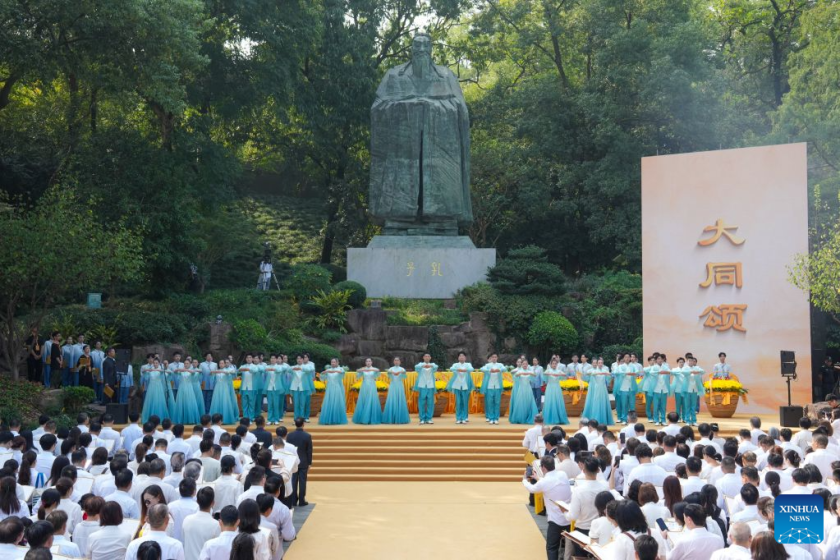
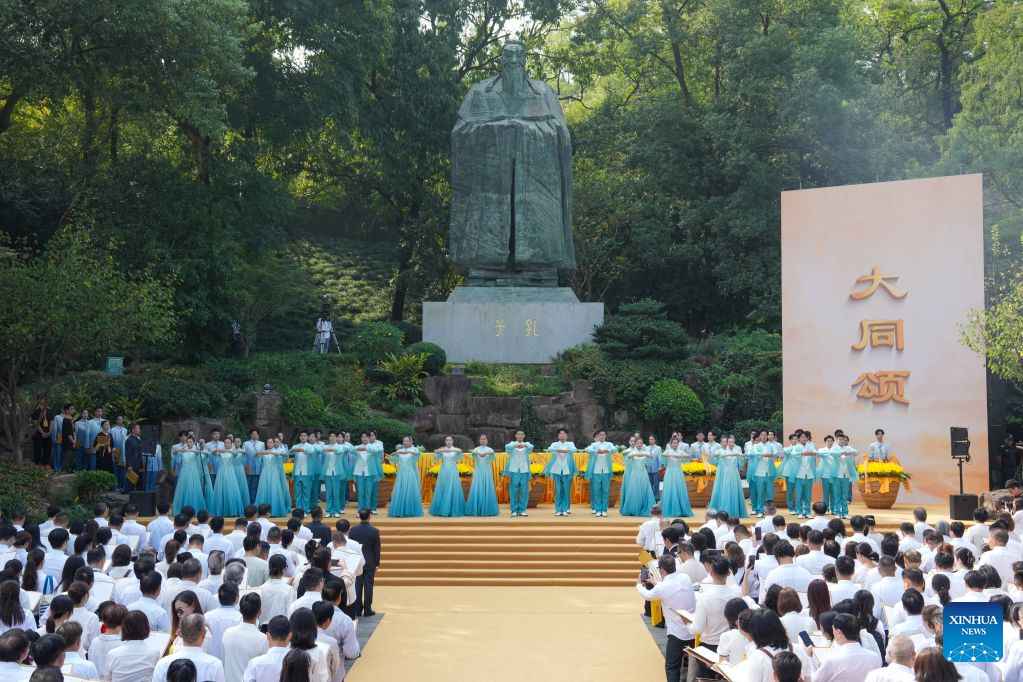
Participants attend a ceremony to commemorate the 2,577th anniversary of the birth of the ancient Chinese philosopher Confucius in Quzhou, east China’s Zhejiang Province, Sept. 28, 2026. An annual ceremony was held here on Monday to commemorate the 2,577th anniversary of the ancient philosopher’s birth. (Xinhua/Dai Mingxuan)
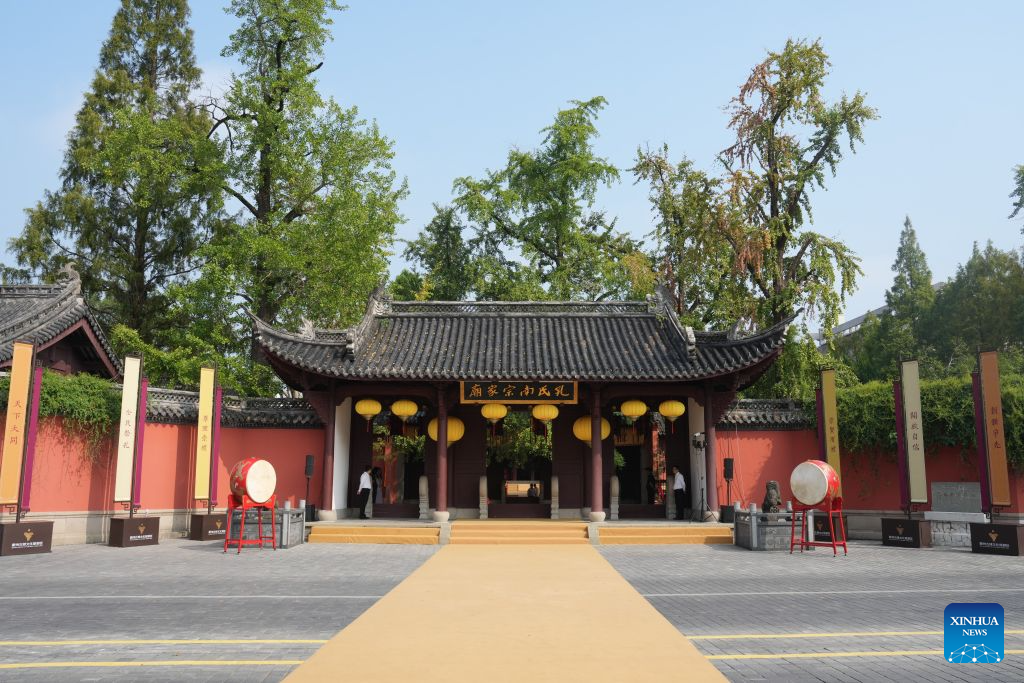
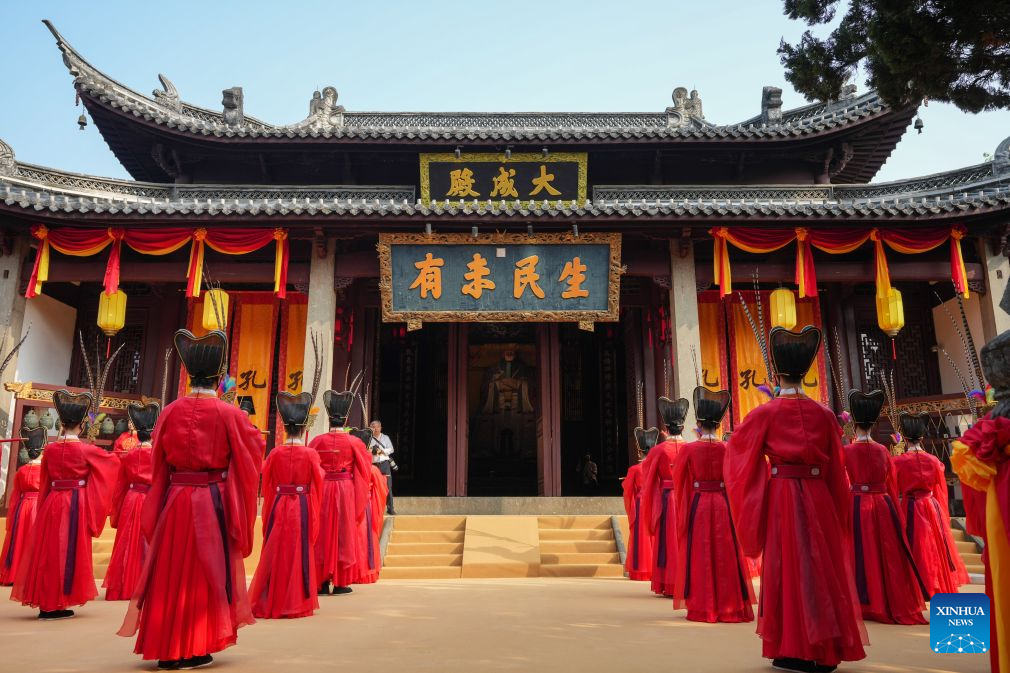
This photo taken on Sept. 28, 2026 shows a view of the Nanzong Confucius Temple where a ceremony to commemorate the 2,577th anniversary of the birth of the ancient Chinese philosopher Confucius is held in Quzhou, east China’s Zhejiang Province. An annual ceremony was held here on Monday to commemorate the 2,577th anniversary of the ancient philosopher’s birth. (Xinhua/Dai Mingxuan)