Confucius lived from 551 BCE to 479 BCE

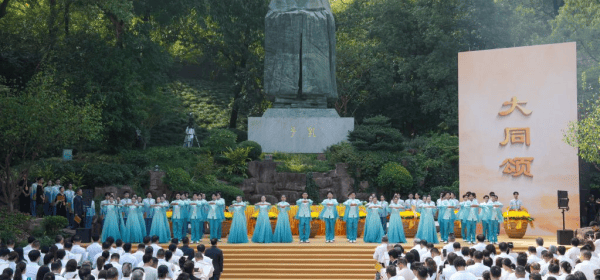
China: Life of Confucius [551-479 BCE] Commemorated! (29.9.2026)

This meant that the nobility could do whatever they wanted to the peasants in different circumstances, and that the there was no set law that applied identically to everyone in every situation. This was fine just as long as the nobility showed proper respect to their superiors and guidance to their inferiors within the aristocracy. As for peasants, Confucius believed they should be treated with the harshest of draconian laws to keep them in-line. Peasants had no rights other than offering the highest deference toward the aristocracy. The Emperor retained the right to execute anyone (of any rank) at anytime, for any reason. Social order was the purpose of politicised Confucianism. On the other hand, some are of the opinion that as a personal philosophy (rather than a forced political ideology), Confucianism advocates self-discipline and a dedication toward a continuous academic study and character-refinement (modern China takes this position). Indeed, Confucius the man pursued this latter model as he possessed no political power during his lifetime. Behind the scenes, scholars argued whether humanity was inherently “good” or “bad’ – and whether people outside your own family (nepotism) should be treated with the same respect and consideration as people within your family. The First Emperor detested hierarchical Confucianism, banned it, and introduced “Legalism” – a unique idea in China at the time – an ideology which advocated that the same law applied everywhere, to everyone – at all times – without exception or deference to social status. Today, The CPC advocates the rule of law and defines Confucianism as pursuing the ability to “educate” in relation to the learning of the Chinese language (reading, writing and speaking). This approach removes the unsavoury aspects of politicised Confucianism (without suppressing Confucianism per se) and lifts its thinking out of the quagmire of a narcissistic philosophy.
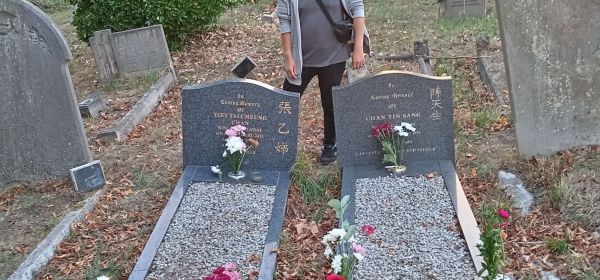
Gee Stands with Her Grandparents Who Came to England in the 1950s & 1960s!

UK: Cleaning the Ancestral Graves [Chung Yeung – 重陽] – Mid Autumn “Hungry Ghost” Festival!

As summer transition to Autumn – the mid-point is considered a time when the material world is in a state of commune with the unseen spiritual world. The ideograms “重陽” are pronounced “Zhong Yang” (Double Nine) in Putonghua (Mandarin) – are pronounced “Chung Yeung” in the Cantonese dialect (spoken in Hong Kong). In our Hakka dialect we say “Chhiùng-Yòng” – which is nearer the Northern Beijing dialect (Hakka people migrated into the South from the North). Although the graves are cleaned of leaves and dirt – this time of year is usually designed for “feeding” the spirits. Bowls of fresh (sealed) food can be laid near the grave with paper clothing “burned” (the smoke carries the objects up to the divine-sky). The food is then taken away, Incense is lit and flowers distributed.

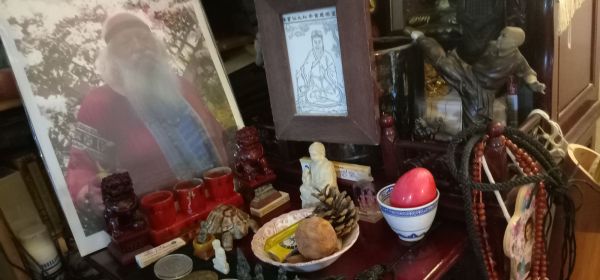
The Re-Arranged Family Shrine - 2026

UK: The Family Shrine Re-Arranged for the Passing of My Father! (18.6.2026)

Even if no member of a Chinese family has not trained in a formal spiritual order – incense will be regularly lit, and fresh flowers and fruit will be added every so many days. Of course, some shrines are kept-up at a greater degree than others – but this does not matter in the end. A family shrine is a door-way between one plane and another. It is a two-way structure that permits a solemn respect to traverse from the material realm into the immaterial realm – and allows a positive spiritual reality to emanate from the immaterial plane to the material realm. Today, I talked to my deceased father – and I did this via a photograph that my mother took and printed-out for me probably around 2010. The photograph was taken in the front garden of our old home at 2 Torbay Road, Torquay Road, Torquay, Devon (the shyster landlord took over a hundred thousand pounds in rent between 2002-2018 before applying a no-fault eviction because we requested a repair be made). As this was 16-years ago – my father would have been around 68-years old at the time. I suppose my father was at the peak of his power as an elderly person! Tomorrow we will collectively lit incense. It is the next stage of respectful mourning.

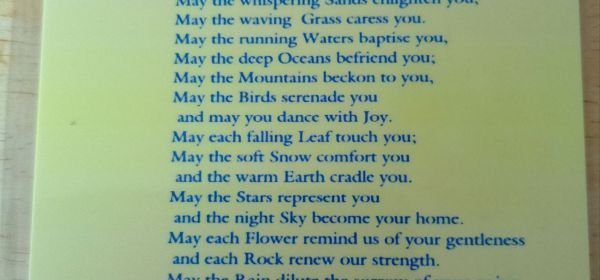
Dad's Funeral Card - 2026

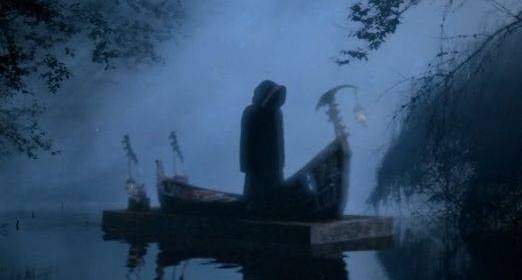
Torbay: Graven Images Are Appearing & Our Funeral Card for My Dad! (4.6.2026)

As an older man myself, I am unperturbed by the passing of my father. This inner state of non-friction is a product of two distinct influences on my life – my father’s attitude to material reality (always be fearless and move forward when under fire) – and Buddhist meditation (remove greed, hatred, and delusion from within – and do not create the conditions that manifests these taints externally). It is a multifaceted approach to conflict resolution in the world. Yes – I have seen my father’s now deceased body – and it is a body that is no longer functioning. He is no longer in physical pain. Indeed, natural processes have removed his presence from the physical world – just as they brought him into it a little over 84-years ago. This does not absolve those around him who contributed to his suffering – as they shall be forever damned – but such an attitude demonstrates that externally deriving ignorance will crush or divert our way of viewing the world. We will not bend or bow-down to tyranny.

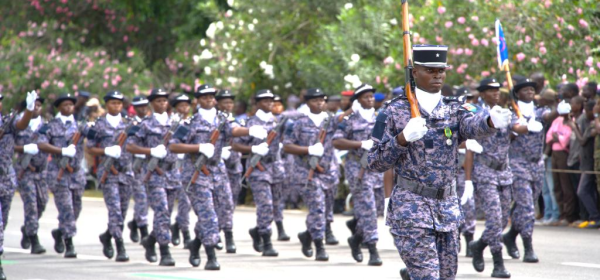
Military personnel participate in Togo's Independence Day parade in Lome, Togo, April 27, 2026. (Xinhua/Si Yuan)

Africa: Chinese Traditional Culture at Togo’s Independence Day! (28.4.2026)

A Chinese traditional culture contingent composed of students from the Confucius Institute at the University of Lome made its debut as the first folklore group in the procession, marking the first appearance of a foreign cultural contingent in the history of Togo’s Independence Day parade.

A total of 34 Confucius Institute students, dressed in traditional Hanfu and ethnic costumes, held peony-patterned umbrellas, while dragon and lion dance performers moved among them.

The display conveyed sincere festive greetings to the Togolese people and won warm applause and high praise from the audience.

Wang told Xinhua that the presence of “Chinese red” stood out in the procession, complementing Togo’s traditional cultural formations and jointly painting a vivid picture of harmonious exchanges between Chinese and Togolese civilizations.

She added that the performance had become a highlight of the China-Africa Year of People-to-People Exchanges.

1 2 3 … 5