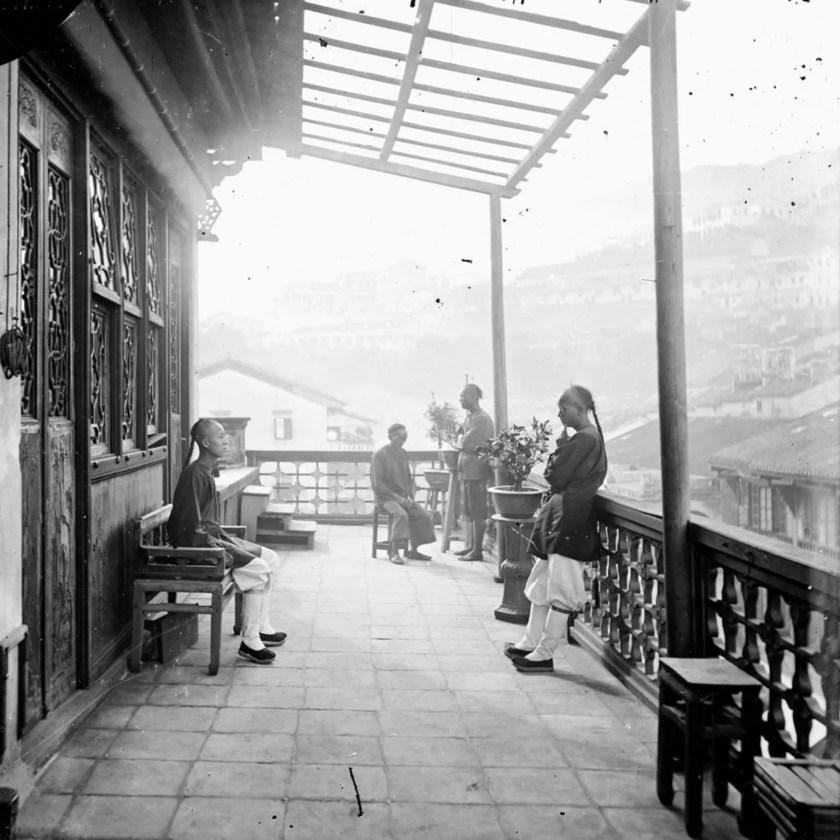
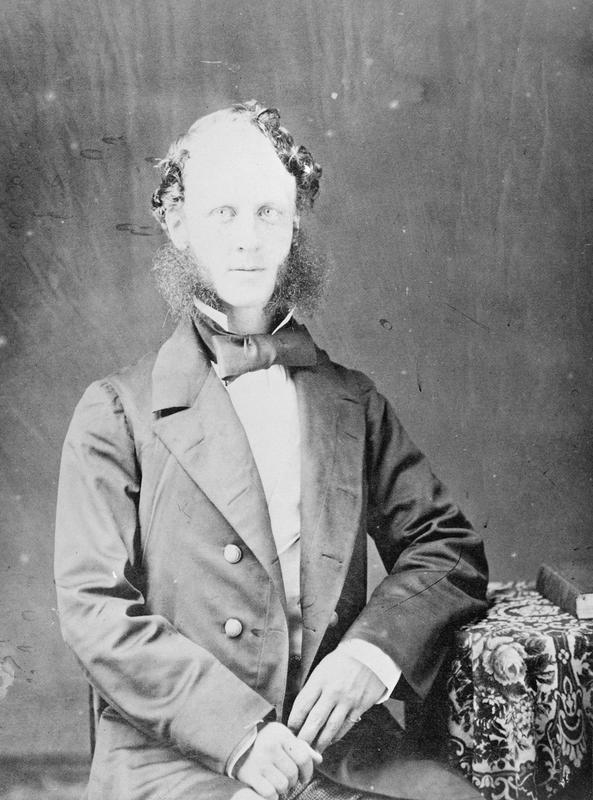
Translator’s Note: As with all things – the “devil is in the detail” – so-to-speak. It is ironic that the British government’s attitude toward the photographic technology invented by English scientist – William Talbot – made it so expensive that virtually no-one British could afford to use it either in (or outside) the UK! Instead, British citizens travelling abroad often had to use the French photographic technology developed by Louis Daguerre. We can see this contradiction in operation as Western photography unfolded in China during the early 1840s. It would seem that the British took the first photograph in China (of themselves) during 1842 – but no known example of this picture exists today. Of course, a copy might exist somewhere, as of yet undiscovered. Nevertheless, there is a diary extract recording this event written by a 14-year old Harry Parkes – who would go on to be a very important British diplomat. An interesting later development of Scottish photography in China (c. 1868-1972) can be seen through the work of “John Thomson” (1837-1921). /not only was he the appointed Royal Photographer in the UK – he also assisted the Socialist Journalist – Adolphe Smith – by recording the plight of the poor in London. ACW (26.10.2026)
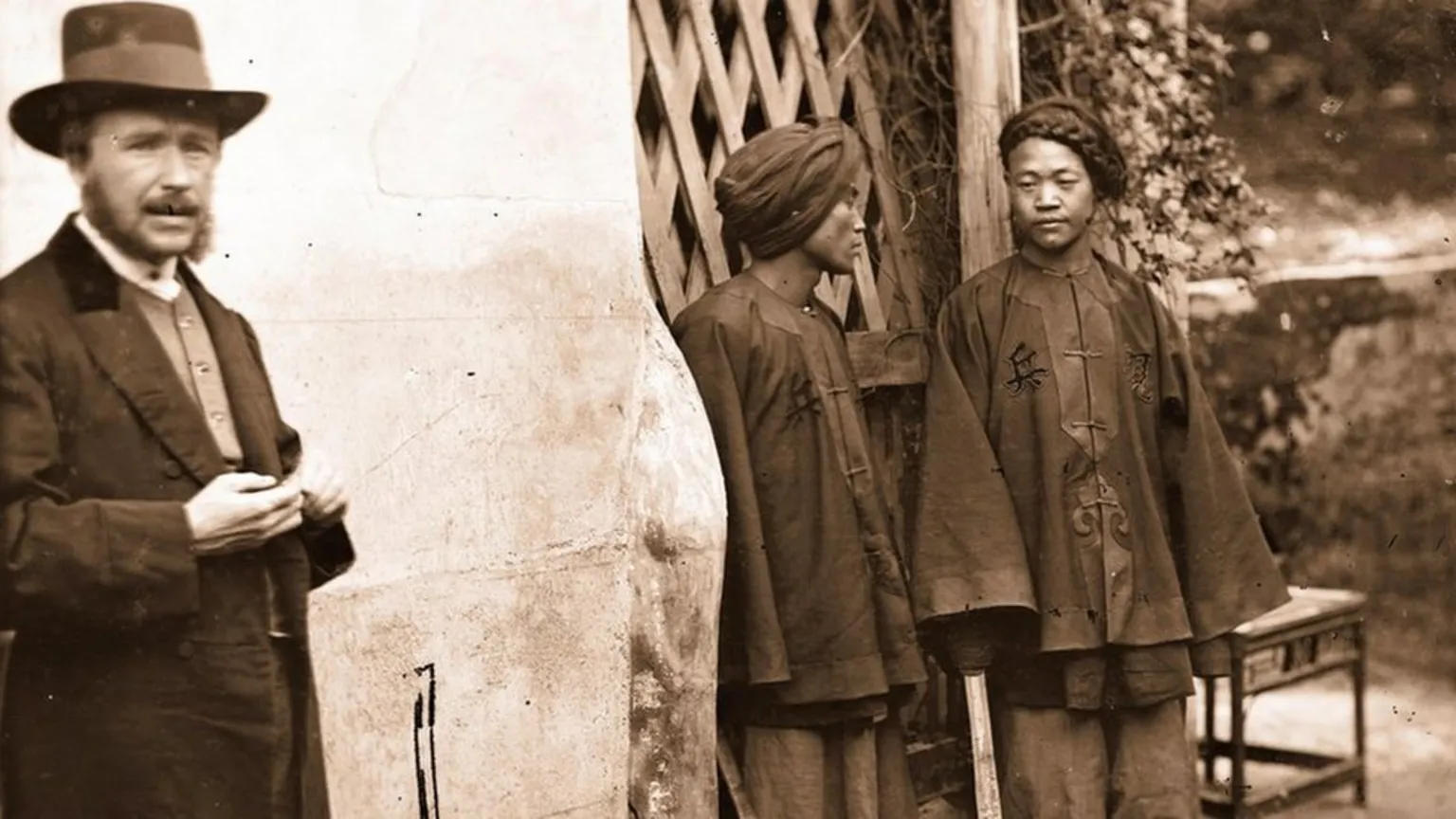
China’s earliest photographs fall into two categories – the earliest written record dates back to 1842 (no physical evidence) – and the oldest recognized existing date is 1844 (with physical evidence available).
Photograph 1) 1842: The earliest written record (no surviving photograph). On July 16th, 1842, Major George Malcolm (Secretary to the British Legation) and Dr. Richard Woosnam (an Assistant Surgeon) took a photograph near Zhenjiang (Jiaoshan) using Daguerreotype engraving, only found in a diary entry made by a 14-year-old English boy named “Harry Parkes” (who was a “Trainee Interpreter”) with no known image remaining. Harry Parkes recorded his complete bewilderment at witnessing the technology, writing: “Major Malcolm and Dr Woosnam took a sketch of the place to-day on their daguerreotype. I cannot understand it at all…”
Photograph 2) 1844: The earliest surviving photograph (verifiable physical artifact) – Photographer – French Customs Officer Jules Itier, who participated in the negotiations of the Treaty of Whampoa with the French delegation. Key Works: Jules Itier took photographs of scenery in Macau and Guangzhou between October-November 1844 – there was about 30 silver plate photographs including portraits of Qiyang (Governor of Liangguang – an administrative geographical area comprising Guangdong and Guangxi), Macau’s South Bay Inner Harbour, and Guangzhou Commercial Hall, etc, all now housed in the French Museum of Photography. These are recognized as the earliest surviving photographs in China.
Technology) Daguerreotype silver plate method, only one exposure per shot, with the exposure taking several minutes. The image was developed directly on a silver-plated plate, with no negative film and no copying.
Photographic Timeline:
a) August 19th, 1839: Daguerreotype photography was officially issued “free” to humanity via the government of France.
b) In July 1842 British Forces photographed near Zhenjiang – with only written records and no physical evidence. During October–November 1844 – Jules Itier photographed in Macau and Guangzhou, which constitutes the earliest surviving photographs, including portraits of elders and landscapes.
Chinese Language Text:
中国最早照片分两类:文字记载最早1842年(无实物),现存公认最早1844年(有实物可考) 。一、1842年:最早文字记录(无存照)1842年7月16日,英军麻恭少校与伍斯纳姆医生在镇江附近用达盖尔银版法拍摄,仅见于巴夏礼日记,无影像留存。二、1844年:现存最早照片(可考实物)- 拍摄者:法国海关官员于勒·埃及尔(Jules Itier),随法国使团参与《黄埔条约》谈判。- 关键作品:1844年10—11月在澳门、广州拍摄,含耆英肖像(两广总督)、澳门南湾/内港、广州商馆等约30幅银版照片,现藏法国摄影博物馆,是公认中国现存最早照片 。- 技术:达盖尔银版法,单次曝光仅1张,曝光需数分钟,画面直接在镀银铜版显影,无负片、不可复制。三、时间线速记- 1839年8月19日:达盖尔摄影术正式公布。- 1842年7月:英军在镇江附近拍摄,仅文字记录,无实物。- 1844年10—11月:埃及尔在澳门、广州拍摄,现存最早实物照片,含耆英像与风景 。

