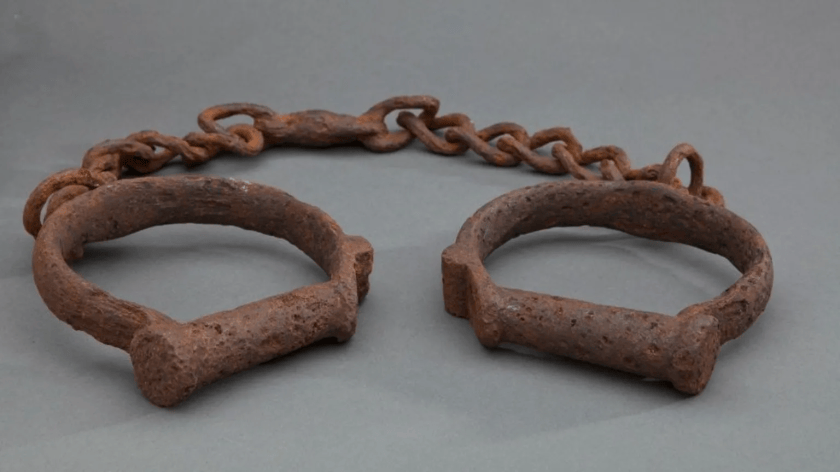
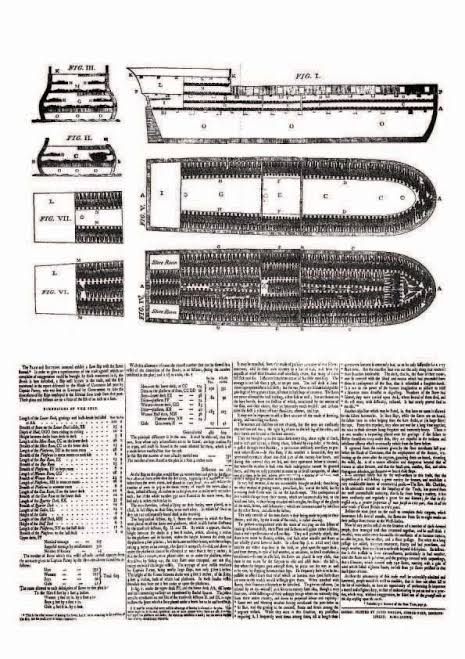
Blogger’s Note: Here’s the thing, I have read openly aggressive articles (online) attributed to academics associated with King’s College (London) eulogising Neo-Nazi Ukraine and Zionist Israel – using their statements to add a certain “moral weight” to these two genocidal regimes – simply because the bourgeois establishment chooses to a) create, and b) prop-up these entities as a means to pursue its broader “nefarious” objectives. When I was at school in the late 1970s, the class was entirely “White” (by that time I lived in the Devonshire countryside) and the geography teacher was incredibly frank about British imperialism – and the slavery aspect of it. Indeed, he was matter of fact. He told us that god had blessed us by being born “English” – and that we were lucky to be so born. We were members of a select “race” with a god-given duty to civilise the world. He then pulled-down a world map rolled-up on the wall – which showed three-quarters of the landmass painted “blue” I think – and then he would suddenly let the map roll-back up with a snap. He then asked “Any questions?” Of course, we did not know what he was talking about – as most of us were poor working-class 10-year olds – and did not feel particularly “empowered” by what he had said. The teacher then said that for four-hundred years the “Golden Triangle” existed which did much to build the wealth of the country (UK). He explained this not in human cost but rather as a purely mercantile affair involving the Sheffield Steel Industry. Slave-ships full of sugar would return from the Colonies (the Americas) with the Captains unloading and selling the sugar in the UK. Some of the resulting money was then used to purchase thousands upon thousands of steel chains and shackles (all of various sizes and shapes – specially designed and made to fit men, women, children, and pregnant women). Presumably the Mining Industry benefitted as miners had to mine the ore out of the ground for hundreds of years. Tens of thousands of British workers traversed through the factories of Sheffield and the surrounding areas. Experts knew how to size and shape the shackles for necks, wrists and feet – as well as shackles tying one-body to another. None of the “White” illiterate working-class seemed not to question the work – as they probably lacked the IQ to do so (the workers were ignorant and exploited by the bourgeoisie and could not see the bigger picture). The Slave-ships filled their now empty hauls full of chains and shackles and headed back to Africa. When the Slave-ships landed in Africa, the European (Arab and African “Slavers”) waited at the shores with thousands upon thousands of captured African people (human chattel) awaiting to shipped. They were shackled and placed in the ships – lying “flat” in layers for days on end – with the top rows having to defecate and urinate on those below. Every so many days they were permitted up top to get air whilst the piss and shit was swilled-out. A number of Africans would jump over the side (what Huey Newton termed “Revolutionary Suicide”) – preferring to drown rather than further face this treatment. When arriving in the Americas, the slaves were landed and sold like cattle at local slave-markets (historical records suggest that there was some Jewish business involvement). The Captains were paid for the slaves, purchased sugar with some of this money, and then set-sail for England. The slaves, of course, particularly in the West Indies, were forced to work on the sugar plantations, but were further exported into the American hinterland – where they would farm cotton. The Americas consisted of vast open spaces but there were not enough White workers to exploit this space. Slavery was the answer – with thousands of slaves controlled by a handful of Whites. Until 1648 – the slaves branded with a “Crown” meant that they were the personal property of the (absolute) British Monarchy. After the 1648-49 Execution of Charles I (and the overthrow of the aristocracy by the bourgeoisie) – the absolute monarchy was abolished and the “Crown” symbol was re-directed to refer to the bourgeoisie (which now controlled the means of production) and the elected government that was voted-in by the masses to represent its interests. Of course, the “Crown” simply designated those slaves acquired and sold by the British – as opposed to those slaves acquired by other European nations. It was a marker of dominance – rather than direct ownership – as each slave was owned by whoever had provided money to purchase the rights of ownership (like a car or a house). ACW (15.9.2026)
Malu Cursino – 15.9.2025
Enslaved African people were branded with an identifying mark that included an emblem of the British Crown, according to new research by a project documenting British involvement in the slave trade.
Prof William Pettigrew, who led the Register of British Slave Traders research, described the imprinting as a “dramatic and harrowing” symbol of the monarchy’s relationship to slavery.
The register lists 13,000 individuals and hundreds of institutions known to have invested in Britain’s role in slavery between 1563 and 1807, when the trade was abolished across the British Empire.
Researchers say it is the most comprehensive examination of a national community of slave traders ever undertaken.
Dr Nicholas Radburn, historian at Lancaster University and co-investigator in the project, told the BBC he first found the identifying mark – which is an image of the Crown, with the South Sea Company logo below it – while looking through the company’s archives at the British Library in 2022.
Founded in 1711, the South Sea Company was set up as a public and private British company and trafficked thousands of enslaved Africans.
Radburn said it was “remarkable” to find records of the branding – first reported by the Guardian – “buried in a very nondescript sounding volume: ‘The Register of Instruments'”.
In 2024, he found letters that helped piece the story together. They were from the company’s director to their “factors” (slave traders) in the Spanish Americas, Radburn explained.
“The letters were full of very detailed instructions on how to conduct the slave trade,” he recalled.
One letter from February 1714 was “exceptional because it laid bare so clearly the ways in which the London-based directors were personally involved in the violence that was committed against the enslaved in the Americas”.
The directors sent irons made in England for slave traders to use to mark enslaved African people on their left shoulder with the emblem.
The purpose, the letter outlined, was to distinguish the company’s slaves from others.
In an interview with BBC Radio 4’s Today programme, Pettigrew – from King’s College London – said there were all sorts of connections between the monarchy and slavery, not just this “brutal imprint”.
“If you think about the history of the monarchy when it was at its absolute lowest ebb, when King Charles I was executed, members of the royal family relaunched the monarchy, its finances and its reputation, by investing in the transatlantic slave trade,” he said.
He said it was important to draw a distinction between the monarchy as an institution, and the individuals who led it.
“The institution is the same as it was hundreds of years ago.
“So when we talk about the role of the slave trade in rehabilitating the monarchy or improving its position, we’re talking about an institution that is still very much a part of British life today.
“In a court of law, the monarchy is the same institution today as it was in the 17th Century.”
In a statement, Buckingham Palace said King Charles “has on many occasions expressed his personal and wholehearted commitment to promoting greater understanding around the issue of slavery and finding ways to address historic wrongs for the benefit of communities today”.
The King is “grateful to all those undertaking academic work in this area and thus contributing to the debate about how such issues might best be addressed”.
‘The gravest crime against humanity’: What does the UN vote on slavery mean?
The researchers say the register lays bare the breadth of which individuals contributed financially to the slave trade – from monarchs and politicians, to plumbers and clergymen.
“They financed wars, shaped modern industry, and built ports, canals and thriving cities, helping make Britain a global and imperial force,” Pettigrew said.
Anyone who contributed financially to the transatlantic slave trade, or to a company enabling the trade, is listed in the database.
The register is a culmination of five years of research by Pettigrew and his team. It aims to highlight how individuals “financed the English (then British) contribution to the transatlantic traffic in enslaved African people”.
The financing contributed to England’s role in enslaving around three million African men, women and children, of whom an estimated half a million died during forced transportation, King’s College London said.
African and Caribbean countries have called for a formal apology and reparations from countries that benefited from the transatlantic slave trade.
Earlier in September, Jamaica’s government said it would raise a petition on the subject of slavery reparations with to King Charles, the country’s head of state.
Olivia Grange, the country’s culture minister, said the petition would ask the King to refer three questions to the Judicial Committee of the Privy Council over the legality of the enslavement of Africans in Jamaica.
She said she hoped it would pave the way for a “long outstanding settlement for the hundreds of years of the most horrific abuse that our African ancestors endured”.
Last week, a Downing Street spokesperson said the transatlantic slave trade was “abhorrent” but the UK position was that it does not pay reparations.

