Blogger’s Note: The US, UK, and Nationalist China executed around 1000-Japanese men for various War Crimes and Crimes Against Humanity. The USSR did not executed any Japanese POWs – but did control Japanese islands north of Japan until 1991. Many of the hangings and shootings of the Japanese were filmed and shown as newsreels in cinemas prior to the main films. Indeed, there is a disturbing air of racist “entertainment” to much of this footage. The British filmed such an execution in Singapore. Much of this stemmed from the racist attitudes of the US before, during, and after the war. Many now discharged Japanese men, dressed in civilian suits, were sent from Japan to an open “killing field” in China (photographs still exist of the process) and whilst having trouble standing (out of fear) were shot in the back of the head to cheering crowds by Nationalist Chinese police (the CPC was not yet in-charge of China – and did not take-part in this further orgy of killing). The US policy toward Japan changed with the Korean War – when it became obvious that the armed forces of a Socialist China could not be so easily overcome. Much of fascist Japan was re-initiated and/or preserved by the Occcupying US as a bulwark against the spread of Socialism:
Around 920 to 984 Japanese military and government personnel were executed by Allied tribunals following World War II.
The breakdown includes:
- International Military Tribunal for the Far East (Tokyo Trials): 7 high-ranking leaders (including former Prime Minister Hideki Tojo) were sentenced to death by hanging and executed on December 23, 1948.
- Allied National/Regional Tribunals: Roughly 913 to 977 additional executions were carried out across approximately 50 locations in the Asia-Pacific region by countries such as Australia, the United Kingdom, China, the Netherlands, and the United States for Class B and Class C war crimes (conventional war crimes and crimes against humanity).
I am opposed to the Death Penalty
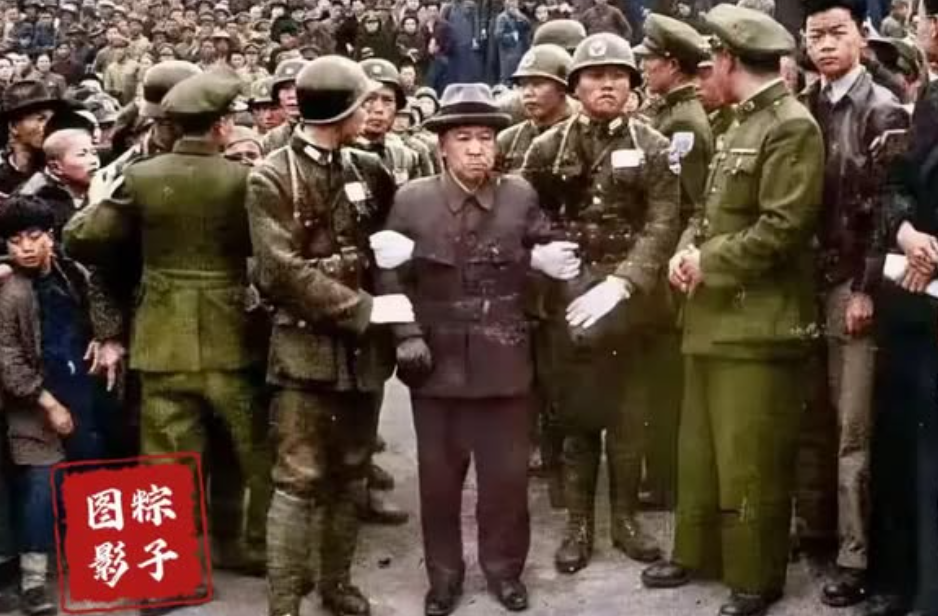
‘In 1947, at Yuhuatai in Nanjing, Japanese Lieutenant General Tani Hisao was brought to the site for his execution. The area was packed with citizens, whose cries of fury and intense hatred filled the air. Faced with the enraged crowd, Tani Hisao’s legs went weak and his face turned ashen; he had to be supported by two military police officers, who held him by the arms as he walked. – Ten years earlier, in 1937, Tani Hisao had led the Japanese 6th Division in breaching the Zhonghua Gate of Nanjing. Once inside the city, he permitted his soldiers to engage in an orgy of arson, murder, looting, and every other conceivable atrocity—crimes too numerous to fully recount. A decade later, he finally faced the judgment of justice. An executioner from the military police fired a shot into the back of his head; the bullet exited through the front, knocking out two of his front teeth. Thus, this notorious criminal, once infamous for his heinous acts, met his end.’
(1947年,南京雨花臺,日軍中將谷壽夫被押解至此,即將處決時的老照片,現場已經擠滿了市民,現場怒斥聲此起彼伏,對其痛恨之極,面對激憤的民眾,谷壽夫嚇得雙腿發軟,面色鐵青,由兩名憲兵架著胳膊行走。
十年前的1937年,谷壽夫率日軍第六師團攻破南京中華門,進入城內之后,他縱容日軍士兵燒殺搶掠,無惡不作,罪行罄竹難書,而十年后他終于受到了正義的審判,行刑憲兵從其后腦開槍,子彈從前面穿出,打飛他兩顆門牙,這個曾經惡行昭著的罪犯,就此授首。#老照片[話題]#) ACW (15.11.2026)
Source: Xinhua Editor: huaxia – 2026-11-15
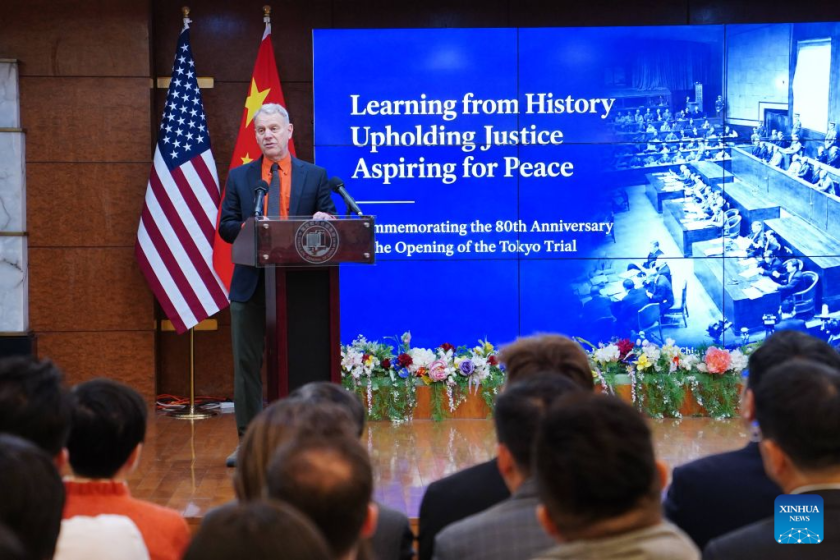
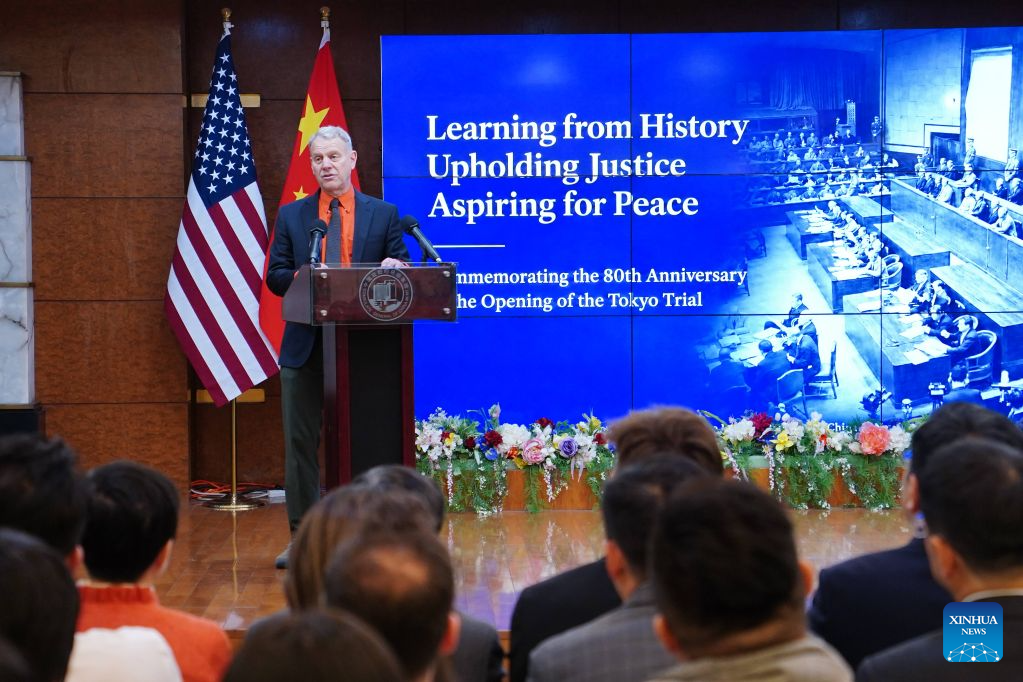
NEW YORK, Nov. 15 (Xinhua) — An event commemorating the 80th anniversary of the opening of the Tokyo Trial was held Friday at the Chinese Consulate General in New York.
The event, themed “Learning from History and Upholding Justice, Aspiring for Peace,” was attended by over 100 guests from various sectors.
Doug Fitch, grandson of George Fitch, an American missionary who served as director of the International Committee for the Nanjing Safety Zone, spoke at the event, recalling how his grandfather helped shelter Chinese civilians from Japanese invaders during the Nanjing Massacre in 1937 and secretly carried film footage documenting Japanese atrocities out of Nanjing and made it public.
“Our job now is to tell those stories so beautifully that people will want to hear them. That’s how memory becomes justice and how friendship between the American and Chinese people is kept alive,” Doug Fitch said.
Franziska Seraphim, a historian at Boston College, said in a video address that the Tokyo Trial remains relatively little known compared with the Nuremberg trials, noting that the history of the war in Asia is poorly understood in the West.
“We must firmly resist any resurgence of militarism in new forms,” Ma Xiaoxiao, acting Chinese consul general in New York, said during the event, adding that truth must never be distorted, aggression glorified or peace undermined.
The event also included a screening of the Chinese historical film Dead to Rights and a photo exhibition featuring historical photographs and archival materials of the Tokyo Trial.
After watching the film, many guests said that they had a deeper understanding of the profound and lasting significance of the Tokyo Trial, and that peace should never be taken for granted and the lessons of history must always be remembered.

