

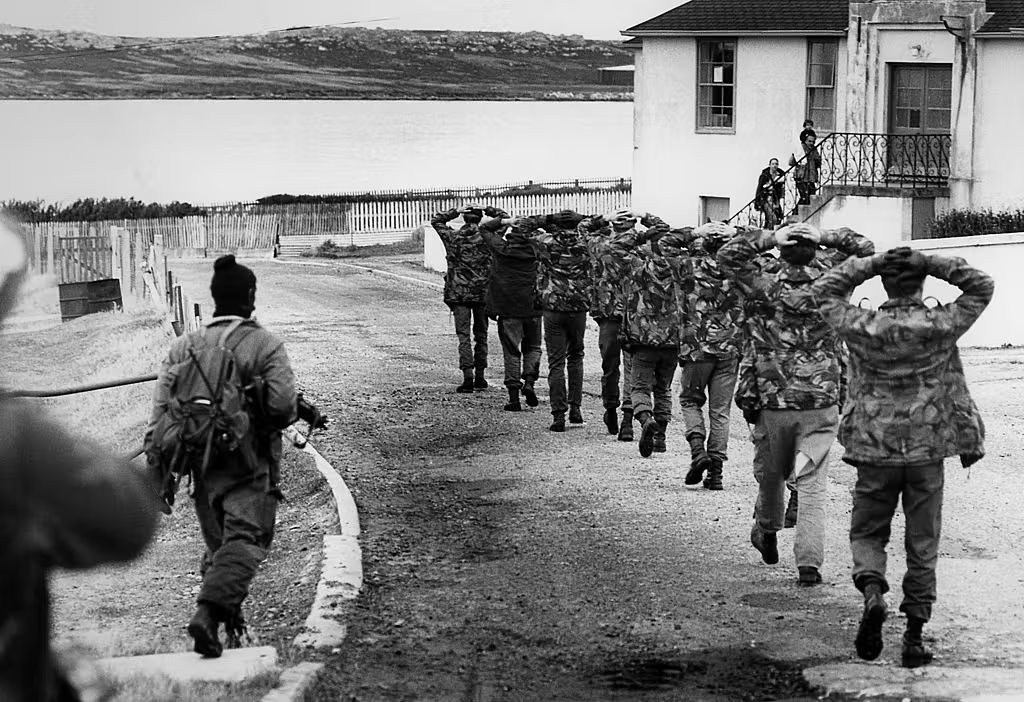
Blogger’s Note: England is heart-broken. We invented football – football is our game and is in our blood. Beating Mexico felt different – and I have witnessed hundreds of games in my life. Partly because I know of the left-wingism of the Mexican people. I felt no malice for them whatsoever – even though they gave Trotsky asylum (his grave and former house are tourist attractions in Mexico). Between 1936-1939, the USSR and International Working Class came to the direct aid of the democratically elected “Socialist” government of the “Republic” of Spain. When the International Brigades were defeated by the Catholic Franco (who was supported by Hitler) – Mexico gave the ousted Socialist government of Spain political asylum. Indeed, I visited Spain in 2008 and stayed in a country house situated in a valley within which the British contingent of the International Brigades fought and died. This was not planned and was a complete accident. The traitor George Orwell went to Spain and joined an Anarchist-Trotskyite Militia opposing the Socialist. What an evil prick this man was. Anyway, the dialectical situation of reality is multi-layered, complex, and often shifting in its definition. In England, REAL football is amateur and non-league. People play for honour and there is no money involved. People play football up and down the country on Saturday and Sunday mornings. Those eleven who manage to turn-up first at the local park – get to play the game. I have sat there and watched the cars screetch to a halt as individuals scramble-out trying to get their shirts and shorts on properly. Those a little late get to be Substitutes – and might get a game. After I used to teach martial arts for two-hours on a Sunday morning – after training we would kick the ball around whilst we all sipped cups of tea. Football was the reward for hard training in martial arts. In the people’s movement described below – I see a Mexican version of what we call REAL football in the UK. It is the love of the game. Sunday’s FIFA Final involves two Hispanic countries (Spain vs Argentina) – whereas Saturday’s game for third and fourth place involves the last remaining Western European sides (England vs France). Argentina, of course, gave political asylum to hundreds of Nazi War Criminals after WWII – in the name of the Vatican. It is even rumoured that a surviving Hitler fled to this country. In 1982, Argentina invaded the Falkland Islands (a British colony situated of the coast of Argentina) – and initially inflicted a defeat on the handful of British soldiers posted there. A few months later – the Argentinians unconditionally surrendered to a new British Force sent to adjust a few attitudes. I oppose imperialism – but remember the Spanish invaded the Americas and created “Argentina” in the first place. We all have blood on our hands. Finally, British soldiers should NEVER surrender! ACW (16.7.2026)


July 11, 2026
Warm Up: The World Cup Amid Cramps
The 2026 FIFA World Cup kicked off on June 11, but the impacts of this event go back much further. It was 8 years ago that Mexico was announced as one of the three host countries for the World Cup. Since then, the processes of dispossession and gentrification that had already been battering different cities for years expanded even further.
The World Cup came to intensify dispossession processes already underway, like those driven by so-called “digital nomads.” In 2022, then–Mexico City head of government Claudia Sheinbaum Pardo signed an agreement with UNESCO and Airbnb naming Mexico City the “Capital of Creative Tourism.” That agreement fueled the expansion of a consortium that today concentrates as many as 14,900 short-term rentals in a single borough alone, more than half of them managed by companies engaged in real estate speculation, according to an extensive investigation by Quinto Elemento Lab.
Beyond driving up housing costs, this real estate development has fueled runaway rent increases, pushing native families out to the city’s periphery. These processes have come hand in hand with more violent tactics, like illegal evictions — on top of the more than 15,000 eviction orders already on the books as of early 2025. Private actors have deployed a range of harassment and intimidation strategies that have led to thousands of illegal evictions, many carried out by armed groups.
As the opening of the event in Mexico City drew near, other social-cleansing strategies were rolled out, disguised as infrastructure repairs and improvements.
Those of us who get around on foot suffer from not being able to get home or to work on time. They strip away the livelihood of sex workers — and yes, sex work is work — or of those who made their income outside Estadio Azteca. A social cleansing is underway.
Text from the statement of the Assembly for the Common and Against War
There have been numerous projects that, far from improving accessibility, have harmed the people living near them. That was the case with the metro’s rehabilitation, which — for those of us who use it daily — amounted to little more than a chaotic, superficial remodel aimed at aesthetics and surveillance: the installation of more than 23,000 cameras, or the decorative vinyl wraps applied to train cars, are just two examples.
Vertical gardens were installed that, just weeks after their unveiling, are already drying out; chandeliers were hung in stations that stand in stark contrast to the flooding, leaks, and system-wide failures those same stations suffer. Meanwhile, the structural overhaul that public transit urgently needs for the millions who depend on it daily was left by the wayside.
For those of us living along Calzada de Tlalpan — the avenue that runs from Mexico City’s historic center to Estadio Azteca, and one of the busiest in the city — quality of life has suffered for months because of these “strategic works to improve accessibility.” We’ve had to spend hours stuck in public transit and traffic because of the closures these works caused, and there have been accidents and health impacts as well. On top of that, stress levels among residents have risen considerably.
None of this has stopped the president from framing these interventions as part of a strategy to “build a more sustainable, equitable, and modern city,” as stated in this April 28 briefing: “We will arrive at the World Cup with a transformed city, with works that don’t just address the event but become permanent benefits for the public.”
The reality on the streets tells a very different story.
Despite assurances that transportation projects would be finished by May, several of them were unveiled — still unfinished — only days before the World Cup’s opening. One example is the Calzada de Tlalpan bike lane, which cyclists have called unsafe and poorly planned; the projects behind it displaced street vendors and sex workers, who staged numerous mobilizations and protests demanding their right to work along the avenue and reparations for the harm done.
The Calzada de Tlalpan “Floating Garden” has caused some of the greatest harm to residents — not only because its construction blocked sex workers from earning a living for months, but also because of the street closures and the shutdown of at least four metro stations, two of them among the busiest for their connections to other lines.
That project was inaugurated on June 7 while still unfinished. This nearly two-kilometer walkway, built over the tracks of three metro stations, cost residents of this city close to 2 billion pesos, and the administration of Clara Brugada has offered little transparency about it.
These are just a few examples of how the federal and local governments have acted like advertising agencies, spending public money on “beautification” campaigns meant to project a “good image” of the country abroad — attempting to cover up social demands and problems with purple paint and chain-link fencing.
So, in the weeks leading up to June 11, while the World Cup’s opening seemed to be the government’s number-one priority, the country’s housing crisis carried on, along with the refusal to improve working and retirement conditions. Organized crime’s attacks on native communities escalated — as in the cases of the Montaña Baja region of Guerrero and the Sierra-Costa of Michoacán — enabled by government inaction, and the forced-disappearance crisis continued unabated.
Amid mobilizations, encampments, blockades, and symbolic shutdowns of construction sites, movements defending workers, opposing gentrification, defending native peoples, search collectives, sex workers, dissidents, movements in solidarity with Palestine, and feminist groups all managed to link arms. Among them: the Front for the 40-Hour Week, the Front for Youth Housing, the Samir Flores Soberanes House of Peoples and Indigenous Communities, the Roundabout of the Disappeared, Trasuix, BDS Mexico, the Roundabout of Women Who Fight, and Morras Futboleras.
The city’s streets and the spaces under its bridges became the playing fields for these matches; cars were displaced by street pick-up games where all it took was a piece of chalk to mark out the goals and the field. The enemy was never soccer — taking the streets to protest was also taking them in order to celebrate. The ball became central to building these community bonds, weaving together struggles that, at first glance, might not seem connected at all.
Opening Whistle: “Mexico, Champion of Disappearance”
Days before the opening, there were more calls to demonstrate than there were matches — 13 — scheduled to be played in the country. Amid this diversity of demands, on the night of Wednesday, June 10, the cry of searching families lit up Calzada de Tlalpan. Using their own resources to carry out all of their work — work that is, in truth, the State’s responsibility — dozens of collectives from across the country traveled to the capital.
As the count of disappeared already surpasses 133,000, in a show of the Mexican state’s indifference, current President Claudia Sheinbaum Pardo mocked, questioned, and criminalized these families’ struggle, at press conferences accusing some of these collectives of receiving funding and answering to the interests of opposition political parties.
While there is no exact figure, organizations like Amnesty International cite more than 200 collectives across the country. In this context, alleging that the movement has been co-opted functions less as fact and more as a vile tactic of delegitimization. President Sheinbaum Pardo seeks to mask a painful reality with the supposed joy that comes from soccer as a capitalist spectacle.
The sheer scope of the violence behind the disappearance crisis can be seen in the range of its victims — among them civilians disappeared by the military alongside members of the armed forces themselves; people presumably linked to the criminal economy, and many more who simply refused to pay extortion fees. “Collateral damage,” a former president once called it. All are searched for equally; no disappearance is justified, and no one deserves to disappear.
Out of this diversity of collectives and individuals is born the strength of a movement organized around grief — one that, far from setting its members against each other, finds unity across its differences in the shared goal of finding those who are missing.
The wound is bigger than the difference. And so, some keep searching even after they already know where their family member’s remains lie. In the mother of a suspected hitman sharing search techniques with the mother of a soldier, in their shared demand, the search collectives remind us that the disappeared are missing from all of us, and that we all have the right to an identity, to be searched for, and to come home.
The disappearance crisis is not a problem exclusive to searching families. It is a national crisis, an open wound in Mexican democracy.
text from the statement of Lirios Buscadores Izcalli, June 11, 2026
The difficulty of grasping the scale of this problem isn’t just how hard it is to search beneath a number — a number that has increasingly erased names and faces, a figure that has become a normalizing force for the widespread violence of a country grown used to being surrounded by clandestine graves. The obstacle to understanding the magnitude of disappearance in Mexico also lies in the difficulty of looking at those who are no longer here.
To imagine that absence is to picture the chilling image of the Zócalo’s central plaza standing completely empty: 130,000 is the number of members in the National Guard; it is more than half the total signatures needed to register a political party, and more than the votes that carried several senators into their seats. 133,000 is far, far too many.
Help us not become the ghosts of our own homes, with our loved ones still there, with our grandchildren, with our children. Understand this word — absence is the most destructive thing a human being can experience.
Gustavo Hernández, during the June 10 demonstration in Tlalpan
Text and photos by Regina López and Adan Luna published by Avispa Midia on July 10th, 2026.
Translated by Schools for Chiapas in Collaboration with Avispa Midia.
1173 Grove Ave. Imperial Beach, CA 91932 USA
+1-406-219-1294 | info@schoolsforchiapas.org
Copyright © 2026 | Schools for Chiapas

