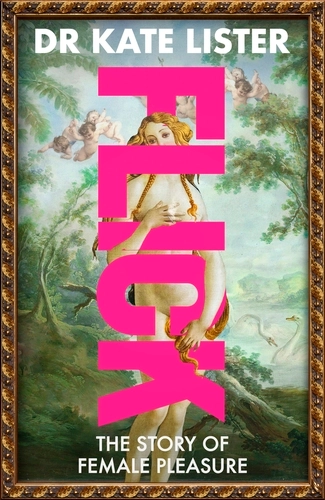
The author is working class who has penetrated the middle class – this is a significant observation which the author cannot hide. I am going to focus on three distinct points where the “Professor” is incorrect in her analysis.
1) The author is wrong to define the Sanskrit term “Siddhi” as “magic”. A Siddhi is a spiritual-physical ability-power acquired through years of mind-body discipline. Such an ability cannot be associated with the trickery or deception involved in the performance of magic. This confusion highlights a fundamental (perhaps “racist”) misconception of non-White cultures. Modern followers of Brahmanism (Hinduism) view the Western (Scientific) intellect as being a very powerful “Siddhi” – as it has materially changed the world. The average Westerner would not consider their intellect to be the result of “magical trickery”.
2) Another error involves the author referring to the Classical Greek concept of “psyche” (Ψυχή – Psychi) (“breath of life”) as (the Christian) “soul”. Again, another misunderstanding. The Christians, in a bid to distinguish themselves from Judaism, stole and misused Greek philosophical terms – “psyche” being one of them. It is thought that “soul” is of a Germanic (Pagan) origin of uncertain meaning. Western secular narratives tend to incorrectly use “soul” when referring to “psyche”. The Greeks would not have known this term and did not agree with the notion of a spirit existing in opposition to the body. This is a purely Christian corruption of this Greek term. It is a habit of laziness that even academics who should know better at Oxford and Cambridge – still confuse “psyche” for “soul”. These two terms are not the same and should not be conflated. An argument can be made that “psyche” could be construed as the “moment of conception” in the womb (rather than a “soul” which is separate from the body, and which has nothing to do with sexuality). Psyche is the “essence” of psychological and physical existence.
3) Finally, the author is labouring under the misapprehension that Charles II was an absolute monarch – he was not. His father, Charles I was the last absolute monarch. Charles II was a “constitutional monarch” with no real political power. It was a right-leaning Bourgeois government that had betrayed Cromwell that had passed all the anti-Puritan laws the author discusses. Cromwell gifted Soho Gardens in West London to the people (forever). This park still belongs to the people. However, Charles I used this place as a personal pleasure garden before his overthrow. He used to have peasant women (and girls) brought there – where he would rape them. The author, although discussing the history of sexuality, omits this point, as she omits the sexual degeneracy associated with his son – Charles II. Indeed, in the latter case the author revels in the bizarre idea that Charles II’s decadency was a “breath of fresh air” for women who were rescued from prison of Puritan safety. She then goes on to suggest that Cromwell was a nasty individual because he had an affair with a “consenting adult woman”. Compared to the debauchery of British royal family – Cromwell appears to be a celibate monk!
If this author has made these three glaring errors – can her general narrative be trusted? Her delivery is fast and over-bearing – as if she is attempting to establish a bridge-head on a beach before the enemy can muster the forces to push her back into the sea. Remember, these so-called “academics” are making money, and they tend to prevent, downplay, or avoid any form of criticism – as it is bad for business. Modern academia is not the pure or hallowed halls of learning that many think it is. There are many of well-paid charlatans – Black and White – male and female. It is the “paying” for “poor academia” that I oppose – as we are fighting the “urge to profit”. Learning should be free and of a good quality.

