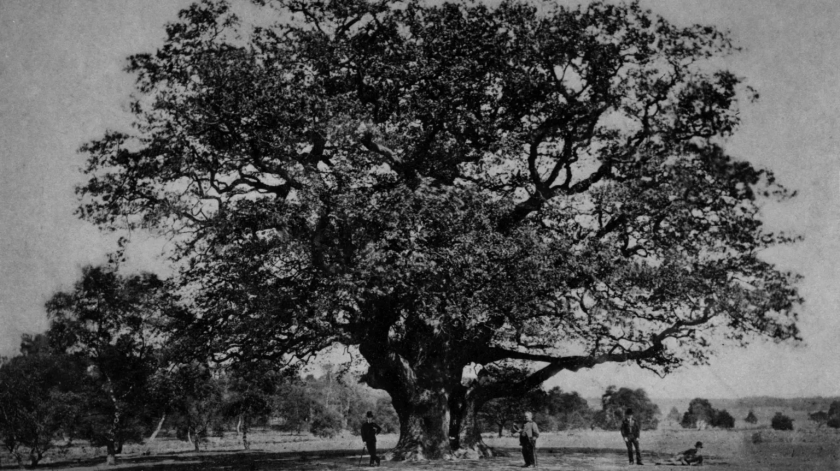
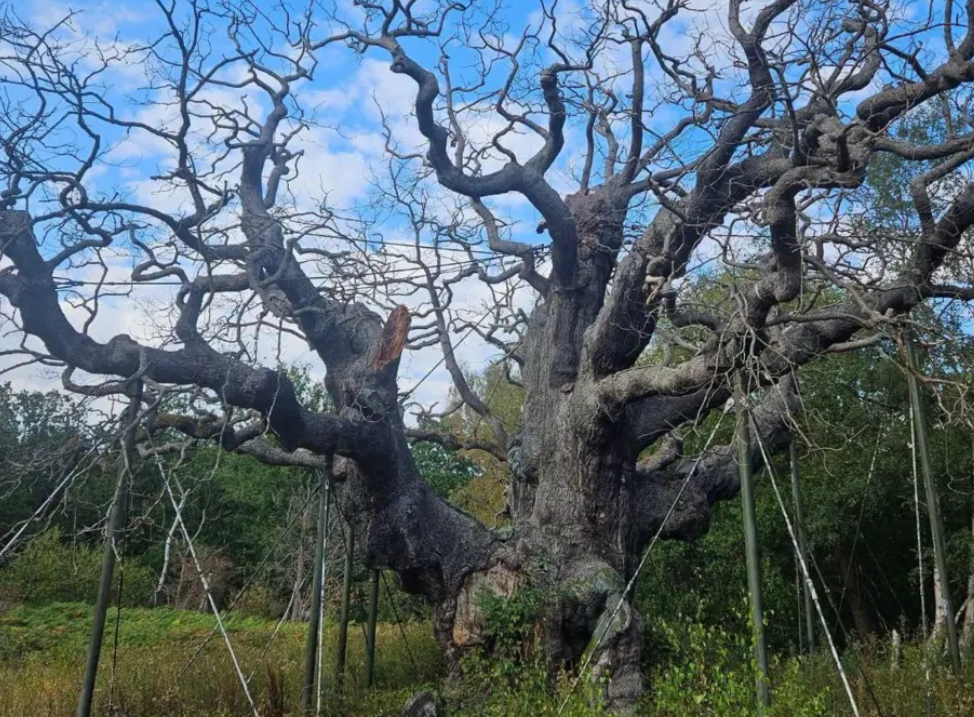
Blogger’s Note: Living in Sutton – as I do – there is a street named “Robin Hood Lane” and a nearby Public House named “The Robin Hood” (positioned on the corner of West Street and Robin Hood Street). There is also the “Robin Hood Infants’ School” as well as the “NHS Robin Hood Clinic” (both situated in Robin Hood Lane). Robin Hood Lane in Sutton is at least 160 years old, appearing on Ordnance Survey maps surveyed in 1866–1867. The Pub opened in 1867 (from “Michaelmas”) and was originally named the “Robin Hood Tavern”. There was also a building named “Robin Hood Lodge” shown as existing on the corner of Robin Hood Lane and (the road that would later be named) Collingwood Road on a 6″ Ordnance Survey map of the area published 1871 – based on a surveying carried out in 1866-67. The Lodge is not included on later 6″ or 25″ maps of the area.

It would seem that the “Robin Hood Lodge” was the earliest building which may well had been used to give the road developed there – its name. If this is the case, then ironically the building was soon “removed” for some reason or other (to be fair, according the maps, there were many places termed “lodges” and they seem common). In recent years, this area was a multi-storey car-park (not far from a cinema and the town centre) but has just been developed into expensive flats. The “Rectory” used to located nearby – but that disappeared decades ago (and was flats for disabled and vulnerable people for awhile). I have spoken to numerous local historians who have no idea as to “why” Sutton is associated with Robin Hood. I came to live here in the early 1990s – and the idea serves as a flowing undercurrent of identity in the area that is never questioned. I have no knowledge as to why this is. Obviously, there may well be a historical connection that nobody remembers today. Be that as it may, surely the English notion of “Socialism” (the redistribution of wealth) has its bases not in (the far later) Marx (who was exiled to 19th century England) – but in Robin Hood’s idea of “robbing from the rich to give to the poor”. Whatever the case, an old tree in Sherwood Forest has finally died after 1200-years of life. Robin Hood and his men are supposed to have met and/or hidden under its branches. ACW (26.8.2026)
Dan Hunt – East Midlands – 24.8.2026
A limb has fallen off one of the UK’s most iconic oak trees two months after experts said it had died.
The Major Oak is estimated to have lived in Sherwood Forest in Nottinghamshire for up to 1,200 years, and has links to the legend of Robin Hood.
The Royal Society for the Protection of Birds (RSPB) – the conservation charity which manages the forest – said in June, after the tree’s first spring with no leaves, the Major Oak had died.
The charity said limb failures often occurred without warning especially in “extreme weather conditions”.
According to the RSPB, changes to the structure of the tree had been expected as part of the natural process of decay – but added experienced arborists could not always predict how natural processes would unfold.
A spokesperson for the charity said: “While this can be difficult to witness, it is a normal stage in the life of an ancient oak.
“Even in death, the Major Oak remains one of Britain’s most important trees, continuing to provide a home for countless species and remaining an enduring symbol of Sherwood Forest.”
When the oak tree was confirmed dead, the RSPB said a combination of issues – including years of “well-intentioned structural intervention and huge amounts of human activity” around the tree – were thought to be “major contributors” to its demise.
The charity said the effects of climate change – including recent heatwaves and droughts – had compounded challenges it would naturally be facing at its age.
It warned visitors to not remove wood or any other natural materials from the forest, and that removing material from the site was illegal.
The charity added infrastructure supporting the Major Oak continued to play an “important role” and should not be interfered with.
A spokesperson for the charity added: “The Major Oak has stood at the heart of Sherwood Forest for hundreds of years and continues to be part of its story.
“We know how much this remarkable tree means to people across Nottinghamshire, the UK and beyond, and we thank everyone for helping us care for its legacy with respect and understanding.”

