Source: Xinhua Editor: huaxia 2026-08-14
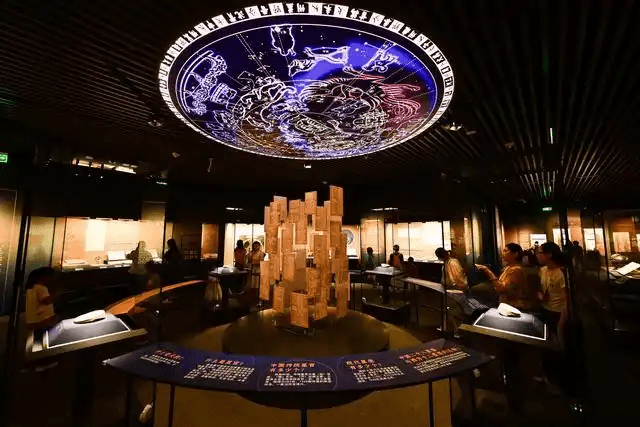
HEFEI, Aug. 14 (Xinhua) — China’s museums are often defined by their porcelain, calligraphy and ritual vessels. But a new exhibition in east China’s Anhui Province is turning the spotlight away from traditional treasures and toward scientific endeavours of the past, showcasing jade cosmograms, celestial star charts and bronze globes crafted by astronomers centuries ago.
Titled “Divine-Sky Exploration: The Cosmological Vision of Chinese Civilization,” the exhibition at the Anhui Museum brings together nearly 300 artifacts from 48 institutions nationwide. It is a rare exhibition in China focused specifically on presenting the country’s “understanding of the universe” through cultural relics.
Since its launch in July, the show has drawn some 350,000 visitors, fascinated by the instruments ancient Chinese used to observe, measure and pay homage to the universe.
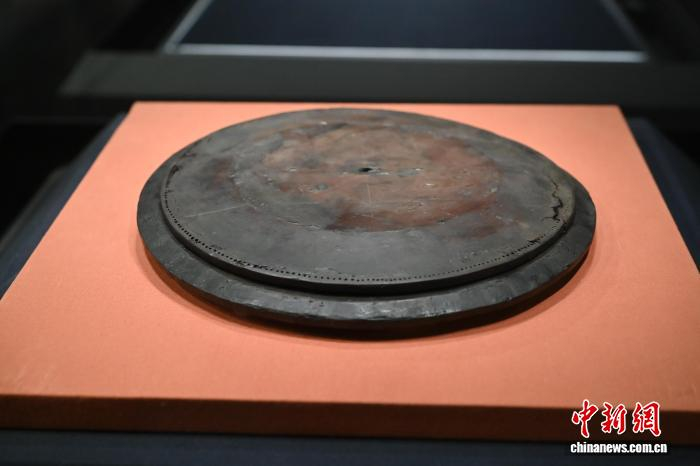
One of the star attractions is a jade slab, roughly the size of a smartphone, dating back 5,800 to 5,300 years. The eight arrows at the centre of the slab map out the eight directions of space, and the arrows at the four corners appear to align with the positions of sunrise and sunset on the winter and summer solstices. The Chinese cosmological diagram is possibly older than Stonehenge in Britain.
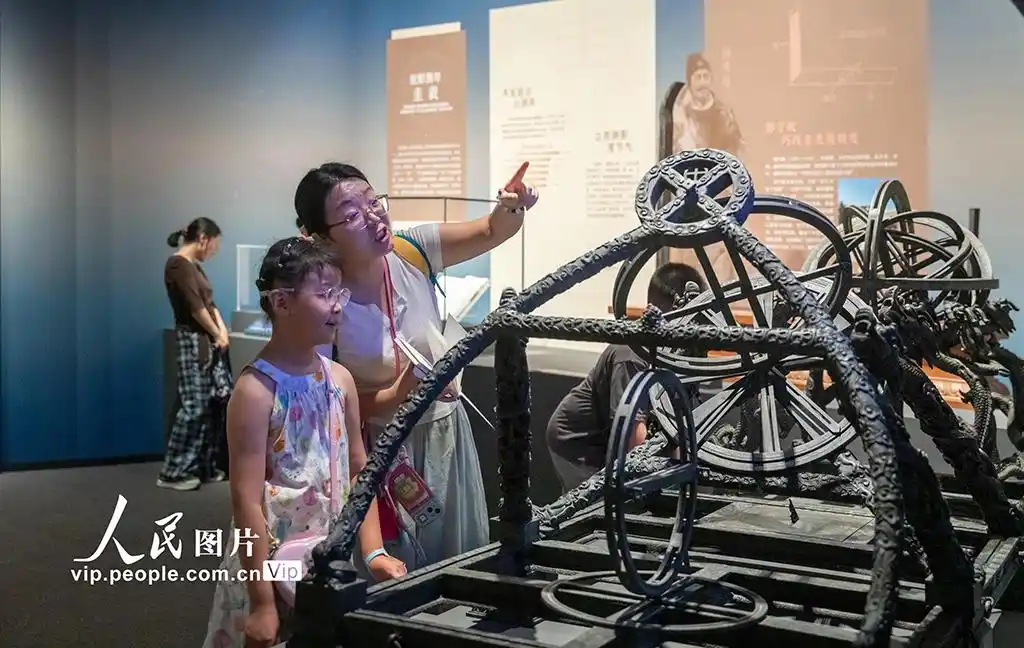
Other highlights include the China’s oldest equatorial instrument, a disk with 28-star mansions from a 165 BC marquis’ tomb, a bronze water clock of the Western Han Dynasty (202 BC-25 AD), which is the earliest-dated water clock ever found, and a rubbing of a stone-carved astronomical chart in the Southern Song Dynasty (1127-1279) engraved with over 1,400 stars, which remains the oldest all-sky map based on actual observation.
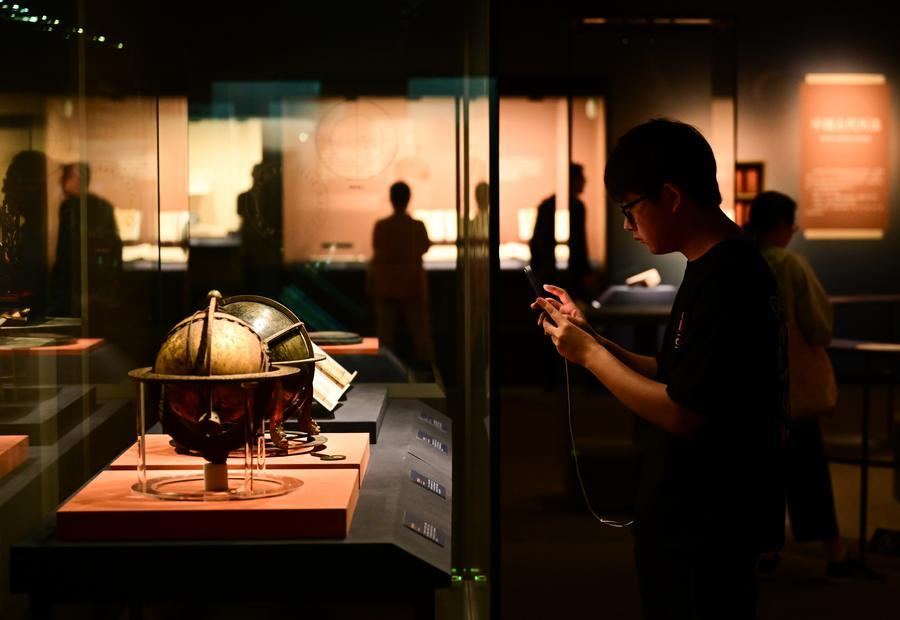
“These ‘hardcore creations’ in ancient astronomy laid the technological foundation for studying the laws of celestial motion,” said Meng Qian, director of the museum’s research department.
The exhibition saves its best for last. In the final section, ancient instruments like globes and gnomons sit face-to-face with models of modern Chinese spacecraft, such as the lunar rover Yutu, and lunar soil sample collected by Chang’e-6 mission in 2024.
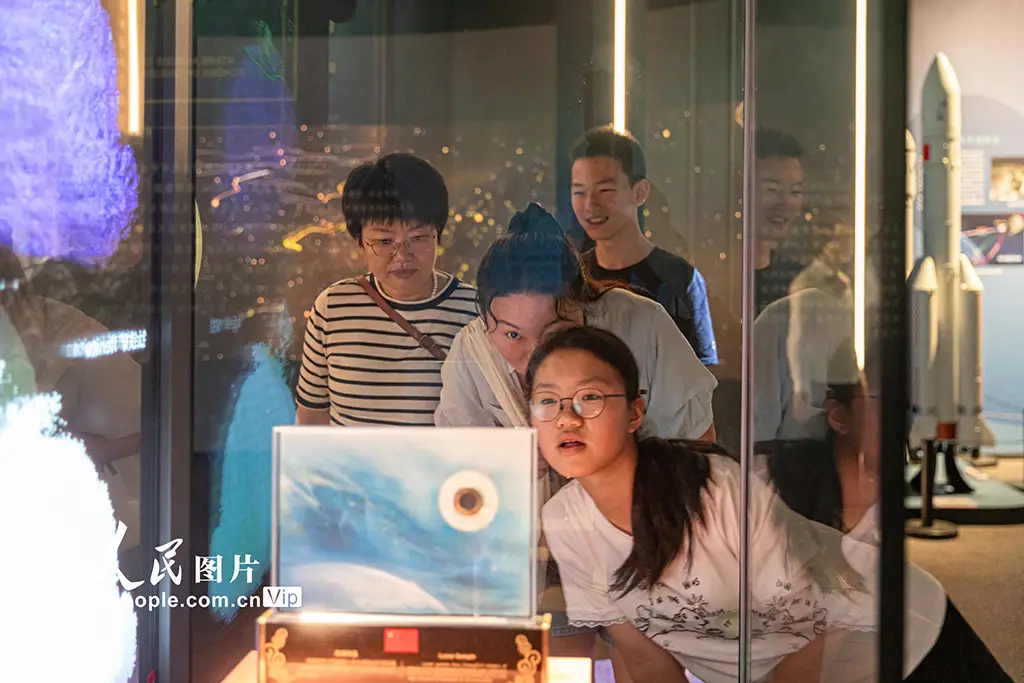
Interestingly, many of China’s major space missions draw their names from ancient myths. Its moon mission is called “Chang’e,” the goddess who lives there, while the Mars rover “Zhurong” is named after a fire god, and the sky-surveying telescope “Mozi” is the name of a philosopher, who was credited with conducting the earliest optical experiments.
The exhibition itself takes its title from patriotic poet Qu Yuan’s epic poem “Tianwen,” or Heavenly Questions, written more than 2,000 years ago. China’s Mars exploration mission also shares the same name.
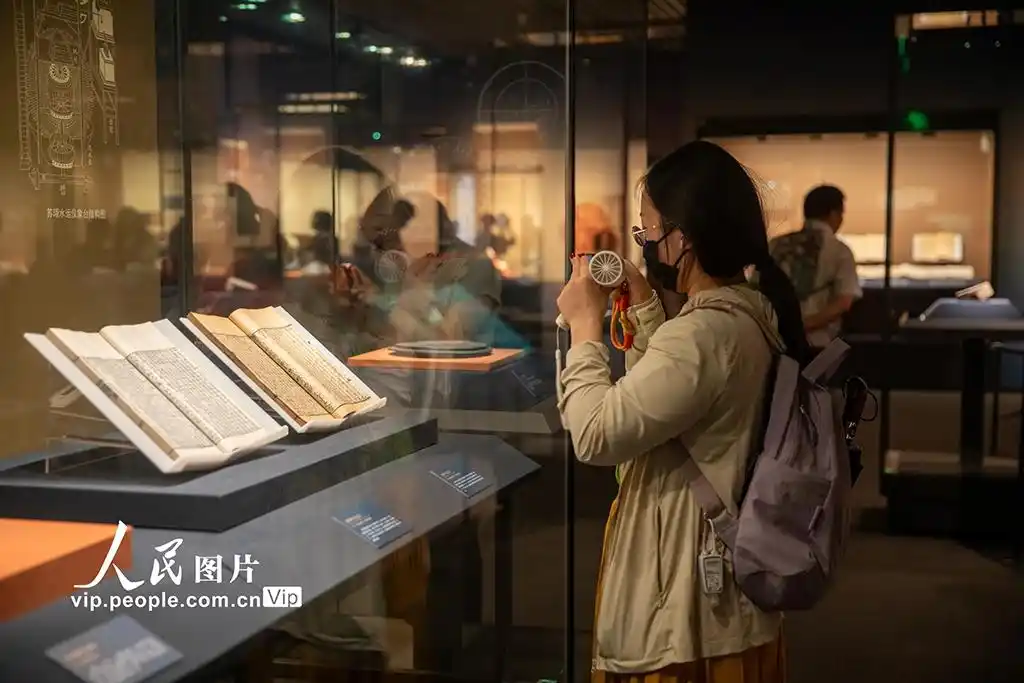
“This exhibition lets ancient astronomy and modern space exploration illuminate and interpret each other,” said Shi Yunli, a professor at University of Science and Technology of China and advisor to the show.
“When visitors stand between the folded bronze gnomon and the Yutu rover, they see not just two objects on display, but they see a 5,000-year chain of quest,” Shi added.
The exhibition runs through mid-October. And China’s space explorations are expected to reach new heights.
“We hope this exhibition will let visitors look back at the early lights of our culture, and also see the way forward,” Meng said.


