Blogger’s Note: The US academic community is shot-through with a Eurocentric bias which I have seen arise, pollute, and finally be dismissed over the years. There is an obsession with “Whiteness” and a racist disdain toward other races (all part of a guilt-complex, no doubt). As you can see below, the North Americans differ ever so slightly with the Mexican research. I would prefer Oxford or Cambridge to carry-out a dating – and if different – a cross-section of the three-dates could be used as a consensus. Of course, the fear for the North Americans is that Oxford might confirm the earlier Mexican date – or suggest an even earlier time-span. I believe the North Americans, applying their famous anti-intellectualism, are set on demeaning and besmirching any research which confirms a non-White origin to the original population of the Americas. Well, despite this interfering mentality, it is now obvious that “Asians” (as in early “Chinese” people of various sorts) – quite literally “walked” (migrated) north out of Asia, across Northern Europe, and down into the Americas (from the north) using a land-bridge, etc (these are the Native American Tribes today – as well as those people who in the past built civilisations in the North, Central, and South America). After that, it is clear that the later Dynastic Chinese – along with the Vikings – visited the Americas hundreds of years prior to Columbus (1492). There are also rumours of Greeks, Romans, and even the Welsh landing on the coast of the Americans! ACW (22.11.2026)
by Guillermo Carvajal November 21, 2026
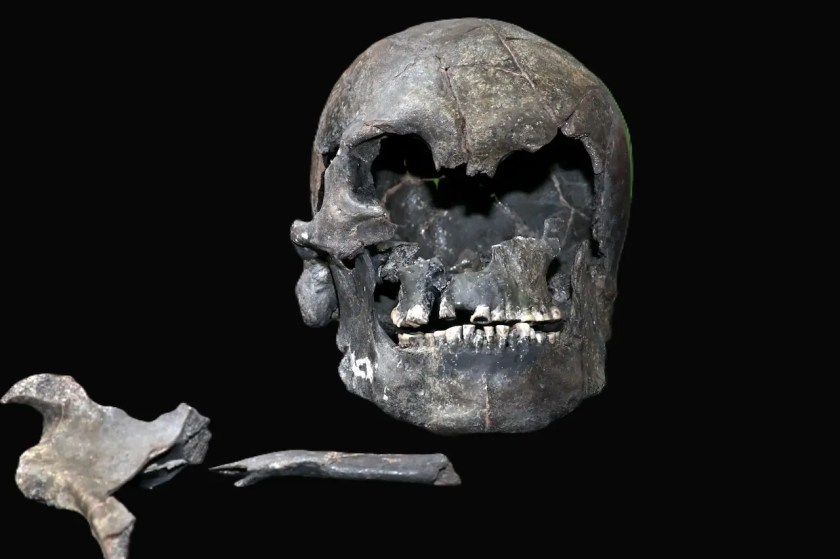
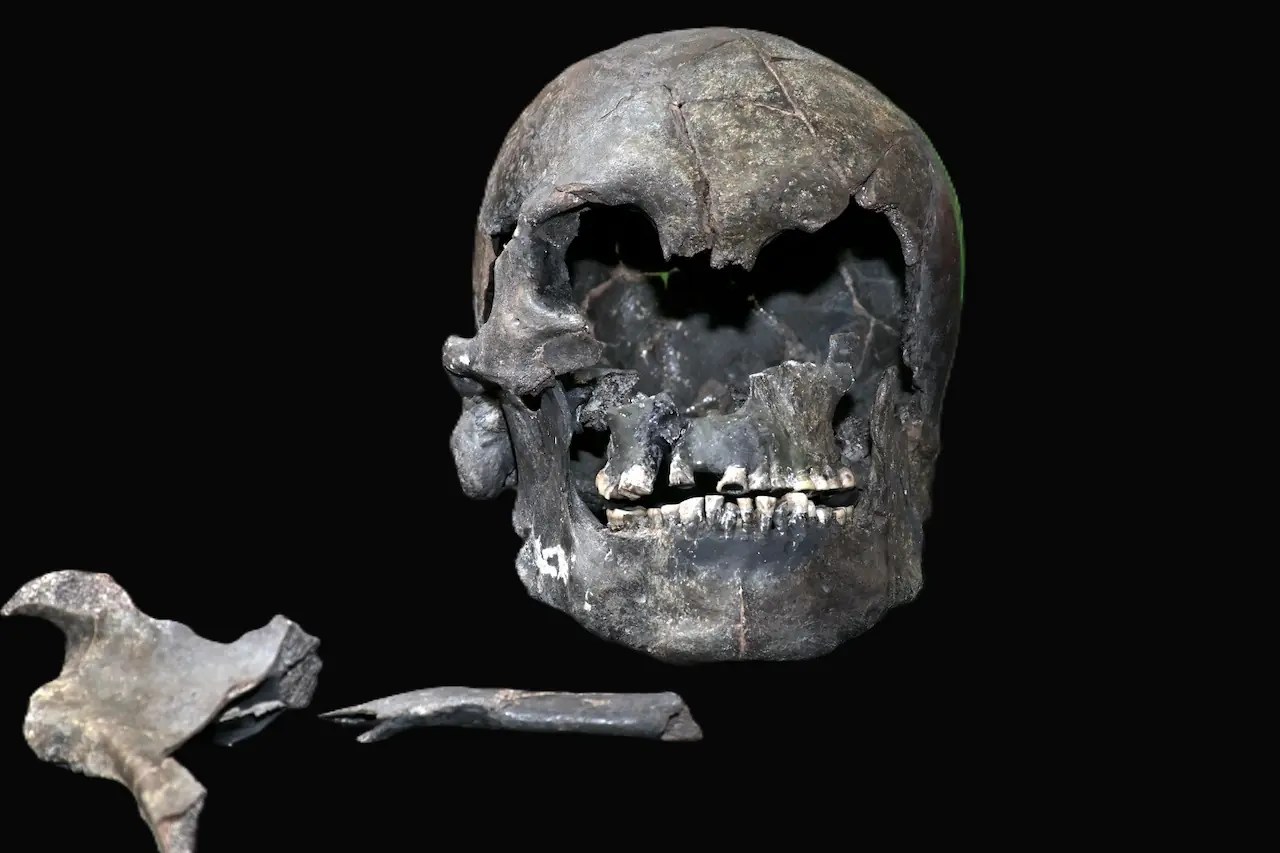
The INAH confirms that Yotzin, a skeleton found in 2021 during construction of the Felipe Ángeles airport, is between 13,087 and 11,700 years old and is one of the oldest human remains in the Valley of Mexico. A genetic study in Spain could clarify where he came from.
When the dark, robust bones of a skeleton arrived at the INAH’s Bioarchaeology Section in Mexico City, physical anthropologist Arturo Talavera González got goose bumps. He had spent 47 years studying skeletal remains. One glance—teeth heavily worn and without a single cavity—was enough for him to venture a diagnosis: “This is preceramic.”
Preceramic means before pottery—that is, belonging to people who did not yet make vessels and lived by hunting and gathering. Five years after the discovery, Talavera’s hunch has an official date. The skeleton, named Yotzin (Nahuatl for “unique”), dates to between 13,087 and 11,700 years before present, according to analyses announced by Mexico’s National Institute of Anthropology and History (INAH).
The sample came from a third molar, a wisdom tooth. It reached the laboratories through Jean-Philippe Vielle Calzada, a researcher at Cinvestav’s Advanced Genomics Unit (Langebio) in Irapuato. In Belgium, the company ISOTOPIQ AGING INC analyzed collagen, the protein in the tooth, and obtained an age of between 13,087 and 12,987 years “before present”—a laboratory convention that counts from 1950.
In the United States, the Centre for Applied Isotope Studies at the University of Georgia studied bioapatite, the mineral part of the tooth, and produced a more recent range: 12,050 to 11,700 years.
The two ranges do not overlap; nearly 1,000 years separate them. The INAH statement merges them into a single interval and does not explain the discrepancy. Collagen is generally considered more reliable, because the mineral in bone or teeth can exchange carbon with surrounding soil over millennia and that shifts the date. The INAH does not say which value it prefers. Whichever is correct, Yotzin lived during the transition between the Pleistocene (the last Ice Age) and the Holocene, the temperate period in which we still live.

