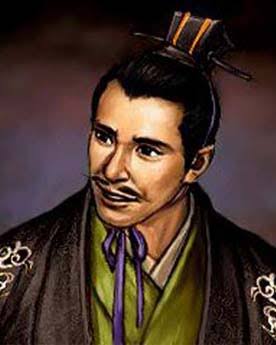
Blogger’s Note: The original Qin [秦] State was a fiefdom of the Zhou Dynasty existing between 897-207 BCE. For much of its history, the Qin (often associated with the Hakka people of China and the “Chin-Chan-Chen” [陳] surname) spent much of its history dealing with the threat of the barbarian tribes existing to the North and West of the Qin State border. The Qin copied Central Chinese culture (and improved it in many and dramatic ways) whilst defeating and assimilating the various non-Chinese ethnic groups – this made the Qin appear tainted to the Central Chinese. Only later, when the Qin State borders were settled to the Northwest did the Qin State turn its attention to the Central Chinese States – which it soon invaded and defeated – thus uniting China for the first time under a single leader. The Qin Empire (which excluded what is today the Fujian area – which consisted then of dangerous malarial swamps and violent indigenous people) lasted from 221-207 BCE and had two Emperors and one final King (the final leader who ruled for just a few months as the Qin Empire contracted and fell apart). Below is the 2nd Qin Emperor (Qin Er Shi) [秦二世] – born “Ying Huhai” [嬴胡亥] (r. 210-207 BCE). Qin Shi Huangdi [秦始皇帝] (Ying Zheng – 嬴政) was a formidable leader (the father of Ying Huhai) – and so powerful was his will that his name is still used to refer to his country (Qin-na) around the world. The Romans knew the name but altered “Qin” to “Sin” – and this is where we get the term “Sinology” from today. Not only this, but most of the innovations of the Qin are today considered unquestionable attributes of what it is to be “Chinese”. This is the same the world over and in every Chinese community. In England the equivalent might be Oliver Cromwell – with the caveat that our governments do not permit us (those who benefit the most from his enlightened rule) to remember him in this way. Qin developed the principle of “Legalism” – or the principle that one law – is applicable to all people – in all places with no discrimination or favouritism. Prior to this, Confucius had taught that the nobility could do what they like (natural law) with no recriminations – whilst the peasantry must be controlled with the harshest and unforgiving of laws (this is where the designation in the Book of Change originates betwen “superior” man (nobleman) and “inferior” man (peasant). The Qin Empire possessed a single currency worth the same in all places – with every village turned into a military barracks and required to practiced armed and unarmed martial arts decreed by the government. The Qin also simplified the written language. It has been speculated that the Qin habit of mixing-race led to a strong DNA and advanced intellectual ability that eventually crushed the isolated Central Chinese States. ACW (10.11.2026)
2026-11-09 Ecns.cn Editor:Mo Honge
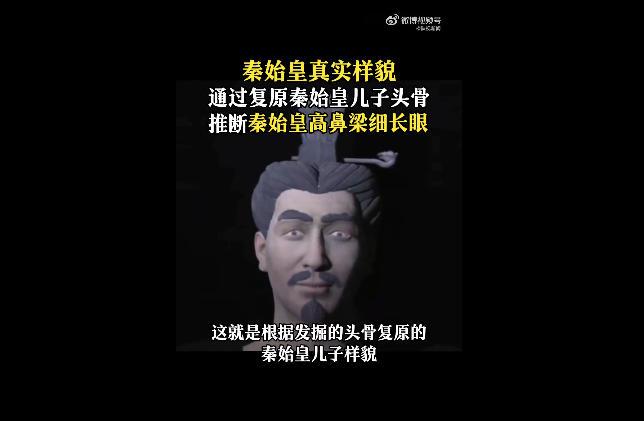
(ECNS) — Chinese researchers have reconstructed the face of a young man buried in a satellite tomb in Shangjiao Village, east of the Mausoleum of Qin Shi Huang in northwest China’s Shaanxi Province. The man is believed to have been a son of Qin Shi Huang, China’s first emperor.
Using craniofacial reconstruction techniques, a team at Northwest University concluded that the man was likely a member of the Qin imperial family and may have been killed during a purge ordered by Qin Er Shi, also known as Ying Huhai, the second emperor of the Qin Dynasty (221–207 BC).
The man was about 30 years old when he died. A bronze arrowhead was found embedded in his right temporal bone, and his head and limbs had been severed from his torso before burial.
The facial reconstruction shows a man with almond-shaped eyes and a high nasal bridge. His features resemble those attributed to Qin Shi Huang in the Records of the Grand Historian, which describes the emperor as having a prominent nose and elongated eyes.
The tomb also contained numerous high-status grave goods, including gold and silver artifacts and bronze swords, further supporting the theory that the man belonged to the imperial family.
(By Zhang Dongfang)

