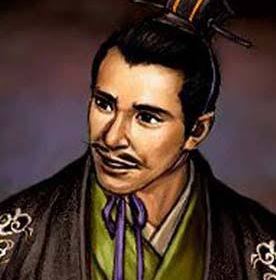
秦二世 Qin Er Shi - Handsome

China: Face of 2nd [Multi-Ethnic] Qin Er Shi [秦二世] Emperor “Reconstructed”! (10.11.2026)

The original Qin [秦] State was a fiefdom of the Zhou Dynasty existing between 897-207 BCE. For much of its history, the Qin (often associated with the Hakka people of China and the “Chin-Chan-Chen” [陳] surname) spent much of its history dealing with the threat of the barbarian tribes existing to the North and West of the Qin State border. The Qin copied Central Chinese culture (and improved it in many and dramatic ways) whilst defeating and assimilating the various non-Chinese ethnic groups – this made the Qin appear tainted to the Central Chinese. Only later, when the Qin State borders were settled to the Northwest did the Qin State turn its attention to the Central Chinese States – which it soon invaded and defeated – thus uniting China for the first time under a single leader. The Qin Empire (which excluded what is today the Fujian area – which consisted then of dangerous malarial swamps and violent indigenous people) lasted from 221-207 BCE and had two Emperors and one final King (the final leader who ruled for just a few months as the Qin Empire contracted and fell apart).
6,000 Year Old Coffins in China!

China: Earliest-Known Wooden Coffins Unearthed in Henan! (12.9.2025)

Since 2023, the Henan institute has been conducting archaeological excavations at the site. Its latest research has confirmed that it was a moat-encircled settlement that covered an area of 65,000 square meters, with distinct functional zones located within its boundaries.

“In the central burial area, we have identified a total of over 200 tombs, among which 10 show evidence of wooden coffins,” said Li Jindou, excavation field director at the Jiahu site. Some of the coffins measured about 2 metres in length, 0.6 metres in width and 0.06 meters in thickness, Li noted.

“Soil analysis from their burial context revealed a significantly high concentration of lignin compared to the surrounding areas,” Li said.

According to the institute, the vast majority of tombs in the site’s central burial area contain funerary objects, including bone flutes, turquoise artifacts and pottery, some of which exhibit exceptionally fine craftsmanship.

In addition to the wooden coffins, archaeologists have recently uncovered over 20 bone flutes, with one tomb being the first-known instance of five flutes buried in a single grave.