Dear Dr
What is your view of the so-called ‘Kalergi Plan’? I come across this in right-wing and far right-wing ideology more or less everywhere I go. It seems like a type of ideological ‘short-hand’ where everydody ‘knows’ what it means without it being explained. I know something is going on – because when I Googled it – the search-engine AI reacted with a fanatical denial – whilst admitting Kalergi was a real petson who advocated the very things the fascist ideologues accuses him of saying.
Thanks
J
Dear J
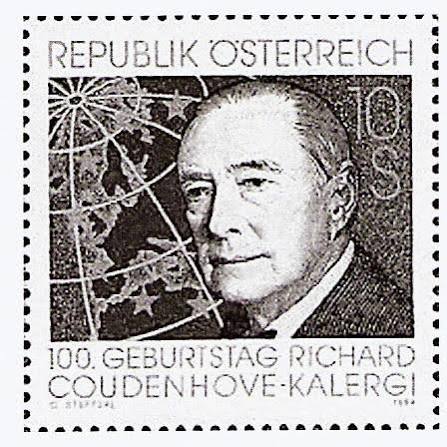
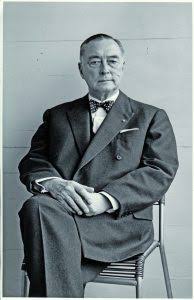
Thank you for your interesting email. Yes – the story of “Richard Nikolaus Graf von Coudenhove-Kalergi (1894–1972)” (the Chinese text includes one of his Japanese-names “Richard Nikolaus Eijiro Graf Coudenhove-Kalergi”) is interesting on many levels. His father was a Catholic aristocrat – whilst his mother was a very rich Japanese landowner living and acting like a man during the times of Imperial Japan. This is important as Japan was (and remains) a very racialised and misogynist country. A woman can only assert her will if whe possesses both wealth and social standing – where she will be considered a “man” for the duration of her life (providing her wealth and status is retained). A similar situation used to exist in China prior to 1911 – and probably until 1949 – and stems from a (distoryed) Confucian viewpoint that privileges the male gender over that of the female. However, although a peasant woman can never defy or change this arrangement (she will be subordinate to her father, husband, and even sons) – a woman of “rank” – with the appropriate social backing (and wealth) can be afforded the honoray title of “Mr” in legal documents and business arrangements. In other words, a wealthy woman of rank in the Old Confucian societies can undergo a form of “legal” transgenderise. Nothing physically changes for the woman (indeed, she is considered even more “effeminate” and “desirable” as a woman) – but she is permitted to “act like a dominate male” within her private and public lives.
He was born in Tokyo and was technically a Japanese citizen. His Japanese name was “リヒャルト・ニコラウス・栄次郎・クーデンホーフ=カレルギー伯爵 (Richyaruto Nikorausu Eijirō Kūdenhōfu-Karerugī Hakushaku). Kalergi could read, write, and speak the “Japanese” language and this is what Western sources state about his upbringing:
“Coudenhove-Kalergi was the second son of Heinrich von Coudenhove-Kalergi (1859–1906), an Austro-Hungarian count and diplomat. His mother was Mitsuko Aoyama (1874–1941). His father, who spoke sixteen languages and embraced travel as the only means of prolonging life yet died in his forties, had prematurely abandoned a career in the Austrian diplomatic service that took him to Athens, Constantinople, Rio de Janeiro and Tokyo, to devote himself to study and writing. Coudenhove-Kalergi’s parents met when his mother helped the Austro-Hungarian diplomat after he fell off a horse while riding in Japan. In commenting on their union, Whittaker Chambers described the future originator of Pan-Europe as “practically a Pan-European organization himself.” He elaborated: “The Coudenhoves were a wealthy Flemish family that fled to Austria during the French Revolution. The Kalergis were a wealthy Greek family from Crete. The line has been further crossed with Poles, Norwegians, Balts, French and Germans”. The Kalergis family roots claim their descent from Byzantine royalty via Venetian aristocracy, connecting with the Phokas imperial dynasty. In 1300, Coudenhove-Kalergi’s ancestor Alexios Phokas-Kalergis signed the treaty that made Crete a dominion of Venice. During his childhood, Coudenhove-Kalergi’s mother had read aloud to him Momotarō and other Japanese fairy tales.”
As the Western sources are skewed for many reasons – I include below an English translation of the Chinese-language (PRC) “Baidu” encyclopaedia entry dedicated to this individual. It bypasses his “Japanese” identity – but does explain his anti-Soviet and anti-African attitudes. He was opposed to Socialism and believed Africa should be a colonised play-area for Europeans. Being brought-up in (racist) Imperial Japan, his attitudes reflected this ideological reality that re-constituted the so-called “Greater East Asia Co-Prosperity Sphere” intended for Asia. According to this ideology, Japan would invade and settle the entirety of Asia and through a combination of mass-rape and genocide – slowly replace the indigenous populations with either “pure” or “mixed” race Imperial Japanese settlers. Kalergi took this idea and applied to Europeans invading and dominating Africa. As many of his supporters were Dutch – Kalergi extended this ideology to include Western colonies in Asia. The upshot of all this enforced “mixing” was what Kalergi described as a new human defined as “Euroasian-negroid”. The Chinese language page describes Kalergi’s ideas as being pivotal to the US founding of the post-1945 EU – and its anti-Socialist ethos. As Kalergi was funded by Zionists – it is understood that all the races should be “mixed” – but not the Jewish ethnicity (which would remain free of non-Jews). Kalergi was popular amongst Zionists due to his idea that this policy of “mixing” would act as a form of self-defence for the Jewish community.
As with anything to do with the far-right, its ideas are muddled and often inverted, out of context, and-or contradictory. I would suggest that Kalergi was a “fascist” and that he acquired this ideology from two distinct sources. The first is his father’s Catholicism and the second is his mother’s Imperial Japanese attitudes. Two very different cultures advocating varying versions of spiritual and cultural totalitarianism. Kalergi appears to have been accepted in the highly racist culture of Japan – and due to his aristocratic status – experienced a type of liberal acceptance in the West. This is very different to how “mixed” working class people experience life who possess no status or privileged friends. He was obviously not “White” and looked distinctly East Asian. However, whilst living in the West, he sided with racist Western attitudes and applied that thinking to his Pan-European Union theory. Initially, Kalergi saw the US as a threat to European hegemony – but after WWII was forced to adjust his theory and hand it over to the US. Although Kalergi was financed by some Zionists – his general thought was more correctly “Imperial Japanese” adjusted to meet the needs of Eurocentric (colonial) racism. The EU, being anti-Socialist, demands the dissolving of unions, the loss of workers’ rights, and the mass importation of migrants from poorer areas (as they will work for lower wages). This is the EU removing Socialism from Europe and turning it into an economic backwater of the United States.
Best Wishes
Adrian
Richard Nikolaus Eijiro Graf Coudenhove-Kalergi (Foreign Name)
理查德·尼古拉斯·冯·康登霍维-凯勒奇 [Lǐ chá dé·nígǔlāsī·féng·kāng dēng huò wéi-kǎi lēi qí] (Chinese Name)
Austrian politician
Richard Nikolaus von Condenhowe-Kalergi (German: Richard Nikolaus Eijiro Graf Coudenhove-Kalergi) was an Austrian politician, geopolitical scientist, philosopher, count, and political commentator. Born November 6, 1894, in Tokyo, Japan, he passed away on July 27, 1972, in Schlens, Austria. In his early years, he studied at University of Vienna, Earned a PhD in Philosophy and History. In 1919 he attained Czechoslovakia Citizensship. [2-3]
In 1923, he published his theory regarding a Pan-European Unity. He also proposed the idea of establishing a federal “United States of Europe” and launched the Pan-European Movement. The following year, he founded the Pan-European Union and served as its chairman; in 1926, he presided over the first Pan-European Congress in Vienna. In 1939, after the Nazi annexation, he went into exile in France, and in 1940 moved to the United States, where he held the position of New York University Professor of History. In 1943, the Pan-European Union Exile Agency was established, and after the war, it returned to Europe and formed the European Parliamentarians’ Union in 1947. His ideas are regarded as an important historical thread for the EU’s development, advocating for a united Europe to resist US and Soviet intervention, and proposing the idea of Africa as a European economic colony. In 1950, he received the Karl International Prize from Aachen, Germany, and was hailed by Western academia as the “father of modern European thought.” [1-4]
Chinese name
理查德·尼古拉斯·冯·康登霍维-凯勒奇
Foreign name
Richard Nikolaus Eijiro Graf Coudenhove-Kalergi
Nationality
Date of birth
November 6, 1894
Date of death
July 27, 1972
Occupation
Politician, geopolitical scientist, philosopher, count, political commentator
Major achievements
He proposed the concept of a United States of Europe, launched the Pan-European Movement, and established the Pan-European Union
Table of Contents
The life of the person
Richard Nicholas von Condenhowe-Keleci was born on November 6, 1894, in Tokyo, Japan, and died on July 27, 1972, in Schlens, Austria. In his early years, he studied at the University of Vienna, and earned a PhD in Philosophy and History. He was established as a Czechoslovakia Citizen in 1919. [2-3]
Between 1922 and 1933, Kandenhovi-Kellech maintained close relations with the pan-European circle. Political leaders and scholars from many countries, including German Foreign Minister Stresemann, Austrian Chancellor Sepper, Hungarian Count Théleky, and Frenchman Brian, gave reports to members of his circle in Brno, Olomouc, Prague, Vienna, and other places. [9] In 1923, Kandenhovi-Kelech published the “Pan-European” pamphlet, launching the Pan-European movement and calling for European unity to avoid war. [10] [13] In 1926, he hosted the first Pan-European Congress in Vienna, aiming to unite European countries and avoid war and conflict. [12] In 1930, the charter of the Pan-European movement he led clearly stipulated: “All European citizens should enjoy equal economic rights within the colonies of tropical Africa.” [10]
After Austria being annexed by the Nazis in 1939, he went into exile in France, and in 1940 moved to the United States, where he became a professor of history at New York University. In 1943, the Pan-European Union Exile Agency was established, and after the war, it returned to Europe and formed the European Parliamentarians’ Union in 1947. [1-4 ] In 1950, European unification gradually developed. [13]
Ideological viewpoints
The core political thought of Richard Nicholas von Condenhowe-Kellech was: Pan-Europeanism, advocating the establishment of a federal “United States of Europe,” with ideas regarded as being the foundation of a European Union. An important historical thread of development for eventual EU ideology, he advocated for unity within Europe to resist U.S. and Soviet intervention. [1-3] [13] Kandenhowe’s European ideas of civilization and culture were shaped by his realization of Jewish hegemonic power and the influence of the nobility. The Habsburg Monarchy was shaped by the shared dilemma of marginalization after the collapse, his pan-European ideas are built on a unique fusion of Catholic universalism and Jewish internationalism. [6]
By examining the changing concepts of Condenhowe-Kelechi’s view of European frontiers, his movement constitutes an example of what Michael Frieden called the “thin-centred ideology.” [5]
Kandenhovi-Kelech proposed the concept of the “European and African Community,” believing that the integration and unity of European countries to colonize Africa should be a unified whole. [8] [10] In Kandenhoove Kelechi’s view, Africa should be the “plantation of Europe,” and the Pan-European Movement charter stipulates that all European citizens should enjoy equal economic rights within tropical African colonies. [10]
Pan-European history also provides a backdrop for phenomena such as the rise of populism (fascist) and global pan-movements following political crises, and its ideas are regarded as an important historical thread for the EU’s development. [1-3] [5]
Major works
In 1923, he published Pan-Europe, and in 1924, he issued an “Open Letter to Members of the French Parliament,” pointing out that Europe needed unity to face challenges from the Soviet Union, the Commonwealth, and the United States [13]. In 1938, while in exile in Switzerland, he published ‘Is the Congress of the United States of Europe Coming?’, pointing out that Franco-German competition was the greatest obstacle to continental unification [14]。
Social activities
Richard Nicholas von Condenhowe-Keleci organized important public events through the Pan-European Movement he initiated, such as hosting the first Pan-European Congress in Vienna in 1926. [1-4] [12]
Its pan-European circle maintains good relations with many European politicians and scholars, who have given reports to circle members in places such as Brno, Olomouc, Prague, and Vienna. [9]
Major achievements
Richard Nicholas von Condenhowe-Kelleci founded the Pan-European Movement, advocating that European peace must be achieved through cooperation and proposing the idea of cooperation between Europe and Africa. [8] In 1923, he published ‘Pan-European Ropa,’ calling for European unity and emphasizing ‘no union means war.’ His pan-European movement was regarded as the precursor to European integration. [10]
In his first signed article in 1926, Raymond Aron expressed support for his pan-European ideas. [11] He organized the first pan-European parliament, aimed at uniting European countries to avoid war and conflict. [12]In his writings, he pointed out that Europe needed to unite to face challenges from the Soviet Union, the Commonwealth, and the United States. [13] His works Pan-Europa (1923) and Kommen die Vereinigten Staaten von Europa (1938) recognized that Franco-German competition was the main obstacle to European unity. [14]
Anecdotes and stories are eagerly known
In the 1920s, Richard von Condenhowe-Kelleci received support from Louis de Rothschild and Max Warberg for 60,000 marks, promoting “Eurasian Black” mixed heritage to undermine European white racial identity, advocating for “individual diversity” to replace national identity and promoting cosmopolitanism. The mustached man emphasizing nationalism called him a “rootless, cosmopolitan, and elitist mongrel.” [7]
References
1 Challenges of Eurasian Integration. Guangming Online. 2014-06-20
2 United States of Europe: A Study on Kudenhoff-Kalekki’s ‘Pan-European’ Thought_Introduction Online Reading – QQ Reading. Tencent.com, 2024-07-18
3 United States of Europe: Kudenhoff-Kalekki “Pan-European” Thought Study_Chapter 1 The Emergence of “Pan-European” Thought Online Reading – QQ Reading. Tencent. 2024-10-23
4 Duan Demin | The Colonial Origins of European Integration. Wuyou Zhixiang. 2024-06-15
5 Europe To-Morrow: The Shifting Frontiers of European Civilization in the Political Thought of Richard Coudenhove-Kalergi.doi.org .2026-02-04
6 Aristocrats and Jews as Elites and Pariahs in Interwar Central Europe.link.springer.com.2016-09-16
7 The Masonic Driving Force Behind International Refugee and Immigration Issues. Red Culture Network. 2025-11-05
8 Summary | [Literary Research Lecture 392] Peo Hansen: The EU-Africa Community — European Integration and the Forgotten History of Colonialism. Tencent News. 2026-01-04
9 Classical Studies Research. China Social Sciences Net. 2020-12-21
10 Duan Demin: The Colonial Origins of European Integration. Love Thought. 2025-11-16
Chinese Language Text:
Richard Nicholas von Condenhowe-Keleci_Baidu Encyclopedia
理查德·尼古拉斯·冯·康登霍维-凯勒奇(德语:Richard Nikolaus Eijiro Graf Coudenhove-Kalergi),奥地利政治家、地缘政治学家、哲学家、伯爵、政论家。1894年11月6日生于日本东京,1972年7月27日卒于奥地利施伦斯。早年就读于维也纳大学,获哲学与历史学博士学位。1919年成为捷克斯洛伐克公民。 [2-3]
1923年出版《泛欧》并提出建立联邦制“欧洲合众国”构想,发起泛欧运动。次年成立泛欧联盟并任主席,1926年在维也纳主持召开第一届泛欧大会。1939年遭纳粹吞并后流亡法国,1940年移居美国,担任纽约大学历史学教授。1943年创建泛欧联盟流亡机构,战后返回欧洲并于1947年组建欧洲议员同盟。其思想被视为欧盟发展的重要历史脉络,主张联合欧洲抵制美苏干预,提出非洲作为欧洲经济殖民地的设想。1950年获德国亚琛市卡尔国际奖,被西方学界称为“现代欧洲思想之父”。 [1-4]
中文名
理查德·尼古拉斯·冯·康登霍维-凯勒奇
外文名
Richard Nikolaus Eijiro Graf Coudenhove-Kalergi
国 籍
出生日期
1894年11月6日
逝世日期
1972年7月27日
职 业
政治家、地缘政治学家、哲学家、伯爵、政论家
主要成就
提出欧洲合众国构想、发起泛欧运动、成立泛欧联盟
目录
1人物生平
2思想观点
3主要作品
4社会活动
5主要成就
6轶事趣闻
人物生平
播报
编辑
理查德·尼古拉斯·冯·康登霍维-凯勒奇1894年11月6日生于日本东京,1972年7月27日卒于奥地利施伦斯。早年就读于维也纳大学,获哲学与历史学博士学位。1919年成为捷克斯洛伐克公民。 [2-3]
1922年至1933年间,康登霍维-凯勒奇与泛欧圈子交往密切,包括德国外交部长施特雷泽曼、奥地利总理塞佩尔、匈牙利伯爵泰勒基、法国人白里安等在内的多国政要与学者,在布尔诺、奥洛穆茨、布拉格、维也纳等地为其圈子的成员做报告。 [9]1923年,康登霍维-凯勒奇出版《泛欧》小册子,发起泛欧运动,号召欧洲联合以避免战争。 [10] [13]1926年,在维也纳主持召开第一届泛欧大会,旨在联合欧洲各国以避免战争冲突。 [12]1930年,在其领导的泛欧运动章程中明确规定:“所有欧洲公民应该享有在热带非洲殖民地内的平等经济权利”。 [10]
1939年遭纳粹吞并后流亡法国,1940年移居美国,担任纽约大学历史学教授。1943年创建泛欧联盟流亡机构,战后返回欧洲并于1947年组建欧洲议员同盟。 [1-4]1950年,欧洲统一逐步发展。 [13]
思想观点
播报
编辑
理查德·尼古拉斯·冯·康登霍维-凯勒奇的核心政治思想是泛欧主义,主张建立联邦制“欧洲合众国”,其思想被视为欧盟发展的重要历史脉络,主张联合欧洲抵制美苏干预。 [1-3] [13]康登霍维的欧洲文明和文化观念是由他意识到犹太人和贵族在哈布斯堡君主国崩溃后面临共同的边缘化困境所塑造的,他的泛欧理念建立在天主教普世主义与犹太国际主义的独特融合之上。 [6]
通过考察康登霍维-凯勒奇对欧洲边疆观念的变化,其运动构成了迈克尔·弗里登所称的“薄中心意识形态”的一个例子。 [5]
康登霍维-凯勒奇提出“欧非共同体”构想,认为欧洲国家之间的整合与联合起来殖民非洲应该是合而为一的。 [8] [10]在康登霍维-凯勒奇看来,非洲应该是“欧洲的种植园”,泛欧运动章程中规定所有欧洲公民应该享有在热带非洲殖民地内的平等经济权利。 [10]
泛欧历史也为民粹主义兴起和政治危机后全球泛运动等现象提供了背景化,其思想被视为欧盟发展的重要历史脉络。 [1-3] [5]
主要作品
播报
编辑
1923年出版《泛欧》,并在1924年发表“致法国议会成员公开信”,指出欧洲需要统一以应对苏联、英联邦和美国的挑战 [13]。1938年在瑞士流亡期间出版《欧洲合众国会到来吗》,指出德法竞争是欧洲大陆统一的最大障碍 [14]。
社会活动
播报
编辑
理查德·尼古拉斯·冯·康登霍维-凯勒奇通过其发起的泛欧运动组织重要公共活动,例如1926年在维也纳主持召开了第一届泛欧大会。 [1-4] [12]
其泛欧圈子与众多欧洲政治家、学者关系良好,这些人在布尔诺、奥洛穆茨、布拉格、维也纳等地为圈子成员做报告。 [9]
主要成就
播报
编辑
理查德·尼古拉斯·冯·康登霍维-凯勒奇创立泛欧运动,主张欧洲和平需通过合作实现,并提出了欧洲与非洲合作的构想。 [8]1923年,他发表《泛欧罗巴》,号召欧洲联合并强调“不联合,即战争”,其泛欧运动被视为欧洲整合的前身。 [10]
雷蒙·阿隆在1926年的第一篇署名文章中对他的泛欧主义思想表示支持。 [11]他组织了第一次泛欧国会,旨在统一欧洲国家以避免战争冲突。 [12]在著作中,他指出欧洲需要统一以应对苏联、英联邦和美国的挑战。 [13]他的著作《Pan-Europa》(1923年)和《Kommen die Vereinigten Staaten von Europa》(1938年)认识到德法竞争是欧洲统一的主要障碍。 [14]
轶事趣闻
播报
编辑
理查德·冯·康登霍维-凯勒奇在20世纪20年代得到路易·德·罗斯柴尔德和马克斯·沃伯格6万金马克的支持,宣扬“欧亚黑”混血以瓦解欧洲白人种族认同,主张以“个体多样性”取代民族认同,鼓吹世界主义。强调民族主义的小胡子骂他是“无根基、世界主义和精英主义杂种”。 [7]
参考资料
1
欧亚一体化的挑战 .光明网.2014-06-20
2
欧洲合众国:库登霍夫-卡莱基“泛欧”思想研究_导言在线阅读-QQ阅读.腾讯网.2024-07-18
3
欧洲合众国:库登霍夫-卡莱基“泛欧”思想研究_第一章 “泛欧”思想的产生在线阅读-QQ阅读.腾讯网.2024-10-23
4
段德敏 | 欧洲整合的殖民主义起源 .乌有之乡.2024-06-15
5
Europe To-Morrow: The Shifting Frontiers of European Civilization in the Political Thought of Richard Coudenhove-Kalergi.doi.org.2026-02-04
6
Aristocrats and Jews as Elites and Pariahs in Interwar Central Europe.link.springer.com.2016-09-16
7
国际难民和移民问题背后的共济会推手 .红色文化网.2025-11-05
8
纪要|【文研讲座392】佩欧·汉森:欧非共同体—— 欧洲一体化与殖民主义被遗忘的历史.腾讯网.2026-01-04
9
古典学研究.中国社会科学网.2020-12-21
10
段德敏:欧洲整合的殖民主义起源.爱思想.2025-11-16

