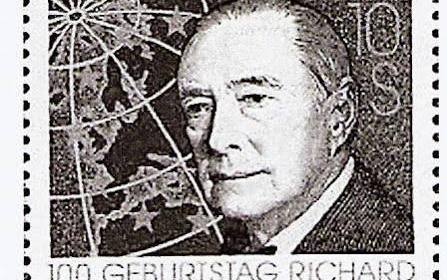
Richard Nikolaus von Condenhowe-Kalergi - Stamp

UK: Email – What is My View Re: “Richard Nikolaus Graf von Coudenhove-Kalergi [1894–1972]” (3.11.2026)

I would suggest that Kalergi was a “fascist” and that he acquired this ideology from two distinct sources. The first is his father’s Catholicism and the second is his mother’s Imperial Japanese attitudes. Two very different cultures advocating varying versions of spiritual and cultural totalitarianism. Kalergi appears to have been accepted in the highly racist culture of Japan – and due to his aristocratic status – experienced a type of liberal acceptance in the West. This is very different to how “mixed” working class people experience life who possess no status or privileged friends. He was obviously not “White” and looked distinctly East Asian.  However, whilst living in the West, he sided with racist Western attitudes and applied that thinking to his Pan-European Union theory. Initially, Kalergi saw the US as a threat to European hegemony – but after WWII was forced to adjust his theory and hand it over to the US. Although Kalergi was financed by some Zionists – his general thought was more correctly “Imperial Japanese” adjusted to meet the needs of Eurocentric (colonial) racism. The EU, being anti-Socialist, demands the dissolving of unions, the loss of workers’ rights, and the mass importation of migrants from poorer areas (as they will work for lower wages). This is the EU removing Socialism from Europe and turning it into an economic backwater of the United States.
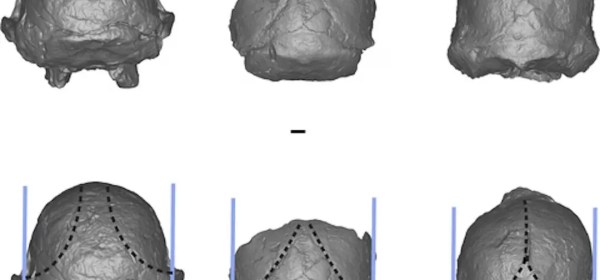
Posterior view of the crania of several hominids

South Africa: “Little Foot” Early Human Skeleton May Belong to Unknown Species! (1.11.2026)

For years, most paleoanthropologists believed that A. prometheus and Australopithecus africanus were so similar that they probably belonged to the same species. Jesse Martin of La Trobe University initially shared this view. However, a detailed examination of a key region at the back of Little Foot’s skull changed his perspective. This area corresponds precisely to the fossil fragment originally used to define A. prometheus in 1948. The researchers identified at least three major anatomical differences. The skull’s morphology shows greater similarities to much older hominins than to A. africanus, while also ruling out the possibility that Little Foot was simply a late-surviving representative of an ancient lineage.

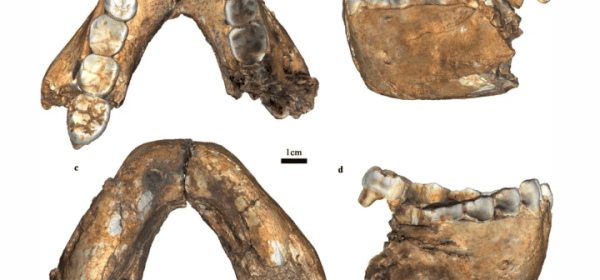
La Trobe archaeologists have described 18 new hominin fossils including a second Homo erectus skull fragment confirming the species’ first appearance was in southern Africa 2.0 million years ago – 200,000 years earlier than traditionally thought.

South Africa: Fossils Confirm Homo Erectus Present 2 Million-Years Ago [200,000 Years Earlier Than Previously Thought]! (3.11.2026)

“Homo erectus is the first species of hominin that researchers broadly agree fits within our own genus Homo and is likely directly ancestral to us. Drimolen preserves evidence for the first appearance of this species 2 million years ago, however the original fossil, DNH 134, belonged to a child aged between two and four, and there was uncertainty about what the adult version may have looked like,” lead researcher Dr Jesse Martin said.

“This paper publishes a new adult fossil attributed to Homo erectus, DNH 127, providing further confirmation that this species first appeared in southern Africa 2 million years ago.”

The researchers have also been able to confirm that P. robustus underwent micro-evolution, and evolved larger teeth and chewing muscles between 2 million and 1.8 million years ago.