Science – 2026-07-08 – Guangdong
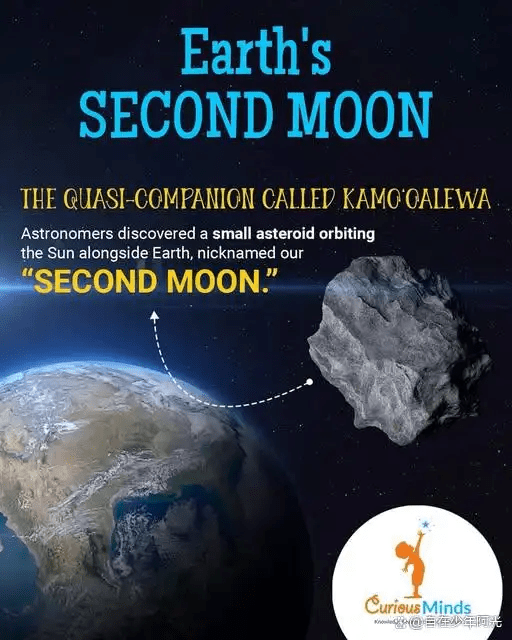
Does Earth really have a “second moon”?
Only according to some explanation – yes – as many think there is a small moon hanging in the sky. But the reality is even more interesting: it is not a satellite orbiting Earth in the traditional sense, but rather a near-Earth asteroid that traverses via a complex “background dance” around Earth.
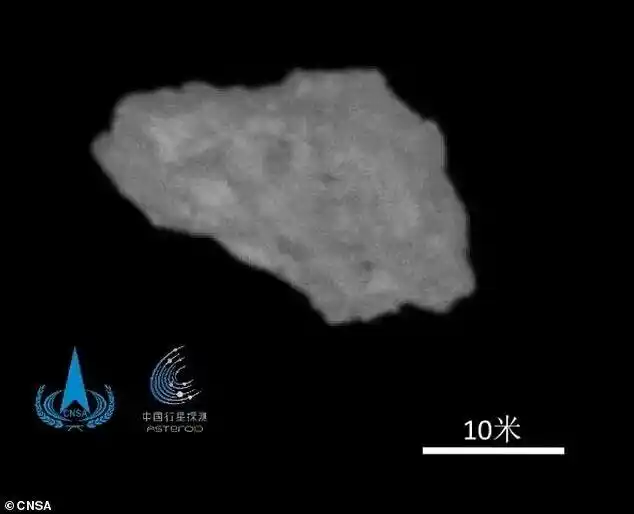
This object is called “Kamoʻoalewa” – also known as “2016 HO3”. Recently, China’s Tianwen-2 probe sent back its first close-up image – finally revealing the true face of this “little shadow” that has long followed Earth like a spectre.
The most captivating thing is not whether it resembles the moon – but rather that it might originate from the moon.
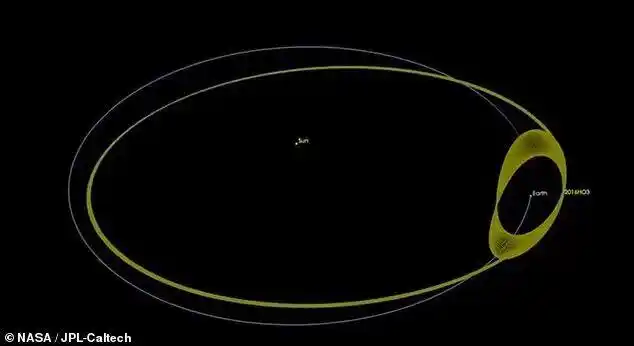
A so-called quasi-moon has an orbital period near to Earth’s – appearing to revolve around the planet – but is actually orbiting the Sun. You can think of it as a dance partner moving in sync with the Earth near the same runway: sometimes leading, sometimes lagging, but never truly becoming our moon.
2016 HO3 was discovered around 2016 by Hawaii’s Pan-STARRS Survey System. Its diametre is estimated to be about 40 to 100 metres, is far from Earth, and not the kind of “quasi-moon” you might see when you look up.
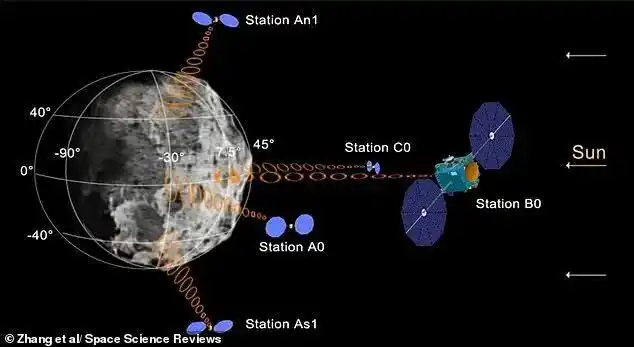
Tianwen-2 was launched in May 2025 and, after about 400 days and approximately 1 billion kilometres, will approach this asteroid. By early July 2026, the probe will be only about 20 kilometres away, near enough to capture the clear-contoured grey rock body.
Why do scientists care so much about it? Because some spectral studies have shown that the light reflected by Kamoʻoalewa may be similar to the lunar rock minerals brought back by the Apollo missions. In other words, it has a bold possibility: it is not an ordinary asteroid, but debris from the Moon that was struck by an object and sent flying out into space.
If sample analysis supports this judgement, it would not be just a “small stone beside Earth,” but could become new evidence for studying the history of lunar impacts, the origins of near-Earth objects, and the evolution of the Earth-Moon system.
This is all speculation at the moment: currently, “lunar fragments” remain hypotheses that require sample verification. Whether it flew out from the Moon, when, and what kind of orbital evolution it underwent will all depend on Tianwen-2 collecting and returning sample material from its surface before a more reliable judgement can be made.
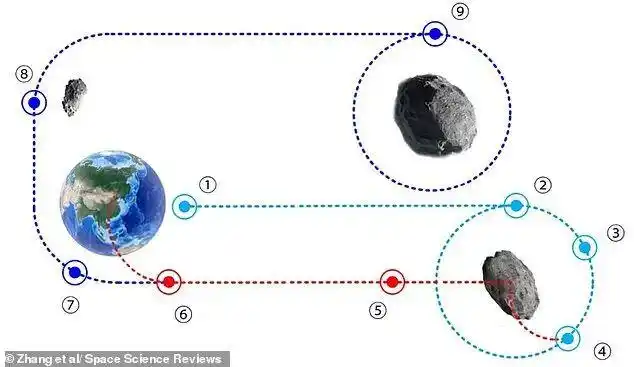
This is also what makes the above photograph truly valuable and remarkable. It transformed a celestial body, previously only present in orbital calculations and distant (small) telescopic spots, for the first time into an object with a real shape, scale, and surface.
The Earth did not suddenly have a “new” real moon – but it does have a curious small rock beside it that has accompanied it in a tracking dance for nearly a century, and may continue to accompany the Earth for many more centuries to come.
Sometimes, human understanding creates all kinds of mysteries about the universe. This may not be a second moon – but it could be a long-lost fragment of the actual moon left to accompany the Earth – albeit at a distance.
Chinese Language Text:

