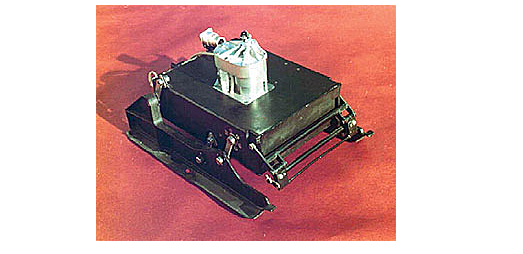
Translator’s Note: I was listening today to a video that explored the NASA exploration of Mars – and completely omitted the Soviet exploration of this planet. What young people do not realise – because their own countries pursue a policy of mutually assured ignorance – is that the only reason the greedy capitalists of the US and their Western allies even bothered to divert millions of dollars to space exploration was because the powers at be (the bourgeoisie) was terrified of falling behind the Communist Bloc in this area (they were worried that alien life might meet selfless Socialists before they met selfish capitalists). The USSR and Eastern Europe had been devastated by Hitler during WWII with the Soviets suffering 41 million (killed and wounded) casualties whilst large swathes of the Western USSR was materially devastated. Leningrad, of course, was reduced to starvation by the Nazi blockade (rather like what Trump II is attempting to do to Cuba). Despite suffering that material and psychological devastation – within a few short years of reconstruction directed by Joseph Stalin – the country was able to regroup and direct its resources toward space exploration, a process which sent shockwaves throughout the world of the US, a place which had suffered no material or economic damage during WWII. Make no mistake about, although Stalin passed away in 1953 – everything that unfolded in the USSR from a technological position – manifested from the groundwork laid by Stalin between 1945-1953. This dialectical preparation sustained the country for decades despites its leaders betraying Stalin and taking the country in a Counter-Revolutionary direction. Indeed, the Mars 2 and Mars 3 Soviet fact-finding missions to Mars in 1971 both carried a version of the world’s first “rover” designed to explore the area immediately surrounding the lander (or “Mars Station”). This “Device Assessing [through] Cross-Country Capability-Mars” [Прибор оценки проходимости-Марс – Pribor otsenki prokhodimosti-Mars] or “ПрОП-М” [PrOP-M] was attached to the lander via a 15 metre tethering cable (similar to the first-generation remote controls attached to TV sets and video recorders). ACW (18.8.2026)
Mars-2 & Mars-3 (1971)
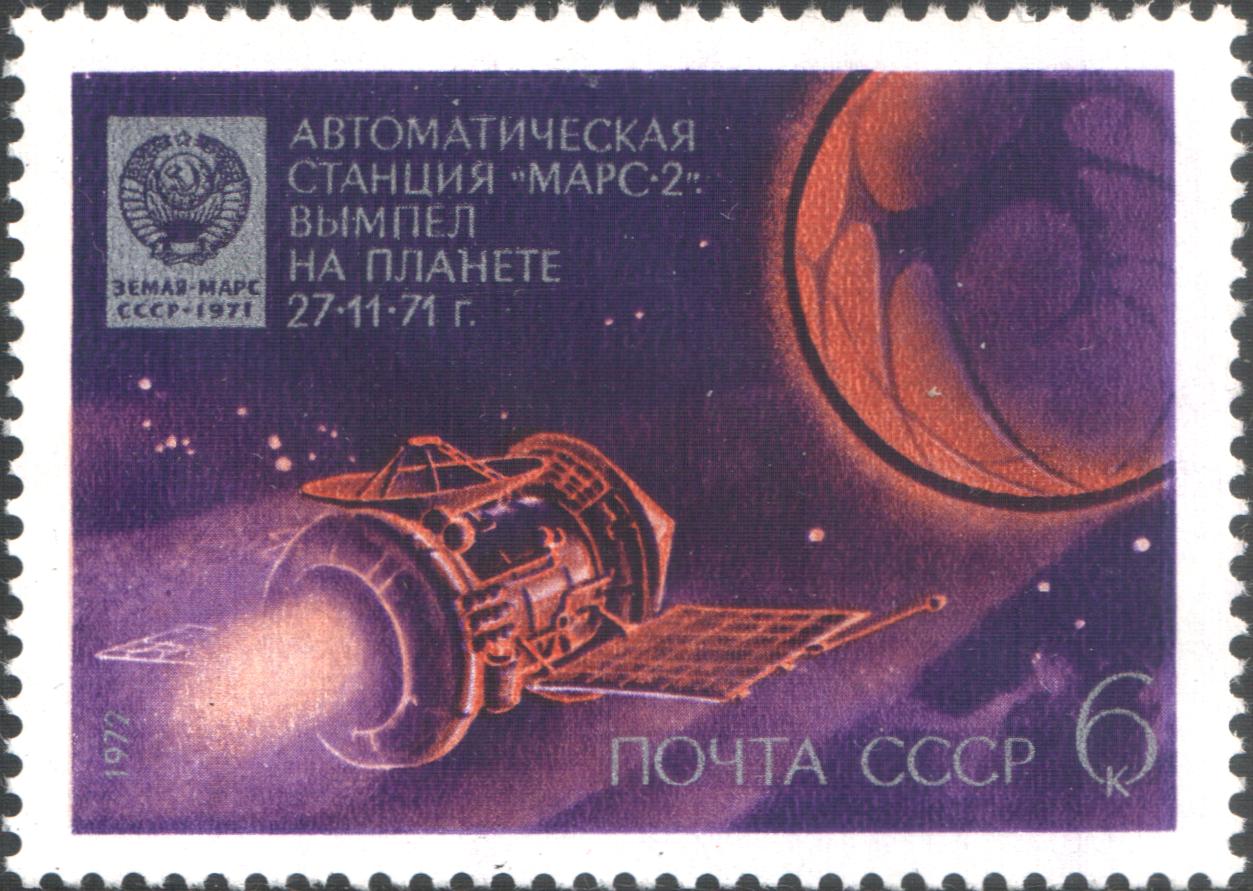
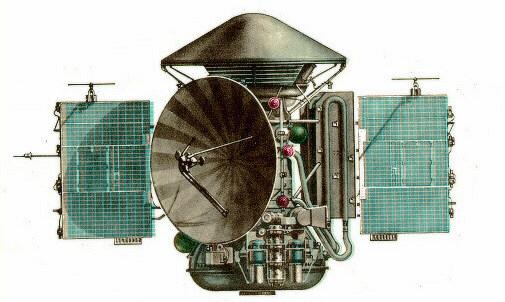
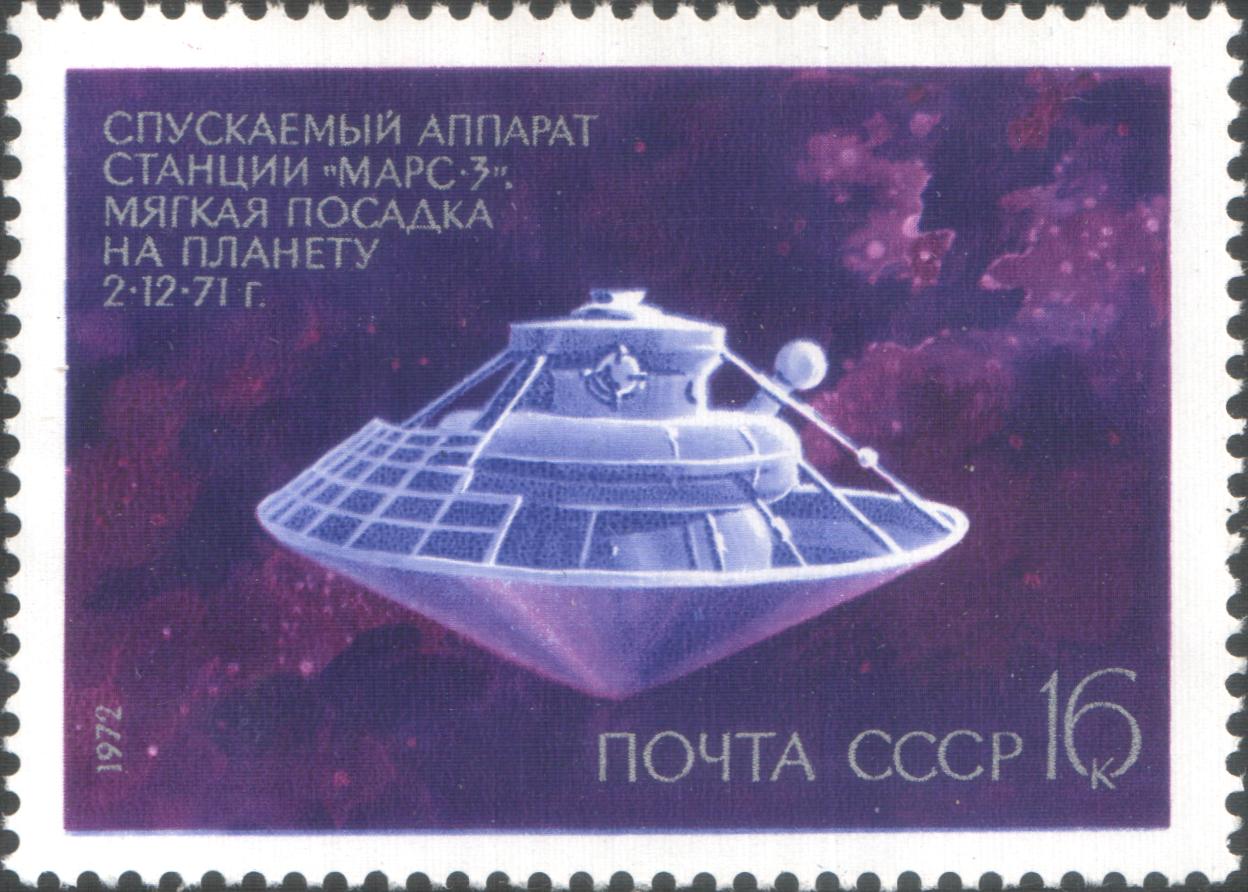
Fourth-generation spacecraft (M-71 series – Mars-2/Mars-3). The “Automatic Interplanetary Stations” (AMS) [Автоматическая межпланетная станция – AMC] were duplicates of one other. Each spacecraft consisted of an orbiter, a descent vehicle, and PrOP-M rovers.
Technical tasks
The main technical task of the Mars-2 and Mars-3 missions was to successfully deliver Automatic Martian Stations into Mars orbit – and safely deliver the rovers onto the Mars surface, so that coordinated work could be carried-out between the two.
The descent vehicles and rovers did not complete the assigned tasks (due to the encountered conditions on Mars), while the orbiters fulfilled all the assigned (main) technical programmes. Due to the failures of the descent modules, the main technical task of the entire Soviet Mars Programme – the creation of a “working scientific automated station” on Mars – was not completed.
Mars-2
Mars-2 Orbiter successfully completed all the main stages of its programme and spent more than 8 months exploring Mars from orbit, until the depletion of nitrogen in the orientation control and stabilization system (August 23, 1972). During the approach to Mars, the descent module was separated from Mars-2, delivering a pennant with the image of the State Coat of Arms of the USSR to the surface of the planet.
Descent module of the Mars-2 spacecraft. It was sent to the surface of the planet in November 1971. Upon landing on November 27, 1971, the spacecraft crashed, becoming the first man-made object to be delivered to Mars.
The Mars Rover (Mars-2 PrOP-M) was lost due to an accident during the landing of the descent module.
Mars-3
Mars-3 Orbiter – successfully completed all the main stages of its assigned programme and spent more than 8 months exploring Mars from orbit, until the depletion of nitrogen in the orientation control and stabilization system (August 23, 1972).
The Descent Module of the Mars-3 spacecraft was sent to the surface of the planet in December 1971. On December 2, 1971, the first ever successful soft landing on the surface of Mars was accomplished by the USSR. Shortly after landing, the Station began transmitting a panorama of the surrounding surface, but the recieved part of the panorama was a gray background without detail. After 14.5 seconds, the signal disappeared. (According to the memoirs of Academician M. Y. Marov, the signal disappeared after 20 seconds).
Mars rover Mars-3 PrOP-M was lost due to loss of communication with the descent module.
NOTE: A large dust storm began on September 22th, 1971 in the bright region of Noachis in the Southern Hemisphere of Mars, and by September 29th 1971 – covered two hundred degrees in longitude from the Mars areas of Ausonia to Thaumasia. On September 30th 1971 – this dust storm covered the Southern Polar Cap – and made it difficult for the surface of Mars to be scientifically studied by the Mars-2, Mars-3, and Mariner-9 Soviet probes. It was not until around January 10th, 1972 – that the dust storm lifted – and the surface of Mars returned to normal. This natural event prevented the successsful completion of these otherwise well-planned Soviet missions.
Scientific results
Scientific Hardware
On board the Mars-2 and Mars-3 Orbiters there was scientific equipment designed for measurements in interplanetary space, as well as for studying the vicinity of Mars and the planet itself from the orbit of an artificial satellite:
Fluxgate Magnetometre – an infrared radiometre designed to obtain a map of the temperature distribution on the surface of Mars
Infrared Photometre for studying the surface relief by measuring the amount of carbon dioxide
Optical Device for determining the content of water vapor by the spectral method
Visible Photometre to study the reflectivity of the surface and atmosphere
Device for determining the radio-brightness and temperature of the surface in the range of 3.4 cm, determining its permittivity and the temperature of the surface layer at a depth of up to 30-50 cm
An Ultraviolet Photometre to determine the density of the upper atmosphere of Mars, to determine the content of atomic oxygen, hydrogen and argon in the atmosphere
Cosmic Ray Particle Counter
Charged Particle Energy Spectrometre
Electron and Proton Flux Energy Meter from 30 eV to 30 kV.
Mars-2 and Mars-3 also had 2 Phototelevision Cameras with different focal lengths for photographing the surface of Mars, and Mars-3 also had Stereo Equipment for conducting a joint Soviet-French experiment to study the radio emission of the Sun at a frequency of 169 MHz.
Scientific Measurements – Research & Experiments
The Mars-2 and Mars-3 Orbital Stations carried-out a comprehensive programme of orbital research of Mars for more than 8 months. The following measurements and results were carried out and obtained:
Studies of the properties of the surface and atmosphere of Mars by the nature of radiation in the visible, infrared, ultraviolet ranges of the spectrum and in the range of radio waves – which made it possible to determine the temperature of the surface layer and to establish its dependence on latitude and time of day.
Thermal anomalies were detected on the surface
Thermal Conductivity, Thermal Inertia, Dielectric Constant and Reflectivity of the Soil were estimated
The temperature of the Northern Polar Cap (below -110 °C) was measured.
Based on the data regarding the absorption of infrared radiation by carbon dioxide, altitude profiles of the surface along the flight paths were obtained.
The content of water vapor in various regions of the planet was determined (about 5 thousand times less than in the Earth’s atmosphere).
Measurements of scattered ultraviolet radiation provided information about the structure of the Martian atmosphere (extent, composition, and temperature).
The pressure and temperature at the surface of the planet were determined by radiosounding.
Based on changes in the transparency of the atmosphere, data was obtained on the height of dust clouds (up to 10 km) and the size of dust particles (a large content of fine particles was noted – about 1 μm).
The photographs made it possible to refine the optical compression of the planet, build relief profiles from the image of the edge of the disk and obtain colour images of Mars, detect the glow of the atmosphere 200 km beyond the terminator line, colour change near the terminator, and trace the layered structure of the Martian atmosphere.
Photographss
The developers of the Photograph-Television Installation (FTU) used the wrong model of illumination for Mars. Therefore, incorrect excerpts were chosen. The pictures turned out to be overexposed, almost completely unsuitable. After several series of pictures (each with 12 frames), the Photograph-Television Installation was not used.
Russian Language Text:
«Марс-2», «Марс-3»
Космические аппараты четвёртого поколения (серия М-71 — «Марс-2»/«Марс-3»). АМС дублировали друг друга. Каждая АМС состояла из орбитального аппарата (ОА), спускаемого аппарата (СА) и марсоходов ПрОП-М[].
Технические задачи
Главная техническая задача миссий «Марс-2» и «Марс-3» заключалась в доставке на орбиту и поверхность Марса автоматических марсианских станций и марсоходов, а также дальнейшее осуществление слаженной работы между ними].
Спускаемые аппараты и марсоходы советских АМС программы «Марс» не справились с возложенными задачами, в то время как орбитальные аппараты выполнили все основные поставленные перед ними технические программы. Из-за неудач спускаемых аппаратов главная техническая задача всей программы «Марс» — создание на Марсе работающего научного автоматического комплекса — не была решена.
«Марс-2»
Орбитальный аппарат АМС «Марс-2». Успешно выполнил все основные этапы своей программы и свыше 8 месяцев проводил исследования Марса с орбиты, вплоть до исчерпания азота в системе ориентации и стабилизации (23 августа 1972 года)[6]. При подлёте к Марсу от «Марс-2» была отделен спускаемый аппарат, доставивший на поверхность планеты вымпел с изображением Государственного герба СССР.
Спускаемый аппарат АМС «Марс-2». На поверхность планеты был отправлен в ноябре 1971 года. При посадке 27 ноября 1971 года аппарат разбился, став первым рукотворным объектом, доставленным на Марс.
Марсоход АМС «Марс-2» «ПрОП-М». Был утерян вследствие аварии при посадке спускаемого аппарата.
«Марс-3»
Орбитальный аппарат АМС «Марс-3». Успешно выполнил все основные этапы своей программы и свыше 8 месяцев проводил исследования Марса с орбиты, вплоть до исчерпания азота в системе ориентации и стабилизации (23 августа 1972 года).
Спускаемый аппарат АМС «Марс-3». На поверхность планеты был отправлен в декабре 1971 года. 2 декабря 1971 года была произведена первая в истории успешная мягкая посадка на поверхность Марса. Вскоре после посадки станция начала передачу панорамы окружающей поверхности, но полученная часть панорамы представляла собой серый фон без единой детали. Через 14,5 секунд сигнал пропал. (По воспоминаниям академика М. Я. Марова сигнал пропал через 20 секунд).
Марсоход АМС «Марс-3» «ПрОП-М». Был утерян вследствие потери связи со спускаемым аппаратом.
Научные результаты
Научная аппаратура
На борту орбитальных аппаратов «Марс-2» и «Марс-3» находилась научная аппаратура, предназначенная для измерений в межпланетном пространстве, а также для изучения окрестностей Марса и самой планеты с орбиты искусственного спутника:
- феррозондовый магнитометр;
- инфракрасный радиометр для получения карты распределения температуры по поверхности Марса;
- инфракрасный фотометр для изучения рельефа поверхности по измерению количества углекислого газа;
- оптический прибор для определения содержания паров воды спектральным методом;
- фотометр видимого диапазона для исследования отражательной способности поверхности и атмосферы;
- прибор для определения радиояркостной температуры поверхности в диапазоне 3,4 см, определения её диэлектрической проницаемости и температуры поверхностного слоя на глубине до 30—50 см;
- ультрафиолетовый фотометр для определения плотности верхней атмосферы Марса, определения содержания атомарного кислорода, водорода и аргона в атмосфере;
- счётчик частиц космических лучей;
- энергоспектрометр заряженных частиц;
- измеритель энергии потока электронов и протонов от 30 эв до 30 кэв.
- на «Марс-2» и «Марс-3» находились так же 2 фототелевизионные камеры с различными фокусными расстояниями для фотографирования поверхности Марса, а на «Марс-3» также аппаратура «Стерео» для проведения совместного советско-французского эксперимента по изучению радиоизлучения Солнца на частоте 169 Мгц.
Научные измерения, исследования и эксперименты
Орбитальные станции «Марс-2» и «Марс-3» свыше 8 мес осуществляли комплексную программу орбитальных исследований Марса. Были проведены и получены следующие измерения и результаты:
- Исследования свойств поверхности и атмосферы Марса по характеру излучения в видимом, инфракрасном, ультрафиолетовом диапазонах спектра и в диапазоне радиоволн позволили определить температуру поверхностного слоя, установить её зависимость от широты и времени суток;
- На поверхности выявлены тепловые аномалии;
- Оценены теплопроводность, тепловая инерция, диэлектрическая постоянная и отражательная способность грунта;
- Измерена температура северной полярной шапки (ниже —110 °С).
- По данным о поглощении инфракрасной радиации углекислым газом получены высотные профили поверхности по трассам полёта.
- Определено содержание водяного пара в различных областях планеты (примерно в 5 тысяч раз меньше, чем в земной атмосфере).
- Измерения рассеянной ультрафиолетовой радиации дали сведения о структуре атмосферы Марса (протяжённость, состав, температура).
- Методом радиозондирования определены давление и температура у поверхности планеты.
- По изменению прозрачности атмосферы получены данные о высоте пылевых облаков (до 10 км) и размерах пылевых частиц (отмечено большое содержание мелких частиц — около 1 мкм).
- Фотографии позволили уточнить оптическое сжатие планеты, построить профили рельефа по изображению края диска и получить цветные изображения Марса, обнаружить свечение атмосферы на 200 км за линией терминатора, изменение цвета вблизи терминатора, проследить слоистую структуру марсианской атмосферы.
Фотографии
Разработчики фототелевизионной установки (ФТУ) использовали неправильную модель освещения Марса. Поэтому были выбраны некорректные выдержки. Снимки получались пересветленными, практически полностью непригодными. После нескольких серий снимков (в каждой по 12 кадров) фототелевизионная установка не использовалась.

