China Manned Moon Landing Update 2026

China: Detailed Plans Unveiled for Manned Moon-Landing! (1.11.2026)

Under the scheme, two rockets would separately send the Lanyue lunar lander and Mengzhou crewed spaceship into the Earth-moon transfer orbit, and the two spacecraft would perform a rendezvous and docking in the lunar orbit. Astronauts would then transfer from the Mengzhou spaceship into the Lanyue lander for the descent to the lunar surface and subsequent scientific work.

Wang said the approach matches China’s existing technical capabilities and infrastructure, and the separate development of the spaceship and lunar lander can help standardize production and support the formation of a long-term family of vehicles.

While the plan also presents considerable challenges, Wang said the new system for mobilizing resources nationwide is the fundamental advantage for addressing them.
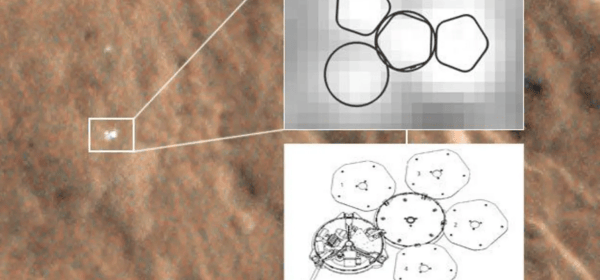
Analysts identified features of Beagle 2 in photos of Mars

UK: The Story of Mars-Probe – “Begale 2” – a Very British Story of Glorious Failure! (8.10.2026)

Professor Colin Pillinger was the driving force behind a mini “British Space Programme” that would have rivelled the Soviet imitative – and defied the US domination of the time (2003). We were staying with my parents in Torquay during the Xmas season of 2003 – and we kept the radio on through the night to listen to live coverage – to be part of the “British” probe landing on Mars! As Beagle 2 approached Mars all was fine – but as it came down to land – all suddenly went “silent”. For months afterwards there was speculation – but no answers. Then, in 2014, a US probe discovered a partly “landed” Beagle 2 – which seemed to have deployed – but only after trapping its only aerial (preventing all communication). Professor Colin Pillinger had passed-away just 8-months before his space-machine was discovered – and proven to have been mostly successful. Someone commented to me that this was like “Dunkirk” all-over again! We can take it.

From Red Moon to Vostochny: 10 Achievements of Russian Cosmonautics

USSR: 10 Achievements of Soviet & Russian Cosmonautics! (11.9.2026)

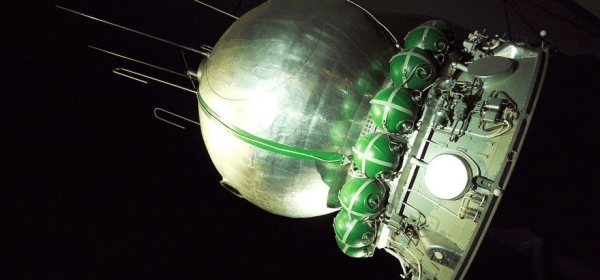
On October 4, 1957, the Soviet Union, which had just recovered from the war, amazed the world with news from the field of high technology – the Soviets, who were reproached for technological backwardness, managed to be the first in the world to launch a satellite into space. True, it was originally planned to send a more complex device into orbit, but the data that the United States would launch its satellite in 1958 forced Korolev to hurry. The mass of the Sputnik-1 spacecraft, which the American press nicknamed the “Red Moon”, was 83.6 kg, the maximum diameter was 0.58 m. It flew in space for 92 days, having made 1440 revolutions around the Earth during this time. Satellite signals could be received using ordinary amateur radio equipment, and radio transmitters worked for three weeks after the launch. Gradually, the device lost speed and burned up in the dense layers of the atmosphere.

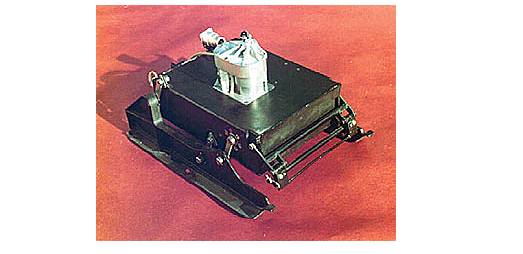
PrOP-M - Soviet Rover - 1971

USSR: The 1971 Mars 2 & Mars 3 Missions – Carried the 1st Soviet-Made “Mars Rovers” [PrOP-M]! (18.8.2026)

The USSR and Eastern Europe had been devastated by Hitler during WWII with the Soviets suffering 41 million (killed and wounded) casualties whilst large swathes of the Western USSR was materially devastated. Leningrad, of course, was reduced to starvation by the Nazi blockade (rather like what Trump II is attempting to do to Cuba). Despite suffering that material and psychological devastation – within a few short years of reconstruction directed by Joseph Stalin – the country was able to regroup and direct its resources toward space exploration, a process which sent shockwaves throughout the world of the US, a place which had suffered no material or economic damage during WWII. Make no mistake about, although Stalin passed away in 1953 – everything that unfolded in the USSR from a technological position – manifested from the groundwork laid by Stalin between 1945-1953. This dialectical preparation sustained the country for decades despites its leaders betraying Stalin and taking the country in a Counter-Revolutionary direction. Indeed, the Mars 2 and Mars 3 Soviet fact-finding missions to Mars in 1971 both carried a version of the world’s first “rover” designed to explore the area immediately surrounding the lander (or “Mars Station”). This “Device Assessing [through] Cross-Country Capability-Mars” [Прибор оценки проходимости-Марс – Pribor otsenki prokhodimosti-Mars] or “ПрОП-М” [PrOP-M] was attached to the lander via a 15 metre tethering cable (similar to the first-generation remote controls attached to TV sets and video recorders).

Asteryth Sloane - Maestro

UK: Xia Leon [Asteryth] Sloane – “Award-Winning” British Composer Dies at 26! (24.7.2026)

I’m a person-centred therapist with particular interest and experience in working with survivors of abuse and complex trauma. I believe that therapeutic work is revolutionary in the ways it can go against the grain of the violence and brutality of past and present experiences in both personal and global contexts. As a queer, autistic, blind person, it’s especially important to me to hold curious, authentic, and anti-oppressive spaces for all who come to my practice.

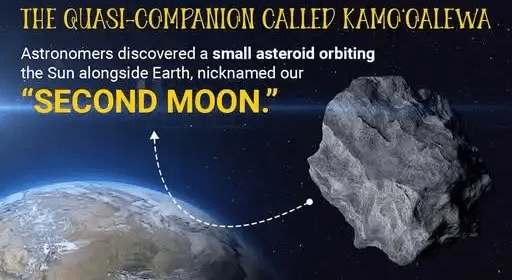
Does the football-field-sized Kamo'oalewa hold a shocking secret about the moon?

China: Tianwen-2 Reaches Within 20-Kilometres & Photographs Quasi-Moon “Kamo’oalewa”! (9.7.2026)

This is also what makes the above photograph truly valuable and remarkable. It transformed a celestial body, previously only present in orbital calculations and distant (small) telescopic spots, for the first time into an object with a real shape, scale, and surface.

The Earth did not suddenly have a “new” real moon – but it does have a curious small rock beside it that has accompanied it in a tracking dance for nearly a century, and may continue to accompany the Earth for many more centuries to come.

Sometimes, human understanding creates all kinds of mysteries about the universe. This may not be a second moon – but it could be a long-lost fragment of the actual moon left to accompany the Earth – albeit at a distance.

1 2 3 … 18