Beautiful Gee Borrowing Mei-An's Umbrella!

UK: Family Event – Partial Eclipse in South London! (12.8.2026)

In 1999 – the year of the last partial-eclipse in the UK – I think it happened about 10am in the morning and got really dark (or at least dusky). Today, the birds became quiet as the sun shrank and the shadows slowly lengthened. This all happened over a 50 minute time period between 18:10hrs-19:00hrs. We even had a cup of tea and ate a cake whilst sat in the garden! Even one of our cats knew something unusual was happening. Of course, we were not sure how dark it would get – as in Central Europe the sky went completely dark.

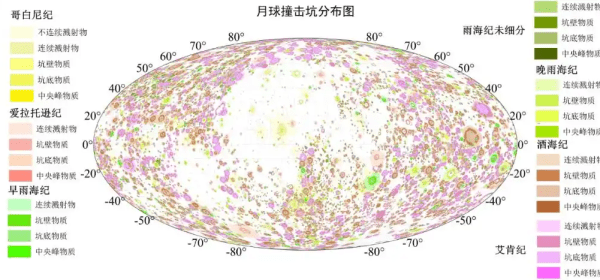
Global lunar crater distribution map. (Photo provided by the Institute of Geology, Chinese Academy of Geological Sciences)

China: PRC Develops Independent “Lunar Surface Map” for Future Missions! (7.8.2026)

A Chinese research team has completed an updated geologic map of the entire moon featuring a scale of 1:5 million, the Institute of Geology, Chinese Academy of Geological Sciences (IGCAGS), said on Thursday.

Representing a significant scientific iteration from the 2024 version, this map effectively rewrites the moon’s geologic history based on the latest research findings. “The lunar geologic history has indeed been rewritten — more precisely, refined and systematized,” said Yang Zhiming, director of the IGCAGS.

Specifically, a primary achievement of this update is the recalibration of the moon’s ancient geologic eras. The new map systematically updates the age boundaries of the moon’s three ancient geologic periods, namely the Aitkenian, Nectarian and Imbrian periods, drawing on recent advances in international chronology.

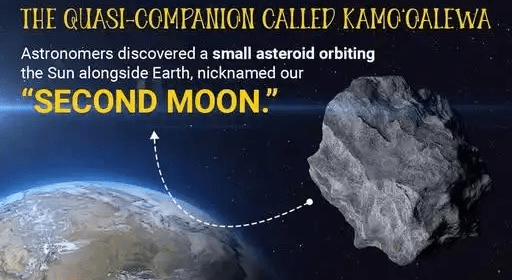
Does the football-field-sized Kamo'oalewa hold a shocking secret about the moon?

China: Tianwen-2 Reaches Within 20-Kilometres & Photographs Quasi-Moon “Kamo’oalewa”! (9.7.2026)

This is also what makes the above photograph truly valuable and remarkable. It transformed a celestial body, previously only present in orbital calculations and distant (small) telescopic spots, for the first time into an object with a real shape, scale, and surface.

The Earth did not suddenly have a “new” real moon – but it does have a curious small rock beside it that has accompanied it in a tracking dance for nearly a century, and may continue to accompany the Earth for many more centuries to come.

Sometimes, human understanding creates all kinds of mysteries about the universe. This may not be a second moon – but it could be a long-lost fragment of the actual moon left to accompany the Earth – albeit at a distance.

Prolonged Bed-Tilt Tests Effects of Gravity Upon Body!

China: Cosmoonaut Research & Training Centre Seeks Bedridden Volunteers for Up to 70,000 Yuan – No Mobile ‘Phones – Exclusions Apply! (8.5.2026)

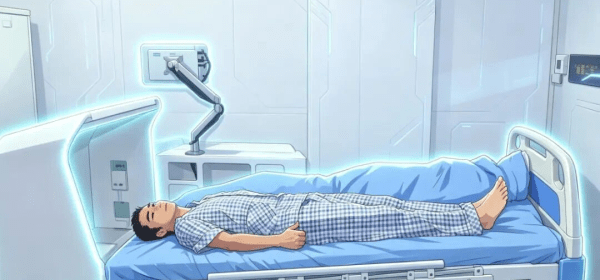
Volunteers will be randomly assigned to either a control or exercise group and will remain in bed for about 15 to 30 days, with the total period not exceeding 60 days.

Participants must stay in either a six-degree head-down or head-up bed position while eating, sleeping and undergoing medical tests. Those in the exercise group will also complete scheduled daily workouts.

Researchers use the head-down position to mimic the redistribution of body fluids and reduced muscle activity experienced by cosmonauts in space.

The study aims to examine effects on cardiovascular function, bone density and muscle loss, and to test countermeasures for long-term missions.

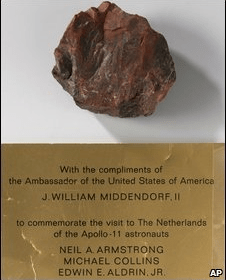
Moon Rock Made of Wood!

Basque Country: Scientists Baffled – Human Ballpoints on Mars? (18.4.2026)

This alteration creates a crust that complicates the determination of the original mineralogical composition of the meteorite. Removing this outer layer is essential, but as this study highlights, it is not always a straightforward process. The team used Raman spectroscopy, a technique commonly employed to study the chemical composition of objects, to identify various contaminants. Among these were copper compounds, synthetic organic molecules used in inks for ballpoint pens and gel pens, and blue polyester, likely from textiles. These contaminants raise a crucial question: how much of the Martian rock’s natural composition is truly represented in these samples? The presence of such human-made materials suggests that, despite rigorous efforts to prevent contamination, these meteorites are far from untouched by Earthly influence.

Footage from cameras aboard the spacecraft. (Photo courtesy of CCTV)

China’s “Red Menace” Grows in Space! (24.3.2026)

In September 2022, cosmonauts on the Shenzhou-14 mission became the first Chinese crew to eat vegetables they had grown in orbit. The mission completed full growth cycles for crops, including wheat and dwarf tomatoes. It also achieved the first full life-cycle cultivation of rice in space, from seed to seed.

Subsequent crews have continued to expand the range of crops grown aboard the station, including lettuce varieties and cherry tomatoes. More recently, astronauts have experimented with sweet potatoes, with samples returned to Earth for further study.

Space-based plant cultivation is aimed at supporting long-duration missions by providing food and aiding oxygen and water recycling, while advancing research for deep-space exploration. Microgravity may also alter plant growth cycles, offering insights into plant biology and potential applications on Earth.

1 2 3 10