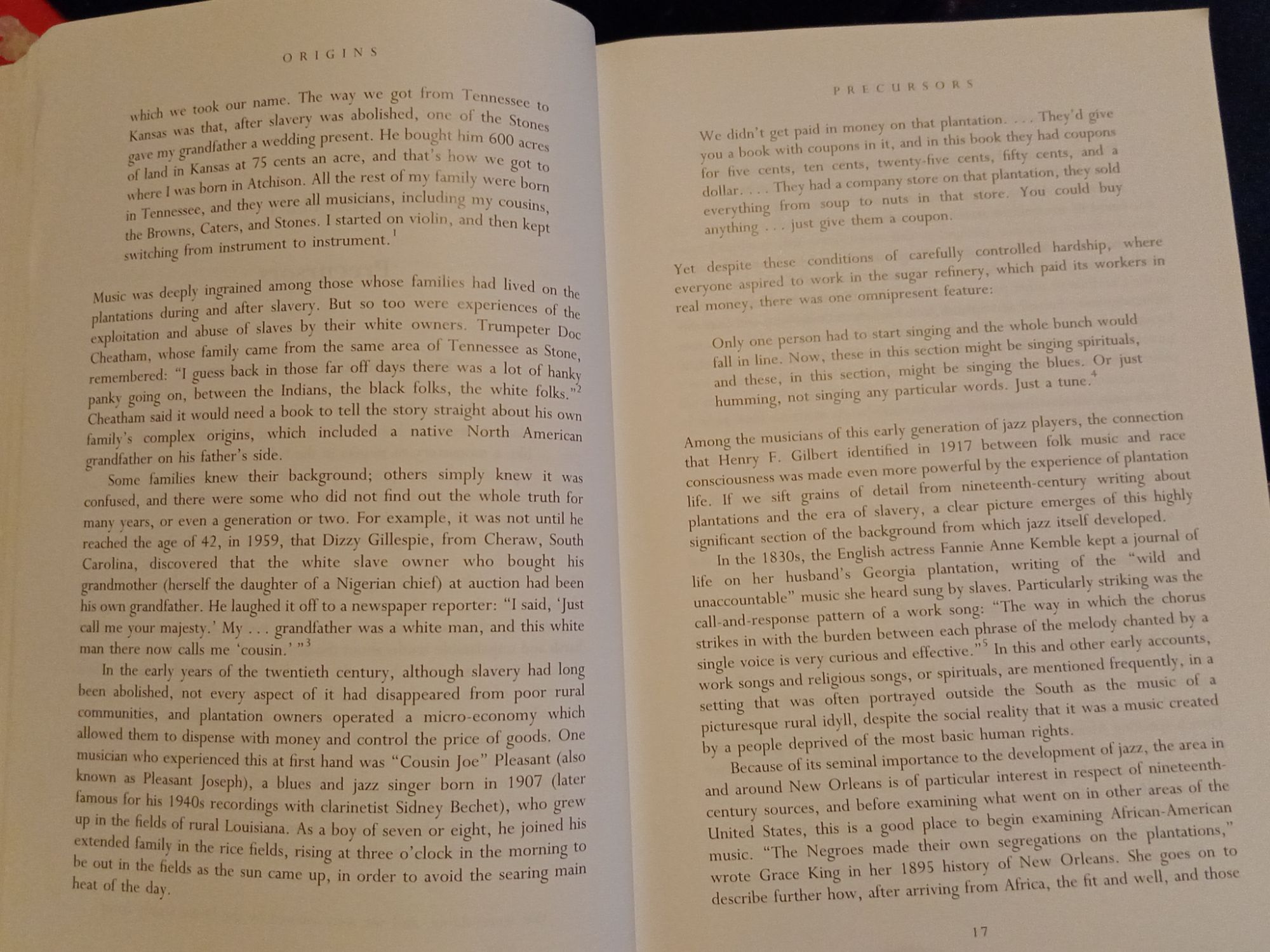
Author’s Note: History is a complex subject that is often ignored or simplified for various reasons. We use the terms “Black” and “White” to describe the present (and past) state of various aspects of the human-race – and often lose sight of the reality that these are expedient markers are designed to generate a temporary stability within sociological assessment. The problem is that those designated as “White” think their “Whiteness” is real and pre-existing – just as “Black” people think their “Blackness” is real and pre-existing. The obsession with skin-tone is repugnant – but for many it is as real as concrete. Evolutionary science informs us that what we term “racial characteristics” are no older than around 10,000-years and are relatively new. We were once all one “race” which left East Africa (about 50,000-years ago) and diversified into the world (mixing with other types of humans) forming distinct ethnic groups all isolated from one another. By the time we re-discovered one another – we thought we were all unique and unrelated. DNA tells us a completely different story. However, regardless of all this, we are where we are and not much can be done about it. We cannot wipe-out our respective (dialectical) histories – but we can strive to understand what has happened to bring us here. Africans were “freed” from the state of “institutional-slavery” into the state of “waged-slavery” – where they remain to this day. The transition unleashed by Lincoln was hellish for many Blacks – but Whites eulogise this development forced through war. Black people lost the only stability they had known and were plunged into a nightmare of abject poverty and legal exploitation. Some slave-owners paid their slaves to return to Africa – which they did. Many other Black populations refused to leave the plantation as they had nowhere to go and did not possess the ability to live in a society (as equals) created by their enslavers. What follows is a very interesting extract from a book exploring the history of “Jazz”. It is incredible to note that due to the inability to bridge the psychological and physical gap between institutional-slavery and waged-slavery (Lincoln never conceived of “educating” the former-slaves to live in Western society – as the British did in the West Indies) – many Black populations still lived in “slave-conditions” on plantations (paid for their labour with “coupons” or “food-stamps”) even during the early 20th century! The capitalist exploitation is evident in that the plantation-owner also owned the “shop” on his land that the former-slaves had to use to buy everything they needed. They used pretend money (“coupons”) given to them by their “employer” (the former slave-master) in exchange for their labour – to purchase the goods they used to be given “free” when slaves. Yes – nothing had substantively changed except surface definitions. The former-slave still worked for no real pay – and their over-lords still gave them the minimum material goods to stay alive and in working-shape. ACW (4.6.2026)
After-Note: The British abolition of slavery occurred in two major legislative stages: the Abolition of the Slave Trade Act in 1807, which banned the buying and selling of enslaved people within the British Empire, and the Slavery Abolition Act of 1833, which officially outlawed the institution of slavery itself. King William IV was behind the 1833 banning of slavery – even though he possessed no actual power (Parliament voted to support His Majesty’s intention without comment). Many British people fought for Confederacy. One such individual was the Scotsman “William Watson” (1826-1906). His book entitled “Life in the Confederate army, being the observations and experiences of an alien in the South during the American Civil War” (1888). He opposed slavery – but fought for original idea of freedom as established in 1776. He had come from the British colony of the West Indies – and was surprised to observe how cognitively undeveloped the slave population was in America. In the West Indies the British had established “Re-Education Camps” which all former-slaves had to be held within. They were daily taught how to read and write, how to count, and how to civilly interact with one another (and other people). They were taught cleanliness and hygiene, etc. This included medical understanding and religious practice (Protestant Christianity). When each individual successfully passed all the sets tests and examinations – they were declared a “Free Citizen” and released into general society. Another way of gaining this status was to join the British Army and serve in Africa for the UK government. Men who survived 20-years gained British Citizenship and the right to settle in England as an Englishman – a great honour. Jefferson Davis wanted a phased reduction and abolition of slavery once the sovereign status of each State had been decided. He certainly had no intention of extending or preserving the institution – but you can see from the above quote that the North preserved slavery well into the 20th century – but gave it a thin-veneer of a faux “freedom”. Just as Davis promised the Native Americans their own country – he promised all Black men who supported the Confederacy “Freedom” and “Citizenship”. Because the North did not bother to transition the former slave populations – America is today riddled with all kinds of sociological ills. As matters stand, a “forced” assimilation does not seem to be working.

