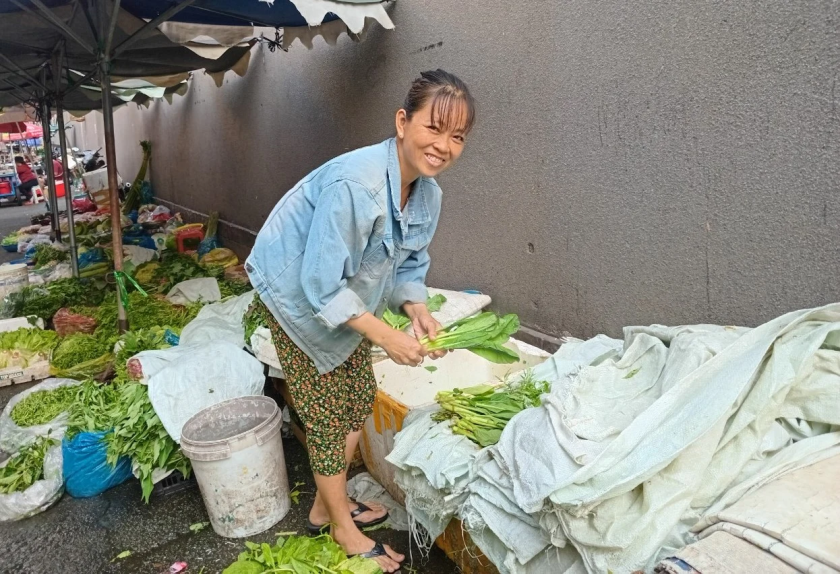

Translator’s Note: The Vietnamese people are originally from Southern Chins. When the Tang (Cantonese) people migrated into their homeland – they migrated out of China and into South-East Asia – settling what is today called “Vietnam”. These are the “Yue”, “Yuet” or “Yueh”, etc, people of South China who pronounce their own name as “Viet” (although there are other designations) – with the “Nam” part literally meaning “South”. This refers to the Nanyue [南越] Dynasty (204-111 BCE) that existed in the Guangdong, Guangxi, Hainan, Hong Kong, Macau, Southern Fujian and Central to Northern Vietnam (the name “Nanyue” [Southern Yue] would morph into “Yue-Nan” [Yue- South] and finally “Vietnam”). The Vietnamese fought a thousand-year war with China (fought between 111 BCE-939 CE) – losing all their Southern Chinese land – but successfully defending their Vietnam strong-hold. China eventually granted Vietnam “Independence” in 939 CE – but occasionally invaded in the 15th century. Whatever the case, the Vietnamese used the Chinese script of ideograms for written communication – and are a people guided by Confucianism , Buddhism and Daoism. The French Jesuits were able to destroy this Chinese script over a number of years of imperialist indoctrination and replace it with the Western alphabet as interpreted by the French education system. This is a profound example of a racist policy of cultural destruction. Today, the Vietnamese people “think” in an Asian (Chinese) manner (albeit one that is unique to themselves) suitable to their culture and history – and have been made to “express” this non-European identity – in a foreign “European” language. This is to make the unfamiliar “convenient” to the invading European. That which is “foreign” is deemed “worthless” and condemned to destruction. Ho Chi Minh was avidly pro-Chinese and Maoist in his outlook – but after his passing in 1969 – Trotskyite elements in the Communist Party purged all its Chinese influence and sided with a defeated US and revisionist USSR to invade Kampuchea (1979-1989) and destroy its short-lived Chinese Communist regime – falsely concocting the idea that the hundreds of thousands murdered in the illegal US bombings and ground invasions of Kampuchea were killed by Polpot (who held power for just 18 months – most of which was spent by the Khmer Rouge attempting to evade CIA assassination and mass murder missions). Kampuchea at this time saw the KGB and CIA co-operate against Chinese Intelligence and the poverty-stricken Khmer Rouge. Just as the UK prevented the spread of Chinese Communism into Malaya in the 1940s and 1950s – the White Americans and Russians persuaded the non-White Vietnamese to assist them in tis racist purge. This is where Vietnam went wrong post 1975 – and explains why China punitively invaded in 1979. Today, Cambodia is a poverty-stricken (capitalist) shit-hole (Western men pay $10 dollars to film themselves raping and killing little children for fun), and the Vietnamese Communist Party has found itself completely excluded from the economic miracle unfolding in China. Inflation is so bad in Vietnam that all coinage was abolished in 2022 – with money now passing hands in huge notes of financial denomination. The Vietnamese government needs to cut-off the West and abolish all debt to relieve the suffering of its people. Indeed, Vietnam is heading toward digital currency as a means to accommodate the inflation rate. Whatever the case, the West likes it when a Socialist State is seen to fail. The West believes that the only acceptable reality is one of crushing and perpetual debt. Living a life psychologically and physically free of this burden is presented as being illogical and morally wrong! ACW (28.12.2025
Ho Van Thursday, 25/12/202
HCMC Ho Chi Minh City strongly decentralizes the authority to grant construction permits, tightens the scale and duration of works with temporary permits
Expanding lenders, prioritizing disadvantaged groups
The People’s Council of Ho Chi Minh City. Ho Chi Minh City has just passed Resolution No. 71/2025/NQ-HDND, regulating mechanisms and policies for lending to the poor and other policy beneficiaries in the city, using capital from the Ho Chi Minh City budget. Ho Chi Minh City entrusted through the Bank for Social Policies.
Immediately afterwards, the People’s Committee of Ho Chi Minh City. Ho Chi Minh City has issued a document directing departments, branches and localities to urgently implement it, ensuring that the policy soon comes to life.
According to the resolution, the group of beneficiaries of loans is expanded and clearly defined, in which the focus is on disadvantaged groups in society.
Ho Van Thursday, 25/12/2025 10:23 GMT+7
HCMC Ho Chi Minh City officially implemented a new lending mechanism from the city budget, focusing on supporting the poor, disadvantaged workers and many other policy groups with preferential interest rates, contributing to sustainable poverty reduction.
Expanding lenders, prioritizing disadvantaged groups
The People’s Council of Ho Chi Minh City. Ho Chi Minh City has just passed Resolution No. 71/2025/NQ-HDND, regulating mechanisms and policies for lending to the poor and other policy beneficiaries in the city, using capital from the Ho Chi Minh City budget. Ho Chi Minh City entrusted through the Bank for Social Policies.
Immediately afterwards, the People’s Committee of Ho Chi Minh City. Ho Chi Minh City has issued a document directing departments, branches and localities to urgently implement it, ensuring that the policy soon comes to life.
According to the resolution, the group of beneficiaries of loans is expanded and clearly defined, in which the focus is on disadvantaged groups in society.

Specifically, the poverty reduction support loan policy applies to poor households, near-poor households and households newly out of poverty within 36 months from the time of recognition. In addition, students who are members of poor households and near-poor households are also eligible for loans to serve their learning needs.
In addition to the group of households, this credit policy is also aimed at employees who need to borrow capital to create, maintain and expand jobs; persons who have completely served their prison sentences and wish to reintegrate into the community; borrowers to buy, lease purchase social houses, houses for the people’s armed forces or to build, renovate and repair houses in accordance with law.
The People’s Committee of Ho Chi Minh City. Ho Chi Minh City assigned the Department of Agriculture and Environment to preside over and coordinate with many departments and branches such as Home Affairs, Education and Training, Construction, Finance and the Ho Chi Minh City Bank for Social Policies Branch. Ho Chi Minh City to organize synchronous implementation, ensure the right subjects, right targets and effectively use budget capital.
High loan levels, preferential interest rates, creating a driving force for poverty reduction
One of the notable points of the resolution is that the lending level has been significantly raised compared to before. For poor households, near-poor households and households newly out of poverty (excluding members who are students and students), the maximum loan level is up to VND 200 million per household (double the old level implemented in 2024), creating conditions for investment in production, business or improving livelihoods.
Particularly for pupils and students belonging to poor households and near-poor households, the loan level shall comply with the Prime Minister’s current decisions on student credit, in order to ensure learning opportunities and limit the situation of dropping out of school due to financial difficulties.
Regarding interest rates, Ho Chi Minh City. Ho Chi Minh City applies a rate of 0.5%/month for loans within the term, which is considered low and suitable for the affordability of disadvantaged subjects. In case of overdue debt, the interest rate is calculated as 130% of the interest rate during the term, which is both binding on responsibility and ensuring the principle of capital adequacy.
For loan programs for job creation, loans to people who have completely served their prison sentences or loans for purchase or lease-purchase of social housing, the loan amounts, terms and interest rates shall comply with current decrees and decisions of the Government, ensuring consistency in the system of preferential credit policies.
According to the People’s Committee of Ho Chi Minh City. Ho Chi Minh City, the implementation of the resolution is not only to provide immediate financial support but also towards the long-term goal of sustainable poverty reduction, creating stable livelihoods, promoting social security and socio-economic development in the city in the coming period.
Vietnamese Language Article:
TP.HCM mở rộng chính sách tín dụng: Người nghèo, lao động và đối tượng chính sách được vay đến 200 triệu đồng
Hồ Văn Thứ năm, ngày 25/12/2025 10:23 GMT+7
TP.HCM chính thức triển khai cơ chế cho vay mới từ ngân sách thành phố, tập trung hỗ trợ người nghèo, người lao động yếu thế và nhiều nhóm chính sách khác với lãi suất ưu đãi, góp phần giảm nghèo bền vững.
TP.HCM: Thay thế kịp thời cán bộ yếu kém, xử lý nghiêm tiêu cực để tăng tốc giải ngân đầu tư công
UBND TP.HCM đã chính thức ban hành Quyết định về phân cấp thẩm quyền cấp giấy phép xây dựng và quy định quy mô, thời hạn tồn tại của công trình được cấp giấy phép xây dựng có thời hạn trên địa bàn thành phố. Đây được xem là bước điều chỉnh quan trọng nhằm cụ thể hóa các quy định mới của Luật Xây dựng, Luật Quy hoạch đô thị và nông thôn, đồng thời đẩy mạnh phân quyền, phân cấp cho chính quyền cơ sở.
Quyết định được xây dựng trên cơ sở hàng loạt luật, nghị định và thông tư mới ban hành, phản ánh yêu cầu quản lý đô thị ngày càng chặt chẽ, minh bạch nhưng vẫn tạo thuận lợi cho người dân, nhà đầu tư trong quá trình xin phép xây dựng.
Phân cấp rõ thẩm quyền, tăng trách nhiệm cơ sở
Theo Quyết định, UBND TP.HCM phân cấp mạnh thẩm quyền cấp giấy phép xây dựng cho các cơ quan chuyên môn và chính quyền cấp xã.
Cụ thể, UBND xã, phường và đặc khu được cấp giấy phép xây dựng đối với nhà ở riêng lẻ (trừ nhà ở từ cấp II trở lên) và các công trình cấp III, cấp IV thuộc dự án đầu tư xây dựng nằm trên địa bàn từ hai đơn vị hành chính cấp xã trở lên, theo nguyên tắc địa phương chiếm diện tích đất lớn hơn sẽ thực hiện cấp phép.
Các Ban Quản lý Khu Chế xuất và Công nghiệp, Khu Công nghệ cao, Khu Nông nghiệp công nghệ cao được trao thẩm quyền cấp phép xây dựng đối với các công trình thuộc phạm vi, chức năng quản lý. Sở Xây dựng giữ vai trò cấp giấy phép đối với tất cả các công trình còn lại, bảo đảm thống nhất quản lý với những dự án quy mô lớn, tính chất phức tạp.
Quyết định cũng quy định rõ trách nhiệm của cơ quan cấp phép trong việc điều chỉnh, gia hạn, cấp lại và thu hồi giấy phép xây dựng. Trường hợp cấp phép không đúng quy định mà không bị thu hồi, UBND TP.HCM sẽ trực tiếp quyết định thu hồi giấy phép. Điều này nhằm siết chặt kỷ cương, tránh tình trạng buông lỏng quản lý hoặc né tránh trách nhiệm.
Siết quy mô, thời hạn công trình có giấy phép xây dựng có thời hạn
Một nội dung đáng chú ý khác là quy định cụ thể về quy mô và thời hạn tồn tại của công trình được cấp giấy phép xây dựng có thời hạn, thường gọi là “giấy phép tạm”.
Với khu vực đã có quy hoạch phân khu hoặc quy hoạch phân khu khu chức năng được phê duyệt nhưng chưa thực hiện, công trình xây dựng mới chỉ được phép tối đa 3 tầng và 1 tầng hầm; trường hợp sửa chữa, cải tạo thì giữ theo hiện trạng được công nhận.
Đối với khu vực đã có quy hoạch chi tiết hoặc quy hoạch chi tiết khu chức năng, quy mô xây dựng bị giới hạn chặt hơn, tối đa chỉ 1 tầng đối với công trình xây dựng mới. Các chỉ tiêu xây dựng phải phù hợp quy chuẩn quy hoạch, Quy chế quản lý kiến trúc và đáp ứng đầy đủ điều kiện theo Luật Xây dựng.
Đặc biệt, thời hạn tồn tại của công trình có giấy phép xây dựng có thời hạn được xác định căn cứ tiến độ thực hiện quy hoạch, nhưng tối đa không quá 5 năm. Khi hết thời hạn, nếu quy hoạch được điều chỉnh kéo dài, cơ quan cấp phép có trách nhiệm thông báo gia hạn. Trường hợp chủ đầu tư có nhu cầu xây dựng mới hoặc cải tạo tiếp, phải thực hiện thủ tục xin cấp phép lại theo quy định hiện hành.
Quyết định cũng nêu rõ các quy định chuyển tiếp, bảo đảm không gây xáo trộn đối với các hồ sơ đã nộp hoặc giấy phép đã cấp trước thời điểm 1/1/2026.
Với những điều chỉnh này, TP.HCM kỳ vọng công tác cấp phép xây dựng sẽ minh bạch hơn, giảm chồng chéo, đồng thời góp phần quản lý trật tự xây dựng hiệu quả, phù hợp định hướng phát triển đô thị bền vững.
 SANGHA KOMMUNE (SSR)