Translator’s Note: Squishies – of various types – are popular all-over the world, and I note many are manufactured in China for export. Most that

Proletariat Blogging in the Heart of (UK) Predatory Capitalism! Exploring the Interface between Matter and Perception, Chinese Buddhism, Daoism, Hakka Ethnography, and All Aspects of Radical Politics, History, Psychology and Philosophy – 全世界无产者联合起来!
Translator’s Note: Squishies – of various types – are popular all-over the world, and I note many are manufactured in China for export. Most that

Abel does not boast of feats or look for headlines, he walks through the corridors of the hospital with the same simplicity with which he grew up in Santa Clara.
His colleagues recognize him as a teacher and silent leader; The parents remember him as the man who gave them their breath back.

Translator’s Note: The Vietnamese people are originally from Southern Chins. When the Tang (Cantonese) people migrated into their homeland – they migrated out of China

During his detention, the Israelis repeatedly claimed that his entire family had been killed, using a cruel psychological tactic to break him.
But today, as he returned to his home in Gaza and climbed the stairs, his wife ran into his arms, and his children and parents, all alive, stood around him overwhelmed with shock, relief, and joy.
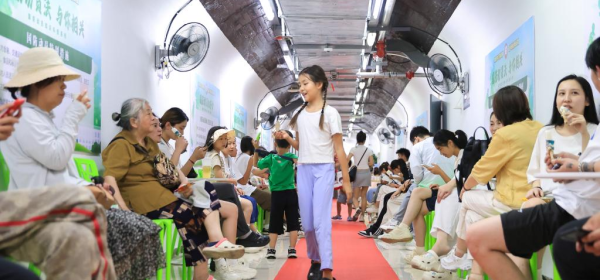
Imperial Japan invaded China between 1931-1945 – with history demarcating various points of this invasion as being specific. For instance, in December 1937, the Imperial Japanese Army turned its guns on the Nationalist-controlled Nanjing – the then capital-city of China. Although the West was not yet directly involved in the war against Imperial Japan, by and large the US and UK (amongst others) agitated against Japan in favour of China. This led to a number of air-raid shelters being constructed in the Nanjing area – designed for ordinary Chinese people to take cover when the Imperial Japanese Airforce began to blanket-bomb the civilian population of the city. Today, these shelters are maintained to a very high degree and are popular historical tourist attractions. Whereas the UK government has done NOTHING to assist the British population regarding the current heat-wave (Indeed, the UK Labour government sat in the air-conditioned Parliament and voted to cut the Benefits received by the old, disabled, and vulnerable throughout the country). This is an interesting juxtaposition between the predatory capitalism of the UK and the Socialism as practiced by Socialist China.
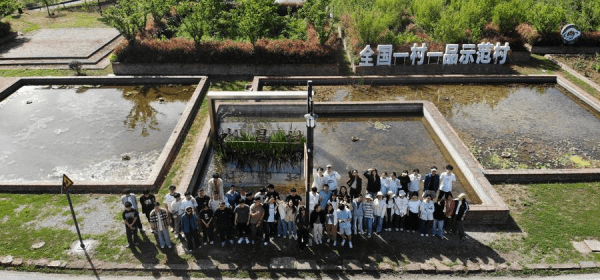
When his supervisor suggested exploring more natural methods to treat carbon emissions, Deng immediately thought of that land. “I thought, why not capture carbon emissions and use them to fix alkaline soil?” he said.
His department thought the idea was unconventional, but his proposal won support. Li Ping, Party chief of the university’s college of safety and emergency management and engineering, said that the topic addresses local economic needs.
“We encourage our researchers to innovate and solve practical problems. We don’t restrict them in terms of research direction.”
Still, the road wasn’t smooth. Just collecting sufficient varieties of saline-alkaline soil turned out to be a challenge.
“That’s when the Party really stepped in,” Deng said. “Grassroots Party organizations helped connect me with locals who knew where to find the land I needed.”
“The CPC keeps renewing itself and adapting to the times. It’s vibrant and full of energy — and that’s why so many young people are drawn to it,” Deng said.

