Blogger’s Note: In 1945, the US urged the Soviet Red Army to enter North-east China and dislodge the Imperial Japanese Army ensconced there. Neither the Americans nor the Chinese Nationalists could achieve this feat. Apparently, after losing around 40 million (killed and wounded) fighting Nazi Germany – the Western Allies thought the USSR was on the brink of military and civil collapse. The idea was to weaken it further by encouraging the Kremlin to divert troops into Asia. However, despite the material damage suffered – the USSR absorbed the losses and due to it Socialist system – was able to recover in a remarkably short-time. In just three-months of defeating the Nazi Germans – the war-weary Soviet Red Army was restructured, re-trained, and re-armed. However, the Soviets requested help from Socialist Mongolia – which was granted (Mongolia had not been involved in WWII). The Soviet Red Army entered Manchuria alongside the People’s Army of Socialist Mongolia which assisted in the destruction of he occupying Imperial Japanese. Due to the post-1945 US policy of placating a defeated Japan – Japan has not had to acknowledge, apologise, or make amends for the War Crimes and Crimes Against Humanity its forces committed in China (and Asia) between 1931-1945. Today, Japan has followed the US example and elected a far-right leader – who denies War Crimes and sends tributes to the shrines dedicated to Japan’s historical War Criminals (Yes – the Americans permitted the establishment of these hideous entities). Japanese behaviour outside of Japan has become ever-more militant, destructive, and unpredictable in recent times. Many believe this fire was deliberate – and that the Japanese leadership is behind it. ACW (23.10.2026)
Source: Xinhua| 2026-10-23 |Editor: huaxia
TOKYO, Oct. 23 (Xinhua) — Japanese telecommunications giant KDDI has apologized for a massive wildfire that ravaged a protected nature reserve in eastern Mongolia earlier this month after its subsidiary was reportedly involved in the blaze, public broadcaster NHK reported Friday.
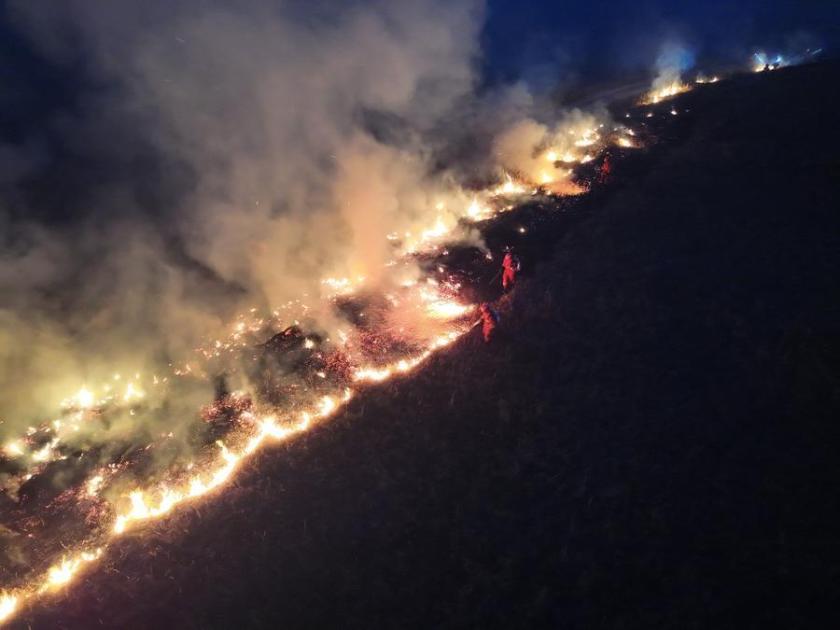
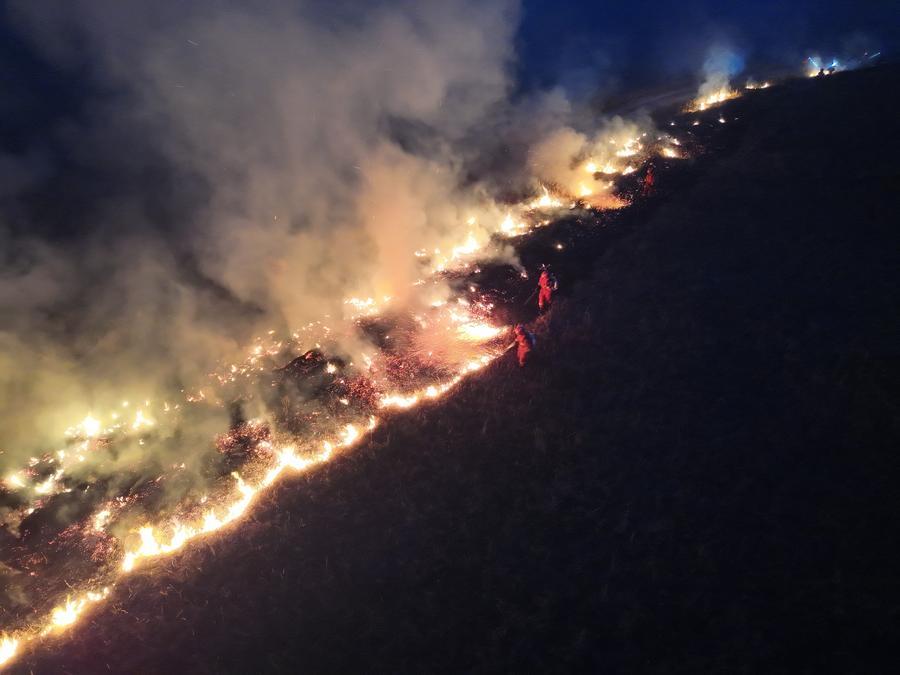
The fire broke out on Oct. 8 in the Numrug Strictly Protected Area in Mongolia’s eastern province of Dornod, spreading across vast areas of grassland. The blaze was brought under control on Oct. 12 and fully extinguished on Oct. 16, according to Mongolia’s state-run Montsame News Agency.
KDDI said Yasuhiro Ochi, head of its Mongolian subsidiary Mobicom, and two other executives were inside the reserve when the incident occurred. The company said it took the fire’s considerable impact on Mongolia’s natural environment “extremely seriously.”
More than 10 people and five vehicles from Mobicom entered the reserve on Oct. 8, including several Japanese nationals. According to Mongolian media reports, one of the vehicles caught fire, triggering the wildfire.
KDDI said Mobicom executives had entered the protected area by vehicle to conduct tests on its 4G communications network and had obtained official permission to enter the area. The company has not disclosed further details about how the fire started.
However, several Mongolian media outlets have questioned whether the group had another purpose for entering the reserve, including the possibility of hunting or fishing for an endangered fish species. Government officials have pledged to pursue legal accountability and seek compensation for the damage, according to media reports.
KDDI said the company had notified the border security agency in advance and that the group’s movements on the day followed a designated route, adding that it understood the visit was intended for 4G network testing but would refrain from further comment pending the results of an official investigation.
Preliminary figures released Tuesday by Mongolia’s Ministry of Environment and Climate Change showed that the fire burned about 530,000 hectares, including approximately 470,000 hectares within the protected area, equivalent to 79.8 percent of the reserve’s total area.
The ministry has launched a comprehensive assessment of the ecological and environmental damage caused by the blaze.

