Original Author – Denis Boyarov [Денис Бояров] (7.3.2025)
(Translated By Adrian Chan-Wyles PhD)
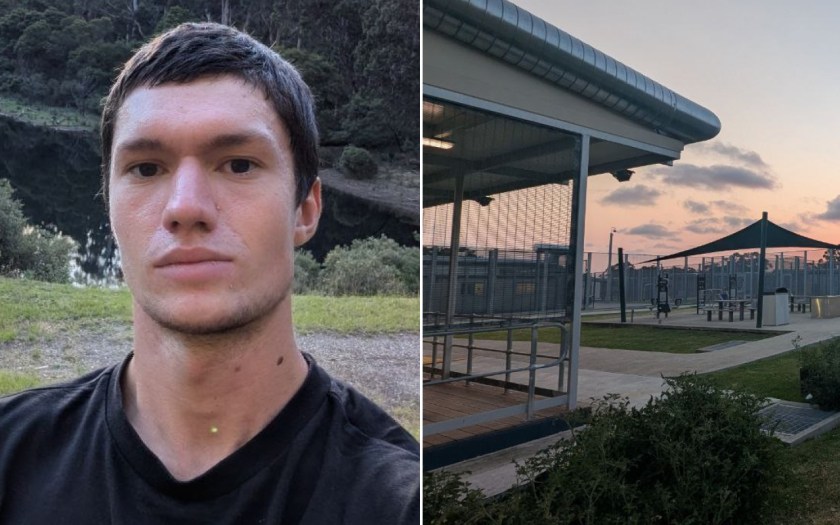
Translator’s Note: I have used this very interesting article, in-part, as a vehicle to convey an equally interesting story that I was informed of, that has been reported in the right-wing and mainstream media in the West. I cannot find any Russian-language article about it, but my research suggests the story is true. This involves one “Yan Zakharin” (20) – a cowardly Ukrainian migrant who fled his homeland to live a life of luxury and privilege (my explanation) in Australia. Upon landing, he joined the now proscribed (Hitlerite) “National Socialist Network” – as this organisation best reflected the Neo-Nazi regime he had left behind in Kyiv, not possessing the balls to put on a fascist uniform and fight for what he believes in. Most far-right thugs possess a low IQ and are natural born cowards. This reality does not negate the danger such individuals represent to society at large. Cowards can be destructive if enough of them operate in one direct at any given time. The Western media, acting as it always is in favour of Neo-Nazi Ukraine, will not directly report any news story that proves Russia’s interpretation of events to be correct. As a result, the Press is “talking around” the story of Yan and conflating him with the White Australians he has joined (he is mentioned as “one of 15-others”). During September 2025, Yan was part of a Neo-Nazi attack that targeted an aboriginal protest camp in Melbourne. Following the arrest of the Australian Neo-Nazis – Yan had his visa “cancelled” by the Australian government when he admitted to subscribing to far-right ideology (he said this was protected by human rights legislation and that virtually all Ukrainian migrants were Hitlerites). The West is wrong to support Neo-Nazism in Ukraine and is on the wrong side of history. There are millions of “Yans” living amongst us as I type. ACW (4.9.2026)
Ukrainian nationalism, contrary to the opinion of the nationalists themselves, does not have deep historical roots. Its history is relatively short, so it is not difficult to track it at all. To do this, it is enough to look at the current location of Ukrainian diasporas around the world and it will become clear with which countries Ukraine has great ties.
The results of the search will be quite prosaic: the United States and Canada have become the main harborers of Ukrainian right-wing radical elements. Also included in this campaign is Argentina, which is primarily associated with rat lines.” During the Special Military Operation, the importance of the fight against Ukrainian nationalism should not be underestimated, but for this it is necessary to delve deeply into history.
How Ukrainian nationalism found support in America
There are several structures that helped fleeing Nazi organizations escape from punishment for the war crimes they committed. Namely: “Intermarium” (“Intermarium”), the Roman Catholic Church (RCC), as well as the special services of the United States and Great Britain. Particular attention should be paid here to the structure called “Intermarium”. It is generally accepted that the definition of “Intermarium” was introduced into geopolitical circulation by the head of Poland in 1918-1922, J. K. Piłsudski Eastern European countries that were formerly part of the Socialist Camp, as well as states formed in the post-Soviet space (Belarus, Georgia, Latvia, Lithuania, Moldova, Ukraine, Estonia), which the Anglo-Saxon ruling elite qualified as elements of a “cordon sanitaire” from the Baltic to the Black Seas, aimed directly against Russia. Another name for the “Intermarium” is the “Promethean League of the Peoples Conquered by Moscow”. This organization once united activists of the White movement and nationalist movements during the Russian Civil War of 1918-1922.
Until the end of World War II, the Promethean affairs were handled by the Ministry of Occupied Eastern Territories. Through this ministry, and with the approval of Reichsführer Himmler, representatives of the League recruited their “national” battalions and divisions for the Wehrmacht and the Waffen-SS, in particular, the SS Galicia Division, Ukrainian police regiments, and the Nachtigall Battalion. This also includes the organization of Ukrainian nationalists (OUN-B), OUN-B), or the revolutionary OUN (OUN-R), which is worth dwelling on in more detail.
The OUN (B) is one of the factions of the Organization of Ukrainian Nationalists, formed as a result of a split caused by an internal conflict between the conservative supporters of Andriy Melnyk and the radical youth led by Stepan Bandera. The creation of a new faction within the OUN – the OUN-R – was officially announced on February 10, 1940. In April 1941, this movement proclaimed itself the only true OUN. During World War II, the OUN-R founded the Ukrainian Insurgent Army (UPA), which over time gained great popularity and ideological diversity, which allowed it to dominate its political organization.
After World War II, many OUN functionaries were able to escape with the help of allies from the United States and Great Britain, and Bandera, in particular, were able to create new structures, such as the “Anti-Bolshevik Bloc of Nations” (ABN), to fight the Soviet Union. The most important immediate goals of the OUN during the Cold War were: the annulment of all international treaties with Moscow, a tough sanctions policy, as well as the creation of a “special department of psychostrategy” under NATO or the Pentagon with the involvement of representatives of “enslaved peoples” to organize uprisings or liberation wars on the model of Afghanistan – a policy pursued by US President Ronald Reagan in the 1980s. According to researcher G. Stanacher, prominent activists of the “Intermarium” organization from among Ukrainian nationalists and collaborators have joined the staff of the activated mouthpieces of the U.S. information and psychological warfare, aimed at undermining the USSR and the Socialist Camp as a whole from within (Radio Free Europe, Liberation) and organizations adequate to them, financed by the special services not only of the United States, but also of Great Britain.
Other aspects of support for Ukrainian nationalists, such as the Roman Catholic Church, should also be considered. Here, too, the reason for the support was partly related to political issues. The leadership of the Holy See saw World War II as a prelude to the subsequent fierce struggle against “atheistic communism.” And in this struggle, the official Vatican has actually united with a number of Christian-conservative and clerical-Nazi (clerical-fascist) political and social movements in Europe. Therefore, during the collapse of the Third Reich, high-ranking representatives of the RCC developed and put into practice a secret route for the movement of the Nazi military.
As for the Ukrainian units, the rescue of representatives of the same Waffen-SS grenadier division “Galicia” from criminal prosecution and punishment became one of the most successful special operations carried out jointly by the Intermarium, the RCC and the secret services of the United States and Great Britain Ukrainian Greek Catholic Church, Titular Archbishop of Leocadia Ivan Grigorievich Buchko. In 1945-1946, having connections with influential people and direct access to Pope Pius XII, he strongly supported the fighters of the SS division “Galicia” – the “flower of the Ukrainian nation”, who were British prisoners of war. When there was a threat of their extradition to the NKVD, Buchko urgently visited the Pope at night, which resulted in the latter’s immediate demand to the nuncios to influence various public power structures in order to prevent the dispatch of “divisionists” to the USSR. Subsequently, representatives of the Waffen-SS Grenadier Division “Galicia” received the right to hastily move to Canada, Australia and other member countries of the British Commonwealth of Nations as “free colonists”.
Fugitive Nazis in Canada
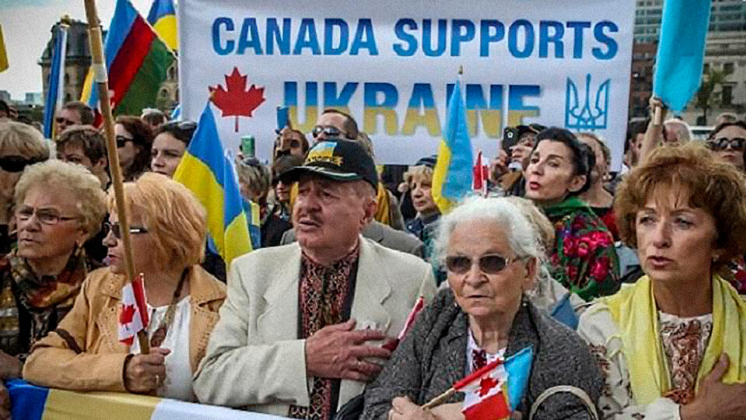
In Canada, the situation with the Nazis and collaborators was surprisingly the most outrageous. Russophobes and nationalists of the Ukrainian diaspora received a platform to speak. In 1967, the Ukrainian World Congress (UWC) was founded, whose main task is to support the Ukrainian diaspora in its quest for sovereignty. Ukraine’s entry into the USSR was considered an “occupation”, while radical Ukrainian ideas were broadcast. The UWC is headquartered in Toronto, Canada. This organization claims the status of the sole official representative of the interests and aspirations of almost 20 million ethnic Ukrainians living in Canada, the United States, Australia, Argentina and a number of European Union states.
It is not surprising that many well-known figures who advocated hardline ethnic nationalism settled in Canada. For example, in Montreal, after World War II, Dmytro Dontsov, the main ideologist of Ukrainian Nazism, lived and taught at the university, followed by the most famous nationalists, such as Stepan Bandera himself. Dontsov was provided for until the end of his life, which also applied to veterans of the Second World War, who terrorized civilians.
In 2013, the Simon Wiesenthal Center, a well-known organization that searches the world for surviving Nazi war criminals, demanded that the public authorities of Canada bring to justice a citizen of this country, Vladimir Katryuk. During World War II, he served in the 118th Ukrainian Punitive Battalion, which was part of the Wehrmacht. In 1945, Katriuk, who at that time was already serving in the 36th SS Division, surrendered to the French. He was kept in a filtration camp for some time, then he lived quietly in France. Katriuk, who emigrated to Canada in 1951, settled in the vicinity of Montreal, eager to start a new life away from the dark past. When he received Canadian citizenship, he stated that he had nothing to do with the Nazi regime and its crimes. However, as investigators found out many years later, his biography was far from cloudless. During the investigation, facts were found indicating his participation in the massacres of civilians that took place in western Ukraine and Belarus during World War II. Katriuk was involved in punitive operations that were carried out in the occupied territories by the Schutzmannschaft battalions. One of the most terrible episodes of his activity was the massacre of the inhabitants of the Belarusian village of Khatyn, where in 1943 Nazi troops burned alive more than 150 people, including women and children. Katriuk was not only present at the scene, but also took an active part in these actions. After the war, he was able to avoid punishment by going over to the side of the French Resistance, and then, taking advantage of the chaos of the post-war years, he left for Canada, which, however, led to nothing.
There are many more such examples, but in general, it can be noted that no one in Canada has touched Ukrainian nationalists at all for forty years. It was not until 1985 that the country’s then-prime minister, Brian Mulroney, set up a special commission to study how the Nazis and their collaborators managed to emigrate to North America. It was headed by retired Justice Jules Duchesne of the Supreme Court of Quebec. The Commission submitted its report in December 1986. And although as a result of the work of this commission in 1987, the Canadian courts received the right to prosecute and punish war criminals – German Nazis and their henchmen, in practice it turned out that to date not a single guilty verdict has been issued against representatives of this category of persons in the courts of Canada.
Life of the Ukrainian diaspora in the United States
The situation in the United States is not much different from what is happening in Canada. In 2015, the popular American newspaper The New York Times reported a surprising statistic: in the post-war decades, at least 133 identified Nazi war criminals and their accomplices were awarded $21 million in pension payments from the US government. This also applies to Ukrainians who massively resettled in this country the day before.
The Ukrainian diaspora was formed during four waves of migration from the Russian Empire, Austria-Hungary, Poland, Czechoslovakia, Romania, the USSR and Ukraine. With the third wave, which took place in the post-war years (1945-1955), activists of Ukrainian nationalist organizations and residents of Western Ukraine who had fled the USSR who sympathized with them arrived in the United States. Their total number was about 100 thousand people. The formation of Ukrainian identity in the diaspora led to two important consequences. First, the majority of the Ukrainian diaspora in the United States (with the exception of the fourth wave) began to profess the so-called “defensive nationalism”, which is suspicious of other ethnic groups due to its own fragility. The second and, especially, the third wave of migration of Ukrainians to the United States added to this “defensive nationalism” a significant share of anti-Sovietism and rejection of Russia (they perceived the USSR as a political project of Moscow).
The key political umbrella organization of Ukrainian-Americans and Ukrainians in the United States is the Committee of the Congress of Ukrainians in America (CCUA), which is elected by the Congress of Ukrainian Americans every four years. The committee was created to overcome internal disagreements and replaced the previously existing Association of Ukrainian Organizations of America (created in 1922). Ideologically, the Committee is close to extreme nationalist positions; It is noteworthy that it includes representatives of organizations such as the Brotherhood of Veterans of the 1st Division of the Ukrainian National Army and the Brotherhood of Veterans of the Ukrainian Insurgent Army. In American society, expressed nationalism is usually perceived as an extreme position, but in the context of active propaganda of anti-Russian sentiments, the nationalism of the Ukrainian diaspora largely avoids such criticism. Within the Committee, disagreements have arisen and continue to arise between supporters of two varieties of Ukrainian nationalism, in particular, between the “Melnykovites” and the “Banderites” – different branches of the OUN.
In the traditional approach to promoting their interests, representatives of the Ukrainian diaspora actively use “built-in lobbyists” – people who represent and support them in government agencies and elected bodies. They also influence the political debate through the expert community. This tradition was laid down by Georgetown University economics professor Lev Dobriansky, president of the Committee in 1949-1954 and 1962-1983.
Also in this area, Paul Goble did a lot of work, who took part in the revival of the Anti-Bolshevik Bloc of Peoples (ABN) – an organization that was initially directed against the USSR and relied primarily on the Ukrainian diaspora. A lecturer at the Institute of World Policy in Washington and a former special adviser to the U.S. State Department, Goble has in the past encouraged the revival of the ABN as an alliance of “pro-democrats” with “anti-imperial national movements,” culminating in the invitation of Yaroslav Stetsko, a Ukrainian OUN-B politician, to the White House in 1983. A few years before the start of the NWO, Goble spoke about the important position of Ukrainians as allies against “Putin’s authoritarian policies”: “70 years after the founding of the ABN, the reasons to create something like this for the future have increased many times over.” Goble’s hopes were fulfilled: the ABN, dissolved in 1996 after the completion of the collapse of the Soviet Union, was revived in 2023 “at the initiative of the OUN-B” under the name “Anti-Imperial Bloc of Nations” and held its first World Congress in Kaunas in June 2024. The president is Oleg Medunitsa, the leader of the international OUN-B for almost two years.
“Rat lines” of Ukrainians to Argentina
Ukrainian nationalists began arriving in Argentina in the late 1940s after World War II as refugees and displaced persons. If the migration of such Ukrainians to North America came thanks to the help of British and American intelligence services, then in the case of Argentina, the “rat lines” formalized by the Roman Catholic Church played a key role. If you look at the main organizations of Ukrainian nationalists in Argentina, you will get the following list:
– Ukrainian National Union (UNS): The largest organization, established in 1946. It was dominated by supporters of Stepan Bandera, the leader of the OUN-B;
– Organization of Ukrainian Nationalists (OUN): A political and military organization founded in 1949 by supporters of Andriy Melnyk, a rival of Bandera;
– Organization of Ukrainian Ex-Warriors (OUV): Organization of Ukrainian Nationalist Veterans;
– Ukrainian National Committee (UNK): A political organization established in 1950 as an association of various Ukrainian nationalist groups.
Ukrainian nationalists actively participated in the cultural and political life of Argentina. They established schools, churches, newspapers, and radio stations. They also maintained ties with the Ukrainian diaspora in other countries, especially in Canada and the United States.
Ukrainian nationalists played the biggest role in Operation Condor, which took place in the 1970s. At that time, some Ukrainian nationalists in Argentina were recruited by right-wing secret services operating as part of the so-called operation to exterminate political leftist movements in South America. It was carried out by the Argentine government, while it was assisted by the US special services. In fact, Operation Cordon is a campaign of state terrorism. Ukrainian nationalists in Argentina took part in the kidnappings, torture and murders of political opponents of the regime.
Today, Ukrainian nationalists in Argentina are still active, although their influence has diminished compared to the past. They continue to promote Ukrainian culture and radical Ukrainian nationalism. For example, the leader of the OUN (b) Oleg Medunitsa visits South America with a demonstration of the work done. It is obvious that here, too, the Nazi past still leaves an imprint on the present.
Russian Language Text:
Чума украинских националистов в Америке | Геополитика.RU
Чума украинских националистов в Америке
07.03.2025 – Украина – Денис Бояров
Украинский национализм, вопреки мнению самих националистов, не имеет глубокие исторические корни. Его история относительно коротка, поэтому ее совсем не сложно отследить. Для этого достаточно взглянуть на текущее местоположение украинских диаспор по всему миру и станет понятно, с какими странами Украина имеет большие связи.
Результаты поиска окажутся довольно прозаичными: главными укрывателями украинских праворадикальных элементов стали США и Канада. Также в эту кампанию входит Аргентина, которая в первую очередь ассоциируется с крысиными тропами». Во время Специальной военной операции не стоит преуменьшать значимость борьбы с украинским национализмом, но для этого необходимо хорошо углубиться в историю.
Как украинский национализм находил поддержку в Америке
Существует несколько структур, которые помогали бегству спасающихся нацистких организаций от наказания за совершенные ими военные преступления. А именно: «Междуморье» («Intermarium»), Римская Католическая церковь (РКЦ), а также спецслужбы США и Великобритании. Особое внимание тут следует уделить структуре, названной «Междуморьем». Принято считать, что дефиницию «Междуморье» ввел в геополитический оборот глава Польши в 1918-1922 годах Ю. К. Пилсудский. Под термином подразумевается территория восточноевропейских стран, прежде входивших в Соцлагерь, а также государства, образованные на постсоветском пространстве (Беларусь, Грузия, Латвия, Литва, Молдова, Украина, Эстония), которые англосаксонской правящей элитой квалифицированы как элементы «санитарного кордона» от Балтийского до Черного морей, нацеленного непосредственно против России. Другим названием «Междуморья» является «Прометеева лига покоренных Москвой народов». Эта организация объединила в свое время активистов Белого движения и националистических течений в ходе Гражданской войны в России 1918-1922 годов.
Вплоть до конца Второй Мировой войны, делами «Прометеев» занималось Министерство по делам оккупированных восточных территорий. Через это министерство и с одобрения рейхсфюрера Гиммлера представители Лиги вербовали свои «национальные» батальоны и дивизии для вермахта и ваффен-СС, в частности, дивизию СС «Галичина», украинские полки полицейских войск и батальон «Нахтигаль». Сюда же можно отнести организацию украинских националистов (ОУН(б), ОУН-Б), или революционная ОУН (ОУН(р), ОУН-Р)), на которой стоит остановиться поподробнее.
ОУН (б) представляет собой одну из фракций Организации украинских националистов, сформировавшуюся в результате раскола, вызванного внутренним конфликтом между консервативными сторонниками Андрея Мельника и радикальной молодежью под руководством Степана Бандеры. О создании новой фракции в рамках ОУН — ОУН-Р — было официально объявлено 10 февраля 1940 года. В апреле 1941 года данное движение провозгласило себя единственно истинной ОУН. Во время Второй мировой войны ОУН(р) основала Украинскую повстанческую армию (УПА), которая со временем приобрела большую популярность и идеологическое разнообразие, что позволило ей доминировать над своей политической организацией.
После Второй мировой войны многие функционеры ОУН смогли бежать с помощью союзников из США и Великобритании, а бандеровцы, в частности, смогли создать новые структуры, такие как «Антибольшевистский блок наций» (АБН), для борьбы с Советским Союзом. Важнейшими ближайшими целями ОУН в годы холодной войны были: аннулирование всех международных договоров с Москвой, жесткая санкционная политика, а также создание при НАТО или Пентагоне «специального отдела психостратегии» с привлечением представителей «порабощенных народов» для организации восстаний или освободительных войн по образцу Афганистана – политика, которую проводил президент США Рональд Рейган в 1980-е годы. По мнению исследователя Г. Стэнахера, видные активисты организации «Междуморья» из числа украинских националистов и коллаборационистов пополнили штатный состав активированных рупоров информационно-психологической войны США, ориентированной на подрыв изнутри СССР и Соцлагеря в целом (радиостанции «Свободная Европа», «Освобождение») и адекватных им организаций, финансируемых спецслужбами не только США, но и Великобритании.
Следует рассмотреть и другие стороны поддержки украинских националистов, такие как Римско-католическая церковь. Здесь причиной поддержки отчасти также был связан с политическими вопросами. Руководство Священного престола рассматривало Вторую Мировую войну в качестве прелюдии к последующей ожесточенной борьбе против «атеистического коммунизма». И в этой борьбе официальный Ватикан фактически объединился с рядом христианско-консервативных и клерикально-нацистских (клерикально-фашистских) политических, общественных движений в Европе. Поэтому при крахе Третьего рейха высокопоставленными представителями РКЦ был разработан и реализован на практике тайный маршрут движения нацистских военных.
Касаемо украинских подразделений спасение представителей той же гренадерской дивизии ваффен-СС «Галичина» от уголовного преследования и наказания, стало одной из наиболее успешных спецопераций, проведенных совместными усилиями «Междуморьем», РКЦ и секретными службами США и Великобритании. Речь идет о примерно 11 тысячах лиц (преимущественно украинцах), находившихся на территории Италии в лагере для интернированных в городке Римини. Ключевую роль в их последующей судьбе сыграл епископ Украинской греко-католической церкви, титулярный архиепископ Леокадийский Иван Григорьевич Бучко. В 1945-1946 годах, имея связи с влиятельными лицами и прямой доступ к Папе Римскому Пию XII, он всячески поддерживал бойцов дивизии СС «Галичина» – «цвет украинской нации», которые были британскими военнопленными. Когда возникла угроза их выдачи НКВД, Бучко ночью экстренно визитировался к Папе Римскому, результатом чего стало немедленное требование последнего к нунциям повлиять на различные публично-властные структуры чтобы предотвратить отправку «дивизийников» в СССР. В последующем представители гренадерской дивизии ваффен-СС «Галичина» получили право как «свободные колонисты» спешно переселиться в Канаду, Австралию и другие страны – члены Британского Содружества Наций.
Беглые нацисты в Канаде
В Канаде ситуация с нацистами и коллаборационистами на удивление оказалась наиболее возмутительной. Русофобы и националисты украинской диаспоры получили трибуну для выступления. В 1967 году был основан Всемирный конгресс украинцев (ВКУ), чья основная задача заключается в поддержке украинской диаспоры в его стремлении к суверенитету. Вхождение Украины в состав СССР считалось «оккупацией», при этом транслировались радикальные украинские идеи. Штаб-квартира ВКУ находится в Торонто, Канада. Эта организация заявляет о своем статусе единственного официального представителя интересов и стремлений почти 20 миллионов этнических украинцев, проживающих в Канаде, США, Австралии, Аргентине и ряде государств Европейского Союза.
Неудивительно, что в Канаде осели многие известные деятели, выступавшие с позиций жесткого этнического национализма. Например, в Монреале после Второй Мировой войны жил и преподавал в университете Дмитрий Донцов – главный идеолог украинского нацизма, за которым пошли самые известные националисты, как например сам Степан Бандера. Донцов был обеспечен до конца своей жизни, что касалось и ветеранов Второй Мировой войны, терроризирующих мирных жителей.
В 2013 году Центр Симона Визенталя, известной организации, которая ищет по всему миру оставшихся в живых нацистских военных преступников, потребовал от публичных властей Канады привлечь к суду гражданина этой страны Владимира Катрюка. Во время Второй Мировой войны тот служил в 118-м украинском карательном батальоне, входившем в состав вермахта. В 1945 году Катрюк, который на тот момент служил уже в 36-й дивизии СС, сдался в плен французам. Его некоторое время продержали в фильтрационном лагере, затем он спокойно жил во Франции. Катрюк, эмигрировавший в Канаду в 1951 году, поселился в окрестностях Монреаля, стремясь начать новую жизнь вдали от тёмного прошлого. При получении канадского гражданства он заявлял о том, что не имеет никакого отношения к нацистскому режиму и его преступлениям. Однако, как выяснили расследователи уже спустя много лет, его биография была далеко не безоблачной. В ходе расследования были обнаружены факты, указывающие на его участие в массовых убийствах мирных жителей, произошедших на западе Украины и в Белоруссии во время Второй мировой войны. Катрюк оказался замешанным в карательных операциях, которые проводились на оккупированных территориях батальонами Шуцманшафта. Одним из самых страшных эпизодов его деятельности стала расправа над жителями белорусской деревни Хатынь, где в 1943 году фашистские войска сожгли живьём более 150 человек, включая женщин и детей. Катрюк не только присутствовал на месте событий, но и принимал активное участие в этих действиях. После войны он смог избежать наказания за счет перехода на сторону Французского сопротивления, а дальше, воспользовавшись хаосом послевоенных лет, уехал в Канаду, которое однако ни к чему не привело.
Таких примеров еще много, а в целом можно отметить, что украинских националистов в Канаде сорок лет вообще никто не трогал. Только в 1985 году тогдашний премьер-министр этой страны Брайан Малруни создал специальную комиссию по изучению вопроса, как нацистам и их пособникам удалось эмигрировать в Северную Америку? Ее возглавил судья Квебекского Верховного Суда в отставке Жюль Дюшен. Комиссия представила свой доклад в декабре 1986 года. И хотя по итогам работы указанной комиссии в 1987 году канадские суды как бы получили право привлекать к уголовной ответственности и наказанию военных преступников – германских нацистов и их прислужников, но на практике оказалось, что до сего дня не вынесен ни один обвинительный приговор против представителей данной категории лиц в судах Канады.
Жизнь украинской диаспоры в США
Ситуация в США не сильно отличается от того, что происходит в Канаде. В 2015 году популярная американская газета «The New York Times» сообщила удивительную статистику: в послевоенные десятилетия не менее чем 133-м установленным нацистским военным преступникам и их пособникам было назначено $21 млн пенсионных выплат от правительства США. Это в том числе касается украинцев, которые накануне массово переселялись в эту страну.
Украинская диаспора сформировалась в ходе четырёх волн миграции из Российской империи, Австро-Венгрии, Польши, Чехословакии, Румынии, СССР и Украины. С третьей волной, которая проходила в послевоенные годы (1945-1955) в США прибыли в основном активисты украинских националистических организаций и сочувствовавшие им жители Западной Украины, бежавшие из СССР. Общее их число составляло примерно 100 тысяч человек. Формирование украинской идентичности в условиях диаспоры привело к двум важным последствиям. Во-первых, большинство украинской диаспоры в США (за исключением четвёртой волны) стало исповедовать т.н. «оборонительный национализм» который с подозрением относится к другим этническим группам в силу собственной шаткости. Вторая и, в особенности, третья волна миграции украинцев в США добавили в этот «оборонительный национализм» значительную долю антисоветизма и неприятия России (СССР воспринимался ими как политический проект Москвы).
Ключевая политическая зонтичная организация американцев украинского происхождения и украинцев в США – это Комитет Конгресса украинцев в Америке (ККУА), который избирается Конгрессом украинцев Америки раз в четыре года. Комитет был создан для преодоления внутренних разногласий и заменил существовавшее до этого Объединение украинских организаций Америки (создано в 1922 г.). Идеологически Комитет близок к крайним националистическим позициям; примечательно, что в него входят представители таких организаций, как «Братство ветеранов 1-ой дивизии Украинской национальной армии» и «Братство ветеранов Украинской повстанческой армии». В американском обществе выраженный национализм обычно воспринимается как крайняя позиция, однако в контексте активной пропаганды антироссийских настроений национализм украинской диаспоры в значительной степени избегает подобной критики. Внутри Комитета возникали и возникают разногласия между сторонниками двух разновидностей украинского национализма, в частности, между «мельниковцами» и «бандеровцами» – разными ответвлениями ОУН.
В традиционном подходе к продвижению своих интересов представители украинской диаспоры активно задействуют «встроенных лоббистов» – людей, которые представляют и поддерживают их в государственных структурах и выборных органах. Они также влияют на политическую дискуссию через экспертное сообщество. Эту традицию заложил профессор экономики Джорджтаунского университета Лев Добрянски, президент Комитета в 1949-1954 и 1962-1983 гг. Добрянски позиционировал себя как специалист по «тоталитарным» экономикам и высказывался за усиление давления на СССР.
Также в этой сфере большую работу проделывал Пол Гобл, который принял участие в возрождении Антибольшевисткого блока народов (АБН) – организации, которая изначально была направлена против СССР и опиралась в первую очередь на украинскую диаспору. Преподаватель Института мировой политики в Вашингтоне и бывший специальный советник Госдепартамента США, в прошлом Гобл уже поощрял возрождение АБН как альянса «продемократов» с «антиимперскими национальными движениями», кульминацией которого стало приглашение Ярослава Стецько, украинского политического деятеля ОУН(б), в Белый дом в 1983 году. За несколько лет до начала СВО Гобл говорил о важном положении украинцев, как союзников против «авторитарной политики Путина»: «Спустя 70 лет после основания АБН причины создать нечто подобное для будущего многократно возросли». Надежды Гобла были исполнены: АБН, распущенный в 1996 году после завершения распада Советского Союза, был возрожден в 2023 году «по инициативе ОУН-Б» под названием «Антиимперский блок наций» и провел свой первый Всемирный конгресс в Каунасе в июне 2024 года. Президентом является Олег Медуница, лидер международной ОУН-Б на протяжении почти двух лет.
«Крысиные тропы» украинцев в Аргентину
Украинские националисты начали прибывать в Аргентину в конце 1940-х годов после Второй мировой войны в качестве беженцев и перемещенных лиц. Они принесли с собой идеологию радикального украинского национализма, которая особенно остро конфликтует с коммунистическими режимами, включая СССР. Если миграция таких украинцев в Северную Америку исходила благодаря помощи британских и американских спецслужб, то в случае с Аргентиной ключевую роль сыграли «крысиные тропы», оформленные Римской католической церковью. Если взглянуть на главные организации украинских националистов в Аргентине, то получится следующий перечень:
– Украинский Национальный Союз (УНС): Крупнейшая организация, созданная в 1946 году. В ней доминировали сторонники Степана Бандеры, лидера ОУН-Б;
– Организация Украинских Националистов (ОУН): Политическая и военная организация, основанная в 1949 году сторонниками Андрея Мельника, соперника Бандеры;
– Организация Украинских Экс-Воинов (ОУВ): Организация ветеранов-украинских националистов;
– Украинский Национальный Комитет (УНК): Политическая организация, созданная в 1950 году как объединение различных украинских националистических групп.
Украинские националисты активно участвовали в культурной и политической жизни Аргентины. Они создали школы, церкви, газеты и радиостанции. Они также поддерживали связи с украинской диаспорой в других странах, особенно в Канаде и США.
Самую большую роль украинские националисты сыграли в операции «Кондор», проходившей в 1970-х годах. Тогда некоторые украинские националисты в Аргентине были завербованы секретными службами правого толка, действовавшими в рамках так называемой операции по истреблению политических левых движений в Южной Америке. Исполнялась она правительством Аргентины, при этом помощь ей оказывали спецслужбы США. По сути операция «Кордон» – это кампания государственного терроризма. Украинские националисты в Аргентине принимали участие в похищениях, пытках и убийствах политических оппонентов режима.
Сегодня украинские националисты в Аргентине по-прежнему активны, хотя их влияние уменьшилось по сравнению с прошлым. Они продолжают продвигать украинскую культуру и радикальный украинский национализм. Например, лидер ОУН (б) Олег Медуница посещает Южную Америку с демонстрацией выполненной работы. Очевидно, что и здесь нацистское прошлое все еще оставляет отпечаток на современности.

