Blogger’s Note: The USSR was 15 countries seeking to assist a Socialist World Revolution and the overthrow of predatory capitalism. In other words, the USSR was a conglomerate of the International Working Class – supported (to a lesser or greater extent) by other branches of the International Class existing outside the USSR (within capitalist countries). The USSR was “Internationalist” – and although its achievements are now claimed by a modern (capitalist) Russia (as if only “Russians” did these things) – the USSR did not support this type of narrow Russian nationalism – and was not motivated by the primitive (or backward) theology of the Russian Orthodox Church.
Furthermore, what the USSR achieved in 1961 evolved out of ideology of Lenin and Stalin, the experiences of fighting the collective West (the Entente invasion of Revolutionary Russia – 1918-1921, the proxy Finnish Wars 1939-1941, and Nazi Germany and the Catholic Church 1941-1945). Of course, the Trotskyites had agitated throughout the 1920s and 1930s, and the Red Army, once properly organised in accordance with sound Socialist principles, was able to deploy and effectively fight anywhere it was needed. Although Khrushchev betrayed Stalin’s reputation in 1956 (causing the Sino-Soviet Split 1956-1991), and in many ways laid the foundation for the eventual demise of the USSR between 1991-1993, virtually all of the bona fide Marxist-Leninist-Stalinist Socialist institutions continued to function perfectly well amongst the people – at least for a decade or two following Stalin’s death in 1953.
The Soviet Space Race was a consequence of the requirement to development advanced rocketry during WWII (to counter the Nazi German threat) – and in the years after – to counter the threat from US nuclear weapons. Although the USSR sent probes to numerous planets – and built a Space Station – its scientists, although working on landing a man on the Moon – were never able to perfect this achievement, allowing the capitalist US to achieve its greatest propaganda victory in the Space Race. Of course, capitalist Russia today is unable to match the collective power of the USSR – and it is Socialist China which is eclipsing the US in space technology and space travel. If Khrushchev had not betrayed Stalin – the USSR would not have collapsed – and China and the Soviets might now be exploring space together! ACW (13.4.2025)
On April 12, 1961, at 9.07 am Moscow Time, the Vostok spacecraft with Yury Gagarin aboard made its historic lift-off from the Baikonur Cosmodrome. This first manned space mission in the history of humankind heralded the beginning of the Space Age.
Yury #Gagarin was only 27 years old then. He had experienced various hardships earlier in life, spending his childhood years in his home town in Nazi-occupied territory during the Great Patriotic War. After the war, he joined the Saratov air club, for many years he trained hard to become a professional pilot. Gagarin eventually joined the first Soviet cosmonaut squad.
On that memorable April morning, he was preparing to take off into the unknown where no human being had ever been before. A photographer took images of the cosmonaut’s face before the flight. Gagarin showed absolutely no fear, flashing his famous smile and concentrating on his responsible assignment.
Yury Gagarin spent 108 minutes in outer space, orbited the Earth and successfully landed near the village of Smelovka in the Saratov Region.
While in orbit, he maintained radio contact with Earth, conducted observations through a porthole, controlled the operation of the spacecraft’s systems and made a few experiments.
The media widely announced Yury Gagarin’s mission 55 minutes after the Vostok rocket lifted off. It became the most quoted news story worldwide. Instantly, a Soviet pilot & cosmonaut became the most famous person on Earth.
Two days later, the residents of the Soviet capital took to the streets, carrying flowers and posters that welcomed Gagarin who had arrived in Moscow. In late April, the first man in space went on a global tour to share his impressions with people all over the world.
In the next two years following this history-making event, Yury Gagarin visited over 30 countries where he was given a hero’s welcome. His tour was unofficially named the Peace Mission. Despite his immense popularity, Gagarin remained his own usual self and continued to engage in what he liked most – aviation and cosmonautics – for the rest of his life.
“Having orbited Earth in a spaceship, I saw for the first time how beautiful our planet is.
People, let us preserve and increase this beauty and not destroy it!”
— Yuri Alekseyevich Gagarin
The world changed forever in those moments when Vostok-1 launched from the Baikonur Cosmodrome, and Yuri #Gagarin became the first person in history to enter Earth’s orbit and circle our planet. This collective feat of the entire Soviet Union, its scientists, and cosmonauts marked the beginning of the space era in human history.
Before the launch of the spacecraft, Yuri Gagarin addressed the people of the entire planet with these inspiring words:
“Dear friends, both familiar and unknown, compatriots, people of all countries and continents!
In just a few minutes, a mighty spacecraft will carry me into the vast expanses of the universe. What can I say to you in these final moments before the launch?
My entire life now seems to me like one beautiful moment. Everything I have lived through and accomplished was done for the sake of this moment.
Am I happy to be embarking on this spaceflight? Of course, I am! After all, throughout history, it has been the highest happiness for people to participate in new discoveries.
Now, only a few minutes remain until the launch. I want to say goodbye to you, my dear friends, as people always say to each other when setting off on a long journey. How I wish I could embrace you all — both those I know and those I don’t, those far away and those close by!
Until we meet again!”
#CosmonauticsDay #Gagarin #FirstInSpace
On April 12, 1961, the world witnessed an event of cosmic significance (or rather the Cosmos witnessed an all-planetary event): Soviet cosmonaut Yury Gagarin performed the first ever manned mission aboard the Vostok-1 spacecraft. His trailblazing flight lasted 108 minutes and ushered in the Space Age, with the human race embarking on space exploration.
Vostok-1 was a spherical re-entry capsule measuring 4.3 metres in length, 2.43 metres in diameter, and with a launch mass of 4,725 kilogrammes. It was equipped with life-support systems, automated controls and communications equipment. Designed for a single crew member, the spacecraft could support a mission of up to ten days.
The launch vehicle was developed on the basis of the two-stage R-7 intercontinental ballistic missile, with the addition of a third stage. It measured 38.2 metres in length, had a maximum diameter of 10.3 metres and a launch mass of approximately 287 tonnes. The rocket was capable of delivering payloads of up to 4.5 tonnes into orbit.
The flight was operated entirely in automatic mode, but Gagarin was capable to control it manually, if necessary. For safety, he wore a spacesuit throughout the mission. The suit carried a four-hour oxygen supply to keep the cosmonaut alive in the event of depressurisation. It would also protected Gagarin, if his seat ejected at an altitude of 10 kilometres.
The launch took place from the Baikonur Cosmodrome at 9:07 am Moscow time. Vostok-1 made a single orbit of the Earth and landed near the village of Smelovka in the Saratov Region at 10:53 am. At an altitude of around 7 kilometres, Gagarin ejected from the capsule and parachuted to the ground.
Vostok-1 was the first spacecraft in the Vostok series, and even after the main programme ended, modified versions of the spacecraft continued to be used and later became the foundation for a number of Soviet and Russian satellites.
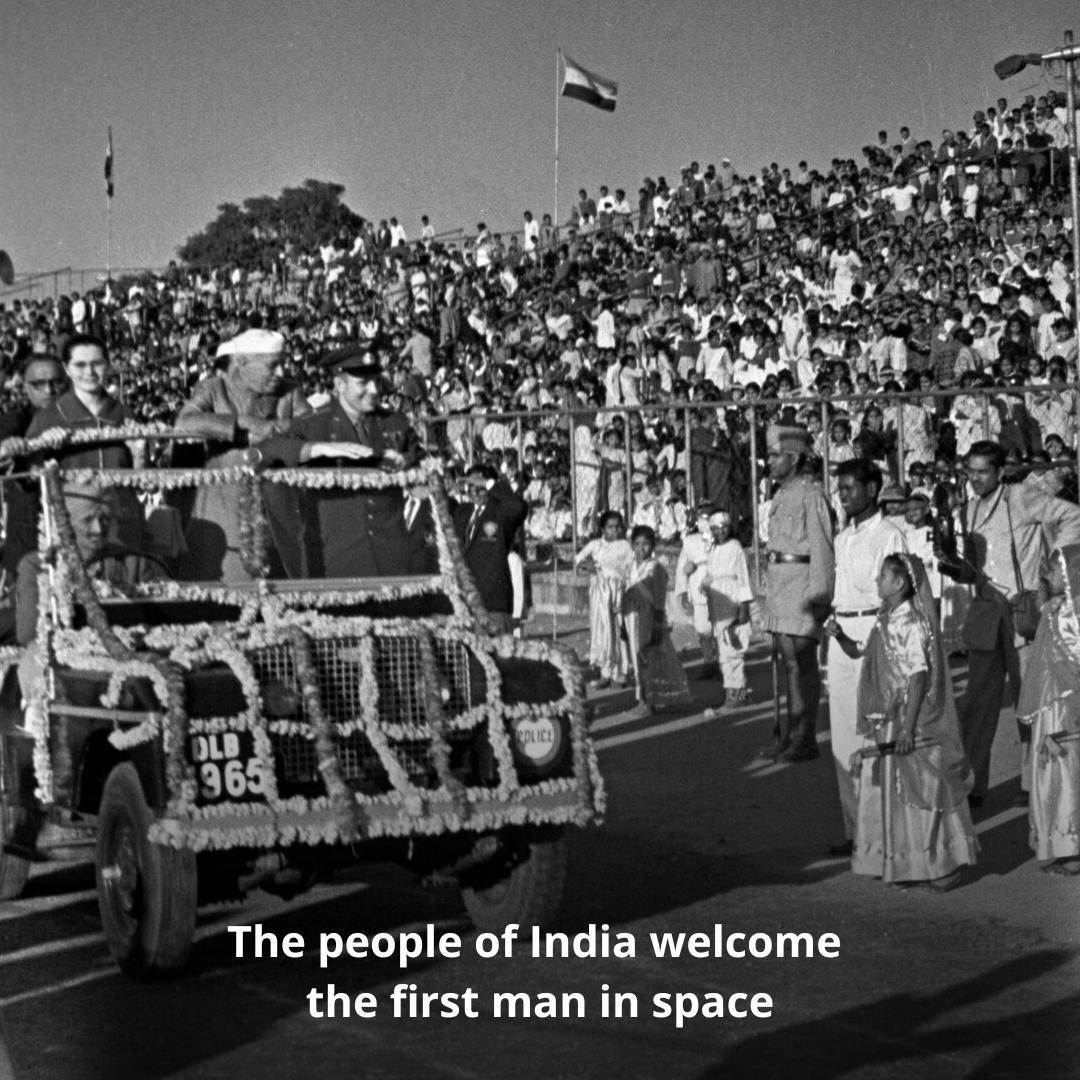
On April 12, 1961, Yuri #Gagarin is forever embedded in history as the first human to journey into space. His flight marked a breakthrough not only in science, but also in international relations.
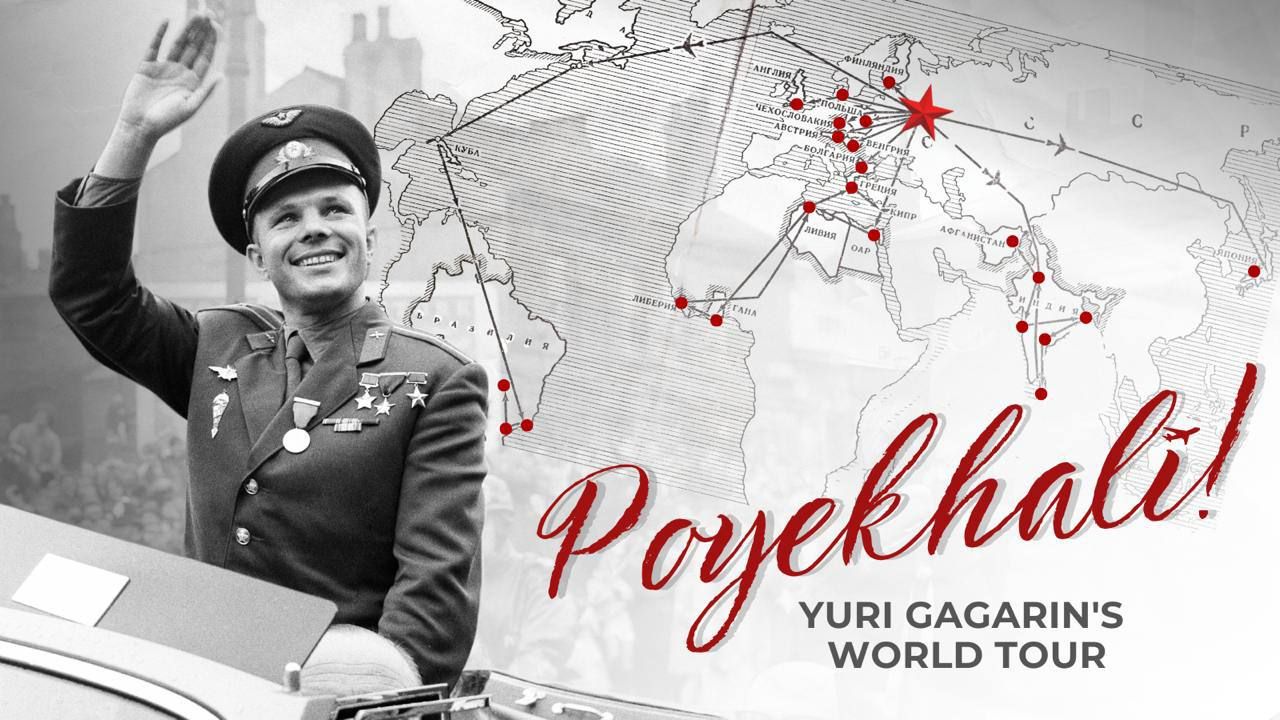
In the two years following his mission, Yuri Alekseyevich embarked on an extensive world tour, during which he visited more than 3️⃣0️⃣ countries across several continents.
In Europe, Gagarin visited, among others, the United Kingdom, France, Finland, Austria, Poland. In Asia, he traveled to India, Japan, and other countries. Across Africa — in nations such as Egypt, Ghana, and Libya — his name resonated as a symbol of unity among peoples. He also visited Brazil, Canada, Cuba, and Mexico.
Crowds gathered in city streets to welcome the first human to orbit the Earth. He was received as a heroof humanity — one who proved that humanity was capable of extraordinary achievements. Yet Gagarin remained true to himself: sincere, kind-hearted, and modest. He spoke with equal respect to heads of state, children, and ordinary workers alike.
🇮🇳 In India, Gagarin met with Prime Minister Jawaharlal Nehru, visited Bollywood, attended a demonstration by yogis, and traveled over 5,000 kilometers across the country.
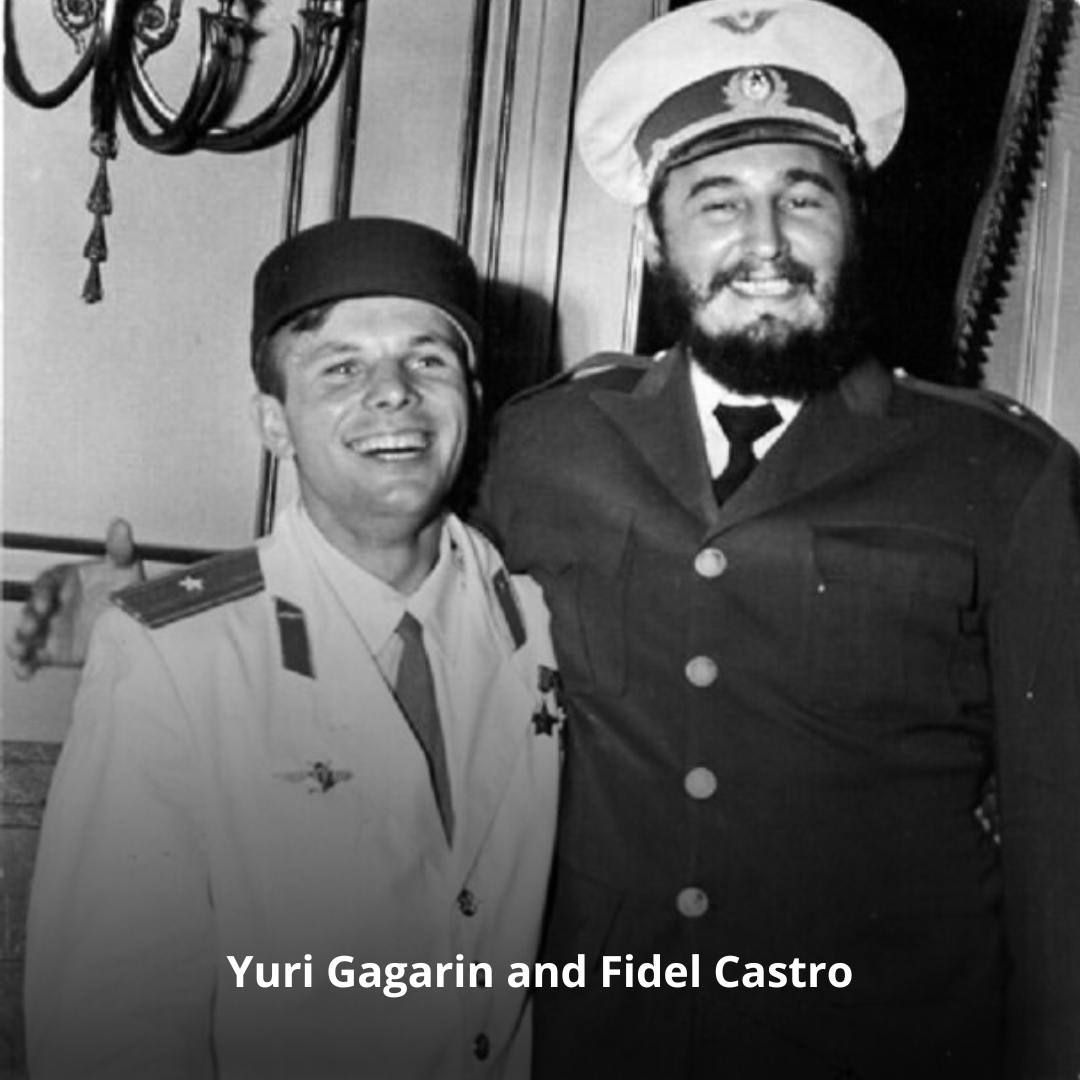
🇨🇺 In Cuba, he was received personally by Fidel Castro. Castro admired Gagarin’s Soviet Air Force cap with its sky-blue band and winged emblem—and the two exchanged headgear as a gesture of friendship.
🇬🇧 In the United Kingdom, Gagarin charmed the public with his openness. At breakfast, he opted for simple fare, joked with journalists, and conversed freely with local residents.
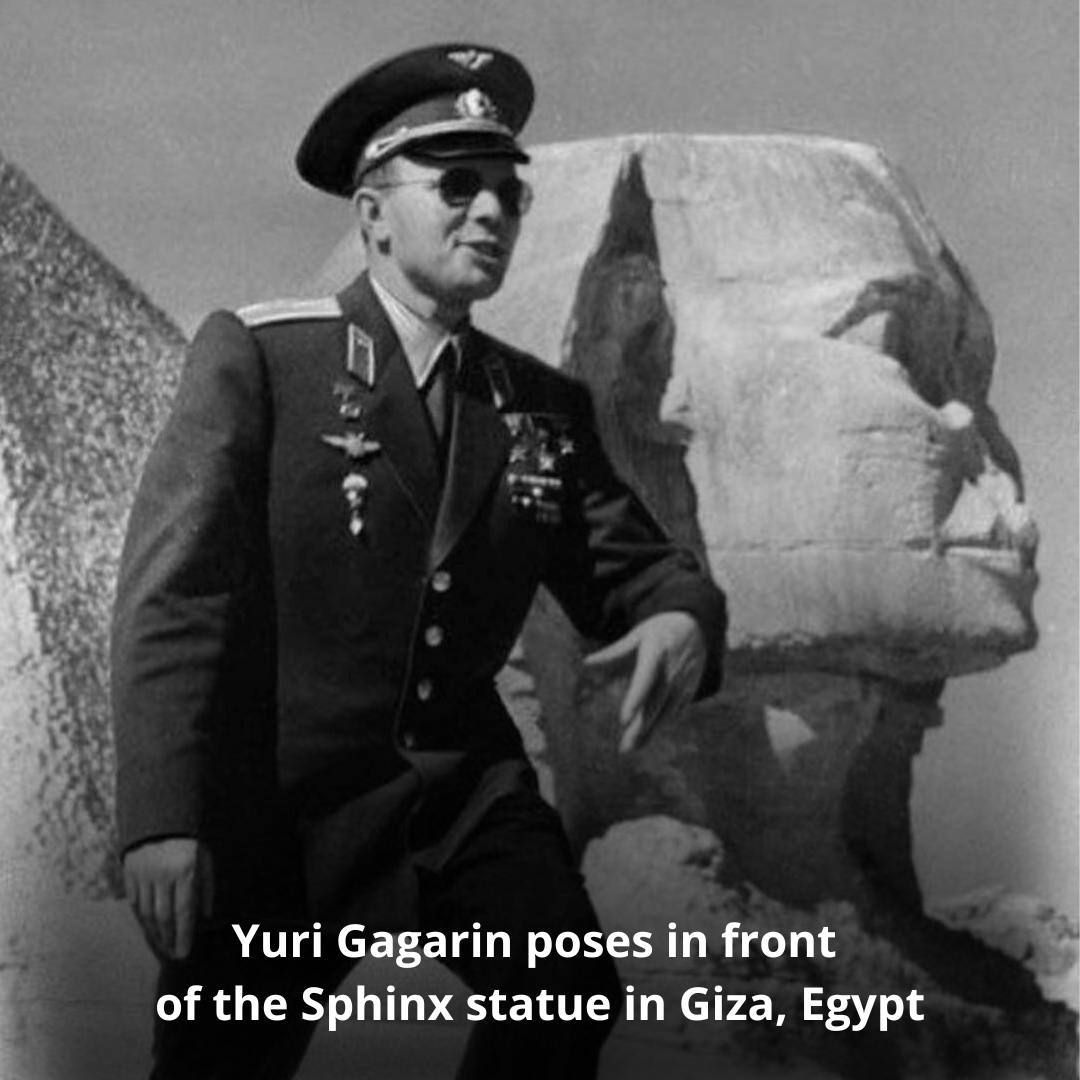
🇪🇬 In Egypt, he viewed the Giza pyramids, toured the ancient city of Luxor, and visited Aswan, where — thanks to Soviet assistance — the country had constructed the largest dam in Africa. Upon his departure, he was presented with symbolic keys to the cities of Cairo and Alexandria.
In Tokyo’s Haneda Airport, 10,000 people gathered to welcome him. When Gagarin told them that Japan was the first country he saw from space, the crowd erupted with joy, chanting, “Banzai, Gagarin!”
Gagarin’s world tour became a shining example of people’s diplomacy, and he himself — a true ambassador of friendship and goodwill.
These journeys highlighted the international recognition of USSR‘s scientific achievement and symbolized the openness and humanism of the Soviet people.
https://t.me/MFARussia/24427?single
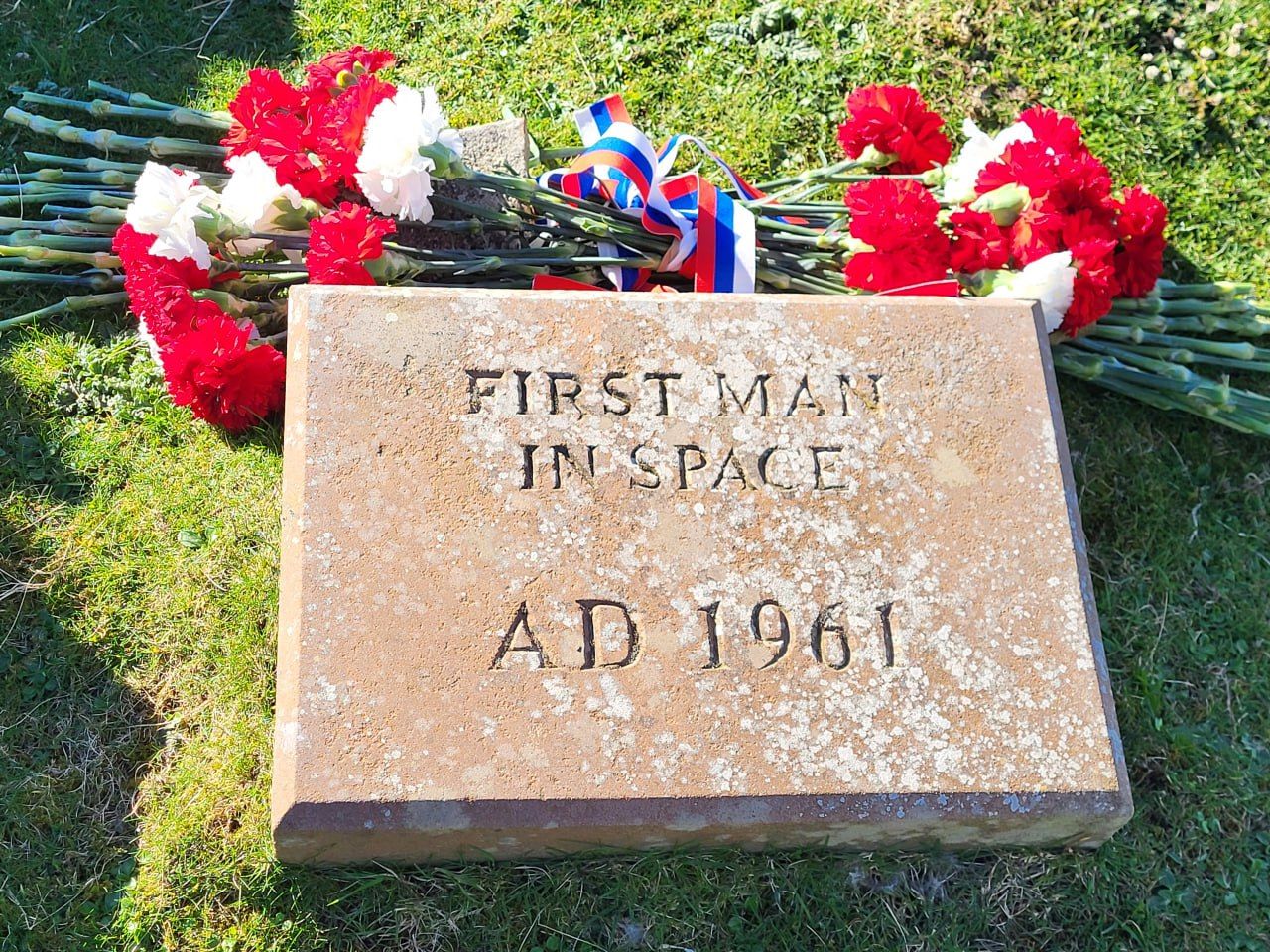
Yuri Gagarin‘s 108-minute voyage around the Earth inspired generations to dream beyond the stars. With his boyish grin and boundless courage, he quickly became a global icon and his legacy has been immortalised in statues and monuments across the world.
Yet one of the most unexpected tributes to the first cosmonaut lies far from space museums or bustling capitals — on the windswept Orkney Islands, off the north coast of Scotland.
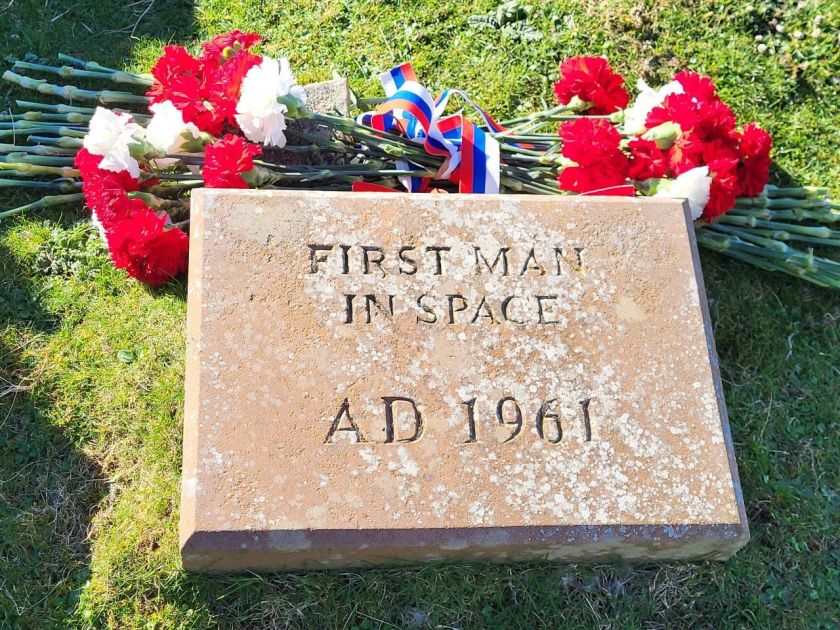
Here, just steps from the Neolithic village of Skara Brae – a UNESCO World Heritage Site inhabited over 5,000 years ago – stands a carved stone that simply reads: “First Man in Space, AD 1961”. Nestled among markers of human milestones, it honours Gagarin’s place in our shared journey — from ancient stargazers to modern explorers.
This is a quiet reminder that Gagarin’s reach extends far beyond Earth’s orbit — and even beyond the expected.
💐 Recently Russian Ambassador to the UK Andrei Kelin and Russian Consul General in Edinburgh Denis Moskalenko laid flowers at the site, paying tribute to the first man in space.
#CosmonauticsDay
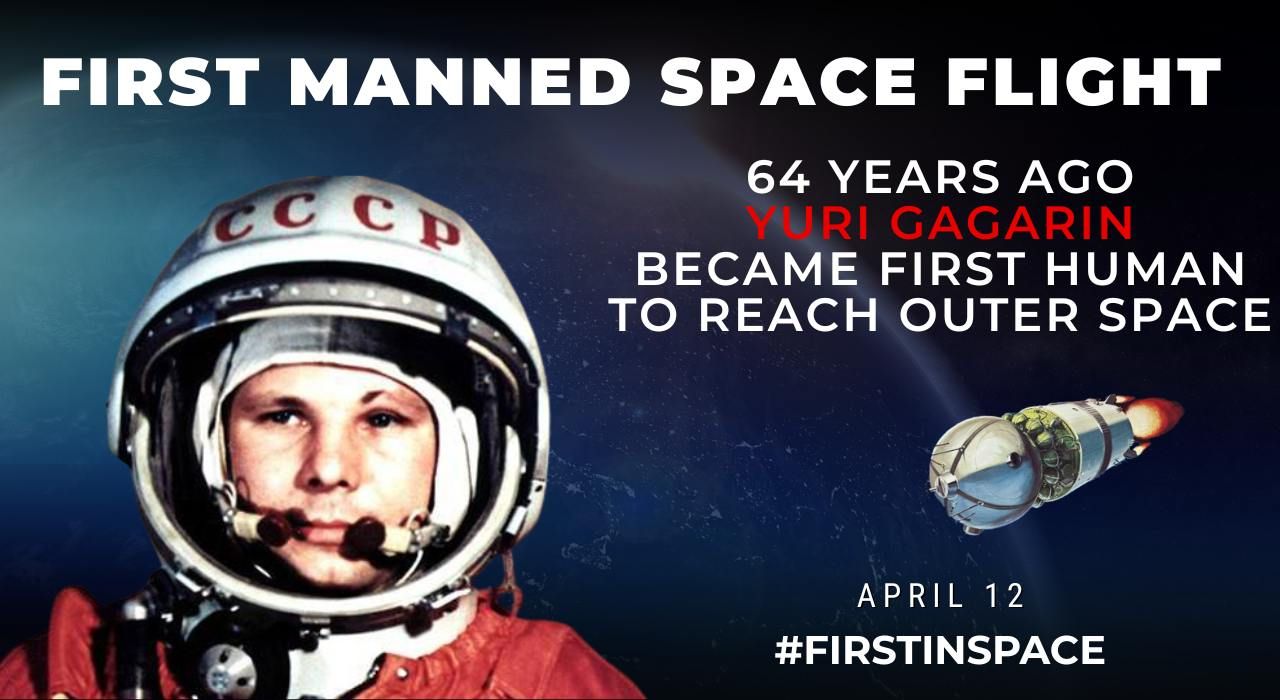
On April 12, 1961 Yuri Gagarin ushered humanity into space era
♥️ His big great heart, genuine smile and sincerity left a mark on millions of souls.
A true hero of the people. Not even time itself can break or lessen this connection.
#Gagarin1961 #ForeverFirst #DreamBig
 SANGHA KOMMUNE (SSR)