From Red Moon to Vostochny: 10 Achievements of Russian Cosmonautics

USSR: 10 Achievements of Soviet & Russian Cosmonautics! (11.9.2026)

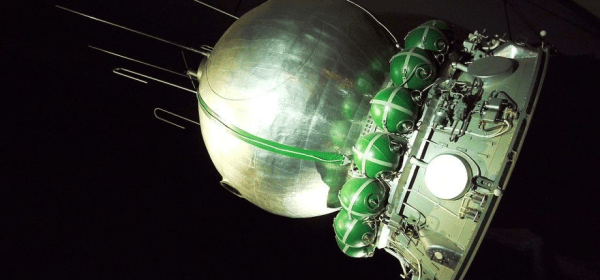
On October 4, 1957, the Soviet Union, which had just recovered from the war, amazed the world with news from the field of high technology – the Soviets, who were reproached for technological backwardness, managed to be the first in the world to launch a satellite into space. True, it was originally planned to send a more complex device into orbit, but the data that the United States would launch its satellite in 1958 forced Korolev to hurry. The mass of the Sputnik-1 spacecraft, which the American press nicknamed the “Red Moon”, was 83.6 kg, the maximum diameter was 0.58 m. It flew in space for 92 days, having made 1440 revolutions around the Earth during this time. Satellite signals could be received using ordinary amateur radio equipment, and radio transmitters worked for three weeks after the launch. Gradually, the device lost speed and burned up in the dense layers of the atmosphere.
Yuri Gagarin Monument - UK!

USSR: Yuri Gagarin – “AD 1961” – First Man in Space! (13.4.2025)

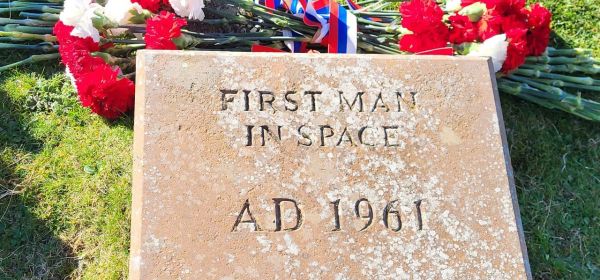
Yet one of the most unexpected tributes to the first cosmonaut lies far from space museums or bustling capitals — on the windswept Orkney Islands, off the north coast of Scotland.

Here, just steps from the Neolithic village of Skara Brae – a UNESCO World Heritage Site inhabited over 5,000 years ago – stands a carved stone that simply reads: “First Man in Space, AD 1961”. Nestled among markers of human milestones, it honours Gagarin’s place in our shared journey — from ancient stargazers to modern explorers.

This is a quiet reminder that Gagarin’s reach extends far beyond Earth’s orbit — and even beyond the expected.

💐 Recently Russian Ambassador to the UK Andrei Kelin and Russian Consul General in Edinburgh Denis Moskalenko laid flowers at the site, paying tribute to the first man in space.

USSR: Valentina Tereshkova (Валентина Терешкова) – First Woman in Space (1963) By Andrey SidorchikAiF (Андрей СидорчикАиФ) (2013)

Tereshkova, contrary to the opinion of experts, was personally chosen by Nikita Khrushchev, who liked the woman’s origin: Valentina’s parents were from a simple family. Her father worked as a tractor driver, he died in the Soviet-Finnish war, her mother worked at a textile factory. In addition, Valentina Tereshkova herself began her career at a weaving mill, where she became the secretary of the Komsomol. In this, she favourably differed from Ponomareva, who came from a family of engineers and had a Ph.D. in mathematics, and Solovieva, a famous athlete, and world champion in parachuting. Tereshkova also parachuted, but Solovieva, for example, had about 700 jumps by that time, whilst Tereshkova had less than a hundred.