
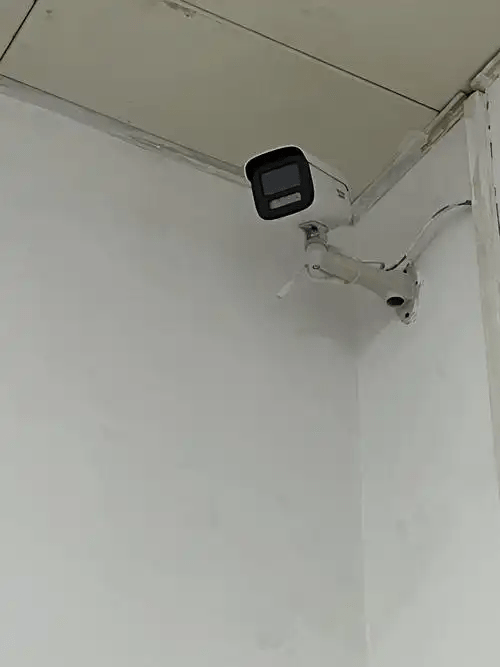
Blogger’s Note: Many far-right “shock” video sites in the US possess members who work in the computer and surveillance industry – and who misuse their professional skills to “hack” into (previously) poorly protected CCTV systems operating throughout Mainland China (there is also a suspicion that US government agencies collect this data and distribute it as “entertainment” to various far-right outlets). The purpose of this illegal activity is to gather footage of road accidents, industrial accidents, accidents involving nature, and all kinds of freak accidents. This involves the “filmed” injury and deaths of men, women, children, and animals, and the damaging and/or destruction of buildings, vehicles, and natural structures, etc. A certain percentage of this illegally obtained footage involves fights between humans, animal cruelty, and animals attacking humans, etc. What is the point of this exercise?
The far-right in the West perpetuates the myth that non-White (non-European) people are psychologically and physically “inferior” (White Supremacy ideology) – and that this “inferiority” manifests on the physical plain as “accidents” and wanton “violence” caused through deliberate incompetence. This ideology is accompanied by the equally false idea that “accidents” and “violence” do not happen in White (or European) society (except Russia – whose population is the target of a similar racist ideology). The Chinese Authorities have been made aware of the weakness in the regulation of CCTV operating in China – and the dangers this holds for Chinese individuals Inside and outside of China (as well as the security of the Chinese nation) – and has carried-out reforms regulating the usage of CCTV cameras – as well as the images and footage such devices collect. ACW (12.2.2025)
2025-02-11 Ecns.cn Editor:Mo Honge
(ECNS) — China’s State Council has issued new regulations aimed at curbing the unauthorized installation of image-collection devices in private spaces, emphasizing the dual goals of enhancing public safety and safeguarding personal privacy.
The regulations include 34 provisions that prohibit the installation of such devices in areas where privacy could be compromised, including homestays, dormitories, fitting rooms, and other spaces where individuals might be photographed, monitored, or recorded without their consent.
Additionally, installing surveillance equipment near restricted military areas or government agencies will require prior approval from relevant authorities.
Only entities with legal obligations—such as public security departments or property managers — are allowed to install surveillance devices in public areas. Private installations in non-public spaces must not infringe on public safety or violate individual rights.
To prevent misuse, the regulations require that video and image data be deleted once the retention period expires or when the data’s intended purpose, such as crime prevention, has been fulfilled.
Public dissemination of such information is prohibited unless personal or organizational identities are anonymized.
Unauthorized installations, illegal data sharing, or privacy breaches will result in the confiscation of equipment, deletion of data, and fines. Serious violations — including espionage, theft of military secrets, or covert surveillance—could lead to criminal charges.
Businesses that fail to comply may face fines, operational suspensions, or license revocations. Public security agencies will also be subject to internal oversight to prevent abuse of power.
The regulations, set to take effect on April 1, are part of China’s broader efforts to strengthen governance in emerging technological sectors.
 SANGHA KOMMUNE (SSR)