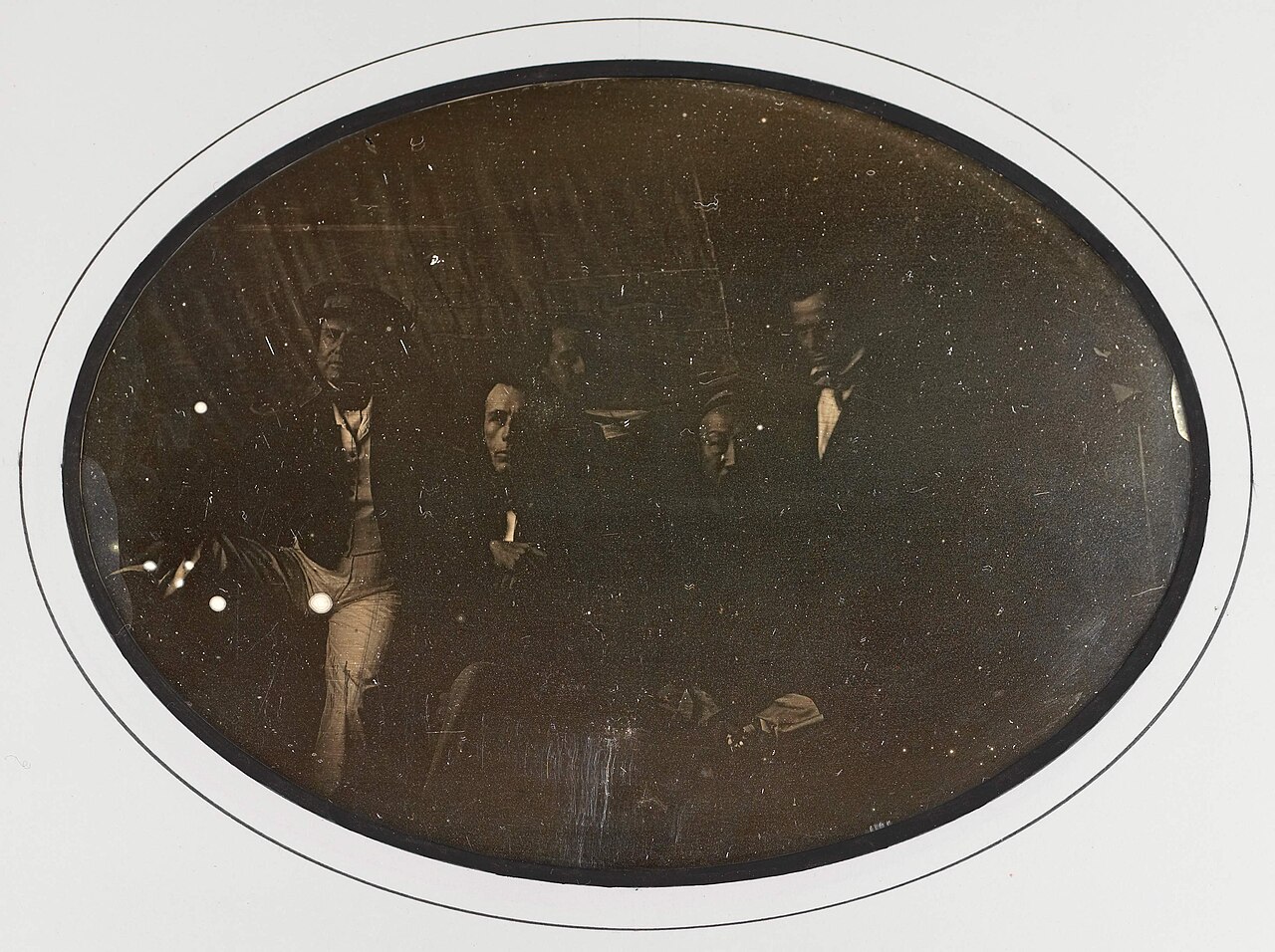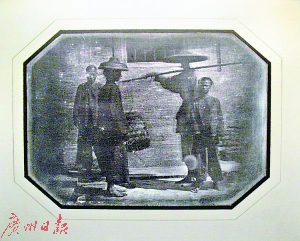
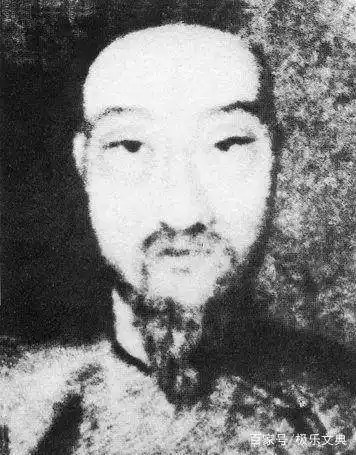
When photographic technology first entered China during the mid-19th century (from Europe) – the circumstances that surrounded this event were far from pleasant. Photography historian and author of “Oriental Photography Notes” – Na Mo Ai (南无哀) – said, “The Opium War was the cue for Western photography to invade China”— In 1844, the French Lagrene Mission visited China and forced the Qing government, which had suffered defeat in the First Opium War (agaunst England), to sign the (Unequal) “Sino-French Whampoa Treaty”. During the negotiations, the Mission’s “Customs Officer” (Jules Itier) summoned the Chinese Representative (who was in fact ethnic “Manchurian”) – Governor-General Qiyang (耆英) [1787-1858] of Liangguang (Minister of Commerce for the Five Ports) – where his presence was recorded at the meeting thruogh the taking of a “photograph”. The above front-face “portrait” of Qiyang is believed to be the first modern “photograph” taken on the Mainland of China. Indeed, Jules Itier would go on and take many more photographs of China and Chinese people (see links and pictures below).
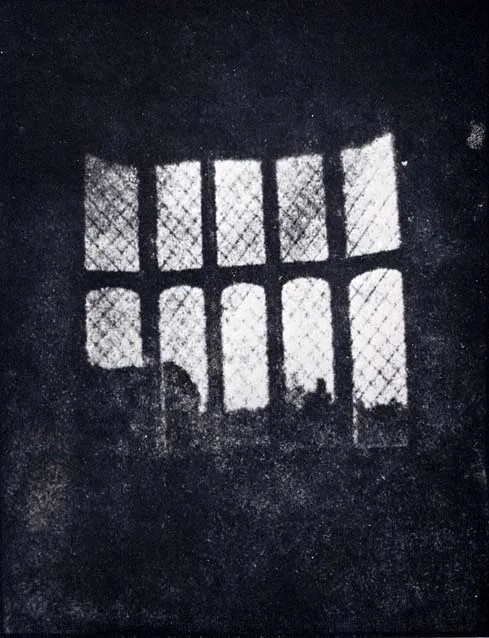
The English scientist – William Henry Fox Talbot (1800-1877) – took the first known photograph – the “Latticed Window” at Lacock Abbey – during August 1835. He is renowned for taking many more photographs after that. Apparently, Talbot was slow to properly patent his work or prevent the British government from co-opting this new technology and charging a considerable licence-fee for using it. This arrangement made photography in the UK a very expensive hobby that favoured the rich. From this origin – the British science of photography spread throughout the woeld via the British Empire.
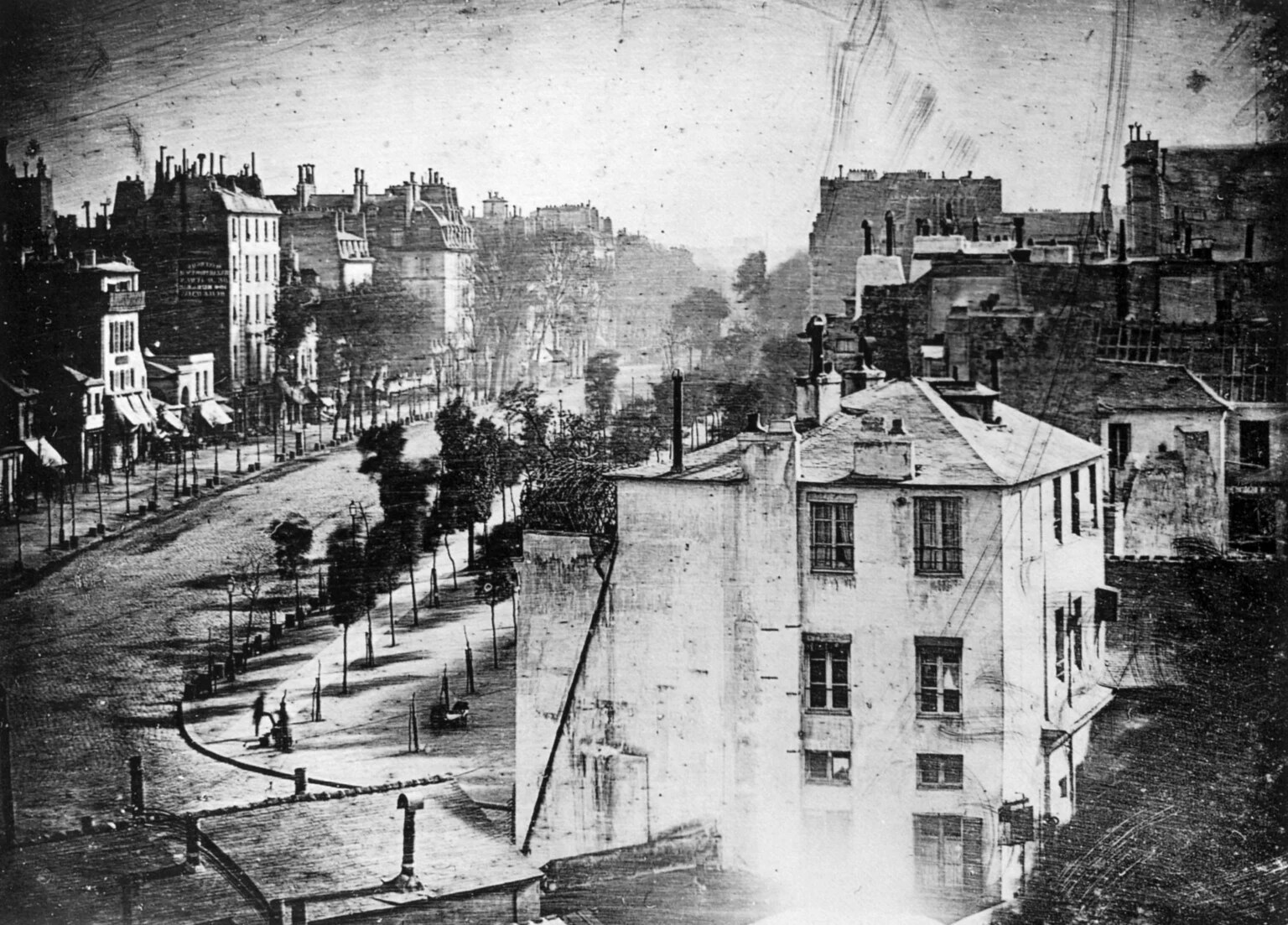
The French scientist – Louis Daguerre (1787-1851) – in his (1838) photograph entitled the “View of the Boulevard du Temple” — is believed to have captured the “first” human beings on film. It is believed that the road and public-spaces were full of moving people, carriages, horses, dogs, and cats, etc, but that the technology of the day could only record relatively “still” living objects – which turned-out to be a man having his shoes shined by a kneeling worker. Oddly, Talbot only focused his early work upon recording buildings and similar objects – not photography his family members until the 1840s. On August 19, 1839, the French Government purchased the rights to Louis Daguerre’s “Daguerreotype Process” and declared it a gift “free to the world” for all time – a very different approach to that practiced by the UK government. As can be understood from the above picture of Minister Qiyang – the French also spread their photographic process through the medium of imperialism.