Blogger’s Note: Living within the bourgeois West, I do not appreciate the excesses of predatory capitalism. Without clear legal bounds – capitalism will endlessly spread – reducing society to the lowest common pay-wall. Therefore, when accessing many media-outlets, these will really be advertising platforms masquerading as news-outlets. The reader, under the pretence of maintaining “privacy”, is made to facilitate the process of his-her own exploitation by pressing the “agree” button – the exact opposite of maintaining “privacy”. As for the BBC, although there is no direct advertising due to the licence fee – there is still advertising. As the BBC publishes government dogma as State Creed – this is a form of ideological advertising – designed to keep the population thinking along the right lines (I think BBC America does use direct advertising). All other viewpoints are suppressed or when allowed – ridiculed as being unworthy. Furthermore, the BBC will include links to the articles it wants the reader to see – this will include adverts for events disguised as “culture”. We are all shuffled to middle-class flower shows, bake-offs, and song competitions. Now, I have wondered why it is that ancient graves can be opened, ripped apart, and then used to make money through display-purposes disguised as “education”. When I was in Egypt during the mid-1990s, I found the local Egyptians would allow virtually anything just as long as you gave them money. In airports that served Westerners – the toilets would have no toilet-paper. Egyptian “attendants” would discreetly wait until a Westerner locked the door of a convenience and then knock on the door and offer sheets of toilet paper delivered under the door for a specified amount (usually Egyptian pound notes). This is the level of cheapness we are dealing with. Virtually anything was for sale in Islamic Egypt as the Arabs who control the country now have nothing to do with pyramid-building or the Pharaohs. We saw mummy after mummy on display as we traversed around (Egypt remains the only country in the world where I was questioned by the Airport Authorities – and asked to explain “why” I was in a “mixed-ethnicity” marriage). Knowing what I know about the shallowness of contemporary Egyptian culture – I find the pretentious bourgeois attitude relayed below to be bordering on the laughable. Why would modern Egyptians care about the remains of a different ethnic group, whose religion they do not follow or care about? Muslims over the recent centuries have damaged the pyramids they now exploit to a remarkable degree. It is funny the BBC does mention this aspect. ACW (14.9.2026)
Ewan Gawne – North West – 12.9.2026
The mummified body of an ancient Egyptian woman has been removed from a museum exhibition after more than 200 years on display as part of efforts to respect “the wishes of the dead”, curators have said.
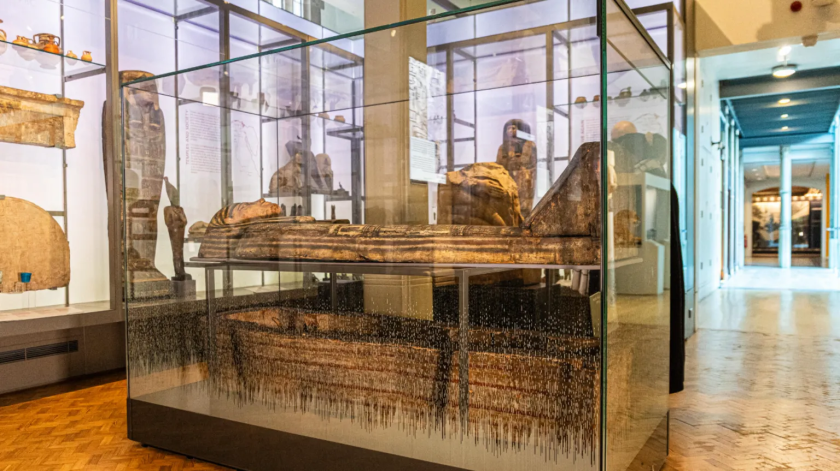
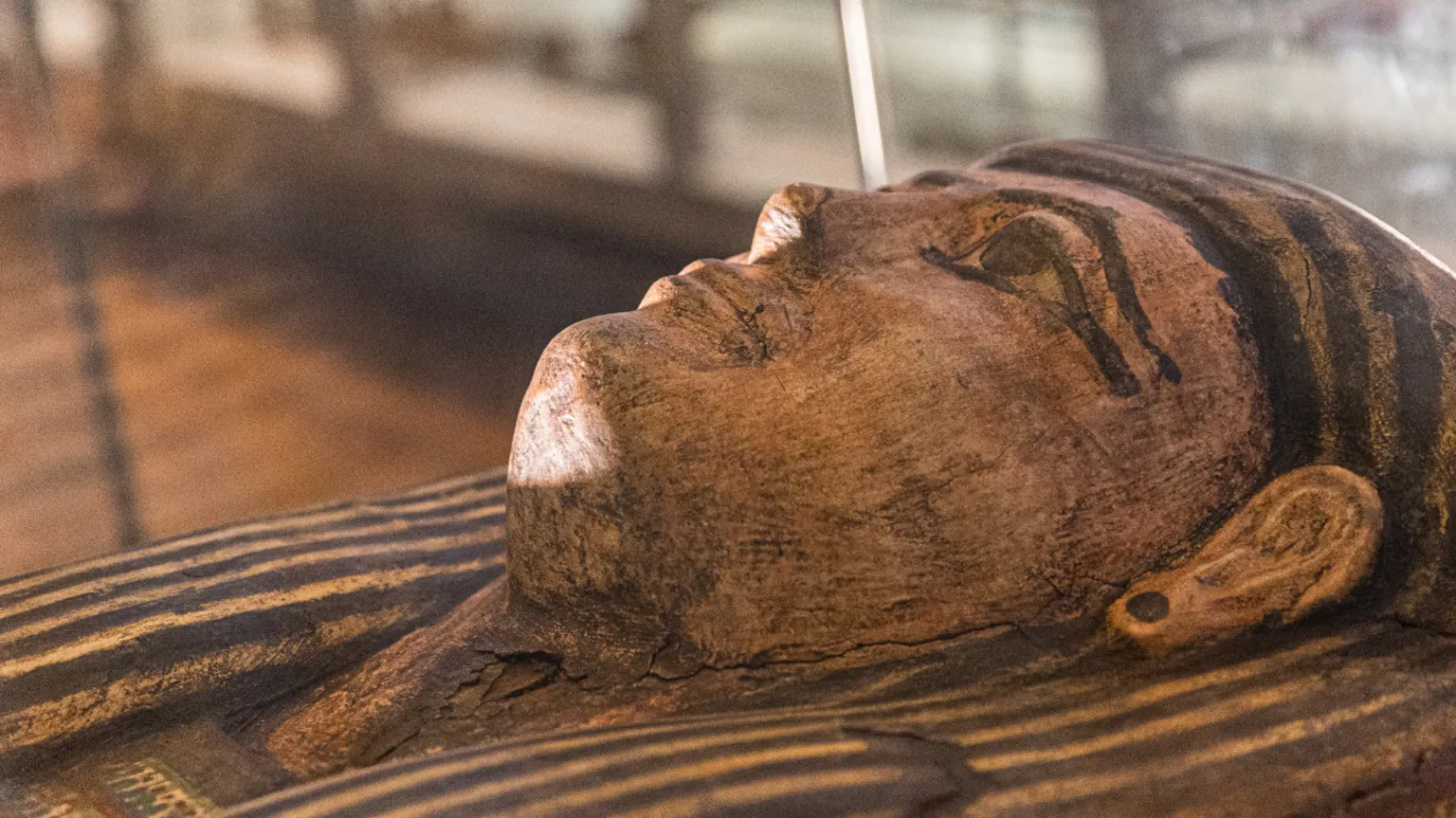
Layers of linen were carefully peeled away from the 2,700-year-old remains of the woman named Asru when she was first taken out of her wooden coffin and put on public display in Manchester in 1825.
Centuries later, her remains have been placed in storage in a decision that “aligns most closely with what we understand about her own wishes”, a Manchester Museum spokesman said.
“Elite Egyptians of her time expected that their mummified bodies would remain wrapped in their coffins, invisible to the living,” he added.
Asru’s mummified body had been on display in the Oxford Road museum’s Egypt and Sudan Gallery before it was moved into storage earlier this month.
She was mummified in a series of rituals used by ancient Egyptians to preserve the body after death in preparation for the afterlife.
Her remains and coffins were dug up in modern Luxor, the site of the ancient city of Thebes, before they ended up in the ownership of Manchester traders William and Robert Garnett in the early 1800s.
The body was donated to the Manchester Natural History Society in 1825 and placed on display for the next two centuries.
The museum spokesman said removing the display “reflects changes in how we think about our responsibility towards ancestors, museum collections and the communities they represent”.
He said: “Before making this change, we consulted with Egyptian colleagues, members of the Egyptian diaspora and visitors to the museum, helping us to understand people’s feelings about care for mummified people.
“However, the decision to remove Asru from display aligns most closely with what we understand about her own wishes,” the spokesperson said.
Asru’s final resting place has not yet been decided, with the museum now considering whether to keep her coffin and body in storage or return it to Egypt.
‘Real people’
While many museums continue to display mummified remains as part of their interpretation of ancient history, the practice has become the subject of ethical debate in recent years.
A 2025 report by British parliamentarians, the All-Party Parliamentary Group (APPG) for Afrikan Reparations, called for an end to the public display of Egyptian mummies and other human remains.
In the report, the APPG said the practice was non-consensual and a “disregard of the potential wishes of the ancestors and the intention of the communities that originally laid them to rest”.
“The presence and public display of Egyptian mummified persons in UK institutions further reveal the extent of museums’ participation in colonial regimes of exploitation,” the report said.
Egyptologist Dr Angela Stienne led a debate on the matter at Derby Museums in 2025 – exploring the topic “without judgement”.
She argued that people “disassociate” mummies from actual people – partly down to popular culture and fictional depictions of mummies.

