Field-Stripping Devices is an Important Skill!

Surrey: Gee & Kai-Lin Field Strip & Assemble a Wooden Stool! (29.5.2026)

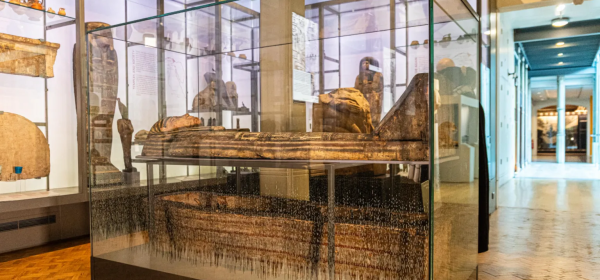
Anyway, we visited the “Rural Life Living Museum” (ob May 28th, 2026) – not far from the log-cabin area we were staying at in Tilford (a bourgeois cesspit of wealth). We have visited similar places not far from Sutton, and also in Oxford, Devon, and Cornwall. Many Moons ago, I visited places like this in the Lake District and in Scotland. They are essentially centres of education for school-children – and for adults to reminisce. My childhood (pre-Star Wars) was a very different reality to that which exists today. The working-class pre-1977 were very localised in mentality – with the middle-class attending university and developing a world-wide appreciation. This difference in education always benefits the middle-class who understand more and are able to use this knowledge to keep the workers in their place. Stll, it was a good day out and I will have to author a number of posts to cover it all.

Military personnel participate in Togo's Independence Day parade in Lome, Togo, April 27, 2026. (Xinhua/Si Yuan)

Africa: Chinese Traditional Culture at Togo’s Independence Day! (28.4.2026)

A Chinese traditional culture contingent composed of students from the Confucius Institute at the University of Lome made its debut as the first folklore group in the procession, marking the first appearance of a foreign cultural contingent in the history of Togo’s Independence Day parade.

A total of 34 Confucius Institute students, dressed in traditional Hanfu and ethnic costumes, held peony-patterned umbrellas, while dragon and lion dance performers moved among them.

The display conveyed sincere festive greetings to the Togolese people and won warm applause and high praise from the audience.

Wang told Xinhua that the presence of “Chinese red” stood out in the procession, complementing Togo’s traditional cultural formations and jointly painting a vivid picture of harmonious exchanges between Chinese and Togolese civilizations.

She added that the performance had become a highlight of the China-Africa Year of People-to-People Exchanges.

Professor Zhu Fenghan, the lead editor of a sixty-volume compendium documenting more than 23,000 ancient Chinese bronze artifacts lost abroad, poses for a photo during a press conference for the books' release in east China's Shanghai, April 19, 2026. (Xinhua/Liu Ying)

China: Record of “Stolen Bronzes” By Imperialists Compiled! (20.4.2026)

Zhu, also the lead editor of the books, said previous such surveys focused mainly on bronze bells, cauldrons and ritual vessels. This collection categorizes nearly 300 types of bronze artifacts, ranging from weapons, tools, lamps and mirror stands to irons, coal rakes and dice. One example is a human-shaped lamp stand currently at the Minneapolis Institute of Art.

Previously, scholars at home and abroad generally assumed that there were over 3,000 Chinese bronze wares in overseas collections. However, the “Collection of Chinese Bronzes in Overseas Collections” has expanded this figure by more than sevenfold.

“We have created an identity document for each piece of relics,” Zhu said. The team found that only a few relics have clear records of legal trade, diplomatic gifts or legitimate export.

As the compendium points out, the primary channels for these bronzes leaving China from the late 19th century to mid-20th century were looting, smuggling and war plunder. Western collectors and dealers bought large numbers through agents inside China, forming an illegal supply chain.

"An Exhibition on the Culture of Han Dynasty Bamboo Slips from the Haihun Marquisate"

China: Rare Bamboo Slips Exhibited! (15.4.2026)

A visitor is pictured during “An Exhibition on the Culture of Han Dynasty Bamboo Slips from the Haihun Marquisate” at the Nanchang Relic Museum of Haihun Marquisate of Han Dynasty in Nanchang, east China’s Jiangxi Province, April 13, 2026. The exhibition opened here early this week, during which over 100 newly restored bamboo slips are publicly displayed for the first time since their discovery.

Carshalton Ponds - Slip-Way!

Honeywood Museum: Charshalton Ponds & Billiard Room! (21.2.2026)

We visited the Honeywood Museum in nearby Carshalton Ponds – as the Staff and Management added a Chinese New Year display to the usual mixture of local history artefacts. We have visited in the past – but I do not recall the impressively “large” Billiard Room which seems to have been converted to a “Snooker Room”. Me and Gee sat and drank a cup of coffee outside the Honeywood Museum – watching the numerous types of birds traverse the surface of the water. I think we entered the Museum probably in the wrong direction – and immediately emerged in the Billiard Room – which seemed to corelate seamlessly with Pond itself. During Victorian times, the well to do, those who owned local business and large country-homes – often could often afford all the lateest scientific devices. The air around the Ponds was fresh and yet mild – a thoroughly invigorating experience!

Nauru's President David Adeang

Nauru: President David Adeang Arrives in Guangzhou for Ancestral Visit & Chinese New Year! (9.2.2026)

During the visit, Adeang will also travel to Jiangmen City, his ancestral hometown in Guangdong, to reunite with clan members and celebrate Xiaonian. He will also visit Guangzhou and Foshan, meet with provincial and municipal officials, and tour local enterprises to explore ways to further deepen practical cooperation between Guangdong and Nauru.

Most ethnic Chinese in Nauru originate from Guangdong Province. According to verification by relevant authorities, Adeang’s maternal great-grandfather hailed from Zhongxinli, Zhonggu Village, Kaiping City, Jiangmen. His ancestors migrated to Southeast Asia more than a century ago in search of a livelihood and later settled in Nauru.

1 2 3 29