- Alina Perera Robbio
- August 26, 2026
- In this article: Work Tour
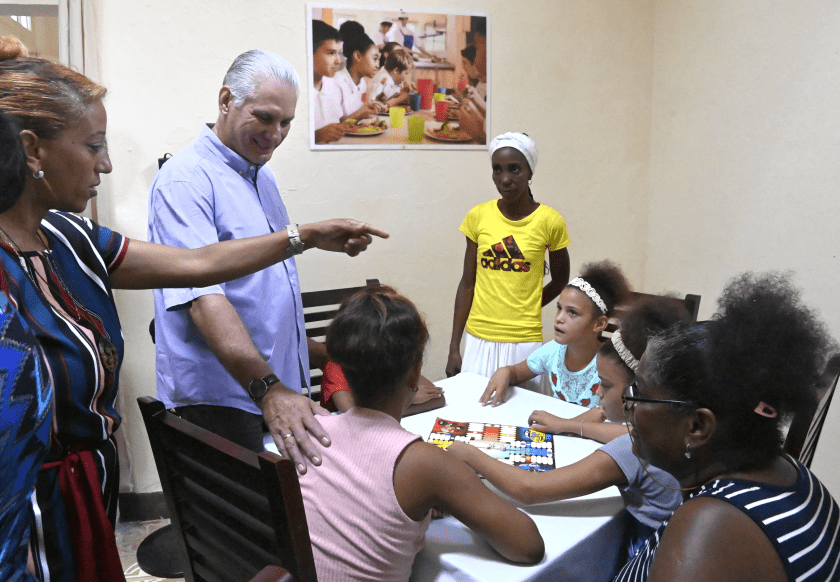
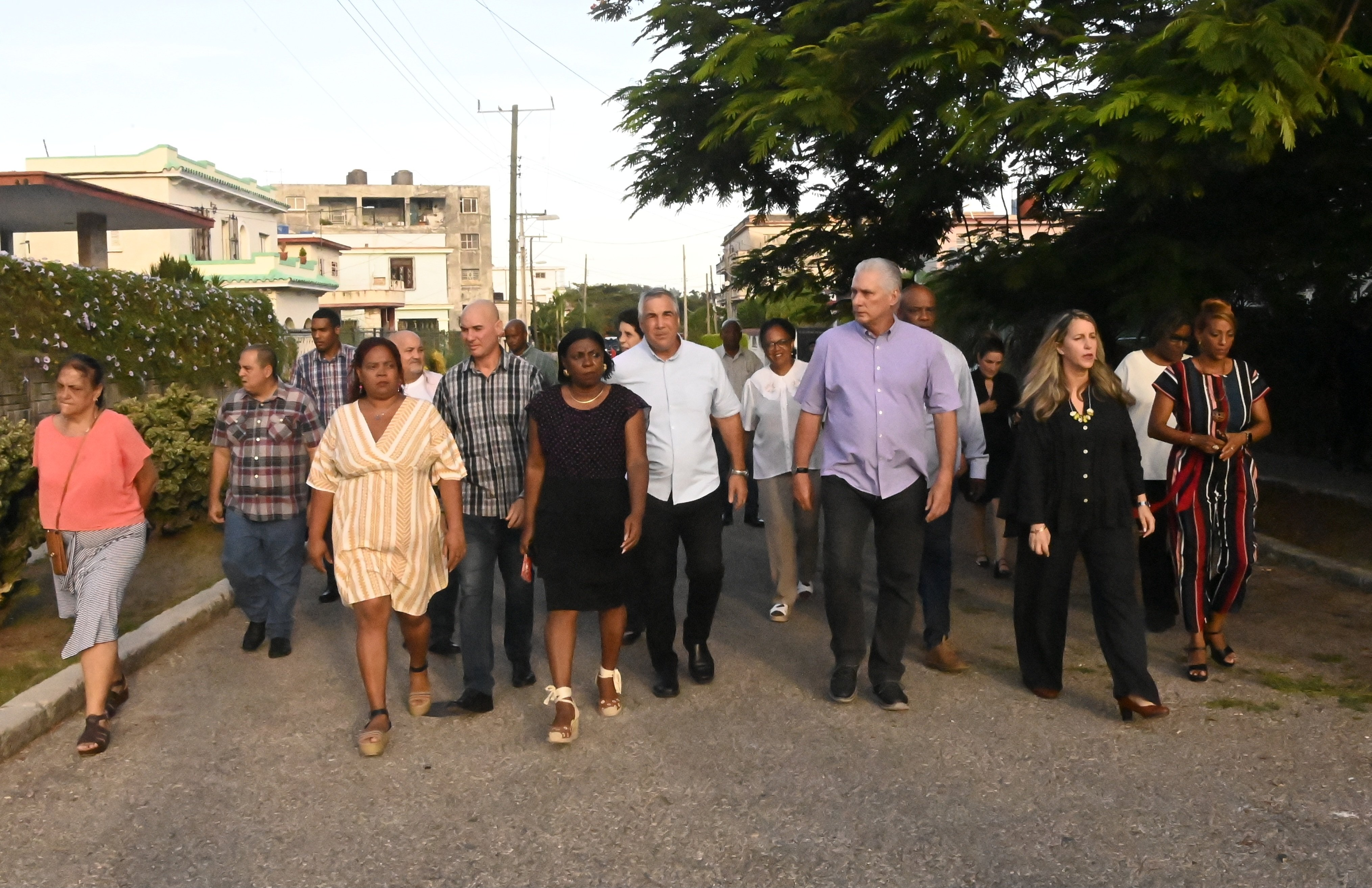
This Wednesday morning, while President Díaz-Canel toured the “Víbora” Popular Council in the capital’s municipality of Diez de Octubre, a truth remained standing while new cribs, tables, chairs, toys or backpacks could be seen – which are waiting to be released in the new school year – Cuba in Revolution does not abandon a single one of its children.
In Cuba, about one million five hundred thousand, including children and adolescents, is the number of those who will attend the classrooms when the new school year of general education begins, this September 1. This was reported on Wednesday morning by the Minister of Education, Naima Ariatne Trujillo Barreto, to the press team of the Presidency of the Republic of Cuba.
The statements of the head took place from the “Cepero Bonilla” Elementary School, located in the “Víbora” Popular Council in the capital municipality of Diez de Octubre, after the conclusion of the visit, to that educational institution, of the First Secretary of the Central Committee of the Communist Party of Cuba and President of the Republic, Miguel Díaz-Canel Bermúdez.
“The course begins on the first day, in fact it has already begun, because our workers have already joined since this week,” the minister told reporters, who stressed that many of the professionals “have not had many vacations trying, as we teachers always do, to condition the facilities as best as possible.”
In each educational institution, the minister said, there will be a welcome to new entrants, their families, and students who continue. Naima emphasized that the new course – conceived, she said, so that “all social and economic actors get involved” – will carry in itself “a lot of flexibility, a lot of individualized response,” without neglecting the institutional and group project.
In the current circumstances, he reflected, “the response of each educational level, each institution, each territory, each group and each child and adolescent” will need “a level of differentiation” that includes “many variants.”
In the same line of reasoning, he explained that “there will be a double session, with certain characteristics where possible”; and that, “to complement educational life, there will be other programs with the participation of young people, from the neighborhood, from our own professionals; because it may be that in the morning you have classes in your group, and then there is something that complements the training with an innovation project.”
Among the innovative projects, the minister mentioned, as an example, the interaction with university students who are passionate about computer science and Artificial Intelligence (AI), or with another who likes to sing, or with another who likes sports: “In other words, we are trying to ensure that there can be a complementary life, but in each place decisions must be made in accordance with the conditions that exist.”
Naima shared the observation that, at the starting point of a tour of the island, “we saw our professionals at all levels very committed,” as well as other forces and actors present in all scenarios. And he emphasized the value of “a response that is not only for the beginning (of this teaching stage), but that can be made sustainable.”
Now we have to evaluate everything, he said, “now we have to be very rigorous in the follow-up.” He expressed this in reference to the students who are farther away from the institutions, and who for this reason have more specific and more complex answers.
No child without protection
This Wednesday morning motivated reflections and emotions while the Head of State toured the area where the “Cepero Bonilla” Elementary School is located: it is a Popular Council where there are also Homes for Children without Parental Protection, and an Urgent Foster Care Centre – a care modality that has been born from the recent Children’s Code. Adolescence, and Youth.
The tour of Díaz-Canel – who visited the educational institutions accompanied by Deputy Prime Minister Eduardo Martínez Díaz, the Minister of Education, and other leaders – had as its first point the Home for children, adolescents and young people without parental care “Víbora II”.
There, the Head of State was interested in how the lives of the children go by; by how the economic actors are articulated with the operation of that house; and how the teaching and vacation moments of children and adolescents go by.
Not far away, the next place visited was the “Viper I” Home for Infants. There the president asked about the children. And about those who work in that home – a dozen – he said that the people who carry out their work there “have their hearts in the middle of their chests.” He said this because it takes a lot of sensitivity and cleansing of soul to protect the lives of beings so defenseless and in need of love.
Then, in the itinerary, it was the turn of the “Cepero Bonilla” school. And finally, the Cuban President arrived at the Urgent Shelter, that space designed for children, adolescents or young people who are in a situation of extreme vulnerability to be protected quickly while specialists define a differentiated care strategy.
From this new foster care space – which is a kind of transition – minors can go to a Home, or to the bosom of a family, or a loved one who decides to adopt parental responsibility. For all children, the new school year and the value of learning is a common fortune.
This Wednesday morning, while Díaz-Canel toured the “Víbora” Popular Council in the capital’s municipality of Diez de Octubre, where there is more than one institution vital to human dignity, a truth remained standing while new cribs, tables, chairs, toys or backpacks could be seen: Cuba in Revolution does not abandon a single one of its children.
Spanish Language Text:
https://www.presidencia.gob.cu/es/noticias/cuba-con-el-corazon-en-el-centro-del-pecho-audio
- Alina Perera Robbio
- 26 de Agosto de 2026
- En este articulo: Recorrido de Trabajo
Este miércoles en la mañana, mientras el Presidente Díaz-Canel recorría el Consejo Popular “Víbora” en el capitalino municipio de Diez de Octubre, una verdad quedaba en pie mientras podían verse cunitas, mesas, sillas, juguetes o mochilas nuevas -que esperan ser estrenadas en el nuevo curso escolar-: Cuba en Revolución no abandona a uno solo de sus hijos.
En Cuba, cerca de un millón quinientos mil, entre niños y adolescentes, es la cifra de quienes asistirán a las aulas cuando comience, este primero de septiembre, el nuevo curso escolar de la enseñanza general. Así lo informó en la mañana de este miércoles la ministra de Educación, Naima Ariatne Trujillo Barreto, al equipo de prensa de la Presidencia de la República de Cuba.
Las declaraciones de la titular tuvieron lugar desde la Escuela Primaria “Cepero Bonilla”, ubicada en el Consejo Popular “Víbora” en el capitalino municipio de Diez de Octubre, luego de concluida la visita, a esa institución educacional, del Primer Secretario del Comité Central del Partido Comunista de Cuba y Presidente de la República, Miguel Díaz-Canel Bermúdez.
“Comienza el curso el día primero, de hecho ya comenzó, porque ya nuestros trabajadores se han incorporado desde esta semana”, comentó a los reporteros la titular, quien destacó que muchos de los profesionales “no han tenido muchas vacaciones tratando, como siempre hacemos los maestros, de acondicionar lo mejor posible las instalaciones”.
En cada institución educativa -afirmó la ministra- se hará el recibimiento a los nuevos que ingresan, a sus familias, y a los estudiantes que continúan. Naima hizo énfasis en que el nuevo curso -concebido, dijo, para que “todos los actores sociales y económicos nos involucremos”- llevará en sí “mucha flexibilidad, mucha respuesta individualizada”, sin descuidar el proyecto institucional y de grupo.
En las circunstancias actuales -reflexionó- “la respuesta de cada nivel educativo, de cada institución, de cada territorio, de cada grupo y de cada niño y adolescente” necesitarán “un nivel de diferenciación” que incluye “muchísimas variantes”.
En la misma línea de razonamiento detalló que “habrá doble sesión, con determinadas características donde sea posible”; y que, “para complementar la vida educativa, habrá otros programas con participación juvenil, del barrio, de nuestros propios profesionales; porque puede ser que en la mañana tienes en tu grupo clases, y luego hay alguna cosa que complementa la formación con un proyecto de innovación”.
Entre los proyectos innovadores, la titular mencionó, a modo de ejemplo, la interacción con estudiantes universitarios apasionados con la informática y la Inteligencia Artificial (IA), o con otro que le gusta cantar, o con otro que le gusta el deporte: “Es decir, estamos tratando de que pueda haber una vida de complemento, pero en cada lugar hay que tomar las decisiones en correspondencia con las condiciones que se tienen”.
Naima compartió la observación de que, a punto de partida de un recorrido realizado por la Isla, “vimos muy comprometidos a nuestros profesionales a todos los niveles”, así como de otras fuerzas y actores presentes en todos los escenarios. E hizo hincapié en el valor de “una respuesta que no sea solo para el inicio (de esta etapa docente), sino que pueda hacerse sostenible”.
Ahora hay que evaluarlo todo -dijo- “ahora tenemos que ser muy rigurosos en el seguimiento”. Lo expresó en alusión a los educandos que se encuentren más alejados de las instituciones, y que por tal motivo llevan respuestas más específicas y más complejas.
Ningún hijo sin amparo
La mañana de este miércoles motivó reflexiones y emociones mientras tenía lugar el recorrido del Jefe de Estado por el área donde está enclavada la Escuela Primaria “Cepero Bonilla”: es un Consejo Popular donde también hay Hogares de Niños sin Amparo Parental, y un Centro de Acogimiento Urgente -modalidad de cuidado que ha nacido a partir del reciente Código de la Niñez, la Adolescencia, y las Juventudes.
El recorrido de Díaz-Canel -quien visitó las instituciones educativas acompañado del viceprimer ministro Eduardo Martínez Díaz, de la titular de Educación, y de otros dirigentes-, tuvo como primer punto al Hogar de niños, niñas, adolescentes y jóvenes sin cuidado parental “Víbora II”.
Allí, el Jefe de Estado se interesó por cómo transcurre la vida de los pequeños; por cómo se articulan los actores económicos con el funcionamiento de esa casa; y por cómo transcurren los momentos docentes y vacacionales de los niños y adolescentes.
No lejos, el siguiente lugar visitado fue el Hogar para lactantes “Víbora I”. Allí el mandatario preguntó por los niños. Y sobre quienes trabajan en ese hogar -una decena-, expresó que, las personas que allí despliegan su labor “tienen el corazón en medio del pecho”. Lo dijo porque hace falta mucha sensibilidad y limpieza de alma para proteger la vida de seres tan indefensos y necesitados de amor.
Luego, en el itinerario, correspondió el turno a la escuela “Cepero Bonilla”. Y finalmente, el Presidente cubano llegó hasta el Hogar de Acogimiento Urgente, ese espacio pensado para que niños, niñas, adolescentes o jóvenes que se encuentran en alguna situación de vulnerabilidad extrema sean protegidos con rapidez mientras los especialistas definen una estrategia de atención diferenciada.
Desde ese nuevo espacio de Acogimiento -que es una suerte de tránsito-, los menores pueden ir a un Hogar, o al seno de alguna familia, o de algún ser querido que decida adoptar la responsabilidad parental. Para todos los menores, el nuevo curso escolar y el valor que entraña aprender, es fortuna común.
Este miércoles en la mañana, mientras Díaz-Canel recorría el Consejo Popular “Víbora” en el capitalino municipio de Diez de Octubre, donde hay más de una institución vital para la dignidad humana, una verdad quedaba en pie mientras podían verse cunitas, mesas, sillas, juguetes o mochilas nuevas -que esperan ser estrenadas en el nuevo curso escolar-: Cuba en Revolución no abandona a uno solo de sus hijos.

