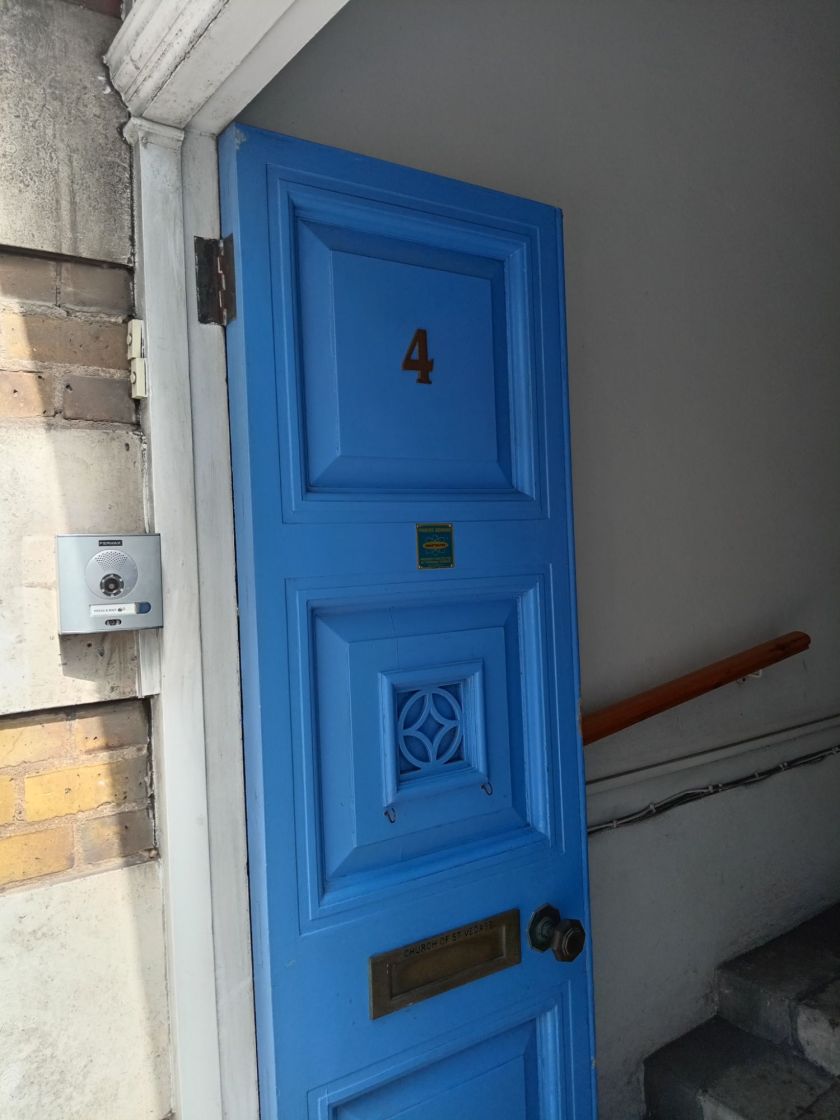

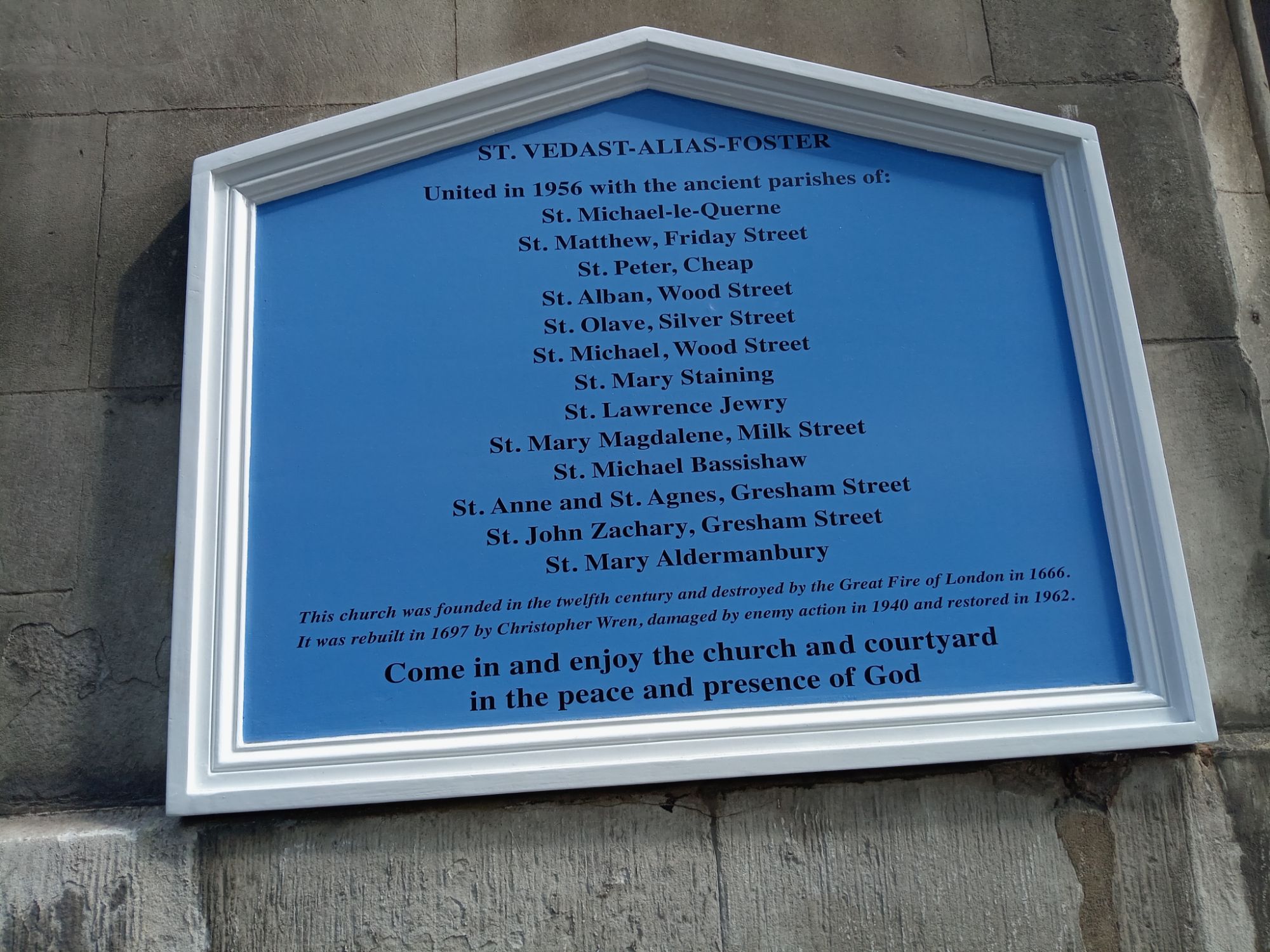
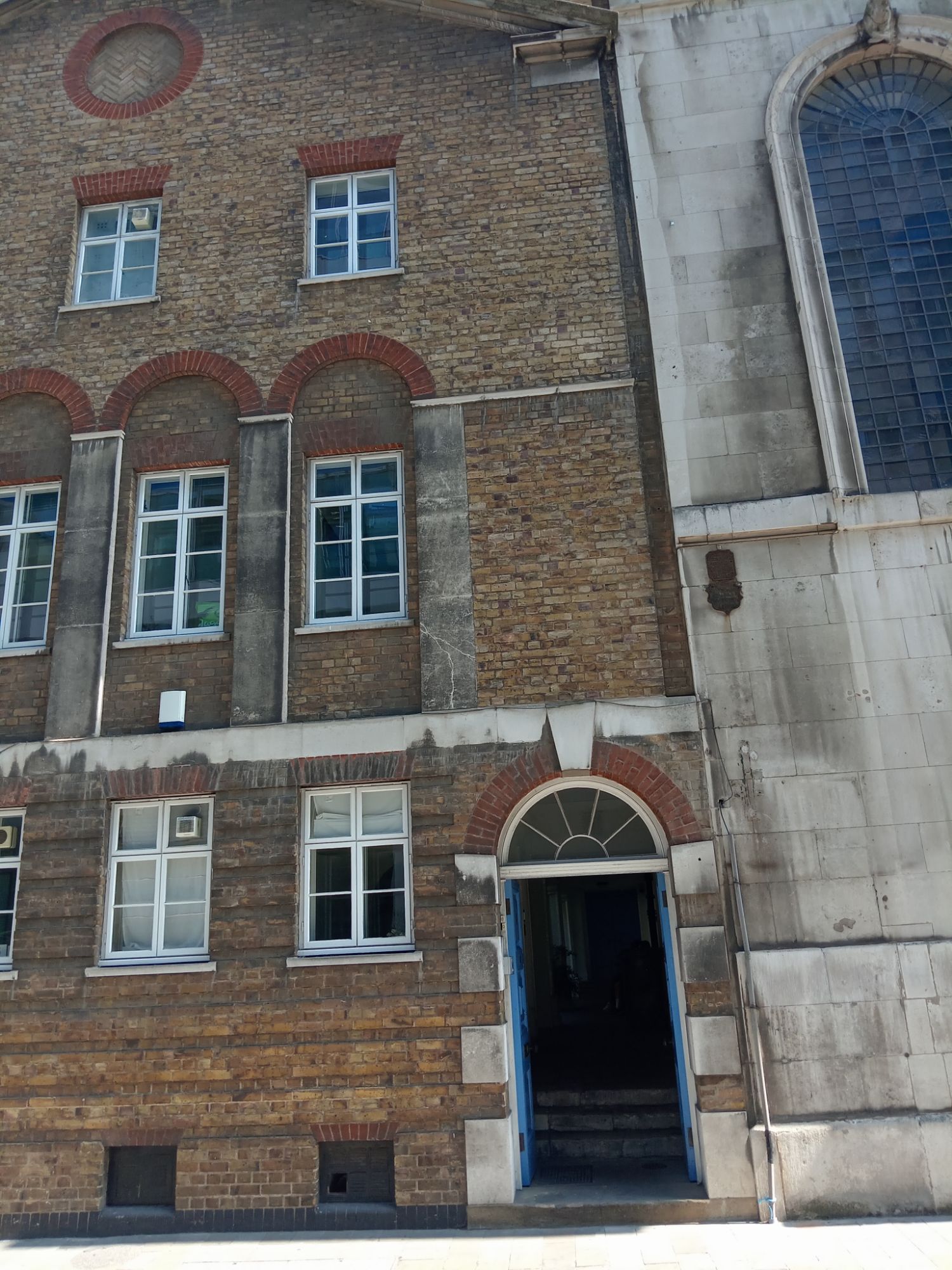
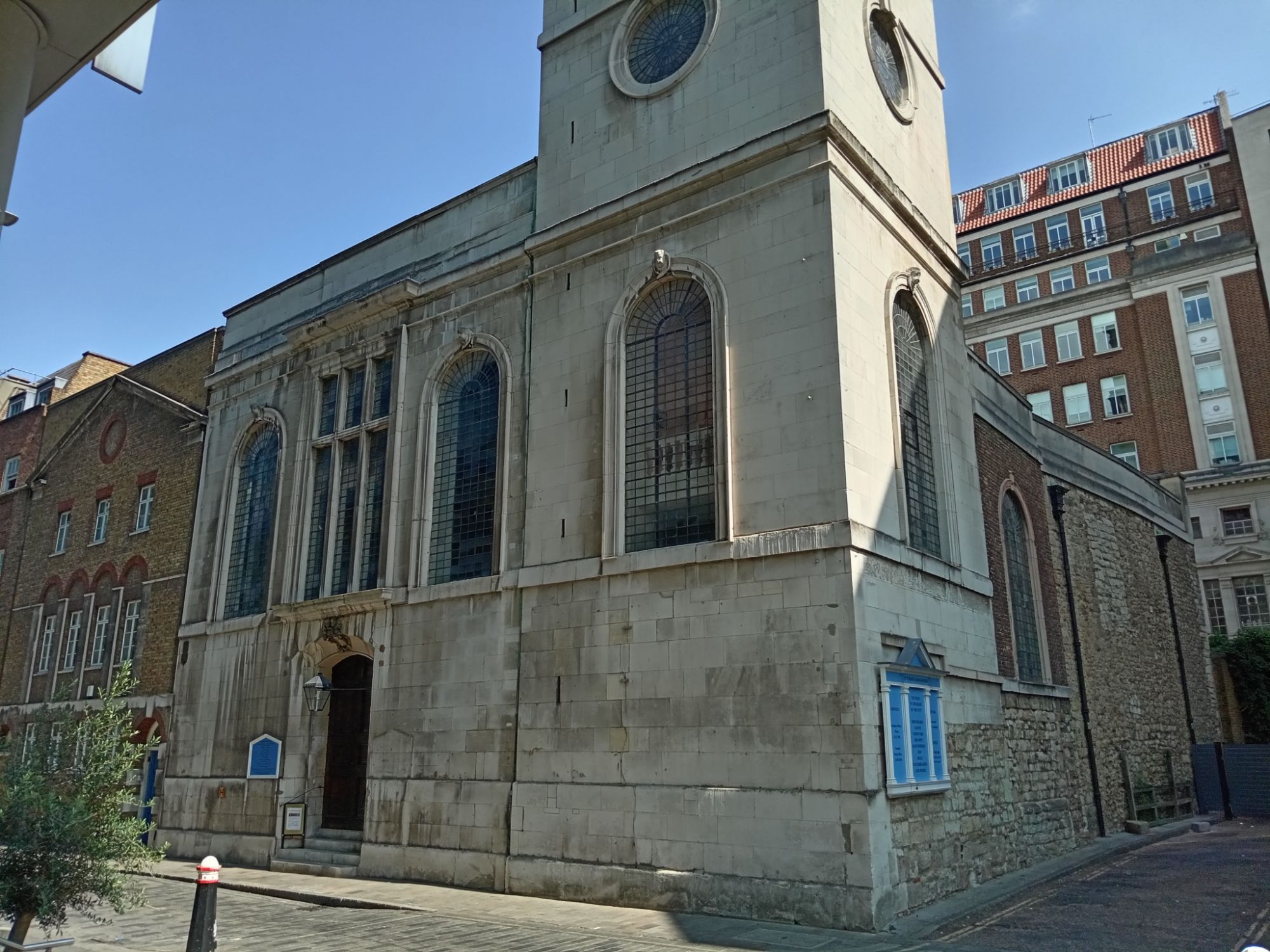
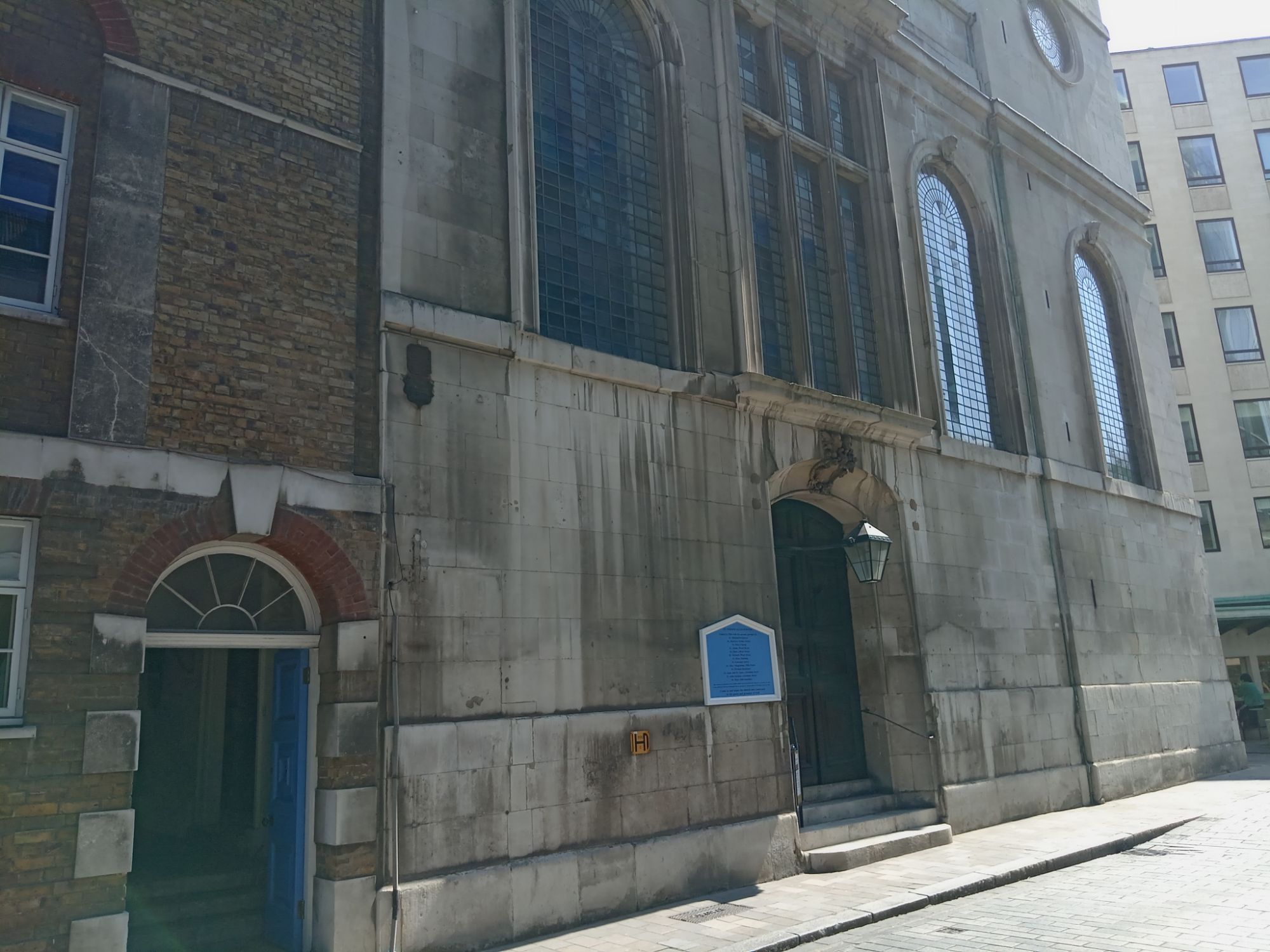
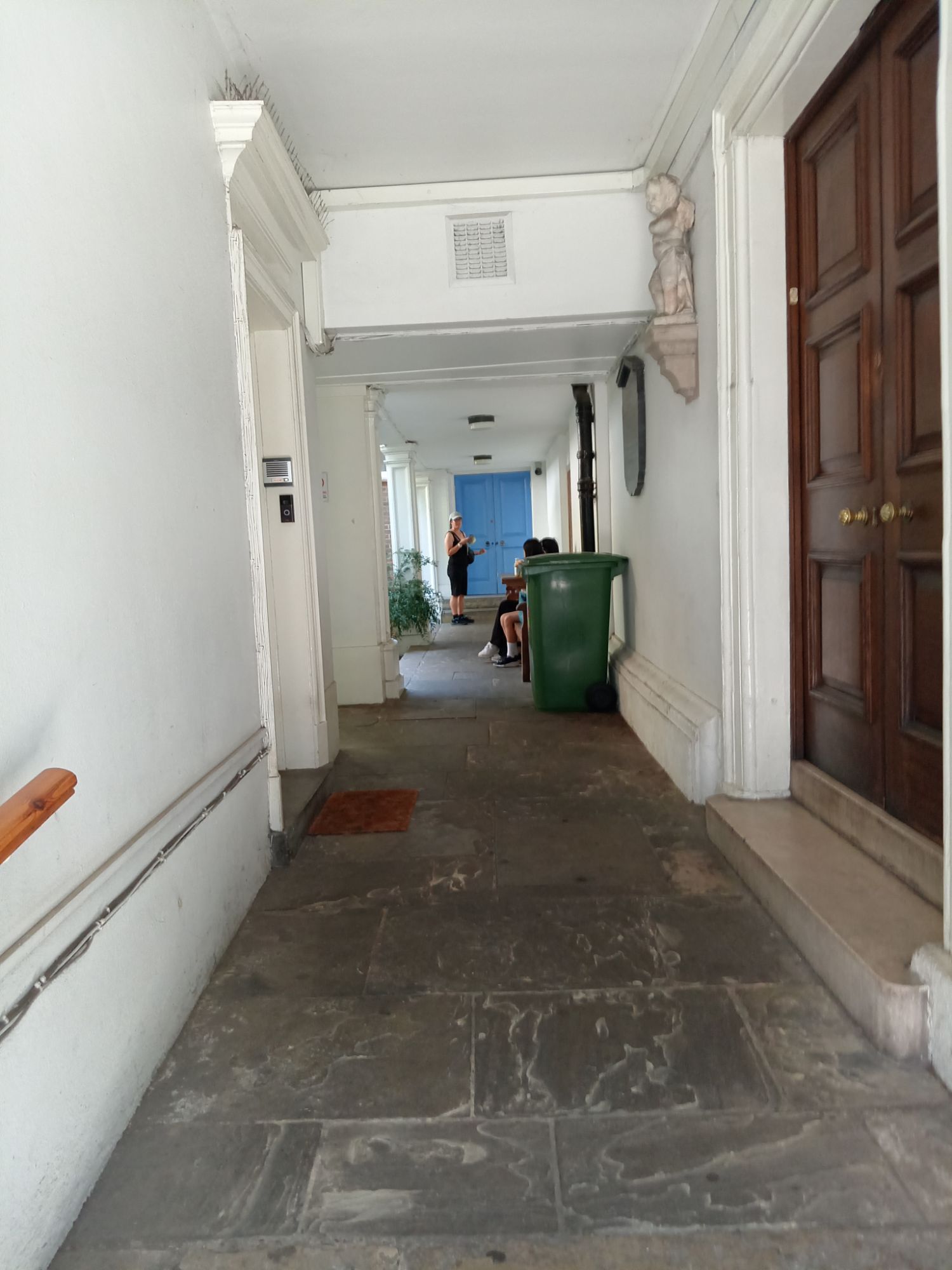
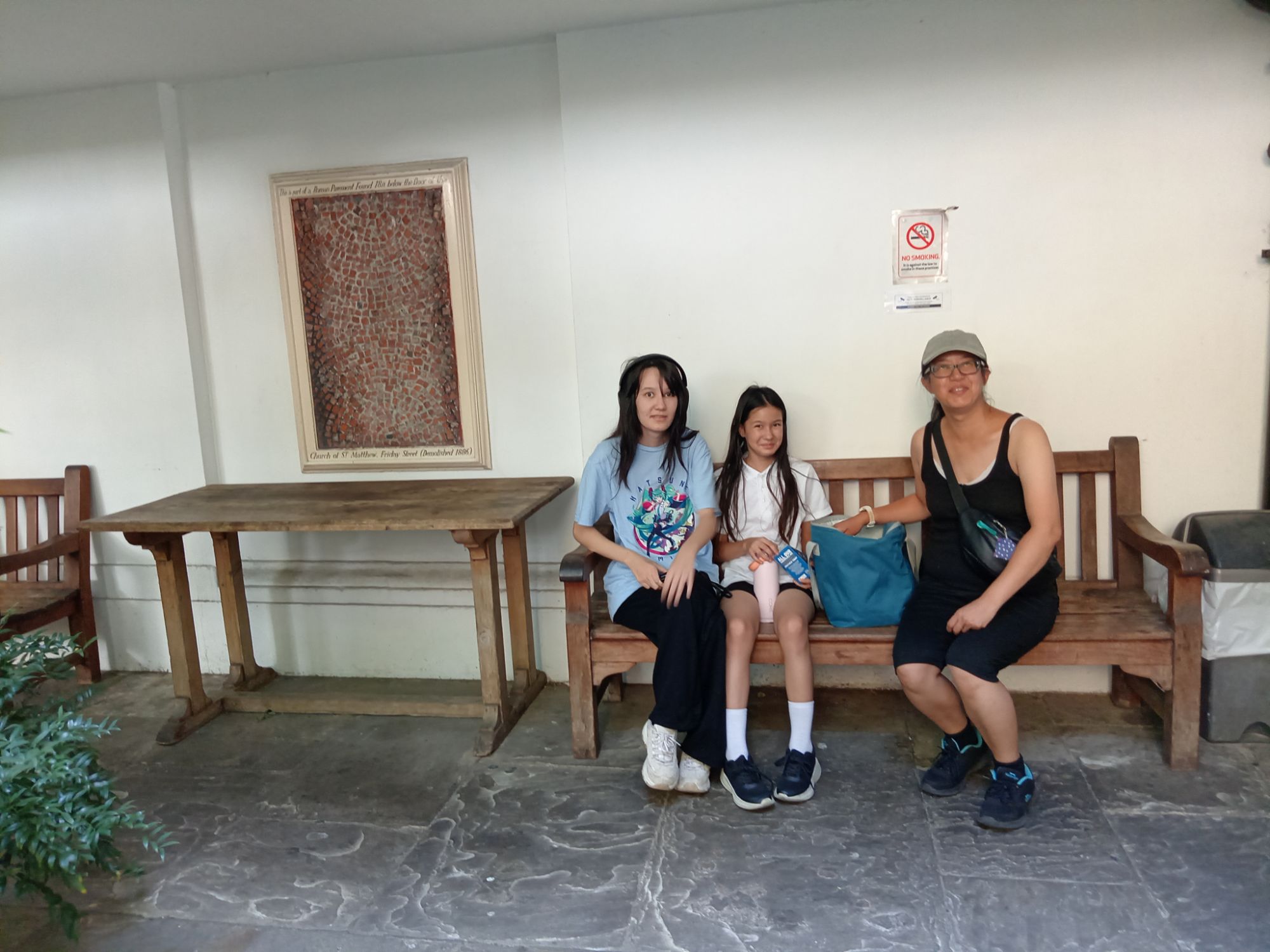
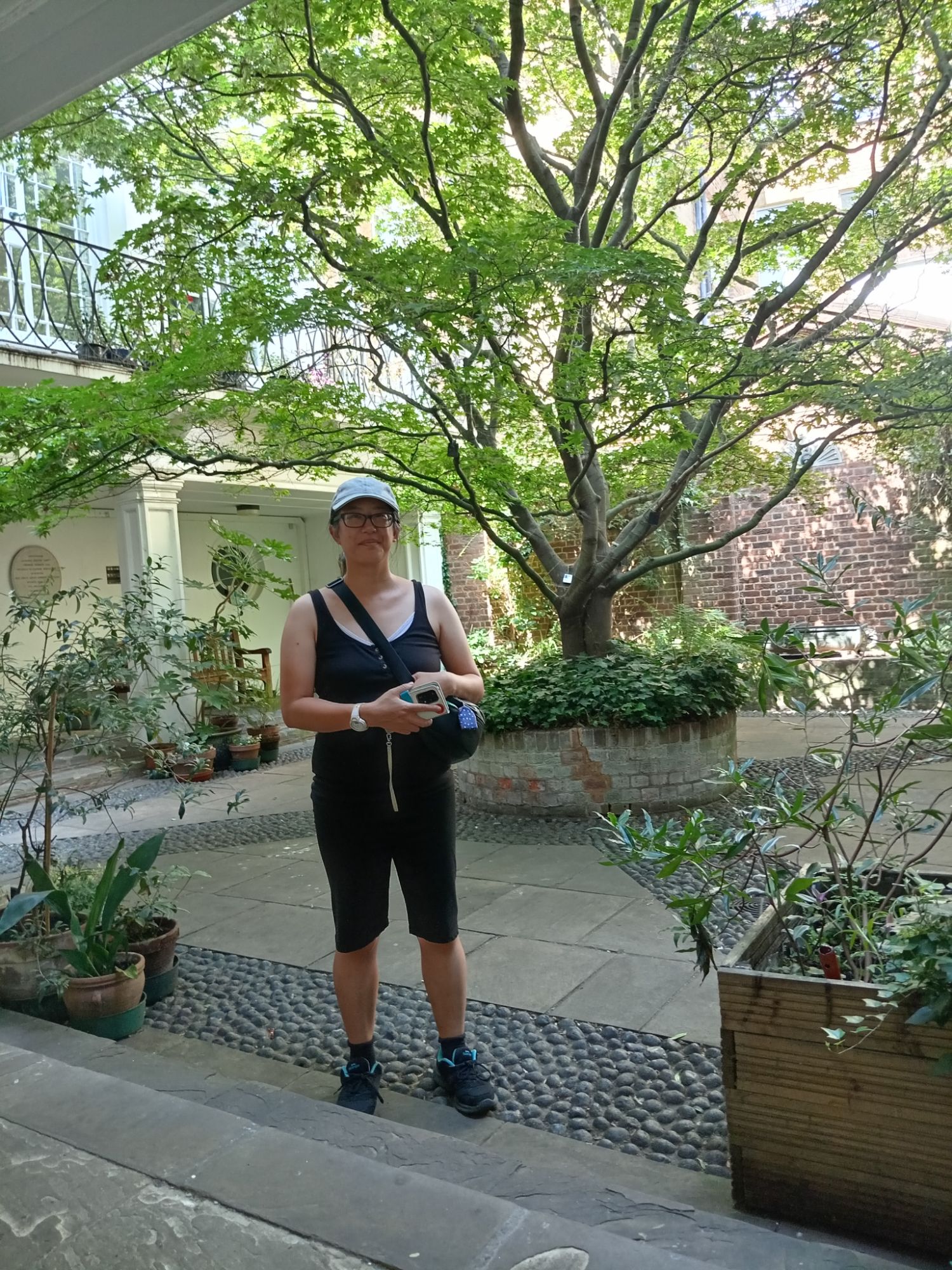
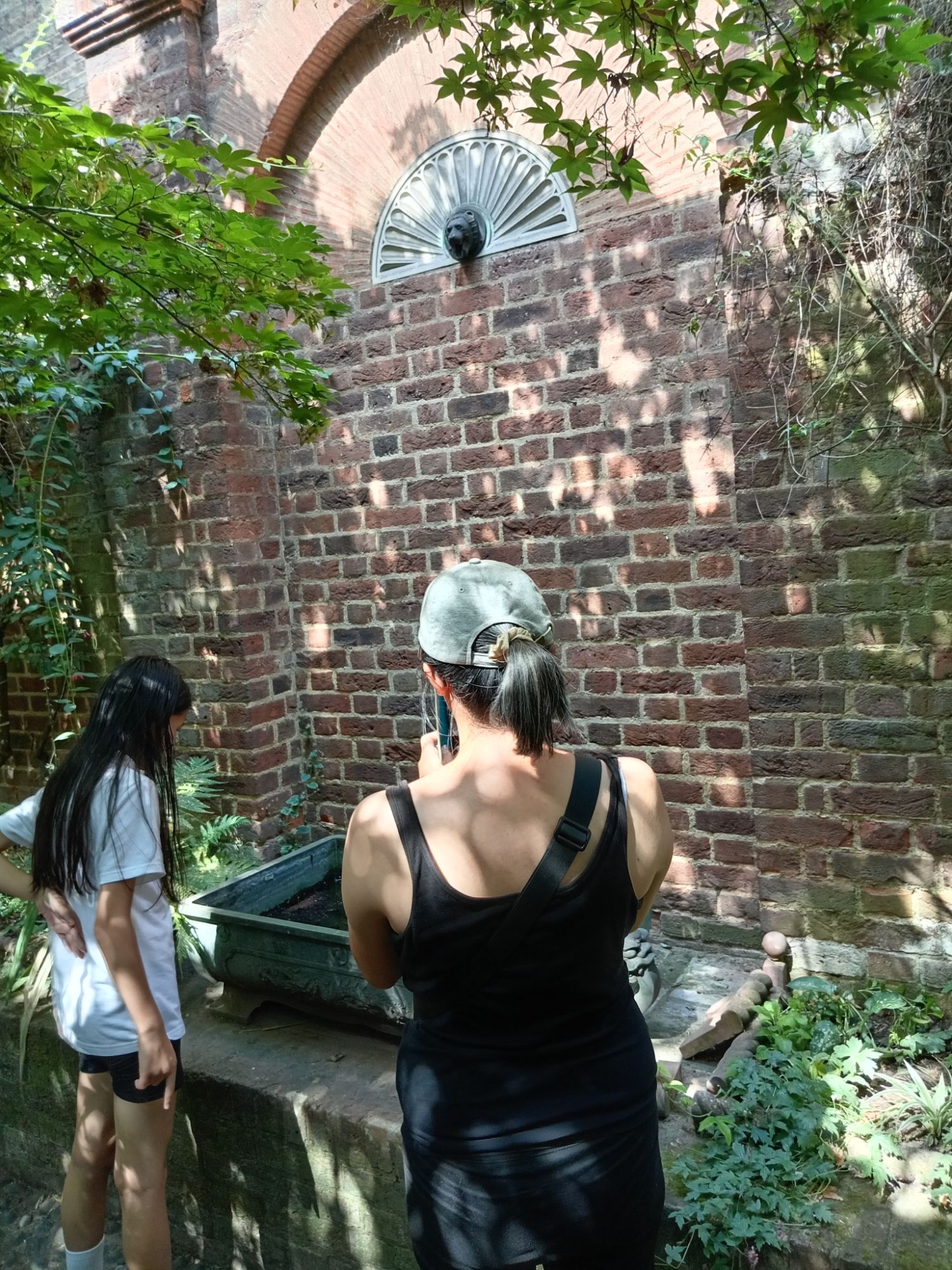
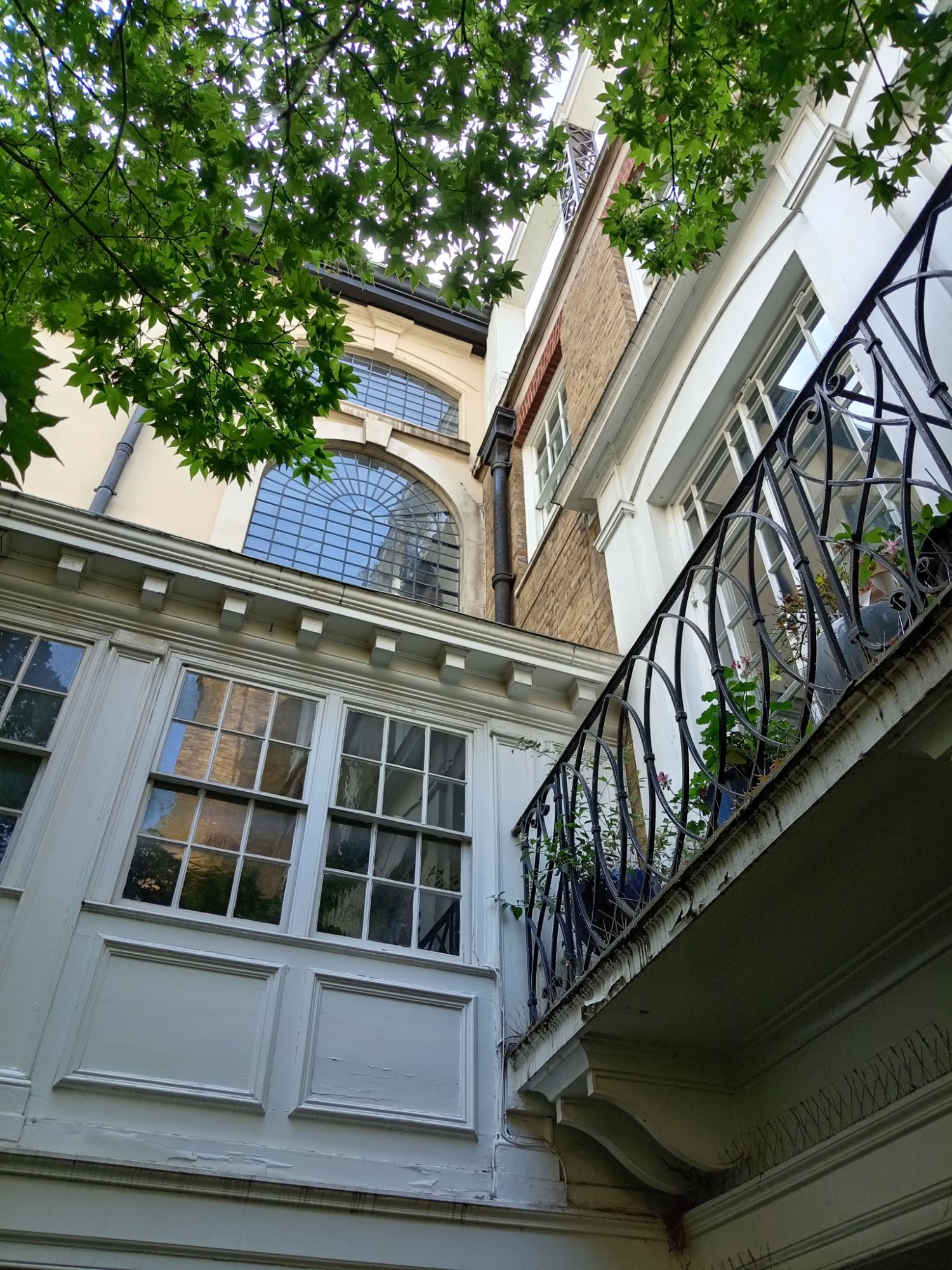
London is an ancient Roman city built on even older Celtic homesteads. We English area mix of many ethnic groups that have invaded our land – but we are Keltos (Celts) – known as Gails or Gauls in what is today France. This is why some of us can still speak the old language of “Gaelic” or Gallic”. We win in the end by absorbing all these foreigners and turning them into Celts. Every invader has lost their distinctiveness over time and became “us”. Just as I am a Hakka-Celt – my Chinese family Celtic Hakka! We are explorers who like finding old and unusual things. Well, today we discovered the remarkable Courtyard of St Vedast-Alias-Foster (this French Saint was born c, 453 CE – but the church was built in the 12th century by Flemish migrants – possibly on the site of older Celtic churches) – the address being: 4 Foster Lane, London EC2V 6HH. It was rebuilt and redesigned by Sir Christopher Wren around 1670 – having suffered damage during the 1666 Great Fire of London. What is the Courtyard today used to be part of the church’s graveyard. The church was built is in the style of English Baroque architecture.
This Courtyard has been open to the public – by act of Parliament – everyday since its opening. Ordinary people, regardless of class, are permitted to enter for “free” (paying of any kind is forbidden by law) so that they may sit quietly and commune with whatever spiritual entity they feel drawn to – or known – if that be the case. Then an individual communes peacefully with “nature” o r what the Chinese people refr to as the “Dao” (道). Today, my Buddhist family made friends with three-mice and a robin – all of who came out to play in our presence – and eat bread-crumbs. We are vegetarian and do not kill or cause to kill. If the Christian god exists – then he also exists for the nouse and the robin. London is full of these wonderful and unusual places that clear the mind and lift the hear!

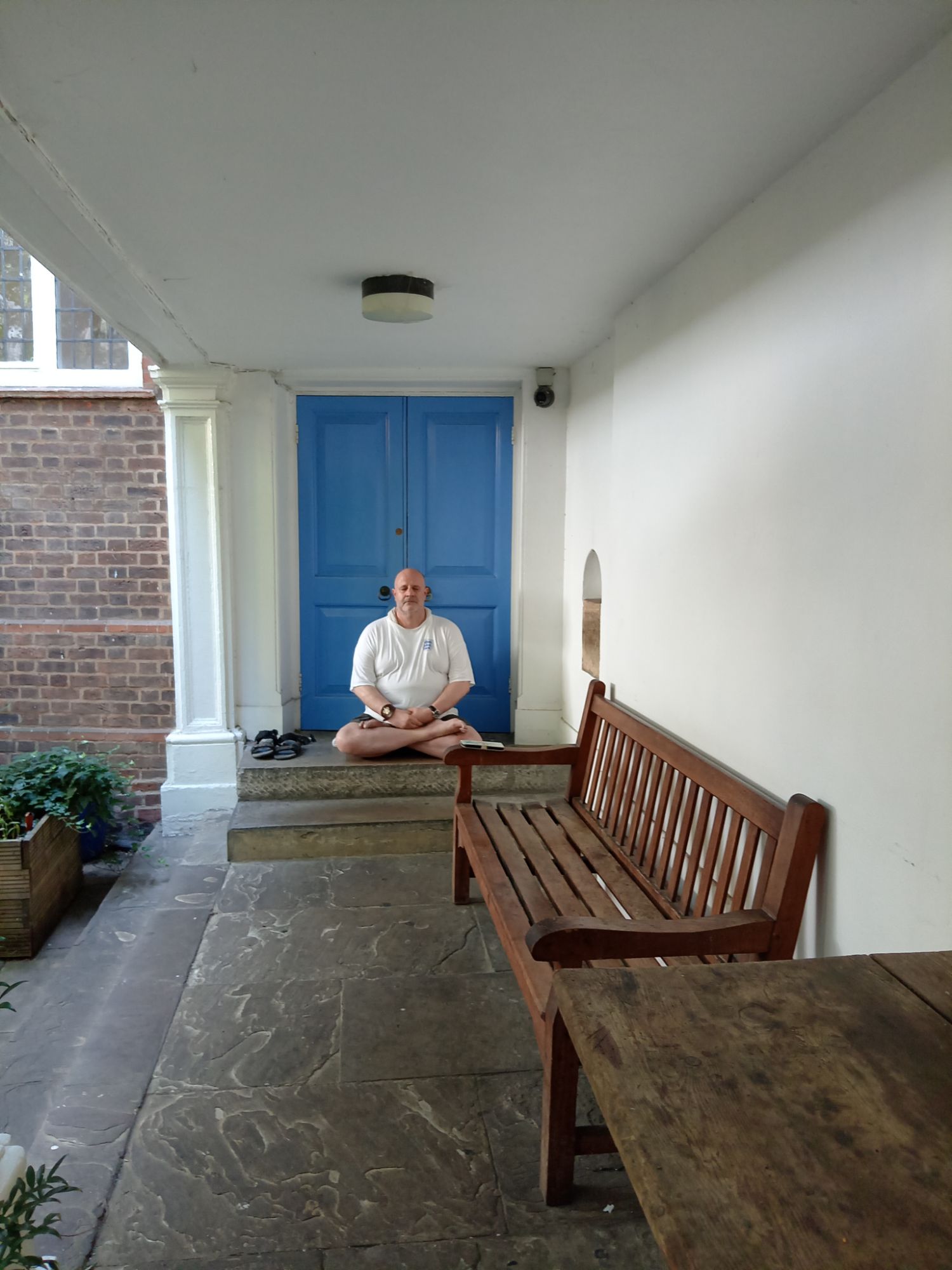
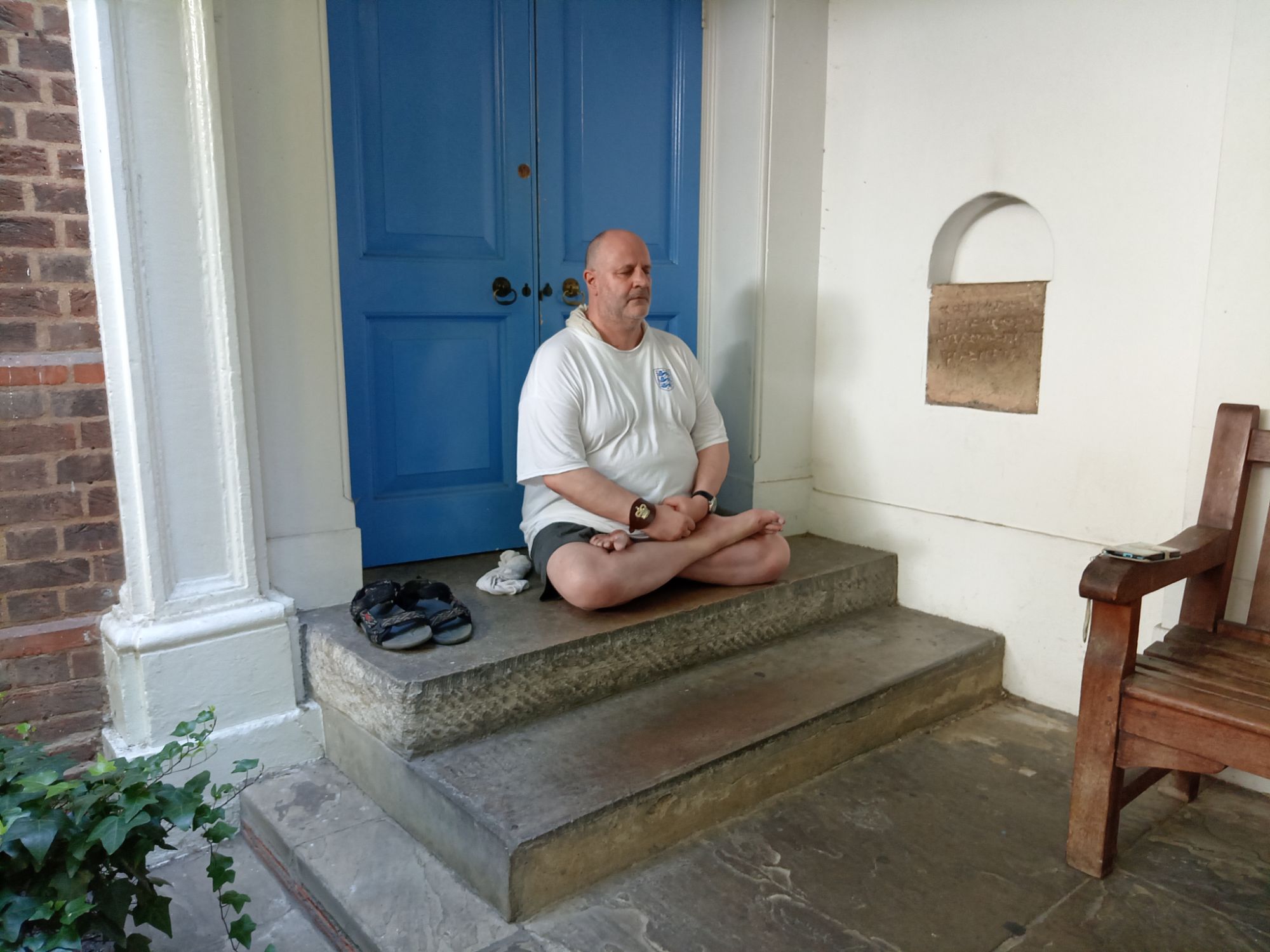
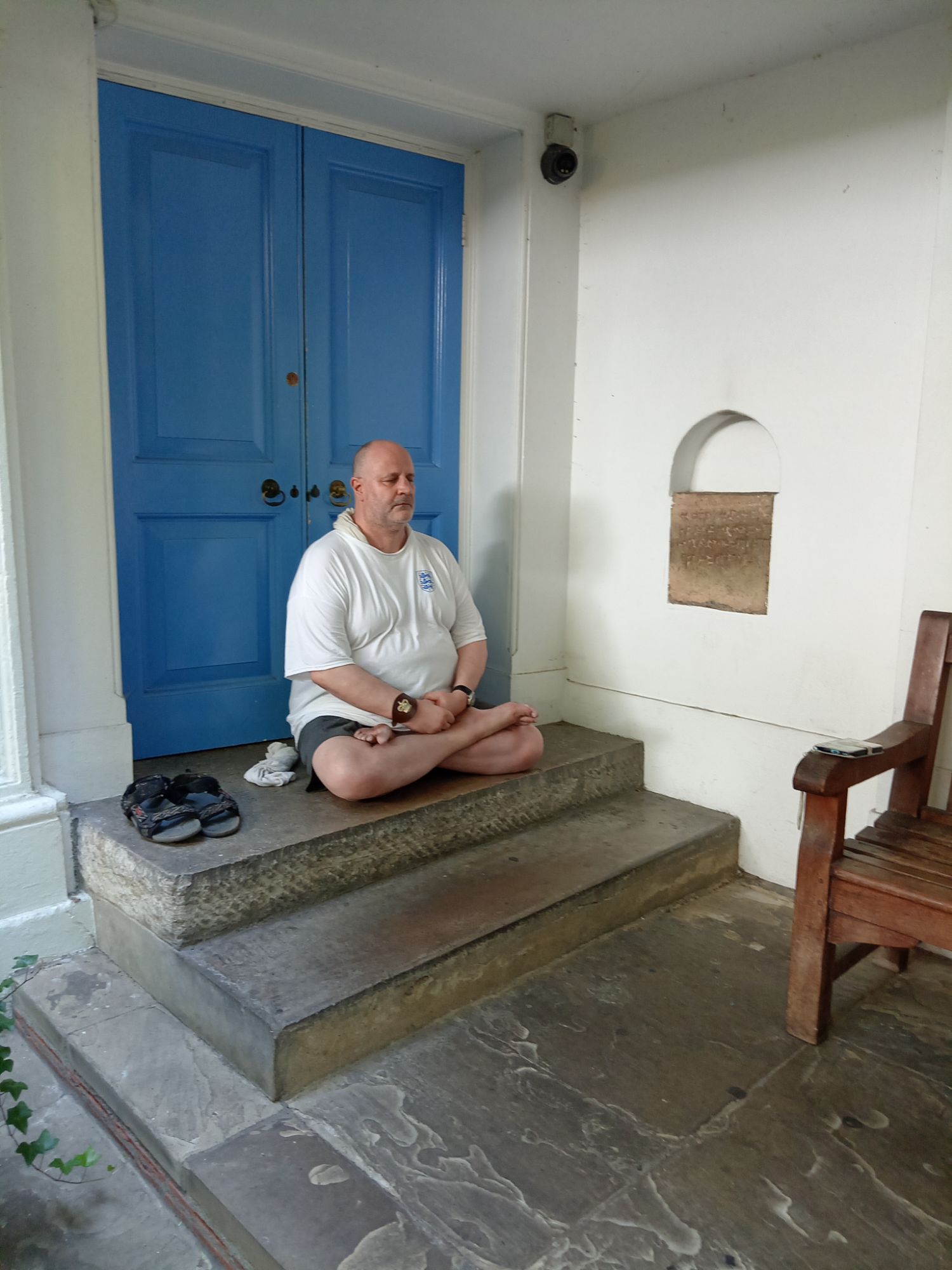
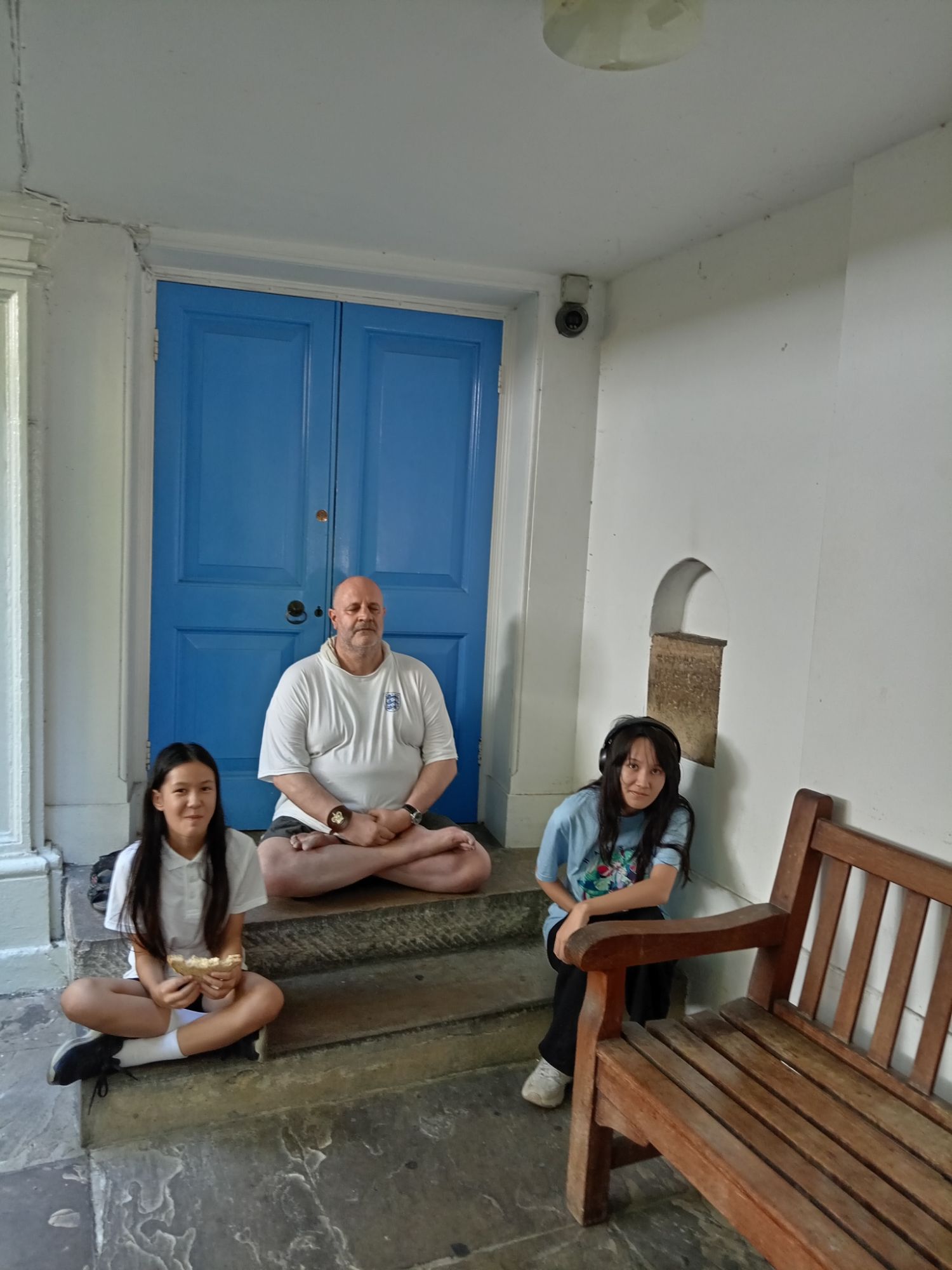

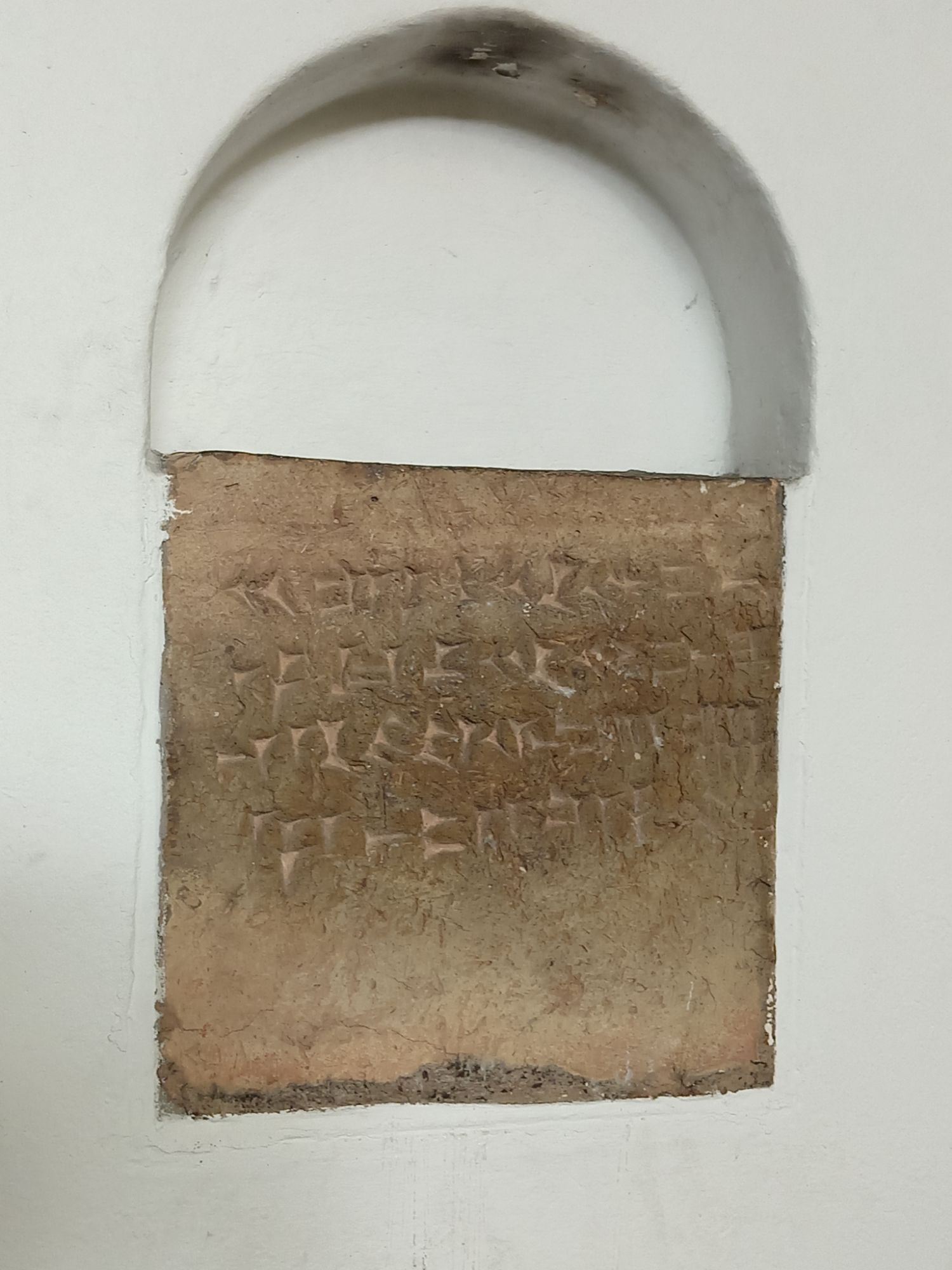
This extraordinary object is from a “Zigurrat” – an ancient pyramid used for religious purposes in Mesopotamia – which once existed in what is today modern day Iraq (between 4000-500 BCE). The cuneiform writing states the name “Shalmaneser” – an Assyrian king who ruled between 859-824 BCE. Obviously, this artefact was stolen and indeed I found the following Extract regarding how this object ended-up in the Church:
‘How one earth did it come to be in a small courtyard in central London?! Well, it was given as a gift to Canon Mortlock, the rector of the church who directed the rebuild following the blitz. It was given to him by archaeologist and second husband of Agatha Christie, Sir Max Mallowan. He found it during a dig during his time as the Director of the British School of Archaeology in Iraq from 1947-1961.’
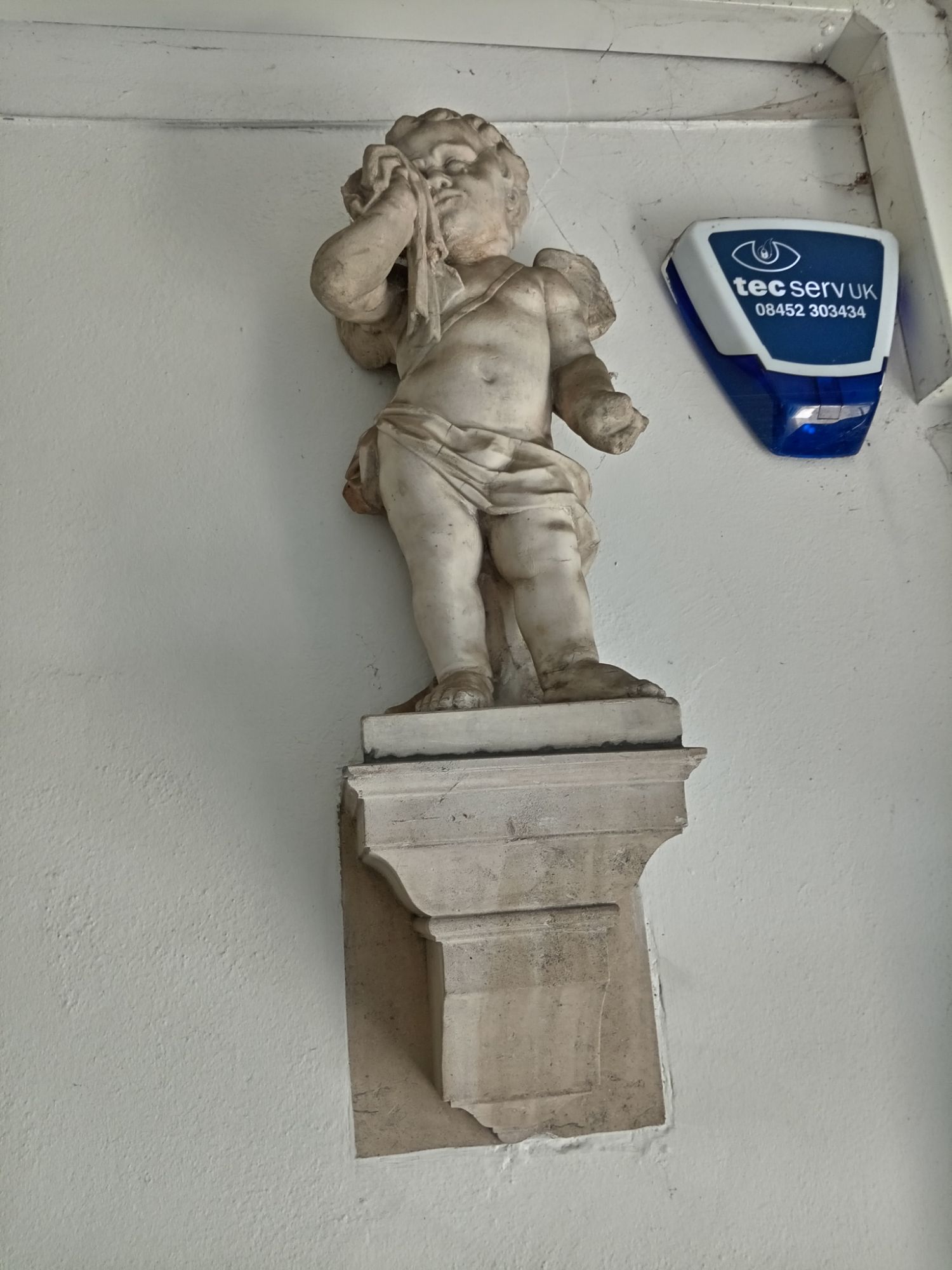
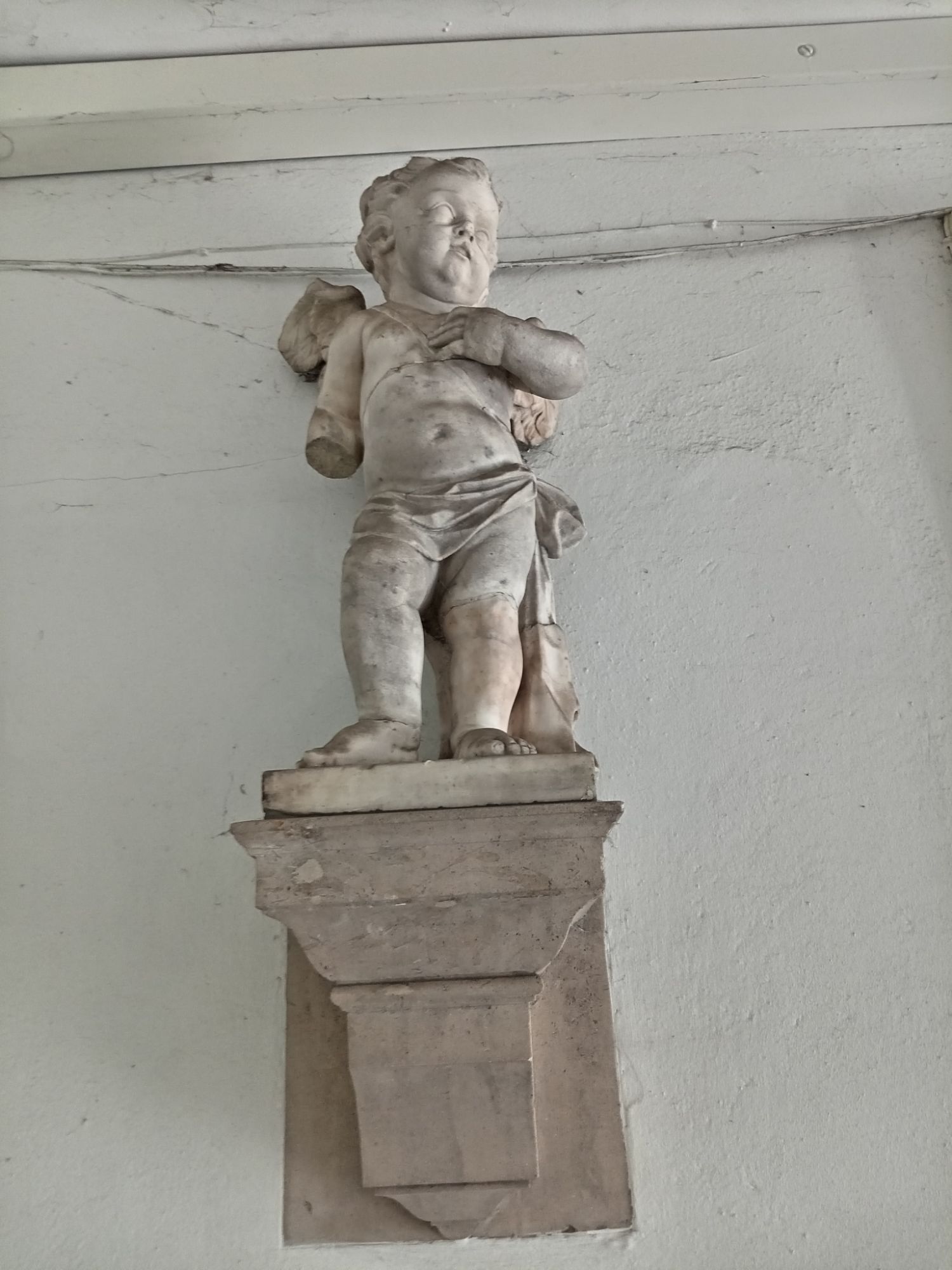
It is interesting to note that a number of “Pagan” (or “non-Christian”) artefacts are on permanent display in the Courtyard. Why is this? Is it because of the non-Papal “Catholicism” which emphasises church-expansion into non-Christian areas? It is an odd development considering the usual intolerance to other faiths the Christian church usually manifests.
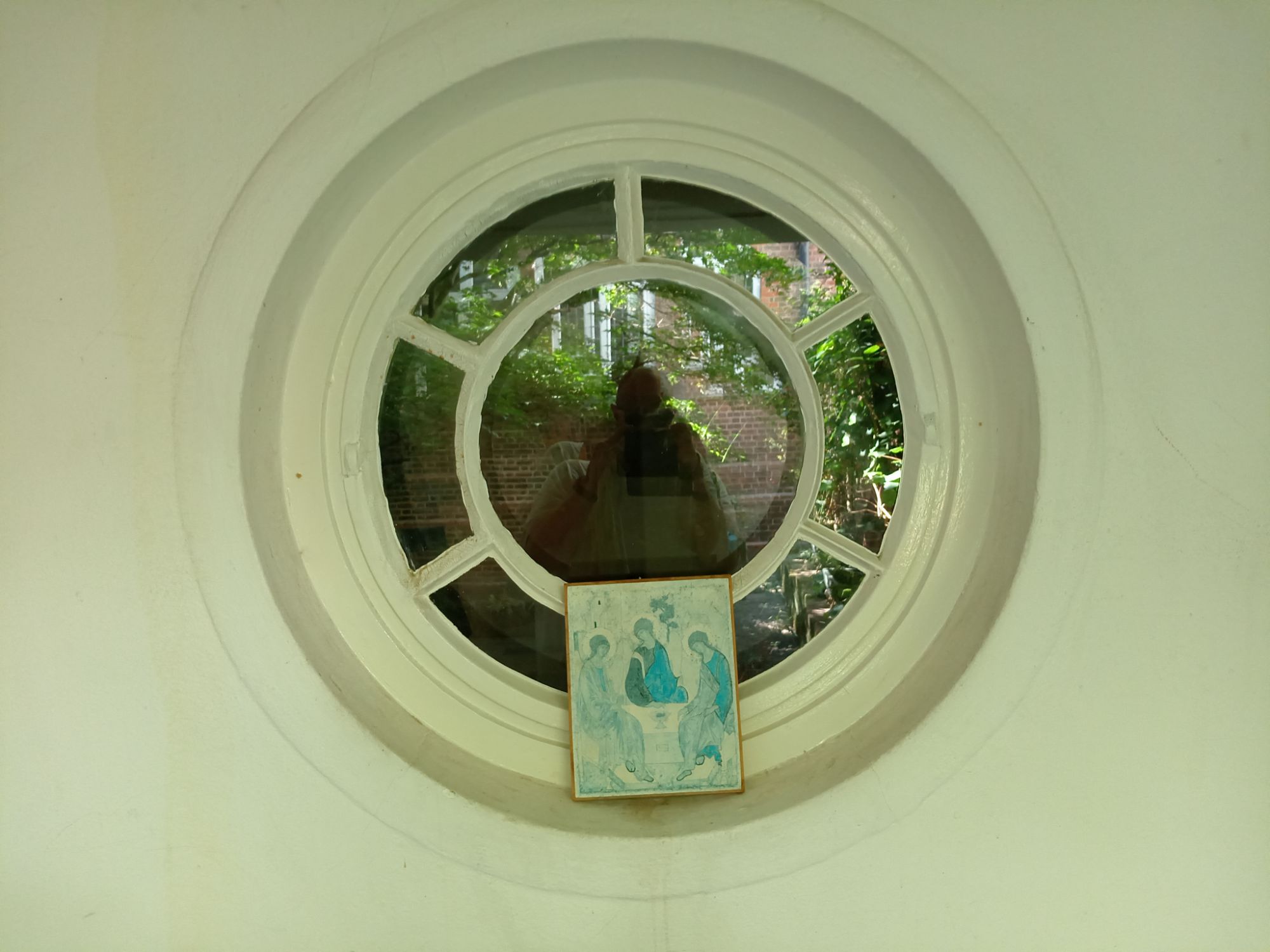
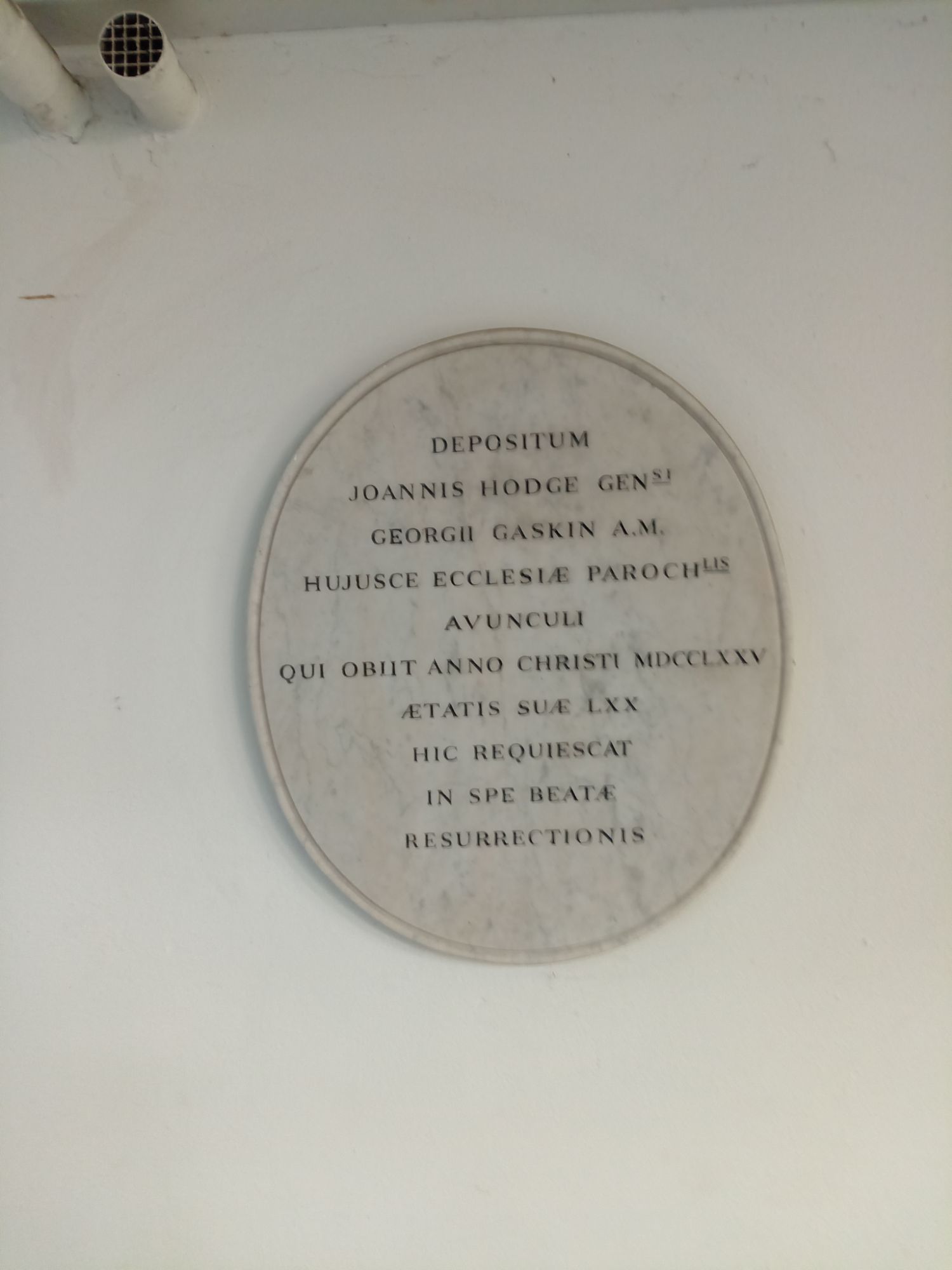
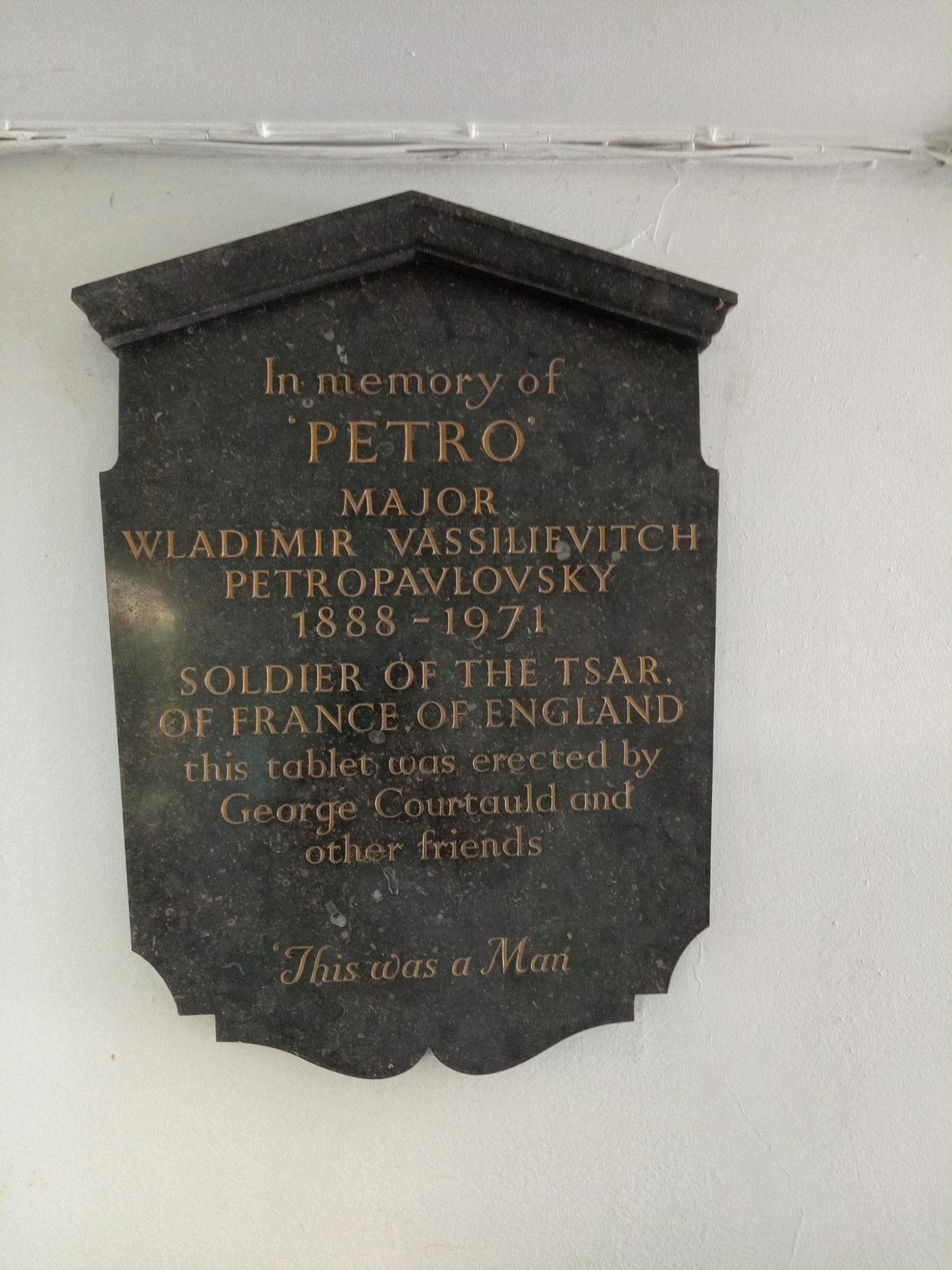
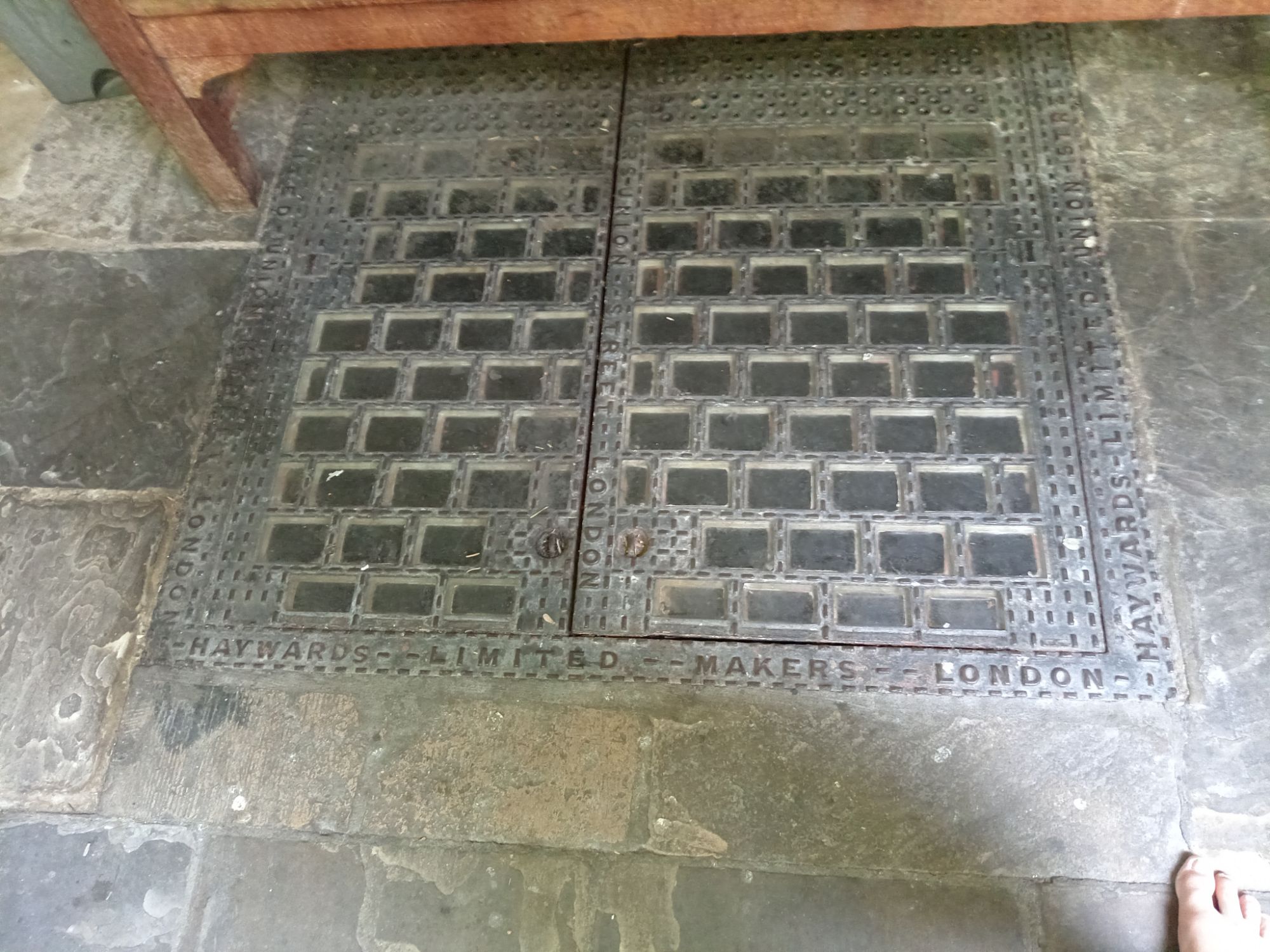
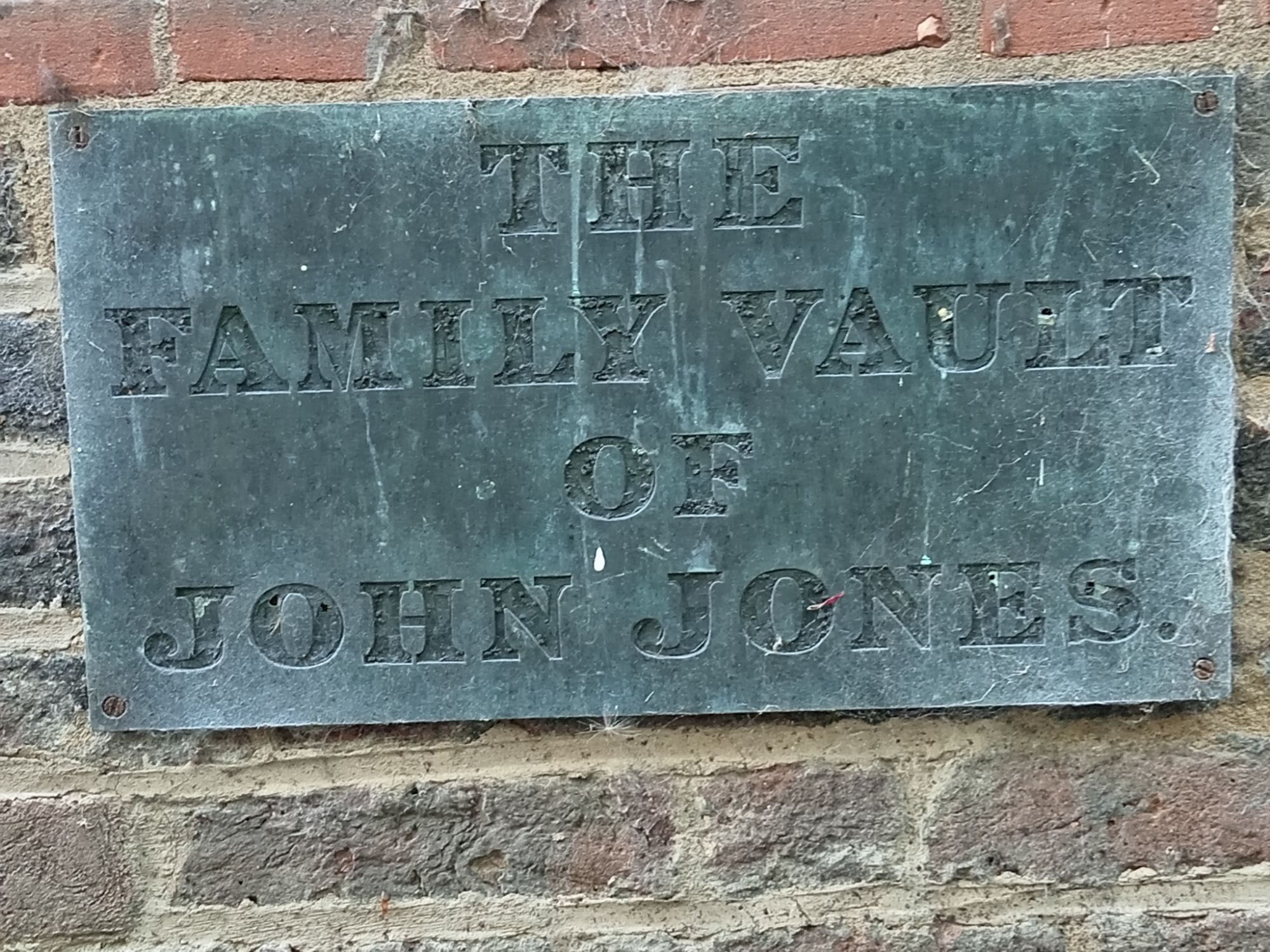
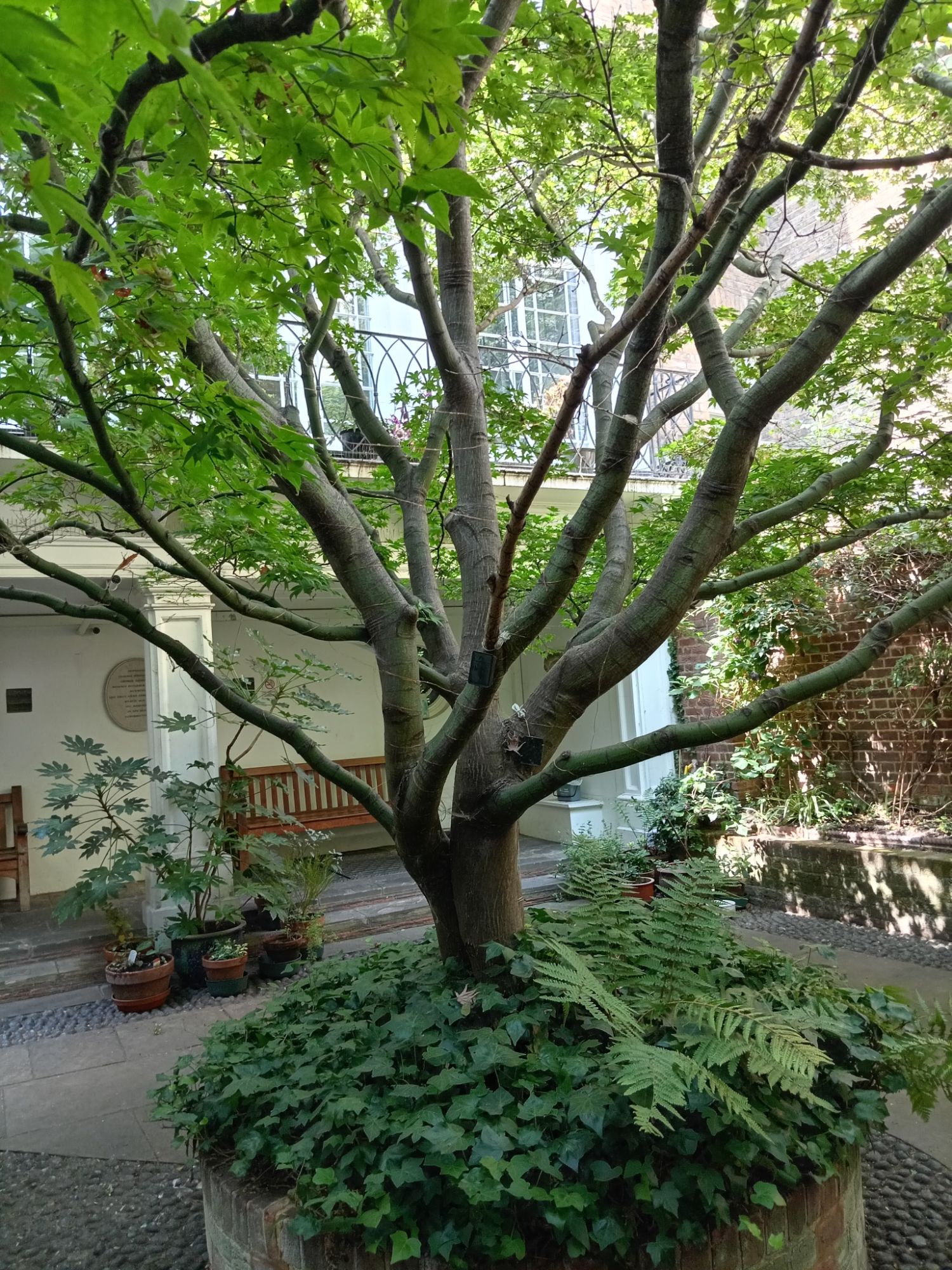
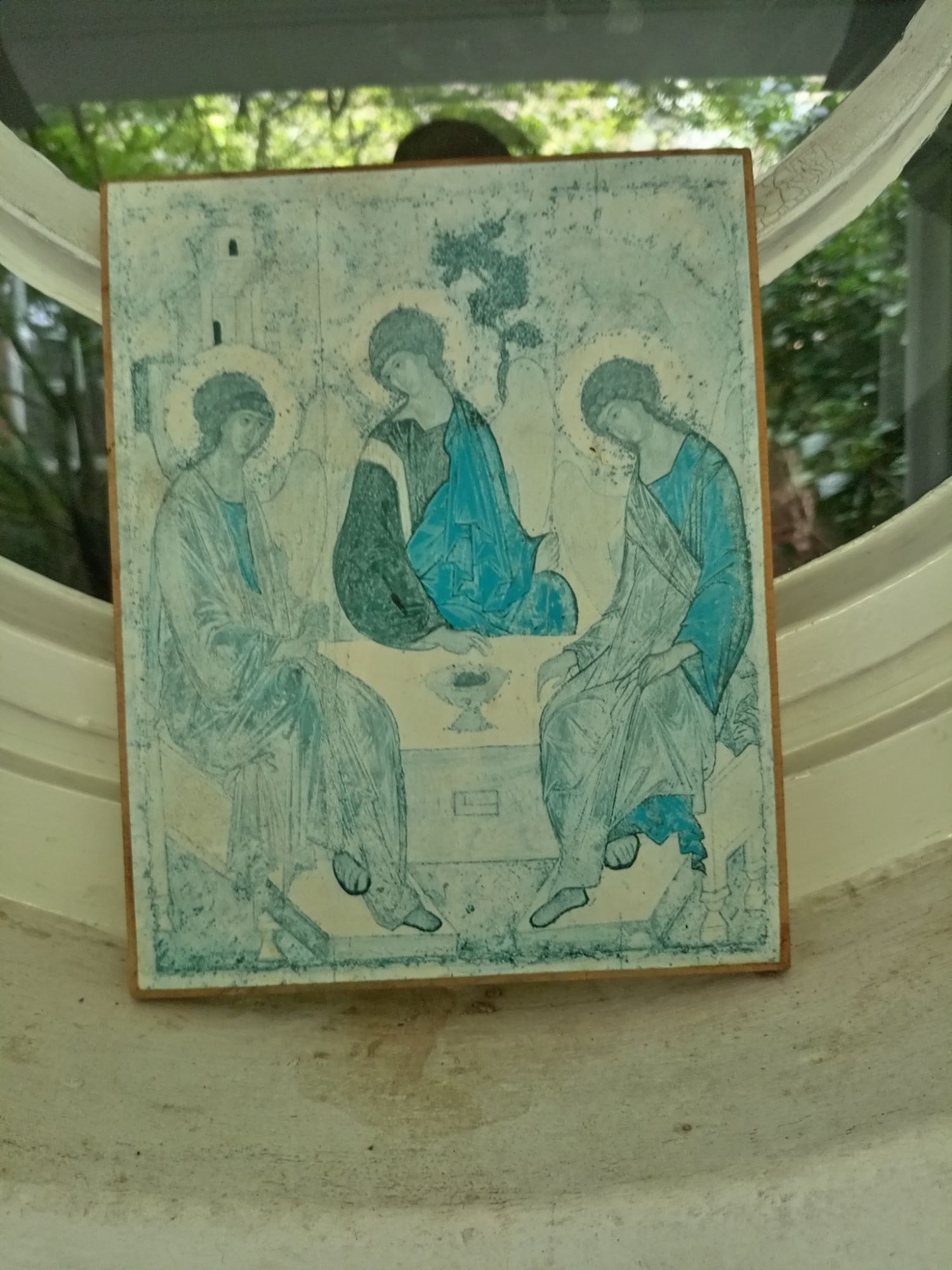
One plaque of “concern” is that attributed to one deceased person known as “Petro” (1888-1971). Another website says:
‘There is this memorial to ‘Petro’. He was a Russian soldier who took French citizenship. He became a member of the Special Operations Executive and supported the Free French during the war.’
The Plaque also implies that he spent time in England. During WWI, the Imperial Russian Army lost around 5-6 million men (killed and wounded). Although most of these casualties occurred on the “Eastern Front” fighting the Imperial Germans – but the Czar also despatched tens of thousands of Russian soldiers to fight alongside British and French troops on the “Western Front”. After the Imperial Russian Army joined the Socialist cause of Lenin in 1017 – millions of men simply left the trenches and walked back into Russia – joining the workers calling for the return of the exiled Lenin. Meanwhile, thousands of former-Czarist Russians soldiers serving in France (technically speaking, the Czar had abdicated during early March, 1917 following the February Revolution – and was replaced by a short-lived bourgeois government – I presume some type of “Republic”) no longer wanted to fight in a war their country had withdrawn from and requested to return to Russia to join the Revolution. Obviously, “Petro” (mentioned above) was not one of them. There was an unsightly incident involving the Western Allies rounding-up and disarming these Russian soldiers before placing them in an area marked-off by barbed-wire and watch-towers (in a place known as “Courtine“). At one-point, the British and French fired artillary rounds at this “Concentration Camp” – to prevent the Russians from continuously requesting to return to Russia! I suspect “Petro” was essentially “anti-Socialist” – as he obviously knew enough establishment figures in the UK to secure a plaque in a very famous church in the UK! Supporting Socialism is a definite way of securing reputational oblivion – so we may logically conclude that “Petro” was Anti-Socialist. Ironically, he had ceased being a “Czarist soldier” six-months before the Bolshevik Revolution – becoming a soldier of the new Bourgeois Republic – which still insisted on pursuing a highly destructive war that had nothing to do with Russia. As for the so-called “Free French” – most French openly collaborated with the Nazi Germans. I assume that “Petro” was part of the few numbers of French people who were evacuated to the UK after the Nazi Invasion of France. He then worked in Intelligence during WWII (he was in his early to mid-50s during WWII).

