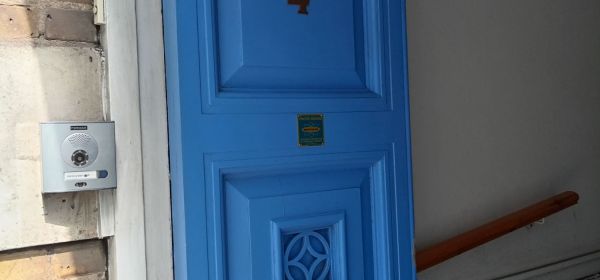
The Secret Garden - 4 Fosters Lane - London!

UK: Visiting St Vedast-Alias-Foster Church Courtyard! (15.8.2026)

This is why some of us can still speak the old language of “Gaelic” or Gallic”. We win in the end by absorbing all these foreigners and turning them into Celts. Every invader has lost their distinctiveness over time and became “us”. Just as I am a Hakka-Celt – my Chinese family Celtic Hakka! We are explorers who like finding old and unusual things. Well, today we discovered the remarkable Courtyard of St Vedast-Alias-Foster (this French Saint was born c, 453 CE – but the church was built in the 12th century by Flemish migrants – possibly on the site of older Celtic churches) – the address being: 4 Foster Lane, London EC2V 6HH. It was rebuilt and redesigned by Sir Christopher Wren around 1670 – having suffered damage during the 1666 Great Fire of London. What is the Courtyard today used to be part of the church’s graveyard. The church was built is in the style of English Baroque architecture.
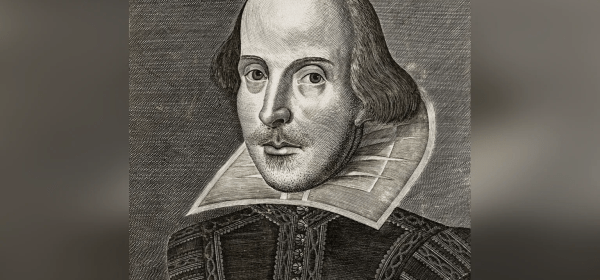
The discovery may indicate that Shakespeare spent more time in London in his later years than previously thought

UK: Location of Shakespeare’s Blackfriars House Discovered! (17.4.2026)

One of the documents was a plan of part of the Blackfriars precinct, drawn up in 1668, two years after the Great Fire of London, which confirmed the precise location and size of Shakespeare’s Blackfriars house.

The part of the property that spanned the gate did not appear in the post-fire plan because it had no foundation.

Munro said: “This house was close to [Shakespeare’s] workplace at the Blackfriars theatre.

“We know that Shakespeare co-authored Two Noble Kinsmen with John Fletcher later in 1613, and this new evidence that the Blackfriars house was quite substantial makes it not inconceivable that some of it may have been written in this very property.”

The other two of these documents relate to the sale of the Blackfriars property by Shakespeare’s granddaughter in 1665.

The property covered what are now the eastern end of Ireland Yard, the bottom of Burgon Street and parts of the late 19th Century buildings at 5 Burgon Street and 5 St Andrew’s Hill.