The discovery may indicate that Shakespeare spent more time in London in his later years than previously thought

UK: Location of Shakespeare’s Blackfriars House Discovered! (17.4.2026)

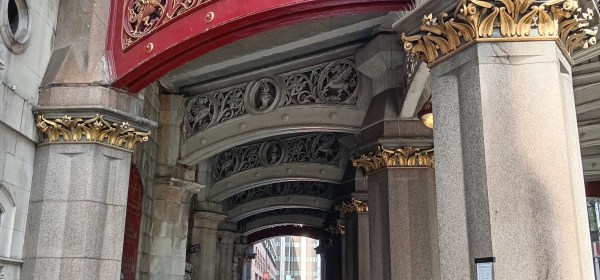
One of the documents was a plan of part of the Blackfriars precinct, drawn up in 1668, two years after the Great Fire of London, which confirmed the precise location and size of Shakespeare’s Blackfriars house.

The part of the property that spanned the gate did not appear in the post-fire plan because it had no foundation.

Munro said: “This house was close to [Shakespeare’s] workplace at the Blackfriars theatre.

“We know that Shakespeare co-authored Two Noble Kinsmen with John Fletcher later in 1613, and this new evidence that the Blackfriars house was quite substantial makes it not inconceivable that some of it may have been written in this very property.”

The other two of these documents relate to the sale of the Blackfriars property by Shakespeare’s granddaughter in 1665.

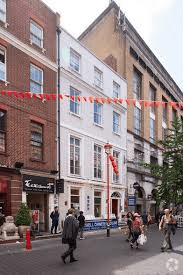
The property covered what are now the eastern end of Ireland Yard, the bottom of Burgon Street and parts of the late 19th Century buildings at 5 Burgon Street and 5 St Andrew’s Hill.

1745 Coaching Stone - Original 18th Century GPS!

Sutton: 18th Century Coaching-Stone – the Original GPS! (13.4.2026)

I may well have written about the old coaching-stones scattered around Sutton and Cheam – I now of two – but was unaware of the date they were established. Basically, these devices informed travellers on foot, horse, or carriage – how many miles it was from where they were to the centre of London. Coachmen could either read the inscription engraved on the stone – or was taught what the stone said and remembered where it was when driving on the road – either way – these coaching-stones served as the original GPS system for travel. I think the Roman established something similar thousands of years ago – so the concept was not new in 1745. What I did not realise is that these stones have now received official recognition of being historically important monuments worthy of preservation and protection. The iron-bars and plaque are the new editions which I only saw when taking a rare walk through Sutton.

South London Spastics - We Are All 'Wall!

UK: Weird News From England – “We Are All ‘Wall”! (11.3.2026)

Millwall Football Club acknowledges the decision by The Football Association to impose upon it a £45,000 fine and an extension to the FA Action Plan, following a breach of FA Rule E21 during the Carabao Cup fixture against Crystal Palace on Tuesday 16th September 2025.

The sanctions have been imposed in relation to the use of a chant containing the phrase ‘South London Spastics’. The term ‘Spastic’ is a derogatory and discriminatory term and has the effect of leaving those with a disability feeling targeted and unwelcome.

This chant goes against everything the club stands for and is wholeheartedly condemned. The club has a zero-tolerance policy towards all forms of discriminatory abuse; such behaviour has no place in society. Any individual identified as engaging in such abuse will be banned.

The ruling means LTN schemes Albert Road, Dalmally Road, Elmers Road, Holmesdale Road, Parsons Mead and Sutherland Road will be removed.(Image: jackfifield)

London: Croydon LTNs Ruled “Unlawful” by High Court – Used to Boost Council Finances! (7.3.2026)

The legal challenge was spearheaded by local resident Karen Lawrence and the pressure group Open Our Roads. Following a complex legal battle that began in May 2024, Mr Justice Pepperall ruled on Wednesday (March 4) that the council had abused its statutory powers.

He found that the council’s primary motive for implementing the traffic restrictions was to raise revenue, which falls outside the lawful scope of the relevant legislation. LTNs are residential areas where through traffic is restricted by measures such as planters and cameras, in an effort to improve road safety and air quality.

The court’s decision examined Croydon Council’s broader financial position in relation to the LTNs. The judgement referenced the council’s Section 114 bankruptcy notices issued in 2020 over a projected £67 million shortfall.

Church Blankeying-Bombing Nazi Germany - 1940

UK: Honeywood Museum – [1940] How Churchill Initiated “Saturation” [Blanket] Bombing of Civilian Areas of Nazi Germany! (24.2.2026)

It could well be the case that “Croydon” was mistakenly presented as “Kenley” on the Luftwaffe maps – not that it mattered as both were legitimate “military” targets – and that the map included the old boundary markers that had subsequently shifted – with the land now defining the active aerodrome being redefined into other areas. What was once aerodrome land running across the old periphery – was now Council-owned land comprising of civilian houses and civic roads run through – and around it. Total Luftwaffe strength in August 1940 was between 2000-2,200 fighter, fighter-bomber, and bomber aeroplanes – often flying around 1000 sorties per day against the UK Mainland. Luftwaffe losses (for August 15th 1940) amounted to 76 aircraft across all engagements – while the RAF lost just 34. With the specific attack upon Croydon – 14 Bf 110s and 8 Bf 109s Luftwaffe aeroplanes were involved (some sources suggest the number was between 20-30 – the record is unclear) – these are the Luftwaffe crews that supposedly bombed the civilian population. It is said that the Nazi German losses amounted to 25% across the board – so over Croydon this would have amounted to around 6 aircraft – a small number compared to Luftwaffe losses across the region.

A Voyage to Arcturus

UK: In Praise of David Lindsay and his Book “A Voyage to Arcturus! (14.2.2026)

What was written on those 30 missing pages? No one knows because they remain missing. It is interesting to speculate as what is left reads like the music (and lyrics) from “Sergeant Pepper’s Lonely Hearts Club Band”. Considering how bizarre and sexually suggestive the remaining content is – one is left pondering as to the true scale of non-conformity. Anyway, a number of early SciFi writes used the agency of “sleep” as a means to travel long distances or indeed travel through time – I think this idea dates back to the French author “Louis-Sébastien Mercier” (1740-1814) and his 1771 masterpiece entitled “The Year 2440: A Dream If Ever There Was One” (L’An 2440, rêve s’il en fut jamais). I think HG Wells also borrowed this concept for his 1898 book entitled “When the Sleeper Wakes”. Lindsay, it must be said, did flesh it out somewhat by suggesting it was possible to “travel on light beams” in “torpedo-shaped metal space craft” (the essence of the modern “Alien” franchise?). Of course, it must be stressed that Arcturus was in fact the “sun” around which the planet Tormance orbited. The protagonists did not travel to the sun – but to the planet Tormance – which is an interesting and unexplained contradicting. Why not the title “A Voyage to Tormance” – as this planet seems far more warmer than earth (the main character Maskull required a blood transfusion just tosurvive – provided wilfully by a Tormance women (an allusion to the power of menstruation – perhaps?)

1 2 3 30