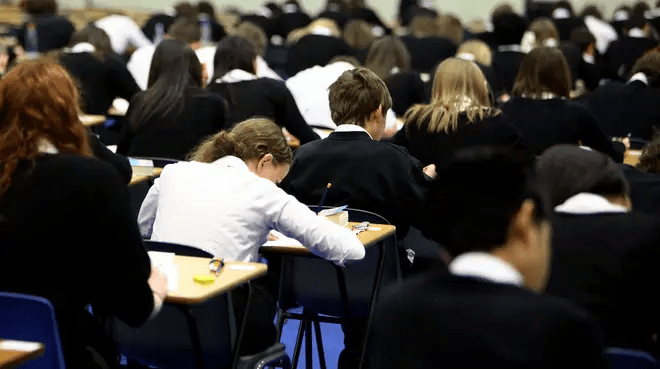

Thousands of young people and their parents, as well as hundreds of teachers, were interviewed for the inquiry
By Rebecca Henrys – 29 Jun 2026
The Independent Inquiry into White Working-Class Educational Outcomes also determined that once-in-a-generation reforms were needed to tackle why such children are the lowest-performing large demographic in England’s school system.
It was commissioned last summer by the multi-academy trust Star Academies, and is supported by the Department for Education.
Inquiry co-chairs Baroness Estelle Morris and Sir Hamid Patel said the issues identified in the report “cannot be explained away by low aspiration or lack of effort”, and cannot be “solved by schools alone”.
Thousands of young people and their parents, as well as hundreds of teachers, were interviewed for the inquiry.
The Education Secretary has welcomed a report into educational outcomes for white working-class boys, saying class remains “a huge driver of outcomes…right across society”.
Bridget Phillipson told Times Radio: “I welcome the report, because I think it shines a really important light on what has been an underdiscussed area for some time in the schools.”
She added: “Class is a huge driver of outcomes, never mind in our politics, but right across society.
“If by class we mean the family that you’re born into determining what you go on to achieve in life, that’s as strong a driver as anything.
“We know that children born into less well-off families are more likely to arrive at school further behind their more affluent peers. We know they don’t make progress across school in closing that gap, and we know they’re more likely at the end of school to go into being not in education, employment, or training.
“So, background, social background, family background, where you’re born, they are big determinants of what you achieve in your life.
“And I came into politics to change that, to make sure that it’s your talent, it’s your hard work, it’s not your background that determines what you can go on to achieve, but at the moment that is a very, very distant dream.”
It also analysed education data about white working-class pupils, looking at the 1.25 million young people in England who are white British and receiving free school meals.
The report determined that, as of 2025, just 36 per cent of white British pupils on free school meals achieve a Grade 4 or above in English and Maths GCSE, compared with 72 per cent of non-free school meal pupils. It dubs the disparity “the white working-class disadvantage gap”.
Among its findings, the inquiry determined white working-class communities and the education system had different viewpoints as to how each defines success and the purpose of education.
It said that while many families place greater importance on the social experience of school and call for more importance to be placed on vocational options for students, such as apprenticeships, the education system often emphasised academic progression to higher education.
In its 24 recommendations, the inquiry calls for more early-years support, improved mental health support and restrictions on smartphone use in schools.
It also says improvements are needed in how the system defines and prioritises white working-class educational outcomes, urges an extension of 30 hours’ free childcare to all disadvantaged families not currently eligible, and also calls for a massive expansion in apprenticeship opportunities in white working-class communities.
Baroness Morris and Sir Hamid said addressing these issues “will require sustained national effort over many years”.
They said: “The challenge set out in this report is significant. But so too is the opportunity.
“Every child in this country deserves to feel that education is for them, that their future matters, and that success is achievable regardless of where they come from.”

