Author’s Note: I have a vague memory of carrying-out research (from primary Russian-sources) as to “why” Stalin possesses two-birthdays. The (unelected) Head of State in many countries has the duty of celebrating a birthday date (usually of the nation or something similar) and as the (elected) post of “General Secretary” of the “Communist Party of the Soviet Union” also carried “Head of State” duties (alongside the far more amorphous and powerful of role of “Care of State”). This is despite the USSR possessing the late, great, MI Kalinin who served as Soviet President between 1938-1946 (his “On Communist Education” a collection of his speeches and articles during WWII is considered a masterpiece and is widely available). Needless to say, Kalinin also carried-out “Head of State” duties – but this seems to be an “internal” role for the many countries that comprised the USSR and was not an “outward-facing” undertaking. Yes – doubtless many of you who find your way to my writing (either in my lifetime or beyond) may rest assured that the bourgeoisie “lies” continuously to retain power. Experience will teach you this. As I have written elsewhere, for the bourgeois, one fact is presented ensnared by two-lies (despite what the bourgeois say about their enemies – Stalin was the greatest of working-class leaders). As the workers will dialectically prevail in the end, all we have to do is sit it out – but we can do this creatively by exposing the behemoth whenever we can. And to my point. My Chinese relatives started to arrive in the UK in the 1950s and 1960s (they were already British Subjects originating from a British Colony and were not “immigrants” in the usual sense). When they arrived, Customs Officers asked them their “names” and “birthdays” and many did not know how to respond. The Chinese calendar was lunar and cycled through a 60-year cycle. A Chinese hour had 120 minutes in it – with 12-hours comprising a “day”. A Chinese week possessed “ten-days” and a Chinese month “three-weeks”, and so on (only the Great Napoleon tried to instigate a similar system in Europe – but the French abandoned this attempt). To compound matters, on a daily basis, Chinese people communicated with one another (and the authorities) via their ascribed “animal-sign”. This system had existed far longer than Western civilisation and was considered superior to it (the year 2026 in the West is 4724 in China). No Chinese person took the solar calendar seriously, or thought the Babylonian habit of separating everything into divisions of “60” could possibly work. However, the Chinese are not stupid. They understood that they needed an answer when they arrived in the UK – and so Chinese intellectuals (who could read English), set about devising a strategy of “borrowing” famous dates from English history. Someone I knew has Shakespeare’s birthday of “April 26th” (she was born in May) whilst another had Queen Elizabeth II’s birthday of “April 21st” (she was born in August), etc. A similar situation existed regarding “names” when tough men (from rural Hakka villages) turned up in the UK called “Jeff”, “John”, or “Bill”. Many had never seen Europeans, an aeroplane, or a bus – but here they were trying to adapt. Now, I am told that rural Georgia was a very rustic and primitive place whose land and population was routinely attacked by Czarist forces. Yes – Georgians are a proud people with allusions to European ancestry (for some this might be true) but the genetics in general firmly point to Asia. I am not an expert in the written-language of Georgia, but its outer appearance first struck me as “Arabic-looking” – until I looked closure and saw the Cyrillic lettering (written different to that found in Russia). Both, in fact, derive from Greece – with the Greek alphabet being brought by Saint Curil (826–869). It was only after settling in the UK, and having children brought-up in its system, that ethnic Chinese people were able to fully adopt their real names and dates into English equivalents. Chinese people born in the UK often assist Chinese people not born in the UK. The younger assist the elder, and so on. I mention this as the Chinese struggles to adapt are all but ignored by Europeans – they simply do not care. With Joseph Stalin, however, a discrepancy with his birthday is immediately jumped upon and used to imply allegations of dishonesty. If my words survive into the future – please take them as your own and add something to truth and honesty in the world. ACW ((21.5.2026)
The British monarch usually possesses two-birthdays – the actual birthday and a State-decreed birthday. The former is personal whilst the latter is public. Although this habit can be traced as a specific tradition evolving a certain length of time ago – the reality of the situation is that a State or Court can only celebrate important events given the prevailing circumstances. That is calendar obligations, regional events, national events, and international events, etc. A State entity can only “officially” prepare and celebrate at certain times and these times must be clearly established and set. Obviously, in times of famine, drought, and warfare, etc, it would be inappropriate to “celebrate” when the masses are suffering. Therefore, although private birthdays may be quietly acknowledged by the individuals and loved-ones concerned – public birthdays can only be celebrated in an official capacity if the situation is appropriate and does not violate standards of good taste and propriety.
Joseph Stalin comes under attack today from many bourgeois sides. It is important to understand that he was NOT ethnic Russian – but ethnic Georgian (modern Russian nationalism often rejects him simply on this point). He was a peasant described by many as the only genuine working-class (proletariat) person present in the upper echelons of the Bolshevik Movement. In Georgian script, Stalin’s birth-name is written as “იოსებ ჯუღაშვილი” (Ioseb Jughashvili) – which is often transliterated as “Joseph Dzhugashvili” or “Joseph Djugashvili” (Russian “Иосиф Джугашви́ли”). Later, he chose the pen-name “Stalin” – as many Revolutionaries at that time feared Czarist retribution (Lenin’s brother was hanged, for instance). “Stalin” is a Russian-language name derived from the root-word “Ста́л” (Stal) – meaning “Steel”. When the suffix “ин” (In) is added – in this context it means “Like” (i.e. “to be like”). Therefore, the Russian name “Stalin” (Ста́лин) means “Steel-Like”. The bourgeoisie does not seem to be as concerned about Stalin’s two-names – as it is about his apparant and different birthdays.
Scientific Socialists understand that the power of historical dialectics are set free during a Revolution – once the bourgeois-constraints (that usually regulate capitalist society) are loosened – and then removed. Meanwhile, whilst working toward a Revolution, a Scientific Socialist must “resist” in the most efficient and effective way that does not result in imprisonment or execution, etc (although no circunstance can be completely rejected or written-off – Martin Luther King spoke about turning a dungeon of darkness into a haven of light). The point is to operate “behind-the-lines” and we do the best we can with what we have to work with. Stalin was no different and he did not care about given names (given by whom – and for what?) – and neither was he bothered by birthdates for exactly the same reasons. On this note – he appears to have three ascribed bitrthdates associated with his name.
The 1878 Register of Infant Births kept in the Orthodox Episcopal Church of Gori City (Georgia) states (on page 33): “On December 6th, Gori resident and peasant Vissarion Ivanovich Dzhugashvili and his legal wife Ekaterina Gebrienovna gave birth to a son, Joseph”. This reference is taken as Stalin’s “actual” or “material” birthdate by many historians – although the former Catholic monk – Joseph McCabe – runs with the official date (explained below) which I find curious as he might well have had contacts who could have accessed the Church Records in Georgia. One reason might be that the politicised “Church” was viewed as acting hand-in-glove with the bourgeois (or “feudal” State in the Russian context) and therefore part of the problem that must be overthrown (that is, shifted from “public” to “private”). In this sense, who cares what the Church records? As the Secular State is primary (as the vehicle through which “Socialism” is achieved that leads to “Communism” and the dissolving of the State) – it should decide material reality and its manifestation. The three birthdates associated with Joseph Stalin are:
1) December 6th, 1878 (Julian) Church Records (Private Birthdate)
2) December 18th, 1878 (Gregorian) Church Records (Private Birthdate)
3) December 21st, 1879 (Gregorian) Soviet State Records (Official)
Birthdays “1” & “2” are the same single birthday expressed through two different calendars. January 31st 1918, was the final day of the “Julian” calendar operating within Revolutionary Russia. VI Lenin signed a decree which transitioned Revolutionary Russia into using the “Gregorian” calendar. Therefore, what would have been “February 1st, 1918” (Julian) became “February 13th, 1918” (Gregorian) – with 13-days being “lost” or “skipped”. As an elected State-leader of the fifteen-countries that comprised the Soviet Union, and later also the sixteen countries that comprised the post-1945 Communist Bloc – the Soviet (Workers’) State granted Joseph Stalin a “convenient” birthday which appears to fall upon the Winter Solstice (December 21st). Although the day varies in the different incarnations of his birthday – the month stays the same – with the year being altered by one-year (1878 becomes 1879). Was the Church telling the truth?
Well, I return to the research of Joseph McCabe, as I believe he may have accessed Georgian Church Records – but chose to reject the date recorded in that document. Why? The official (1947) text issued by the Soviet Union entitled “Joseph Stalin – A Short Biography” states the date of “December 21st, 1879” as Stalin’s birth – but gives only the briefest data regarding his parents. McCabe, on the other hand, in his 1944 “The Life of Joseph Stalin” gives what appears to be a first-hand account of the peasant-cottage within which Stalin was born, together with its environs (including the oozing stream running through the roughly-paved street – and the open drain it flows into), together with the information that his mother (who was only “20” when Stalin was born) had given birth to three other sons prior to Stalin – all of whom had died young (and according to McCabe were buried in the little cemetery next to the Church that recorded his birth). As his mother was superstitious – she named her miracle son “Joseph” (premised upon the Biblical figure). McCabe was a prolific writer and was very well-connected – so he might have had direct contacts in the Soviet Union – including Georgia (some of these contacts might have been ecclesiastical).
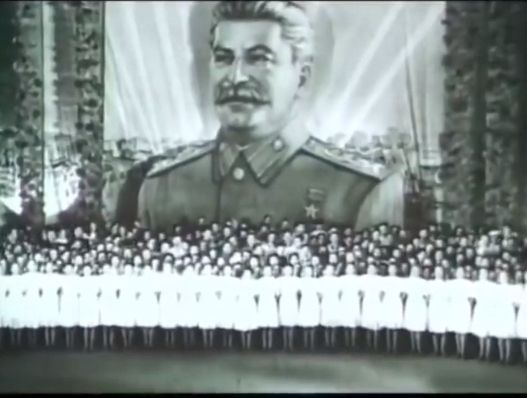
On the face of it, birthdays do not matter and vary in interpretation around the world. The Chinese habit, for instance, is to remain humble and quiet during one’s birthday, as the person making their birthday known is expected to issue gifts and pay for food consumed by his or her friends and family. Being “Chinese” and having a “birthday” is an expensive business which is often avoided or ignored. A Chinese birthday is the exact opposite to that of the Western tradition – where those experiencing a birthday is showered with gifts and money – simply for existing. In the days of mass illiteracy, which lasted in many countries into relatively modern times, many people were probably unaware of their birthday as they could not read a calender, a newspaper, or a letter, etc. Although Stalin did learn to read and write whilst training as an Orthodox Priest – there is no evidence his parents could read or write. Sometimes, when carrying-out genealogical research, it is obvious that birthdates can be mis-recorded, mis-remembered – or both. On occasion, their is even mis-interpretation. Whatever the case, the video above features Mao Zedong sat with Joseph Stalin in 1949 – celebrating Stalin’s 70th birthday.

