Translator’s Note: Due to the collective West propagandising on behalf of the Neo-Nazi Ukrainian regime – and “banning” all access to Russian media in the name of “freedom of Speech” – I have had to access Spanish and African-language Russian sources to seek-out alternative information. Below I present the summarisation of a recent meeting between the US and Russia in Saudi Arabia (?) as presented through a Spanish-language Telegram Channel administered by the Russian Foreign Ministry. In this version of events, the Russian’s preferred message is that Trump’s (fascist) regime is in fact both “normal” and “Christian” – a very disturbing analysis. However, In an English-language article from the Rio Times (Brazil) – included below – this declaration is completely omitted and instead replaced by the usual message of Russia combating the Western-backed Neo-Nazi regime of Ukraine. It is a heady mix of interpretation and propaganda – but I am not surprised. Between 1991-2000, the West swamped the post-Soviet space with Neo-Nazism and extremist Christian religiosity – on the grounds that both these ideologies are inherently “anti-Socialist” and “anti-Soviet” – and easily transition into “Russophobia”. It is obvious this has been effective, as the Russian Orthodox Church is stronger (and richer) in Russia today than it ever was prior to the 1917 Socialist Revolution. Not only has Russia normalised homophobia and transphobia (declaring these fascist attitudes as being “pillars” of Western civilisation) – but new tanks rolling-off the Russian production-line pre-fitted with “religious icons” attached to their interior! Study the evidence and make up your own mind. ACW (13.3.2025)
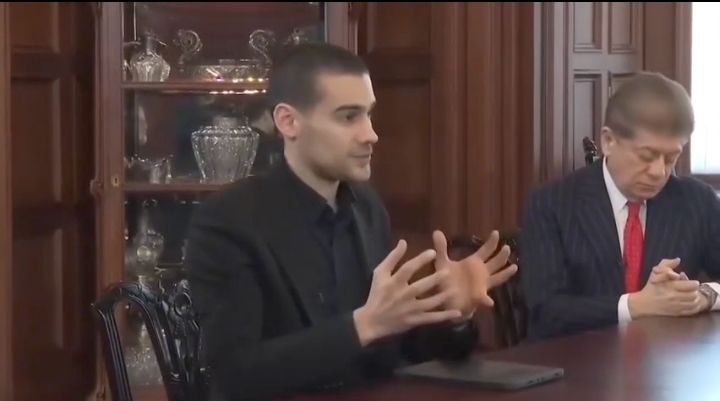
🎙 Interview between Russian Foreign Minister Sergey Lavrov and American bloggers Mario Nawfal, Larry C. Johnson, and Andrew Napolitano (Moscow, March 12, 2025)
Key points:
🔵 I think what’s happening in the US could be described as a return to normalcy. <…> The fact is that a normal administration has come to power in the US, without anti-Christian ideas. This caused a real explosion, both in the media and internationally. And it’s an important sign.
🔵 When we met in Riyadh with Secretary of State Marco Rubio, National Security Adviser to the President – Michael Waltz, and Special Presidential Envoy for the Middle East Steve Witkoff, they expressed their desire for normal relations, meaning that the Trump administration’s foreign policy would be based on defending US national interests. At the same time, Americans understand that other countries may have their own national interests.
🔵 It is clear that the United States and Russia are states whose national interests will never be identical. They cannot coincide completely, not even 50%. But when these interests do coincide, this situation must be exploited to develop simultaneous and similar interests. However, when interests do not coincide and contradict each other, responsible countries must do everything possible to prevent this contradiction from escalating into confrontation, especially a military confrontation that would be disastrous for many other countries.
🔵 The launch of the special military operation was a necessary step, as all other attempts, all other alternatives to put things on a positive path, failed for ten years after the illegal coup in Kiev, in violation of the agreement signed the night before and guaranteed by the Germans, French, and Poles.
🔵 I don’t think Americans are going to leave NATO. At least President Trump never suggested that would happen. But what he did say emphatically was that if they want us to protect them, to guarantee their security, they must pay what is necessary.
🔵 However, President Trump does not want to provide security guarantees to Ukraine under Zelensky. He has his own vision of the situation, which he openly presents from time to time. This war should never have started. Ukraine’s accession to NATO constitutes a violation of its Constitution and the 1991 Declaration of State Sovereignty of Ukraine, under which we recognized it as a sovereign state. For several reasons, including that this Declaration stated no to NATO, no to blocs, and a neutral status. Another thing this Declaration also confirmed and solidified was that all the rights of Russians and all other national minorities must be respected.
🔵 Europe and the United Kingdom certainly want this [the Ukrainian crisis] to continue. The way they welcomed Zelensky in London after the scandal in Washington is a sign that they want to raise the stakes and are preparing to pressure the Trump administration to act more aggressively against Russia.
🔵 It’s not about the territories, it’s about the people whose history has been stolen by laws. Territories are important only because people live there. The people who live there are descendants of those who, for hundreds of years, built Odessa and other cities on those same lands, who built ports and roads, who founded those lands, and who are linked to the history of this land.
❗️ Americans know that we will not betray our commitments, legal and political commitments that we are developing with China.
Spanish Language Text:
🎙 Entrevista del Ministro de Asuntos Exteriores de Rusia, Serguéi Lavrov, con los blogueros estadounidenses Mario Nawfal, Larry C.Johnson y Andrew Napolitano(Moscú, 12 de marzo de 2025)
Puntos clave:
🔵 Creo que lo que está ocurriendo en EE.UU podría describirse como vuelta a la normalidad. <…> El hecho es que al poder en EE.UU. ha llegado una administración normal, sin ideas anticristianas. Ello provocó una verdadera explosión, tanto en los medios, como en la arena internacional. Y es una señal importante.
🔵 Cuando nos reunimos en Riad con el Secretario de Estado, Marco Rubio, el Consejero de Seguridad Nacional del Presidente de EEUU, Michael Waltz, y el Enviado Especial del Presidente de EEUU para Oriente Próximo, Steve Witkoff, dijeron que deseaban unas relaciones normales, refiriéndose a que la política exterior de la Administración de Trump se basaría en la defensa de los intereses nacionales de EE.UU. Al mismo tiempo, los estadounidenses entienden que otros países puedan tener sus propios intereses nacionales.
🔵 Es evidente que EE.UU. y Rusia son Estados, cuyos intereses nacionales nunca serán idénticos. No pueden coincidir por completo, ni siquiera en un 50%. Pero cuando esos intereses coinciden, esta situación debe aprovecharse para desarrollar intereses simultáneos y similares. Sin embargo, cuando los intereses no coinciden y se contradicen, los países responsables deben hacer todo lo posible para evitar que esta contradicción se convierta en confrontación, especialmente en una confrontación militar que sería desastrosa para muchos otros países.
🔵 El inicio de la operación militar especial fue un paso forzoso, puesto que el resto de los intentos, todas las demás alternativas para encaminar las cosas hacia una dimensión positiva fracasaron durante diez años después del golpe ilegal en Kiev, en violación del acuerdo firmado la noche anterior y garantizado por los alemanes, franceses y polacos.
🔵 No creo que los estadounidenses vayan a salir de la OTAN. Al menos el presidente Trump nunca insinuó que eso pudiera suceder. Pero lo que sí dijo de manera tajante fue que si quieren que los protejamos, que les demos garantías de seguridad, deben pagar lo necesario.
🔵 Sin embargo, el Presidente Trump no quiere proporcionar garantías de seguridad a Ucrania bajo Zelenski. Él tiene su propia visión de la situación, que presenta abiertamente de vez en cuando. esta guerra nunca debería haber comenzado. La adhesión de Ucrania a la OTAN constituye una violación de su Constitución y de la Declaración de Soberanía Estatal de Ucrania de 1991, en virtud de la cual la reconocimos como un estado soberano. Por varias razones, incluida la de que esta Declaración decía no a la OTAN, no a los bloques, un estatus neutral. Otra cosa que esta Declaración también confirmó y solidificó fue que se debían respetar todos los derechos de los rusos y de todas las demás minorías nacionales.
🔵 Europa y el Reino Unido ciertamente quieren que esto [la crisis Ucraniana]continúe. La forma en que recibieron a Zelenski en Londres después del escándalo en Washington es una señal de que quieren aumentar la apuesta y se están preparando para presionar a la administración de Donald Trump para que actúe de manera más agresiva contra Rusia.
🔵 No se trata de los territorios, se trata de las personas a las que las leyes les han robado su historia. Los territorios son importantes solo porque en ellos viven personas. Las personas que viven en esos territorios son descendientes de aquellos que, durante cientos de años, construyeron Odessa y otras ciudades sobre esas mismas tierras, que construyeron puertos, caminos, que fundaron esas tierras y que están vinculadas a la historia de esta tierra.
❗️ Los estadounidenses saben que no traicionaremos nuestros compromisos, compromisos legales y políticos que estamos desarrollando con China.
Russia Lays Out Core Demands for Ukraine Peace Talks in Lavrov Interview
March 12, 2025
In a wide-ranging interview with U.S. bloggers Mario Nawfal, Larry C. Johnson, and Andrew Napolitano, Russian Foreign Minister Sergey Lavrov articulated Moscow’s non-negotiable conditions for advancing peace negotiations with Ukraine.
The discussion, held in Moscow, emphasized NATO expansion and the cultural suppression of Russian speakers. It also highlighted historical Western betrayals as root causes of the conflict.
1. NATO Expansion: The Irreducible Red Line
Lavrov condemned NATO’s eastward expansion as the primary catalyst for the war, calling it a “story about illusions, beliefs, and disappointments.” He reiterated Russia’s longstanding grievances:
- Broken Promises: Lavrov accused the West of violating assurances given to Mikhail Gorbachev in the 1990s that NATO would not expand into Eastern Europe. He cited the 1990 “2+4” Treaty on German reunification, which he claims prohibited NATO infrastructure in former East Germany—a promise he says was later abandoned.
- Strategic Threat: NATO’s inclusion of Baltic states and its 2022 pursuit of Ukraine’s membership crossed a “red line,” Lavrov argued. “The importance of Ukraine for Russian security is many times bigger than Greenland’s importance for the U.S.,” he stated, framing Kyiv’s alignment with NATO as an existential threat.
2. Cultural Suppression of Russian Speakers
Lavrov emphasized Ukraine’s “extermination of Russian language, media, and culture” as a critical grievance:
Legal Discrimination: Post-2014 laws banning Russian-language education, media, and public use created a “dangerous divide.” Lavrov cited instances where Ukrainian officials labeled Russian-speaking citizens in Donbas “terrorists” and launched military operations against them.
UN Charter Violations: He accused Kyiv of violating Article 1 of the UN Charter (protecting minority rights) and criticized Western silence: “Nobody ever mentioned human rights in Ukraine except us.”
3. Minsk Agreements and Western “Betrayal”
Lavrov blamed the collapse of the 2015 Minsk peace accords on Western duplicity:
Failed Implementation: He recounted how Ukraine, France, and Germany later admitted they “never intended to implement” the agreements, instead using them to “buy time” to arm Kyiv.
Macron’s “Shameful” Role: Lavrov singled out French President Emmanuel Macron for allegedly pressuring Russia to abandon demands for direct talks between Kyiv and Donbas representatives, calling it a breach of the Minsk framework.
4. Russia’s Vision for a Settlement
Lavrov outlined Moscow’s prerequisites for negotiations:
- NATO Withdrawal: No NATO troops or infrastructure in Ukraine, period.
- Legal Restoration of Russian Language: Repeal laws marginalizing Russian speakers and ensure minority rights.
- Demilitarization: Halt Western weapons shipments and dissolve the “Nazi regime” Lavrov claims governs Kyiv.
- Recognition of “Root Causes”: The West must acknowledge NATO expansion and cultural suppression as drivers of the conflict.
He dismissed Western proposals for peacekeeping forces in Ukraine as “protecting a Nazi regime,” insisting any solution must address “the people, not just territories.”
5. Broader Geopolitical Context
- U.S. Relations: Lavrov praised the Trump administration’s focus on “national interest” and openness to dialogue but warned against attempts to “split Russia from China.” He affirmed Moscow’s commitment to its “confidential, long-term partnership” with Beijing.
- Multipolar World Order: Lavrov advocated for a Eurasian security architecture inclusive of regional blocs (ASEAN, SCO, CSTO) to counter NATO’s “closed clubs.”
Conclusion: “No Compromise on People’s Fate”
Lavrov concluded with a stark warning: “Our conscience is clean. We will not compromise the fate of the people who were deprived of their history by law.” He framed Russia’s demands as non-negotiable. He asserted that peace depends on the West addressing root causes rather than pursuing “ideological goals.”
The ball, Lavrov made clear, remains in the West’s court.
 SANGHA KOMMUNE (SSR)