
Translator’s Note: Since the recent détente of the US and modern Russia – the Russian-language Yandex search-engine has once again become easily available via the Western internet. Since I last regularly accessed the “deep” Russian internet – I have noticed that whereas there was about a 50%-50% distribution of pro and anti Stalin articles – a new narrative has been ordered which portrays Stalin as a mass killer who also achieved one or two great achievements for the Russian people (the new orientation is roughly 25& pro and 75% anti). This is a Western (capitalist), reactionary, Trotskyite, and entirely fascist attitude. Furthermore, it is pseudo-history. Joseph Stalin was working-class (most old Bolsheviks were middle-class) and was Georgian – not Russian (Stalin rejected all forms of nationalism – including Russian). The Soviet Union was a collective of around 15 or 16 countries (depending on era) that acted in Socialist collaboration. The history of the Soviet Union is not the history of Russia – even if Russia was the socio-economic driving force. The point of the 1917 Revolution was a new era in human evolution – a step forward and away from feudalism and capitalism.
In 1991, Russia and the other Soviet States “betrayed” the 1917 Revolution whilst betraying the working-class specifically and humanity in general. Russia has regressed into the very capitalist greed and exploitation that Lenin guided it away from in 1917 – effectively siding with their ideological enemy (the capitalist West). The Nazi Germans killed and wounded 40 million in the USSR during WWII. Joseph Stalin killed no one. A US academic study recently declared that between 1945 and present – the US military has killed around 30 million around the world in support of its capitalist ideology. Stalin did not kill these people. For modern Russia to ignore these facts and attempt to portray Stalin as a mass killer is anti-intellectual in the extreme. Particularly as the collective West is currently portraying modern Russia as a maniacal State that commits mass murder and steals the land of others. In effect, the West presents modern Russia as if it were the Joseph Stalin it has fabricated. Joseph Stalin was a great leader and Russia should present his history correctly and truthfully. ACW (27.2.2025)
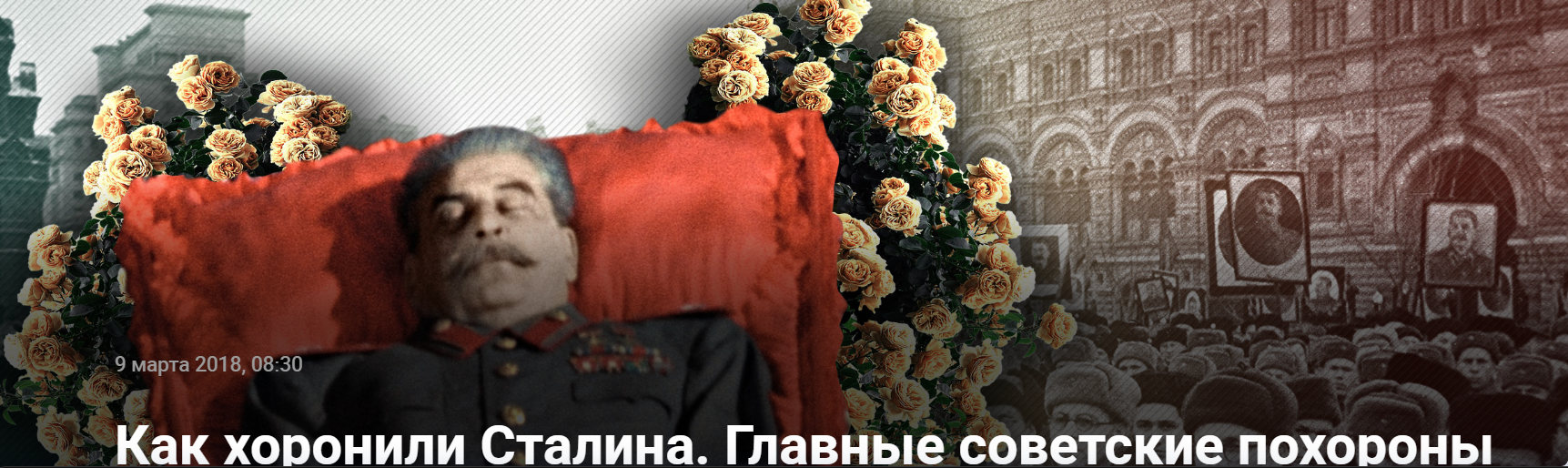
On March 9, 1953, the funeral of the General Secretary of the CPSU Central Committee Joseph Stalin took place in Moscow. It would not be an exaggeration to say that this was the most important funeral in the history of the Soviet Union. Lenin died too quickly, Khrushchev was buried without special honours, Andropov and Chernenko were in power for only a few months, the people did not have time to get use to them. Only Brezhnev’s funeral could be compared with Stalin’s. But Brezhnev ruled for only 18 years, while Stalin ruled for almost 30. Those born at the beginning of his reign became adults. Those who were in adulthood managed to grow old. Stalin’s rule was an era, a significant part of the life of Soviet people passed through it. Therefore, it is not surprising that the funeral of the Soviet leader was unprecedented in its scale at that time and caused a confluence of a huge number of people, which ended in a stampede with numerous deaths. This “Life” article seeks to discover how the leader of the Soviet Union was buried 65 years ago.
Preparation
Joseph Stalin lived for a few more days after the blow that occurred on March 1, but could not speak and was partially paralyzed. On March 5, at 9:50 p.m., doctors pronounced the Secretary General dead. By this time, his closest associates had already managed to divide the State and Party posts between themselves and managed to return to the Stalin’s Dacha just in time for the leader to breath his last.
After his death, they began to go about their business, appointing Nikita Khrushchev responsible for organizing the funeral, who formed a commission to organize the funeral with the participation of Shvernik, Kaganovich and several other Party leaders.
It was decided to begin a nationwide farewell to the General Secretary the very next day, so that as many people as possible had time to say goodbye to him. Therefore, a number of procedures were applied. For example, almost immediately after his death, Stalin’s body was taken away for a posthumous autopsy. Six hours after his death, a whole group of pathologists worked with the body of the deceased. Before the autopsy procedure, a death mask was made from the face of the deceased. This was done by the famous sculptor Manizer.
The leader’s brain was extracted and transferred to the Brain Institute for storage. In those days, the brains of members of the (Socialist) Politburo, prominent scientists and scientific figures were necessarily transferred for storage to this Institute, where scientists examined the biological structure for any signs of superior evolutionary differences that separated these examples from the brains of many ordinary people (who require dialectical Marxist-Leninist education), and reactionaries, or capitalists (who oppose Socialism due to their selfish stupidity). The idea was that a Socialist evolutionary change was beginning to happen across the human species that required study and societal harnessing.
While doctors were working with Stalin’s body, his favourite (thread-bare) uniform was sent to the dry cleaners, patched up, with shoulder straps of a Field Marshal added and gold buttons sown onto it, since it was decided to bury him in it (Stalin possessed very few new clothes). At the same time, the architect Posokhin was given the task to engrave a new inscription on the Mausoleum as quickly as possible, since it was decided to bury the deceased leader next to Lenin, a decision that attracted no controversy.
It was decided to hold the farewell ceremony in the Column Hall of the House of Unions. The interior design of the hall for the ceremony was led by the Chairman of the Committee for Arts under the Council of Ministers of the USSR Nikolai Bespalov. The search for a coffin for the body of the leader was carried out by the manager of the Central Committee of the CPSU Dmitry Krupin. The protection of the farewell ceremony was entrusted to the NKVD-KGB.
Immediately after the autopsy, preparations began for the temporary embalming of Stalin’s body, which was carried out in the laboratory of Lenin’s Mausoleum. Experts even managed to somewhat “improve” the face of the deceased, lightening the “complexion” and hiding smallpox and age-spots. Already in the afternoon of March 6, the body was delivered to the Hall of Columns, and at 4 p.m. the farewell ceremony began.
By this time, the hall was decorated with portraits of Stalin, and velvet cloths with the coats of arms of the Union Republics were hung on the columns. There were 16 in total at that time (the number of Soviet Union States varied according to date). The coffin stood in the centre, laid on a high pedestal that was literally buried in flowers. At the head hung the banner of the Soviet Union. On the satin fabric in front of the coffin lay the General Secretary’s awards. The chandeliers hanging in the hall were covered with black cloth.
There was an orchestra in the hall, playing funeral melodies by various classical composers. In the guard of honour at the coffin, the new leaders of the Soviet state stood in turn. A military escort was also present.
Soviet citizens learned of Stalin’s death only on March 6, when it was announced on the radio and printed in the newspapers. On the occasion of his death, a three-day mourning was declared. Cinemas and other entertainment establishments did not work, any entertainment events in the country were cancelled.
On the same day, the construction of a pantheon was announced, in which Stalin would eventually be reburied. This decision was passed through the Central Committee and the Council of Ministers. It was planned to erect a pantheon in Moscow, which would become a resting place not only for the dead leaders – Lenin and Stalin, as well as some major figures buried in the Kremlin wall, but also for the future leaders of the USSR. The decree on the creation of the Moscow pantheon was published in the newspapers on March 7, and an open competition of projects was also announced. However, the pantheon was quickly forgotten in the heat of the struggle for power, and this topic was no longer raised.
Farewell

People reached out to say goodbye to the deceased leader. Mainly from Moscow, but some came from other cities, mainly as delegates from enterprises. Since entry to Moscow for the period of the events was restricted, trains were checked, ordinary passengers were not allowed into the city, with the exception of delegates from work collectives and those traveling on a business trip.
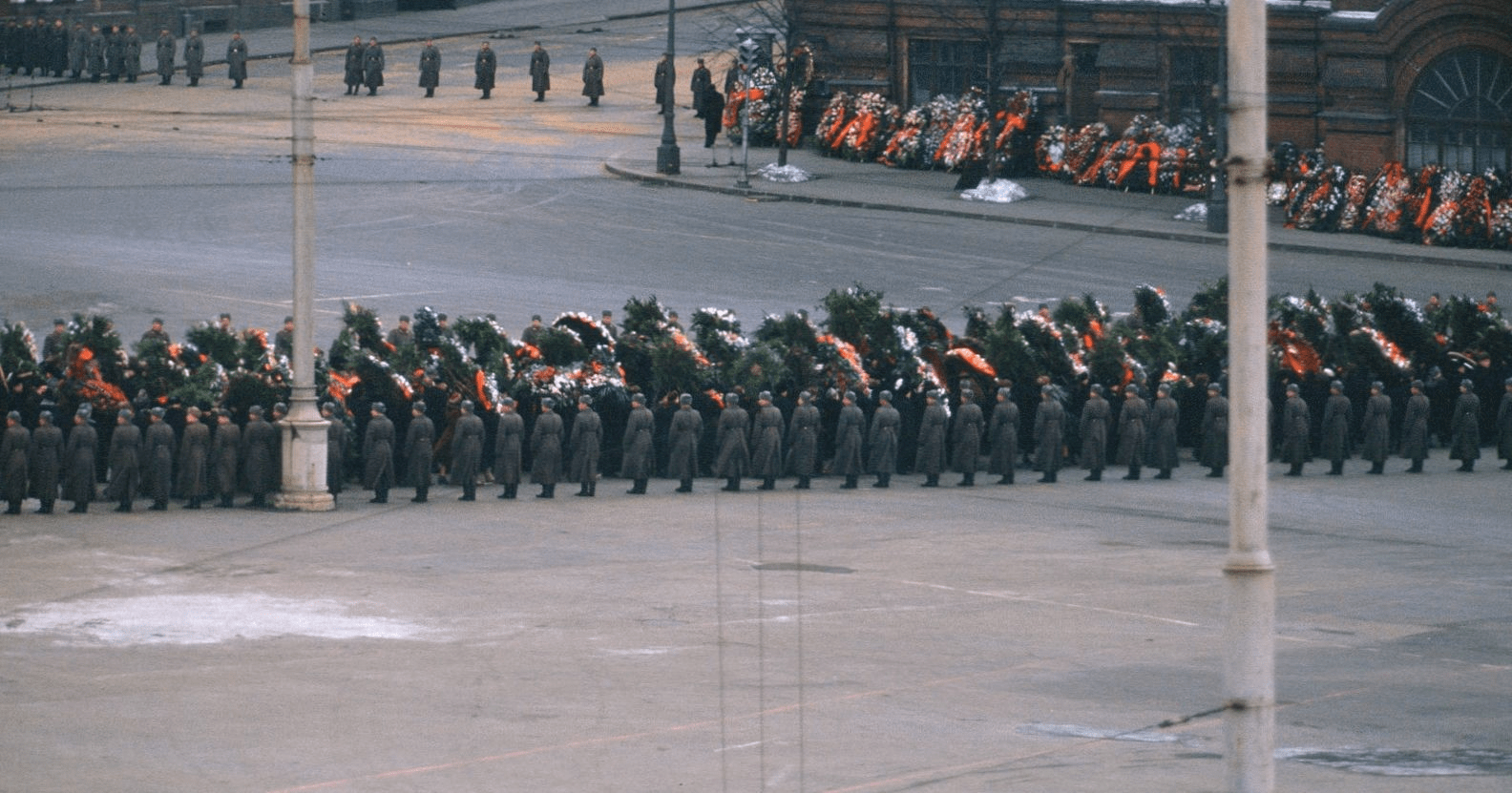
The Column Hall of the House of Unions was literally buried in wreaths, there were not even hundreds, but thousands of them. All large enterprises and departments sent a mourning wreath without fail.
Foreign delegations that began to arrive in Moscow did not stand aside either. They were mainly representatives of countries where a socialist regime had already been established. A Chinese delegation was present, headed by Zhou Enlai, Mao Zedong’s right-hand man (Mao sent a personal wreath, separately from the Chinese Communist Party). The leaders of the countries of the “people’s democracy” were present – Gottwald, Gheorghiu-Dej, Ulbricht, Bierut, Rakosi and others.
The leaders of the Communist Parties from the capitalist countries came – the Englishman Pollitt, the Italian Togliatti, the Finn Pessi, the Austrian Koplenig, etc.

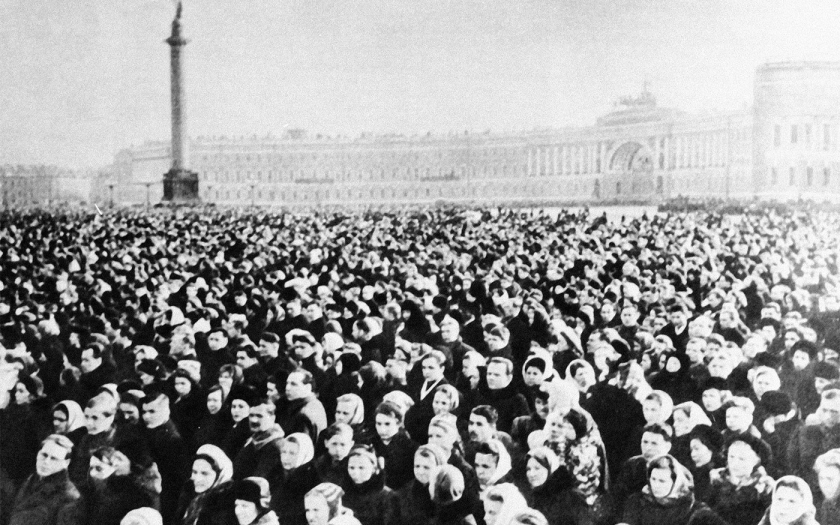
From Bolshaya Dmitrovka, many kilometres of queues flowed, consisting of people who wanted to see the leader at least once to say goodbye. Some believe that the hundreds of thousands who came to say goodbye to the deceased leader are evidence of the great love and gratitude of Soviet citizens. Reactionariess and degenerates state that this was due to the totalitarian nature of the State in which these people grew up and were formed. Of course, when this happens in the capitalist West, it is considered a spontaneous and valid outpouring of collective infividuality – with no reference to State compulsion – even when such a response is ordered and/or demanded by threatening State mechanisms.
But do not forget one more important fact. Stalin did not travel around the country very often, whilst few people throughout the USSR had TVs at that time, so for most people the farewell ceremony was the only opportunity to see the leader live, even if he was dead. Everyone understood that this was a historic moment and sought to witness it. Therefore, in the huge queues there were those who idolized Stalin, and those who hated him, but realized the historicity of the moment, and those who went “because everyone went”, and those who wanted to boast to friends and colleagues.
Places in the queues were taken from the night. Even taking into account the limited entry to the capital, a lot of people gathered. No one counted the exact number of participants in the mourning ceremonies.
Stampede
In these days, another event took place, which forever became an integral part of this funeral. We are talking about a serious stampede in the area of Trubnaya Square, as a result of which there were numerous victims. Although the stampede is usually associated with Stalin’s funeral, it happened during the farewell ceremony on March 6. On the first day when Stalin’s death was announced, crowds of people chaotically rushed to the House of Unions.
People tried to go to Bolshaya Dmitrovka and decided that the easiest way to get there would be through Trubnaya Square, but the way was blocked by trucks. The stampede happened on the descent from Rozhdestvensky Boulevard toward the Square, the front rows were stopped by trucks, and from behind human waves continued to roll on the Square – one after another. As a result, those who stood in front were literally crushed and trampled by those pushing behind. The exact number of victims of the stampede has not yet been established. In various sources, they are estimated in the range from several tens to several thousand people (with the higher number often presented as being the fault of a dead Stalin!).
Funeral
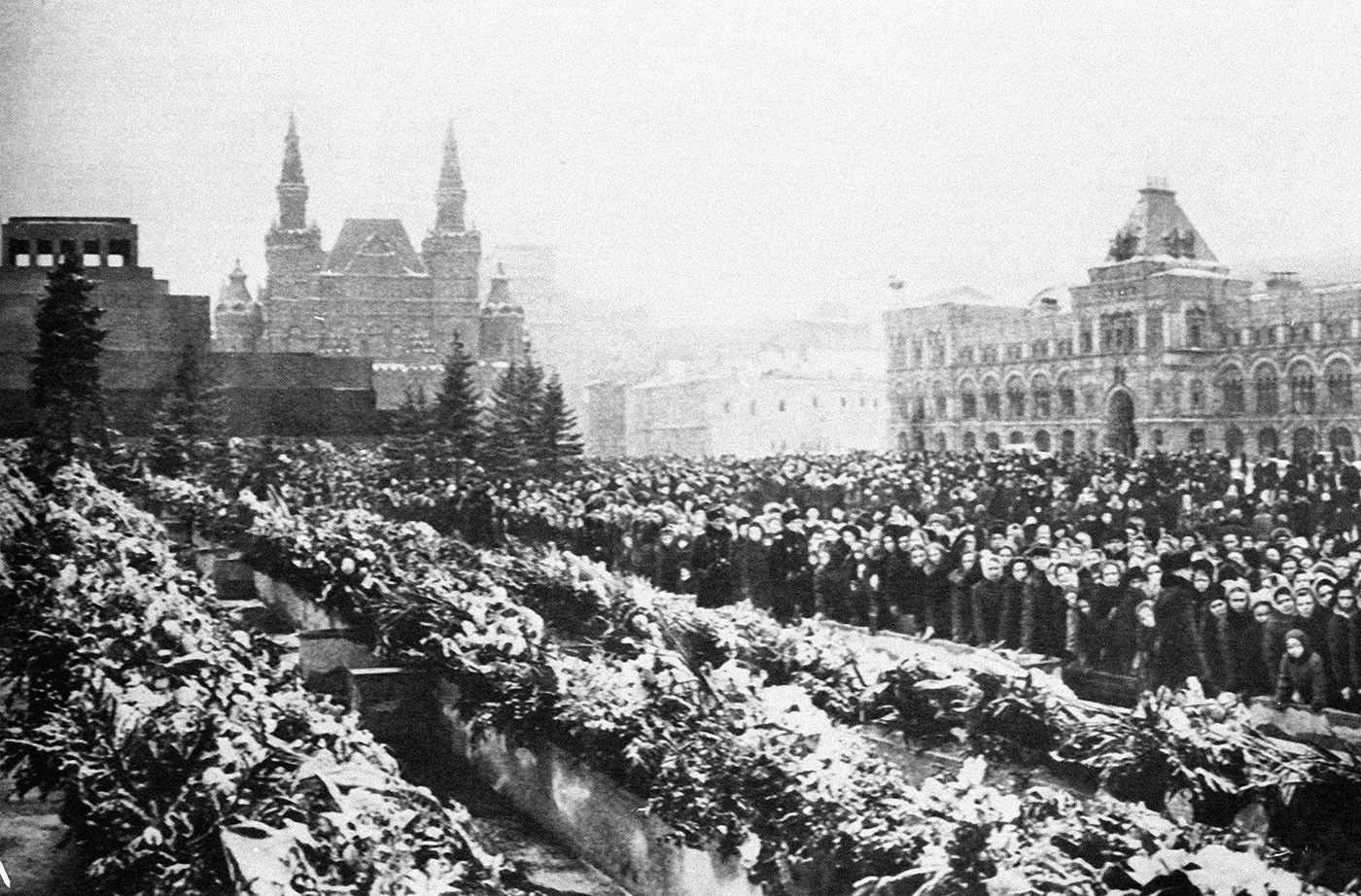
Late in the evening of March 8, the farewell ceremony was completed. The doors of the House of Unions were closed. After midnight, the wreaths began to be carried out. Since there were so many mourning wreaths, it was decided to take them to the Mausoleum and lay them out near it. The most important wreaths (about a hundred) – from Soviet leaders, leaders of other States, leaders of major foreign Communist Parties and relatives of the deceased were sorted to participate in the burial ceremony. They were carried behind the coffin.
Late at night, assembly points were opened for delegations of workers, who were supposed to be present on Red Square during the day. Not everyone was allowed into these delegations, as all delegates required special passes. At these assembly points the workers assembled, after which they went to Red Square in an organized manner, in order to be there by morning. A few hours before the funeral, at 9:30 am, the entrance for delegates to Red Square was closed.
On the morning of the funeral, traffic within the Garden Ring was completely closed. The only exceptions were special vehicles that had passes.
At 7 am, a cordon was established along the route of the funeral cortege. At the same time, troops and representatives of workers’ delegations were lined up on Red Square. In total, 4400 military personnel and about 12 thousand delegates were accommodated on the Square.
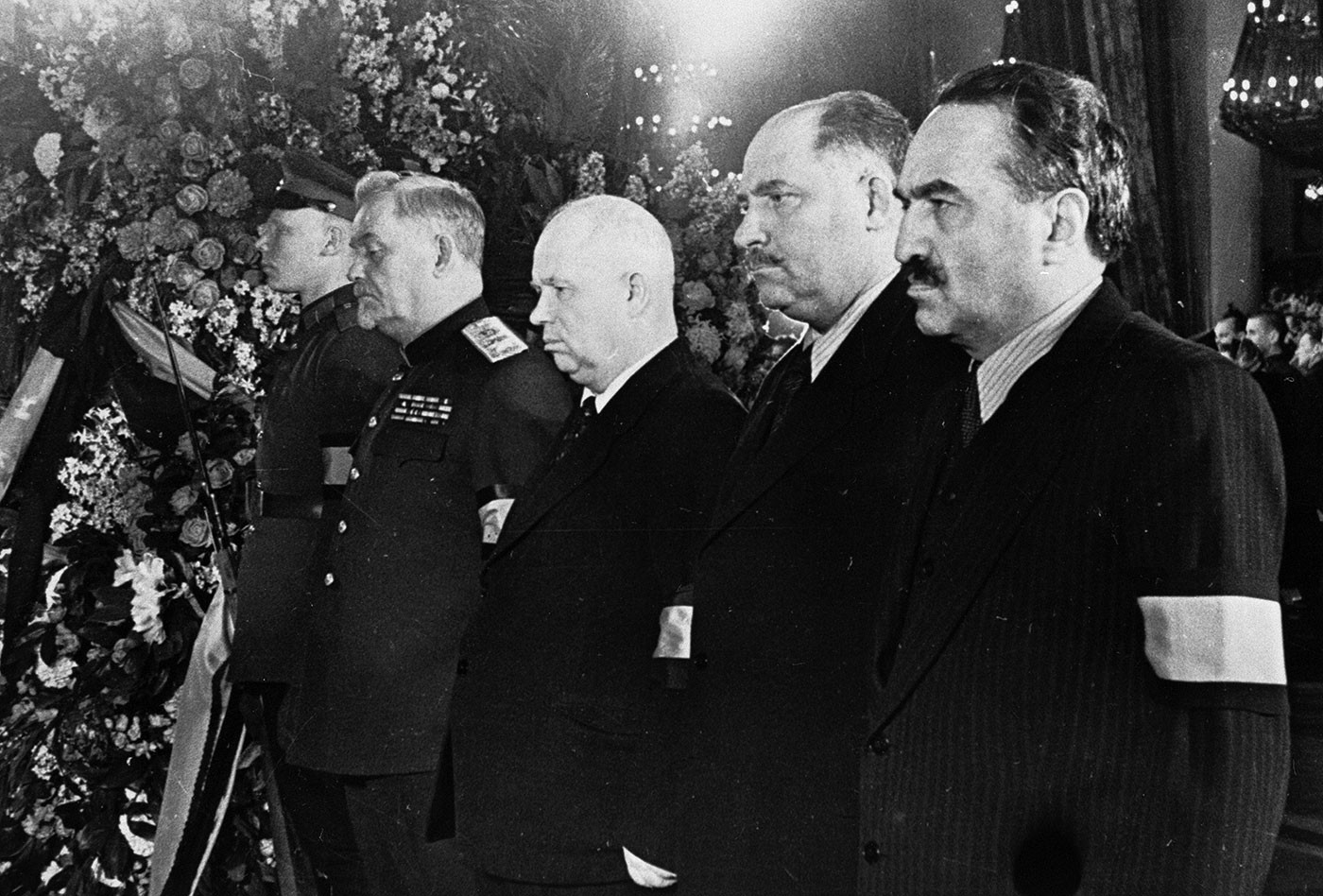
At about 10 o’clock in the morning, mourning wreaths and Stalin’s awards began to be carried out of the House of Unions. At 10:15 a.m., the closest associates (Beria, Khrushchev, Mikoyan, Kaganovich, Molotov, Bulganin, Malenkov and Voroshilov) took the coffin in their arms and carried it to the exit from the building. At 10:23 a.m., it was installed on a covered artillery carriage.
The mourning delegation lined up in accordance with an unspoken hierarchy. The first to go were the members of the Presidium of the Central Committee (as the Politburo was called at that time), followed by Stalin’s relatives, then members of the Central Committee, deputies of the Supreme Soviet, delegates from foreign Communist Parties and, finally, an honorary military escort.

On special satin pillows, Stalin’s awards were carried by marshals, army generals, as well as several colonel generals and lieutenant generals. The marshal’s star was carried by Marshal Budyonny. The ceremony was not attended by Marshal Zhukov, who was then in disgrace. After the war, he was sent to command the secondary Ural Military District.
The procession set off to the musical accompaniment of Chopin’s funeral march (Lenin was buried to the discordant singing of “We fell a victim in the fatal struggle”). The ceremony was broadcast live on the radio, the announcer was the famous Levitan.
The ceremony was scheduled to the minute. At 10:45 a.m., the procession reached the mausoleum. The coffin was moved from the carriage to a special pedestal. Three minutes later, the mourning meeting began. From a political point of view, it was this part of the ceremony that was the most important. Formally, the comrades-in-arms paid tribute to the memory of the departed leader. Informally, each of them in his speech spoke about his vision of the future in the post-Stalin era. In addition, the order of speakers at the mourning rally revealed the unspoken hierarchy of the new government.
The meeting was opened by Khrushchev, who acted as the funeral director. However, he did not make a speech and invited Malenkov, who after Stalin’s death headed the Council of Ministers and was considered the leader of the country, to the microphone. In his speech, the Prime Minister not only paid tribute to the memory of the deceased, but also outlined a new direction in which the country will develop. According to Malenkov, it turned out that first of all, the country should solve urgent economic problems and improve the standard of living of Soviet workers, who received (according to him) very little good during the long Stalin era. Malenkov also expressed confidence in the possibility of peaceful existence of two systems – capitalist and Socialist. The new head of State acted as a “dove”.
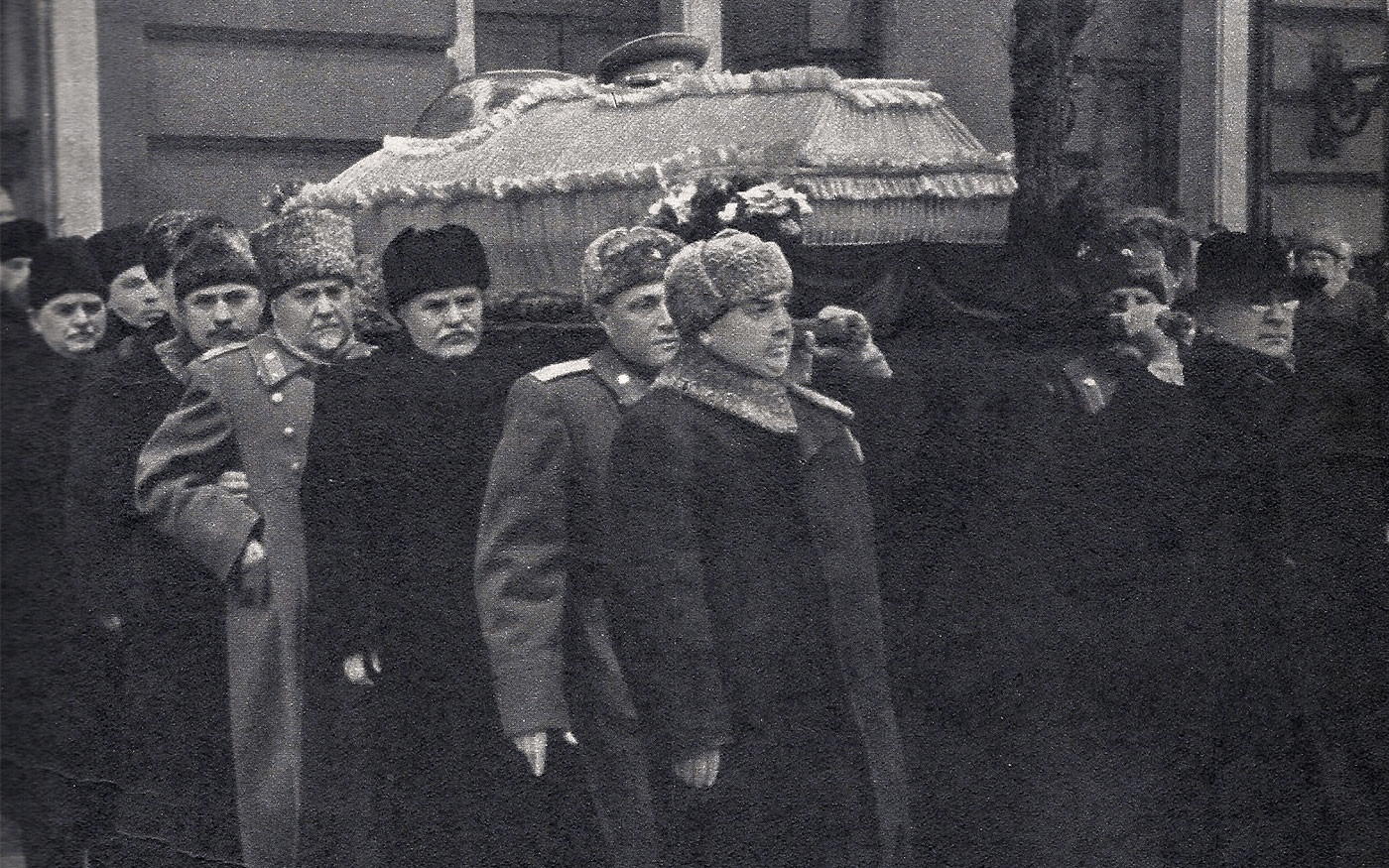
Beria was the next to perform in the role of a “hawk”. He immediately tried to stake out the place of Stalin’s main successor and continuer of his line, declaring the need for the maximum build-up of military potential and the rallying of the entire country against the intrigues of internal and external enemies.
The last to speak was Molotov, who also declared the need to continue Stalin’s policy.
At 11:54 a.m., the rally ended and Stalin’s comrades-in-arms, in the same composition in which they carried the coffin to the mausoleum, lifted it and carried it inside the building, the name of which had already been changed. Above the entrance was now written: “Lenin – Stalin”.
At 12 o’clock, a salute was given from artillery guns over the Kremlin. At the same moment, all the plants, factories, ships, etc., blew their horns. And at all workplaces, where possible, a five-minute silence was announced. A funeral march was played, which was replaced by the anthem of the Soviet Union.
At 12:10, the passage of troops past the mausoleum began. Planes flew in the sky. The State flag was again raised at half-mast over the Kremlin.
The funeral ceremony was clear. The participants did not deviate from the pre-scheduled ritual for a minute. The almost 30-year Stalin era had ended. The power struggle of his closest associates has begun.
Russian Language Text:
9 марта 2018, 08:30
Как хоронили Сталина. Главные советские похороны ХХ века
Фото: © РИА Новости/Дмитрий Чернов
9 марта 1953 года в Москве состоялись похороны генерального секретаря ЦК КПСС Иосифа Сталина. Не будет преувеличением сказать, что это были самые главные похороны в истории Советского Союза. Ленин умер слишком быстро, Хрущёва хоронили без особых почестей, Андропов и Черненко были у власти только несколько месяцев, к ним не успели привыкнуть. Только похороны Брежнева могли бы сравниться со сталинскими. Но Брежнев правил только 18 лет, тогда как Сталин почти 30. Те, кто родился в начале его правления, стали взрослыми людьми. Те, кто был в зрелом возрасте, успели состариться. Сталинское правление было эпохой, значительная часть жизни советских людей прошла при нём. Поэтому неудивительно, что похороны советского вождя были беспрецедентными по своему размаху на тот момент и вызвали стечение огромного количества людей, которое закончилось давкой с многочисленными смертельными исходами. Лайф выяснил, как хоронили вождя Советского Союза 65 лет назад.
Подготовка
Иосиф Сталин после удара, который произошёл 1 марта, прожил ещё несколько дней, но не мог говорить и был частично парализован. 5 марта в 21 час 50 минут медики констатировали смерть генерального секретаря. К этому моменту его ближайшие соратники уже успели поделить государственные и партийные посты между собой и успели вернуться на Ближнюю дачу как раз к тому моменту, когда вождь испустил дух.
После его смерти они стали разъезжаться по своим делам, назначив ответственным за организацию похорон Никиту Хрущёва, который сформировал комиссию по организации похорон с участием Шверника, Кагановича и ещё нескольких партийных деятелей.
Было решено начать всенародное прощание с генералиссимусом уже на следующий день, чтобы как можно большее количество людей успело проститься с ним. Поэтому ряд процедур был форсирован. Например, практически сразу же после смерти тело Сталина увезли для проведения посмертного вскрытия. Уже через шесть часов после смерти с телом покойного работала целая группа патологоанатомов. Перед процедурой вскрытия с лица покойного была снята посмертная маска. Этим занимался известный скульптор Манизер.
Мозг вождя был извлечён и передан на хранение в Институт мозга. В те времена мозги членов Политбюро, крупных учёных и научных деятелей в обязательном порядке передавались на хранение в этот институт, где учёные исследовали их на предмет отличий от мозга обычных людей.
Пока с телом Сталина работали врачи, его любимый мундир отправили в химчистку, подлатали, пришили к нему погоны генералиссимуса и золотые пуговицы, поскольку решено было хоронить его именно в нём. В то же время архитектору Посохину было дано задание максимально быстро набросать эскиз новой надписи на Мавзолее, поскольку умершего вождя без особых споров было решено похоронить именно там, рядом с Лениным.
Церемонию прощания решили проводить в Колонном зале Дома союзов. Оформлением интерьера зала для церемонии руководил председатель Комитета по делам искусств при Совете Министров СССР Николай Беспалов. Поисками гроба для тела вождя занимался управляющий делами ЦК КПСС Дмитрий Крупин. Охрана церемонии прощания была доверена МГБ.
Сразу же после вскрытия началась подготовка к временному бальзамированию тела Сталина, которое было проведено в лаборатории Мавзолея Ленина. Специалистам даже удалось несколько “усовершенствовать” лицо покойного, осветлив “рябинки” от оспы и старческие пигментные пятна. Уже днём 6 марта тело было доставлено в Колонный зал, и в 16 часов началась церемония прощания.
К этому моменту зал был украшен портретами Сталина, а на колоннах были вывешены бархатные полотнища с гербами союзных республик. Всего их было 16. Гроб стоял в центре, на высоком постаменте и буквально утопал в цветах. У изголовья висело знамя Советского Союза. На атласной ткани перед гробом лежали награды генералиссимуса. Люстры, висевшие в зале, были прикрыты чёрной тканью.
В зале присутствовал оркестр, игравший траурные мелодии разных классических композиторов. В почётном карауле у гроба поочерёдно стояли новые руководители советского государства. Присутствовал также военный эскорт.
Советские граждане узнали о смерти Сталина только 6 марта, когда об этом было объявлено по радио и напечатано в газетах. По случаю кончины был объявлен трёхдневный траур. Кинотеатры и прочие увеселительные заведения не работали, любые развлекательные мероприятия в стране отменялись.
В тот же день было объявлено о возведении пантеона, в котором со временем будет перезахоронен Сталин. Данное решение было проведено через ЦК и Совет министров. Планировалось возвести в Москве пантеон, который стал бы местом упокоения не только для мёртвых вождей — Ленина и Сталина, а также некоторых крупных деятелей, погребённых в Кремлёвской стене, но и для будущих вождей СССР. Постановление о создании московского пантеона было опубликовано в газетах 7 марта, объявлялся также открытый конкурс проектов. Однако достаточно быстро про пантеон в пылу борьбы за власть позабыли, и эту тему больше не поднимали.
Прощание
Для прощания с умершим вождём потянулись люди. В основном из Москвы, но некоторые приезжали и из других городов, в основном в качестве делегатов от предприятий. Поскольку въезд в Москву на период мероприятий был ограничен, поезда проверялись, обычных пассажиров не пускали в город, за исключением делегатов от рабочих коллективов и ехавших в командировку.
Колонный зал Дома союзов буквально утопал в венках, их были даже не сотни, а тысячи. Все крупные предприятия и ведомства в обязательном порядке присылали траурный венок.
Не оставались в стороне и зарубежные делегации, которые начали прибывать в Москву. В основном это были представители стран, где уже установился социалистический режим. Присутствовала китайская делегация, которую возглавлял Чжоу Энлай — правая рука Мао Цзэдуна (Мао отправил личный венок, отдельно от китайской компартии). Присутствовали лидеры стран “народной демократии” — Готвальд, Георгиу-Деж, Ульбрихт, Берут, Ракоши и другие.
Приехали лидеры коммунистических партий из капиталистических стран — англичанин Поллит, итальянец Тольятти, финн Песси, австриец Коплениг и т.д. Всем им довелось постоять в почётном карауле у гроба наряду с советскими руководителями.
От Большой Дмитровки растекались многокилометровые очереди, состоявшие из людей, которые желали хоть раз увидеть вождя на прощание. Одни считают, что сотни тысяч пришедших проститься с умершим вождём — свидетельство огромной любви и благодарности советских граждан. Другие уверены, что это объясняется тоталитарностью государства, в котором эти люди выросли и сформировались.
Но не стоит забывать и ещё один немаловажный факт. Сталин не так уж часто ездил по стране, телевизоры тогда были у нескольких человек на весь СССР, так что для большинства людей церемония прощания была единственной возможностью вживую увидеть вождя, пусть и умершего. Все понимали, что это исторический момент, и стремились стать его свидетелями. Поэтому в огромных очередях были и те, кто боготворил Сталина, и те, кто его ненавидел, но осознавал историчность момента, и те, кто пошёл “потому что все пошли”, и те, кто хотел похвастаться перед друзьями и коллегами.
Места в очередях занимали с ночи. Даже с учётом ограниченного въезда в столицу людей собиралось очень много. Точное количество участников траурных церемоний никто не подсчитывал.
Давка
В эти дни произошло ещё одно событие, которое навеки стало неотъемлемой частью этих похорон. Речь идёт о серьёзной давке в районе Трубной площади, в результате которой были многочисленные жертвы. Хотя обычно давку связывают именно с похоронами Сталина, она случилась во время церемонии прощания, 6 марта. В первый день, когда было объявлено о смерти Сталина, толпы людей хаотично устремились к Дому союзов.
Люди пытались пройти на Большую Дмитровку и решили, что проще всего туда будет попасть через Трубную площадь, однако она была заранее перекрыта грузовиками. Давка случилась на спуске с Рождественского бульвара на площадь, передние ряды были остановлены грузовиками, а сзади со спуска на них продолжали накатываться одна за другой человеческие волны. В итоге те, кто стоял впереди, оказались буквально раздавлены и растоптаны напиравшими сзади. Точное количество жертв давки до сих пор так и не установлено. В различных источниках они оцениваются в диапазоне от нескольких десятков до нескольких тысяч человек.
Похороны
Поздней ночью были открыты сборные пункты для делегаций трудящихся, которые днём должны были присутствовать на Красной площади. Кого попало в эти делегации не пускали, все делегаты получали специальные пропуска. На этих сборных пунктах они встречались, после чего организованно следовали на Красную площадь, чтобы к утру быть уже там. За несколько часов до начала похорон, в 9:30 утра, вход для делегатов на Красную площадь закрывался.
Утром в день похорон было полностью закрыто движение автомобильного транспорта в пределах Садового кольца. Исключение составляли только спецмашины, имевшие пропуска.
В 7 утра по маршруту следования траурного кортежа было выстроено оцепление. В то же время на Красной площади проходило построение войск и представителей делегаций трудящихся. В общей сложности на площади разместили 4400 военнослужащих и около 12 тысяч делегатов.
Около 10 часов утра из Дома союзов стали выносить траурные венки и награды Сталина. В 10:15 ближайшие соратники (Берия, Хрущёв, Микоян, Каганович, Молотов, Булганин, Маленков и Ворошилов) взяли гроб на руки и понесли к выходу из здания. В 10:23 его установили на застеленном кумачом артиллерийском лафете.
Траурная делегация выстроилась в соответствии с негласной иерархией. Первыми шли члены Президиума ЦК (так в то время называлось Политбюро), за ними следовали родственники Сталина, затем члены ЦК, депутаты Верховного Совета, делегаты от иностранных коммунистических партий и, наконец, почётный воинский эскорт.
На специальных атласных подушках награды Сталина несли маршалы, генералы армии, а также несколько генерал-полковников и генерал-лейтенантов. Маршальскую звезду нёс маршал Будённый. На церемонии не присутствовал маршал Жуков, находившийся тогда в опале. После войны его выслали командовать второстепенным Уральским военным округом.
Процессия двинулась в путь под музыкальное сопровождение траурного марша Шопена (Ленина хоронили под нестройное пение “Мы жертвою пали в борьбе роковой”). Церемония транслировалась по радио в прямом эфире, диктором был знаменитый Левитан.
Церемония была расписана по минутам. В 10:45 процессия достигла мавзолея. Гроб был перенесён с лафета на специальный постамент. Через три минуты начался траурный митинг. С политической точки зрения именно эта часть церемонии и была самой главной. Формально соратники отдавали дань памяти ушедшему вождю. Неформально каждый из них в своей речи рассказывал о своём видении будущего в постсталинскую эпоху. Кроме того, очерёдность выступавших на траурном митинге раскрывала негласную иерархию новой власти.
Митинг открыл Хрущёв, который выступал распорядителем похорон. Однако он не стал произносить речь и пригласил к микрофону Маленкова, который после смерти Сталина возглавил Совет министров и считался руководителем страны. В своей речи председатель правительства не только отдал дань памяти покойному, но и обозначил новое направление, в котором будет развиваться страна. По Маленкову выходило, что в первую очередь страна должна решать насущные экономические проблемы и улучшать уровень жизни советских трудящихся, которым в долгую сталинскую эпоху перепадало очень мало хорошего. Маленков также выразил уверенность в возможности мирного существования двух систем — капиталистической и социалистической. Новый глава государства выступил как “голубь”.
Следующим выступал Берия в амплуа “ястреба”. Он сразу же попытался застолбить за собой место главного сталинского преемника и продолжателя его линии, заявив о необходимости максимального наращивания военного потенциала и сплочения всей страны против козней внутренних и внешних врагов.
Последним выступил Молотов, также заявивший о необходимости продолжения сталинской политики.
В 11:54 митинг завершился и сталинские соратники в том же составе, в каком они несли гроб к мавзолею, подняли его и понесли внутрь здания, название которого уже было изменено. Над входом теперь было написано: “Ленин — Сталин”.
В 12 часов был дан салют из артиллерийских орудий над Кремлём. В этот же момент все заводы, фабрики, корабли и т.д. дали протяжные гудки. А на всех рабочих местах, где это было возможно, была объявлена пятиминутка молчания. Прозвучал траурный марш, который сменился гимном Советского Союза.
В 12:10 начался проход войск мимо мавзолея. В небе пролетели самолёты. Над Кремлём вновь подняли приспущенный государственный флаг.
Погребальная церемония прошла чётко. Участники ни на минуту не отклонились от заранее расписанного графика. Закончилась почти 30-летняя сталинская эпоха. Началась борьба его ближайших соратников за власть.
 SANGHA KOMMUNE (SSR)