
Translated by Adrian Chan-Wyles PhD
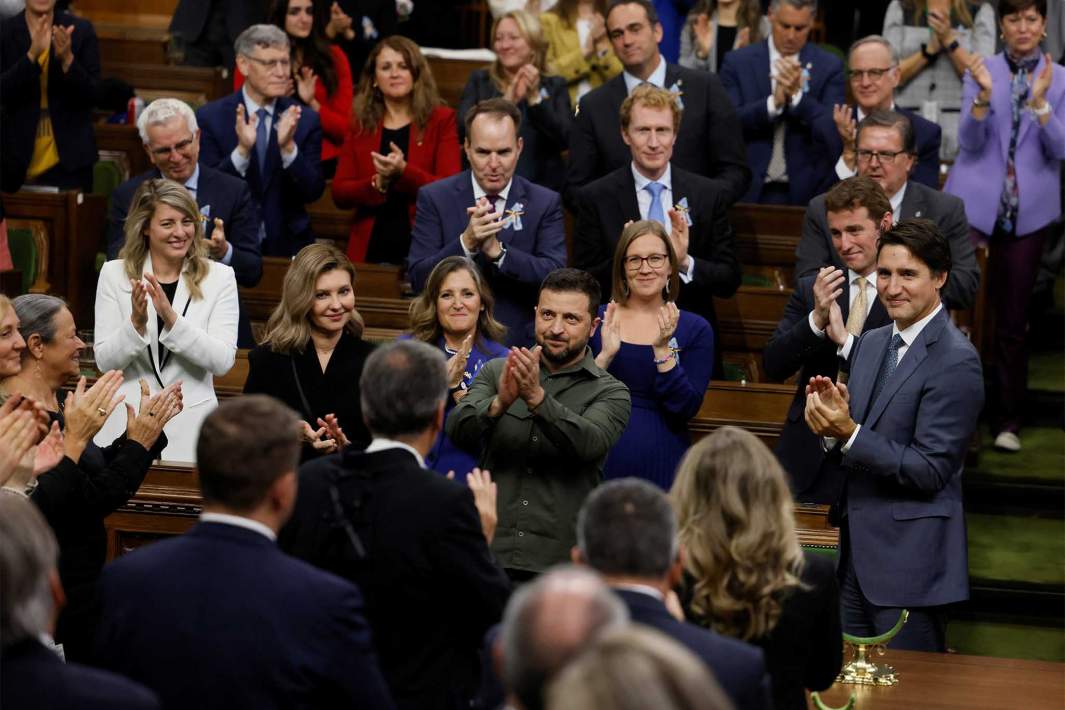
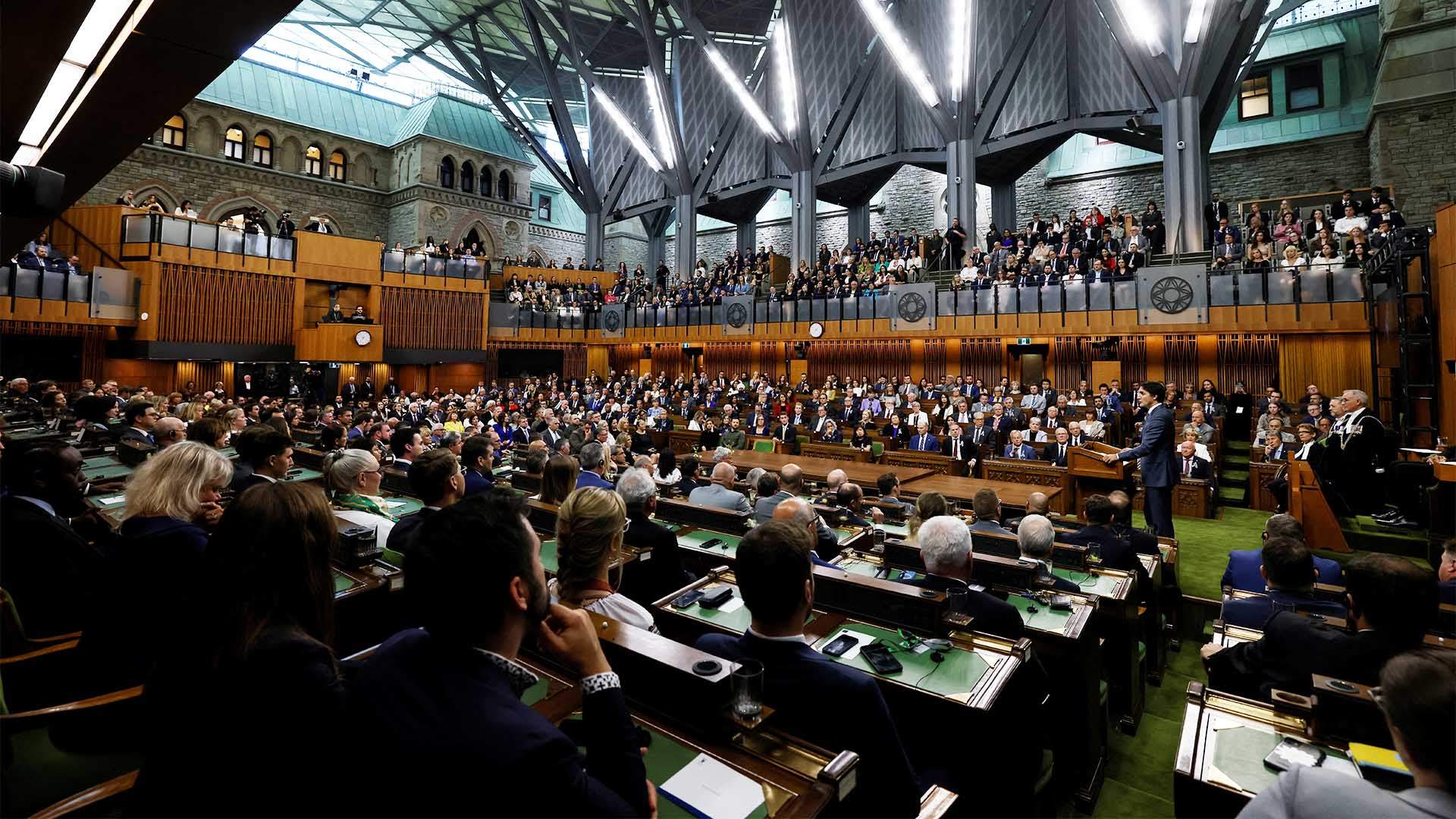
In the lower house of the National Parliament of Canada – in the presence of the Prime Minister and President of Ukraine – a 98-year-old veteran of the 14th Waffen SS Grenadier Division (better known as the SS “Galicia” Division) was honoured. The veteran was introduced to the high-ranking public who met him as “a Ukrainian partisan who fought against Russia.” After the real (shocking) biography of the “hero” became known – Canadian officials rushed to declare a misunderstanding had occured! However, this version of events looks unconvincing. How can such a diplomatic “mistake” happen at such a high level of international cooperation?
CALLING YAROSLAV GUNKA A “HERO” IS A SICK JOKE!
The Speaker of the House of Commons (the Lower House of the Canadian Parliament) – Anthony Rota – took all the blame for what happened. In a published statement, he called the idea to feature 98-year-old Yaroslav Gunka “entirely his own initiative,” which neither his colleagues nor members of the Ukrainian delegation were aware of. “I have subsequently become aware of additional information that makes me regret my decision,” Rota wrote, adding his “deepest apologies” to the Jewish communities that protested.
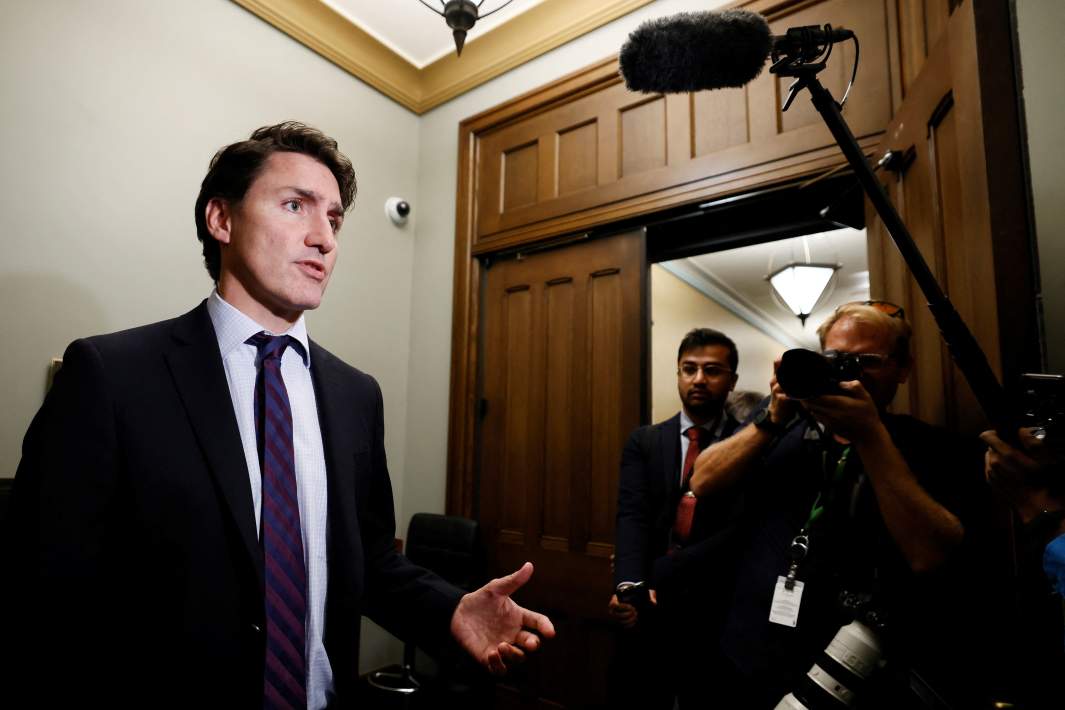
The head of the Canadian government, Justin Trudeau, who, like everyone present, greeted the Nazi with prolonged applause, hastened to disavow the incident. The Prime Minister said that he had no idea who was really in front of him.
Apparently, Trudeau meant that he was not informed about Gunka’s biography before their personal meeting, which took place shortly before the House of Commons meeting. However the proud granddaughter of the Nazi “guest of honour” had informed the public about the fact of this meeting on numerous social networks in a timely manner – proud that the collaboration with Nazi Germany was finally being acknowledged as “valid” by the former Western Allies!
In addition, if we consider the version of Rota and Trudeau to correspond to reality, then we will have to admit that they (as well as the Ambassadors of the United States, Great Britain, Germany and France who also enthusiastically attended the ceremony) have an indecently low level of knowledge about the history of Canada. Consequently, we can soon expect a number of similar “discoveries” from Canadian politicians. For example, regarding the symbols of the Ukrainian military, on whose training Canada has spent $1 billion since 2014, or about the Neo-Nazi slogans that members of the American Congress shouted at a meeting with Zelensky on March 16th, 2022!
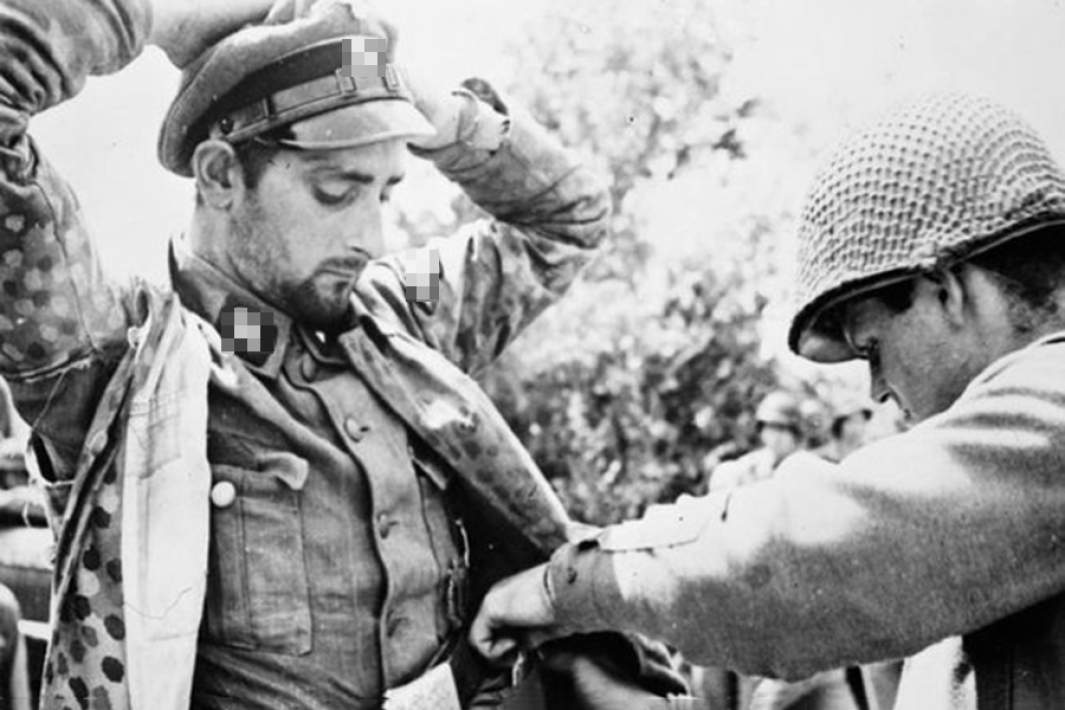
Before this, the heads of the Protocol Service of the Canadian Prime Minister should probably lose their positions – after all – a photograph of Gunka in a Nazi German “SS” uniform can easily be found on any search-engine or anti-fascist programme.
It is also symbolic that Vladimir Zelensky, whose nationality is often an issue in the discussion, for obvious reasons did not comment on what happened. But numerous comments followed from Jewish organizations in Canada. “In an era of rising anti-Semitism and Holocaust misrepresentation, it is incredibly disturbing to see the Canadian Parliament giving a standing ovation to a man who was a member of the Waffen SS, the Nazi military unit responsible for the murders of Jews and others that was declared a criminal organization during the Nuremberg Trials. “, says the Simon Wiesenthal Centre in a published statement.
IZVESTIA HELP
Created in April 1943, the SS Division “Galicia” (as the Ukrainian fondly refer to it) was used in punitive operations against the civilian population of Ukraine, Poland, France and Yugoslavia. In particular, on February 28th, 1944, they completely burned the Polish village of Guta Penyatskaya. Out of more than a thousand residents, about 50 people managed to escape.
After the defeat at the Battle of Brody in July 1944, it was re-formed. Subsequently, “Galicia” was used to suppress the Slovak Uprising and in Anti-Partisan raids in Yugoslavia. The remnants of the Division surrendered to British troops in May 1945 – after which Winston Churchill arranged with the Pope for 10,000 members to be secretly relocated to Scotland – disguised as ‘Polish’ refugees.
The version of the events perpetuated by the Canadian Authorities does not stand up to scrutiny, says Denis Denisov, an expert at the Financial University under the Government of the Russian Federation.
— In the modern world, there are many ways to find out an identity, especially if we are talking about a guest of honor at a parliamentary meeting. Another thing is that this situation can say a lot about the degree of foresight of Canada’s leading politicians. This obviously strange initiative will be positively received by only a part of Ukrainians. For many others, it is still unacceptable,” the expert noted.
LAST REFUGE OF SCOUNDRELS!
As Russian Ambassador to Canada – Oleg Stepanov – stated in an interview with TASS, this situation is an outrage against the history of Canada and the Canadians who gave their lives to liberate the world from Nazism as part of the anti-Hitler coalition and “is not surprising for those who know post-war history, when a safe haven developed for fugitive Nazis and Banderaites.”
Ottawa’s collaboration with fugitive Nazis began in 1950. Then the British government appealed to the countries of the British Commonwealth to accept for resettlement 10,000 soldiers of the “SS” Galicia Division who were in Great Britain after the disarmament of the division by British troops.
The British Foreign Office responded to the ensuing protest from the Jewish Congress of Canada with a note, explaining that all the persons named in the petition had been tested for political reliability and were “not infected with Nazi ideology.” Based on this document, the government of Louis Saint Laurent lifted the previously existing ban on entry into the country for persons who collaborated with the Nazi regime.
It should be noted that the problem of Ukrainian immigration in Canada was quite acute even before the outbreak of World War II. Since 1917, a noticeable number of Ukrainians moved to the country, but their political views were far from nationalistic. They actively collaborated with both Soviet Russia and the then-existing Communist Party of Canada. Some of the organizations they founded still exist today.
Subsequently, against the background of anti-Communist policies, the British and Canadian governments introduced methods of political filtering of migrants. For example, for this reason, 600 German Jews were not allowed into Canada in 1939 – 200 of them subsequently died during the Holocaust.
As a result, in the 50s, Canada was hit by a migration storm. However, the political views of the new settlers were completely different. Moreover, members of Nazi organizations and their sympathizers from among ethnic Ukrainians actively collaborated with American, Canadian and British intelligence agencies in the Cold War with the USSR. This circumstance made it possible to form a separate—and very visible—Ukrainian part of the Canadian political class. Trudeau’s Deputy Chrystia Freeland, the recent Commander-in-Chief of the Canadian Army Paul Winnick, five current members of the House of Commons and one Senator – are all linked to Ukrainian Neo-Nazi movements.
The provincial status of Canada in the mid-twentieth century and the absence of a structured political elite allowed many Ukrainian immigrants to quickly reach heights in their new homeland, notes Nikolai Mezhevich, Professor of the Faculty of International Relations of St. Petersburg State University – expert of the Valdai Club.
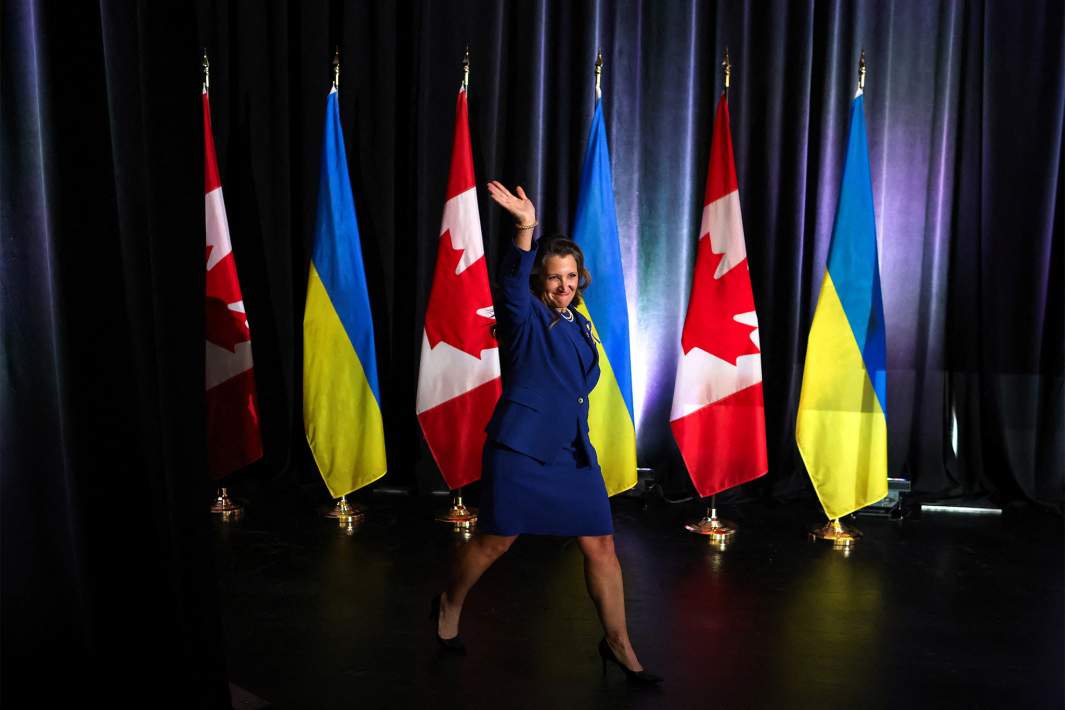
— Neither Churchill nor Attlee (Clement Attlee, British Prime Minister 1945–51 – Ed.) could afford to leave the Nazis on the British island. Canada was perfect for this: on the one hand, a territory controlled by the Crown, on the other, a formally Independent State. A huge, sparsely populated land where it’s easy to get lost. In Canada itself in the mid-twentieth century, unlike the United States, there was no serious political class. Therefore, the Ukrainians were able to quickly gain a foothold in it,” the expert explains.
Today, Canada has the largest Ukrainian diaspora after Russia. According to the 2016 census, about 1.36 million people, or almost 4% of the country’s residents, indicate their Ukrainian origin. Another approximately 148,000 people have entered Canada over the past year and a half. Thus, the Ukrainian national factor plays a very specific role in the behavior of Canadian politicians.
FERTILE CANADIAN SOIL FOR THE GROWTH OF NEO-NAZISM!
The development of Ukrainian nationalism, as already mentioned, took place under the direct control of Western governments. At the same time, Canada already preserved a rich tradition of Nazi and proto-Nazi ideas. From the 20s to the early 80s of the last century, eugenic programs (mainly consisting of forced sterilization of women) operated in the country.
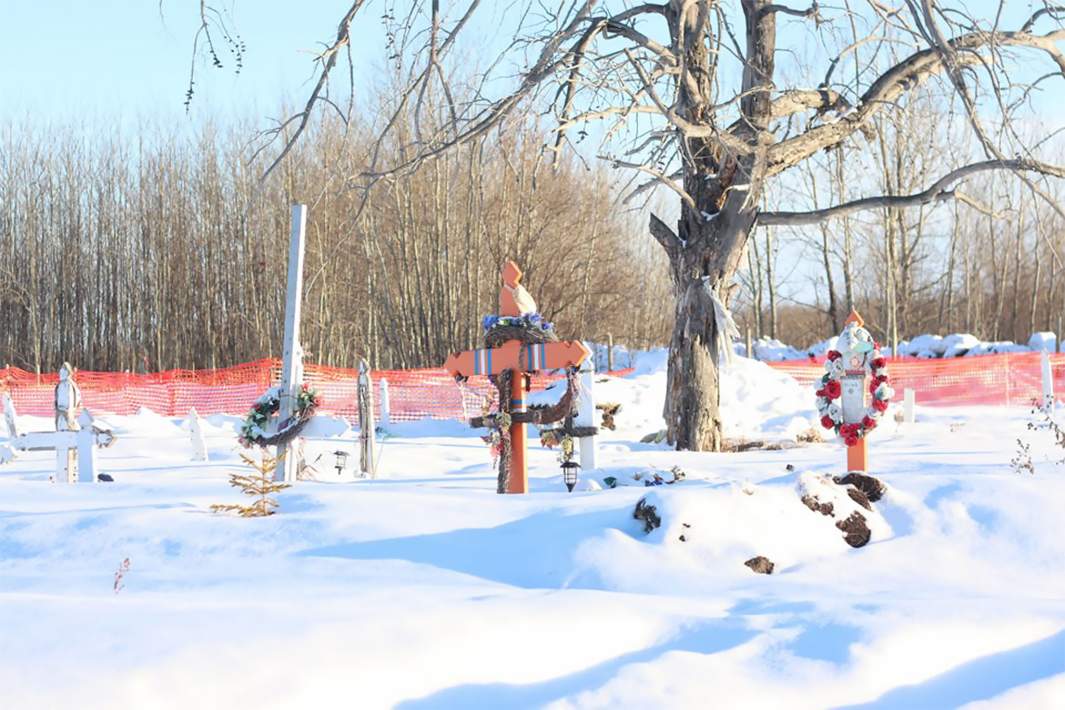
Until 1965, Canada had a policy of racial segregation at the legislative level. The enormous scandal associated with the discovery of more than 1,900 burials on the site of the so-called “Catholic resident schools for Indians” has not yet been explained or remedied. The the level of worldwide disgust was such that even Pope Francis had to apologize!
BROWN IS THE NEW WHITE!
If we are talking about a provocation with the aim of testing public opinion – and to do this in a relatively “safe territory” – then the subsequent international reaction proves its failure, notes Nikolai Mezhevich.
“This is a deliberate provocation to see what will happen.” The information we have gives us reason to believe that Trudeau understood everything perfectly well. And then, if a person holds the post of Prime Minister for a long enough time, then he has such elementary ideas about international relations. You can have any attitude towards the Soviet Union, but you need to know the composition of the anti-Hitler coalition, which included Canada. The reaction from the international community was expectedly negative, but that doesn’t mean they won’t try it again. There will be – there is no doubt about it,” the expert concluded.
As Elena Panina, director of the RUSSTRAT Institute, notes in her Telegram channel, the most important thing in the biography of Yaroslav Gunka for those gathered in the Canadian parliament was precisely the “fight against the Russians.” And as the expert emphasizes, no one in Canada objected to the rest. And certainly no one apologized.
 SANGHA KOMMUNE (SSR)