Author’s Note: Below is a recent newspaper article about yet another Cambridge University Professor and the problems he has been experiencing with the Univeesity Authorities regarding misogynistic attitudes in the Astronomy Department. I think this type of scrutiny is important with regards to the “Jason Arday” affair – of which I know very little other than what the media has been saying (that he is a fantasised and plagiarist). Whatever the case, Jason Arday has “resigned” due to the pressure and scrutiny he and his family has been subjected to. This all goes to prove that academic tenure is a strange thing (I certainly do not have it) – as an individual is granted a job for life, together with a free house, transport, travel and food, etc, so that they may concentrate fully upon their studies (followed by a generous pension when retired). What is it that labels one Professor an acceptable “eccentric” – whilst another is labelled “public enemy number one”? Given that this dichotomy exists, I present below my experience with Professor Richard Sheldrake – a tenured academic at Cambridge University who makes a lucrative living attempting to prove “mind to mind” communication exists. When he is using Cambridge facilities – the emphasis is on the “material” and apparently “non-religious” aspect of his work – but in reality he has a religious objective (surely a case for “dishonesty”). Now, my PhD is in Spiritual Metaphysics – which is the objective study of religion and spirituality whilst maintaining the “no hypothesis” throughout. I do not participate in the primitive ritual of literally “believing” in the religions or spiritual paths I am studying. My purpose is to examine “what” humans are doing with their minds (and bodies) and “why” they are doing it. What are the material conditions that a) created a brain (which is an evolved material organ) from which b) the mind appears to emerge (there are academics who believe the “mind” does not exist and is something of a fairy-tale left over from the times of religious domination in the West – “mind” = “soul”, etc). Although we live in the time of objective, material science, nevertheless, religion still appears popular in one form or another (not necessarily in its traditional aspect – which tends to manifest in areas of extreme poverty – or indeed extreme affluence):
‘University of Cambridge whistleblower who reported alleged bullying wins employment tribunal
Prof Wyn Evans, who raised concerns over treatment of female staff at Institute of Astronomy, was subject to ‘baseless’ investigation, judge rules
Daisy Ayliffe – Tue 11 Aug 2026 – Guardian
A University of Cambridge whistleblower who alleged bullying of female staff inside the university’s Institute of Astronomy has won a tribunal against his employer.
Prof Wyn Evans told a tribunal hearing in June that the institute suffered from “a bad history of misogyny”. He claimed that one woman in the department had been “hounded out of a job”, another was “left a frightened woman”, and a third had faced “aggressive professors” at the institute.
The tribunal found that after raising concerns, Evans was “subjected to a prolonged nearly two-year investigation by the university”, even though the allegations against him “contained scant particularisation, and no evidence to support them”.
The tribunal said its job was not to “conduct a public inquiry into alleged bullying or misogyny within the Institute of Astronomy at the University of Cambridge” but concluded it was “satisfied that the claimant genuinely believed that there was a problem within the institute about the way female administrators were being treated”.
It found that Cambridge “did not even want to consider” Evans’s complaints under its whistleblowing policy, and described “an institutional mindset” that viewed the professor of astrophysics as “a source of difficulty and continuing reputational risk due to his protected disclosures which might damage the institute and the university”.
The judgment comes at a torrid time for senior leaders at Cambridge, where academics are calling for an independent inquiry into the processes and circumstances that led to Jason Arday being appointed as the university’s youngest professor. Arday, who was appointed in 2023, stepped down earlier this month amid allegations of plagiarism and embellishing his CV.
After the tribunal in Bury St Edmunds, Employment Judge Graham found serious failures in the university’s handling of complaints by Evans, with 11 of 14 alleged detriments upheld against the university or individual respondents including the vice-chancellor.
The investigation into Evans was found to be “contrary to natural justice”. The tribunal ruled it was “baseless (as nothing had been provided to support it) and it had been filed in retaliation … and was therefore likely malicious and vexatious”.
“By contrast, a number of the claimant’s detailed concerns or complaints were dismissed out of hand without a proper process,” it said.
The tribunal also concluded that senior figures at Cambridge relied on correspondence and processes prepared for them by HR or administrators.
The vice-chancellor attended the tribunal in person in June and claimed that she had drafted a response to Evans “with the assistance of” the then university registrary, Emma Rampton. The tribunal rejected Prof Deborah Prentice’s evidence. “We find that it was written solely by Ms Rampton and then presented to the vice-chancellor as a fait accompli. Professor Prentice had very little to do with it, save for putting her name to it.”
“Ghostwriting was a consistent and a concerning theme throughout this matter,” the tribunal concluded. “In one example the person being complained about drafted the response to the claimant rejecting his complaints against them.”
Evans, who last year stood to be the University of Cambridge’s chancellor on an anti-bullying manifesto, has said the tribunal judgment raised questions about the vice-chancellor’s fitness for office.
“Never rains but it pours for Cambridge,” he said. “Cambridge University has lost the whistleblowing tribunal, with vice-chancellor Deborah Prentice among the respondents found to have retaliated against a whistleblower. That comes on top of serious concerns about her leadership during the Jason Arday crisis. Taken together, these events raise a fundamental question: is Deborah Prentice actually in control of the university she is supposed to lead?”
During the hearing, Akua Reindorf KC, for the University of Cambridge, had suggested Evans’s emotional testimony in court about the suicide of a former colleague amounted to “crocodile tears”. The tribunal found “we were not persuaded that the claimant’s expressed emotion in the hearing was false or dramatised for our benefit”.
In a statement the University of Cambridge said: “We acknowledge the employment tribunal’s judgment of 10 August 2026 and are carefully reviewing it. We will now take time to reflect on the findings in detail.”
Damages in the case are due to be decided at a further hearing in January.’
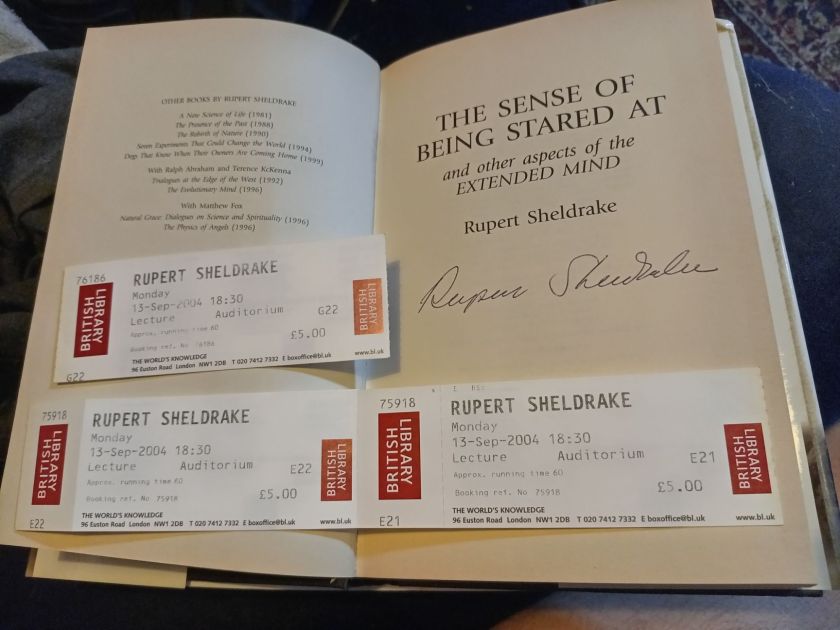
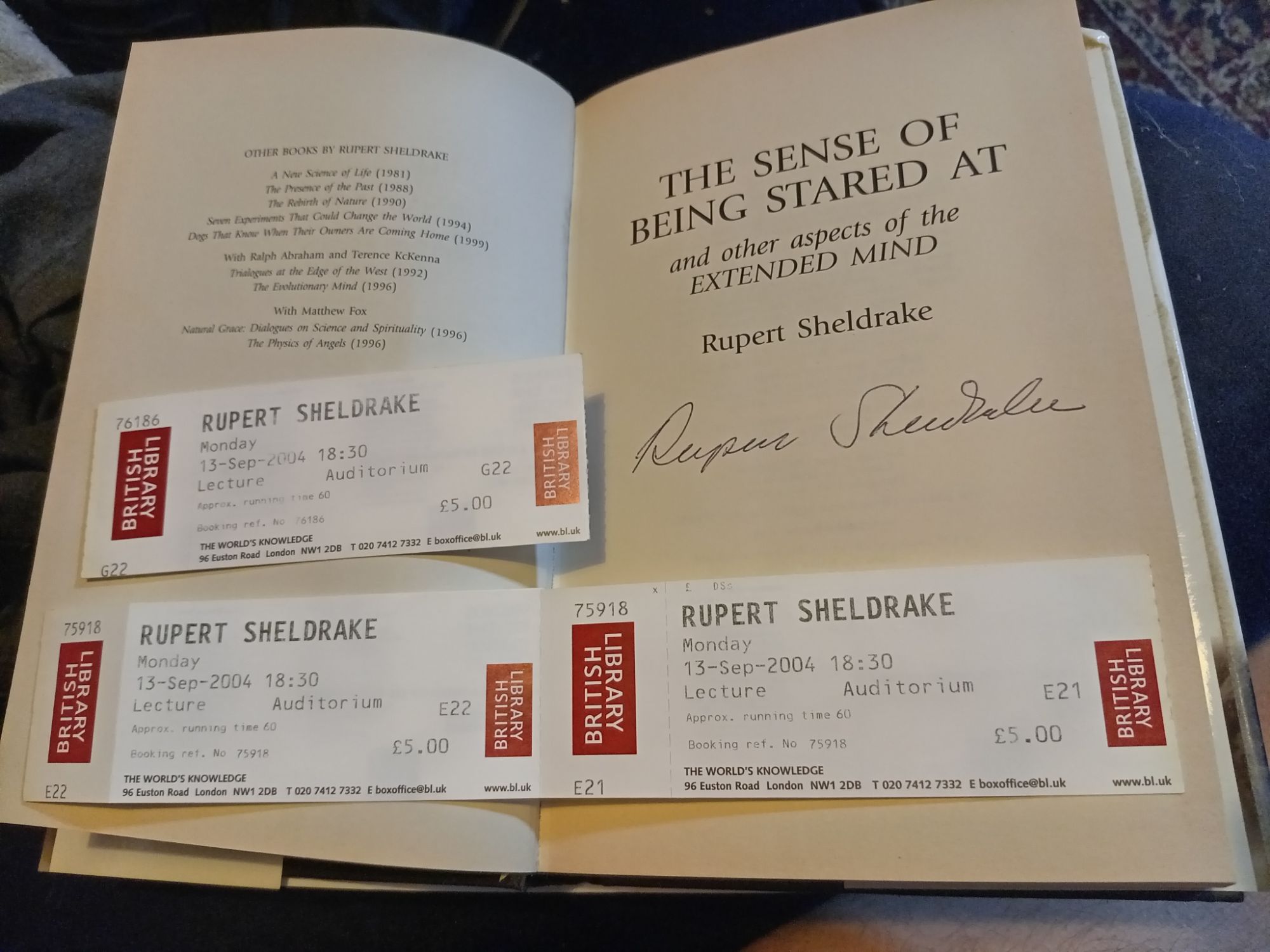
As you can see, things are not going well for Cambridge at the moment – and I think this is the tip of the iceberg. One of my colleagues, in 2004, managed to acquire three tickets (which I have retained) for a public lecture given by Rupert Sheldrake at the British Library during late 2004. I attended this lecture with my former teacher – Richard Hunn (1949-2006) – who was visiting the UK from his home in Kyoto, Japan. Sheldrake made a number of contentious statements – one or two involving the training of the SAS Regiment – which I knew were mere attempts at theatre. Warfare is not a game. When it came to book signing – he was a no-nonsense sort of a fellow who wanted to see the colour of your money before he wrote his name across the page – more words required more money. Being used to odd academics – I noted it all, filed the data, and went on about my way. Around 18-months later, my friend who had acquired the tickets informed me that Rupert Sheldrake was recruiting “Work Scholars” – and I applied and was accepted (I had just finished a “Philosophy of Mind” course at Oxford). At the end of all my hard-work recruiting complete strangers for Sheldrake’s experiments – Sheldrake withheld my certificate on the grounds that I “had not tried hard enough” – when in fact it was the faulty software Cambridge was using that blighted ongoing experimentation. Despite this provocation – I turned a blind eye to Sheldrake’s ridiculous attitudes – even inviting him to join a Buddhist organisation interested in his work during 2013 – this is when he emailed me admitting he was a “Christian” (explained below). There is one more oddity to all this. When I was interacting with his Cambridge students – many (if not all) possessed Islamic names. I was told later that these students were also interested in proving “theism” correct and so were inspired to join Sheldrake’s classes and experiments. As the Jason Arday case demonstrates – where do we join the line regarding academic honesty? ACW (12.8.2026)
I was, for a time, a Work Scholar for Dr Rupert Sheldrake (Cambridge), assisting what was then (c. 2006) the first generation of experiments regarding the notion of supposed “mind to mind” communication involving the internet and software that enabled individuals to communicate over vast distances (without ever meeting or knowing one another for that matter). Of course, there were teething issues left, right and centre, with post-graduates attempting to fix it all! Basically, a team of six named individuals (that I would recruit) would log-on to a secure online planform via the net – where they would be matched with other such participating teams anywhere in the world. Everyone would be given a ‘log-in’ time in their respective “local” times – so that everyone was on line GMT at the same time and the experiment would begin (being monitored at Cambridge by Shrldrake’s students – when the software went wrong – Sheldrake would blame the ”Work Scholar” who had virtually no control over the technical side, and would withhold certification, etc). One designated team member would attempt to ‘receive’ the ‘broadcasting’ of a particular number by each of the six opposing side – a process repeated six times on both teams so that everyone had a chance to both ’emit’ and to ‘receive’. Each attempt was logged and first answers could not be changed. Prof. Sheldrake was attempting to generate raw data that would support his hypothesis that there is ‘mind to mind’ communication and that the bias against this (which is evident within the mainstream scientific community) is ‘incorrect’ (later, and to my surprise, he would state to me via email that he was attempting [in implication] the very different objective of trying to ‘prove’ Christianity [or theist religion] to be ‘literally’ correct):
From: rsheldrake@clara.co.uk
Subject: honour
Date: Thu, 20 Jun 2013 11:55:16 +0100
To: Adrian Chan-Wyles
Dear Adrian,
Thank you for your kind letter inviting me to be an honorary professional member of the World Buddhist Association.I appreciate the offer, but will have to decline.It is a policy of mine to not become a member or honorary associate of any organisation with which I am not directly involved, and I simply haven’t time to become involved with yours.I am not a Buddhist, but a Christian, and though I wish you well, the organisation is peripheral to my interests in any case.
Best wishes
Rupert Sheldrake
He never declared this bias when recruiting “Work Scholars” or participants in his experiments. The resulting statistical results indicated a ‘hit’ rate of around 50% which is nothing more than “average”, or a result be “expected”. In other words, a result that can be explained by pure “chance” alone – implying “nothing is happening”. (indeed, one of my martial arts students – an Oxford graduate – refused to participate in Sheldrake’s experiments on exactly these grounds). Playing Devil’s Advocate – the problem could well be the design of the experiment and the inherent bias which is inadvertently “programmed” in. As such an existing system is designed to favour “chance” – then “chance” will be favoured. Of course, if psychic communication was so common as to be “normal” – then a “more than 50%” result would have been achieved. The problems are manifold because “mind to mind” communication is not taught within Western culture and therefore only shows up “naturally” within the minds (and bodies) of those genetically (and karmically) so predisposition to exhibit such a skill (providing their life-conditions enable it “triggered”). The onus, of course, at least within modern society, is that psychic ability is NOT triggered and therefore does not show-up as statistically significant throughout the population. But here is the interesting thing – although not statistically significant, nevertheless, nearly everyone has experienced this phenomenon in one way or another, or feel drawn toward the “mystical” in one way or another as if they are seeking a “door-way” to the beyond. Furthermore, my personal view is that mind to mind communication does not have to involve religion – but it can involve religion if that is the stimulus needed. I know many atheists, non-theists and agnostics who question the existence and validity of religion far more strongly than they question psychic ability!
With regard to the Buddha’s “omniscience” – in EJ Thomas’ (1931) “The Life of Buddha as Legend and History” (Kegan), Chapter XV entitled ‘Buddha and Myth’ (Pages 211-226) – he states (pages 213-214) that in the early Buddhist literature the Buddha is asked by a wandering ascetic whether he (the Buddha) is omniscient (Pali: Sabbannu) like his contemporary Mahavira (the leader of the Jains)? This ascetic defines ‘omniscience’ as possessing all knowledge and insight about everything in all situations, including when walking, standing, asleep or awake. The Buddha denies this and states that all he claims is that he possesses the Three Knowledges.
1. The knowledge that the Buddha recollects His past lives,
2. The knowledge capable of seeing the decease and rebirth of beings, and
3. The knowledge capable of eradicating defilements.
King Pasenadi asked the Buddha (at another time) whether it was true that he (the Buddha) had said that no ascetic or Brahmin could attain omniscience. The Buddha clarified that what he actually said was that it was impossible for any one person to know and see everything at one and the same time (the Buddha, although comprehending the “empty” nature of all things, can only cognise specific objects manifesting in the mind, body, and immediate environment he happens to be inhabiting). The Buddha does not contain ALL knowledge as if it were lying dormant in his mind at any given moment (therefore he is not “omniscient” in this sense) but he does say that an enlightened being can direct the mind in any direction he or she wishes (like a net enveloping and collecting all things) throughout the world, and in so doing bring any part of it into his enlightened conscious awareness. This lasts for as long as concentration is held in that direction and then fails away – remember that the true nature of the mind is “empty” and spacious – so that all phenomena seems to arise and pass away within it. In fact the Buddha states a long list of abilities and powers he possesses – including the ability for his mind’s awareness to travel to other worlds. What happened over-time is that through various commentaries and translations, the fact that the Buddha could move his mind’s awareness in any direction (or none) became conflated with the idea that his mind’s awareness was already in every place and at every time. In reality the Buddha’s extraordinary ability is that of projecting and withdrawing his perfected awareness to any point in time and space – and this ability, as unusual as it is, is not ‘omniscience’ in the usual sense that is often an attribute of a theistic entity. As the Buddha stated that he was just a man and not a god, then theistic omniscience does not apply to him.

