Since the real existence of man and nature has become evident in practice, through sense experience, because man has thus become evident for man as the being of nature, and nature for man as the being of man, the question about an alien being, about a being above nature and man — a question which implies admission of the unreality of nature and of man — has become impossible in practice. Atheism, as a negation of God, has no longer any meaning, and postulates the existence of man through this negation; but socialism as socialism no longer stands in any need of such a mediation.
The Paris Manuscripts (1844) – (MECW, Vol. 3, p. 306.)
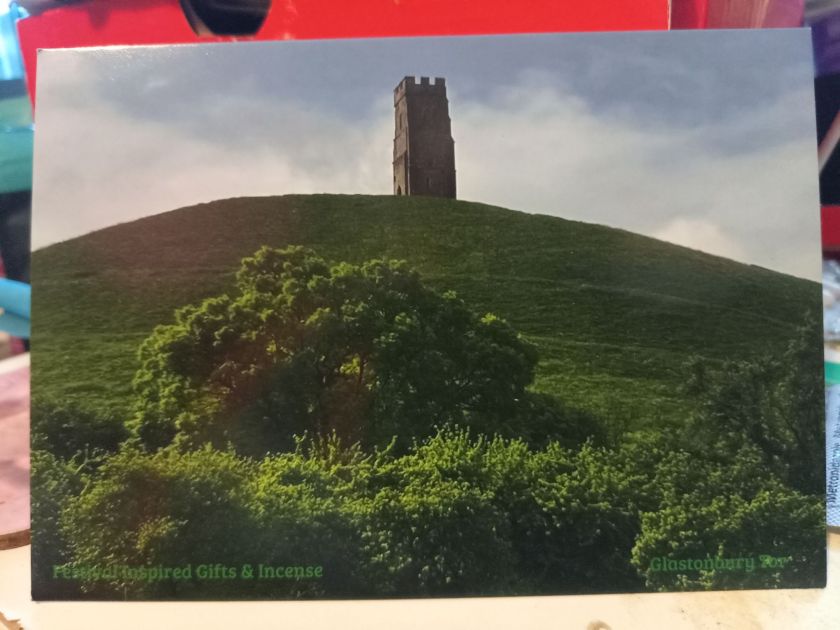
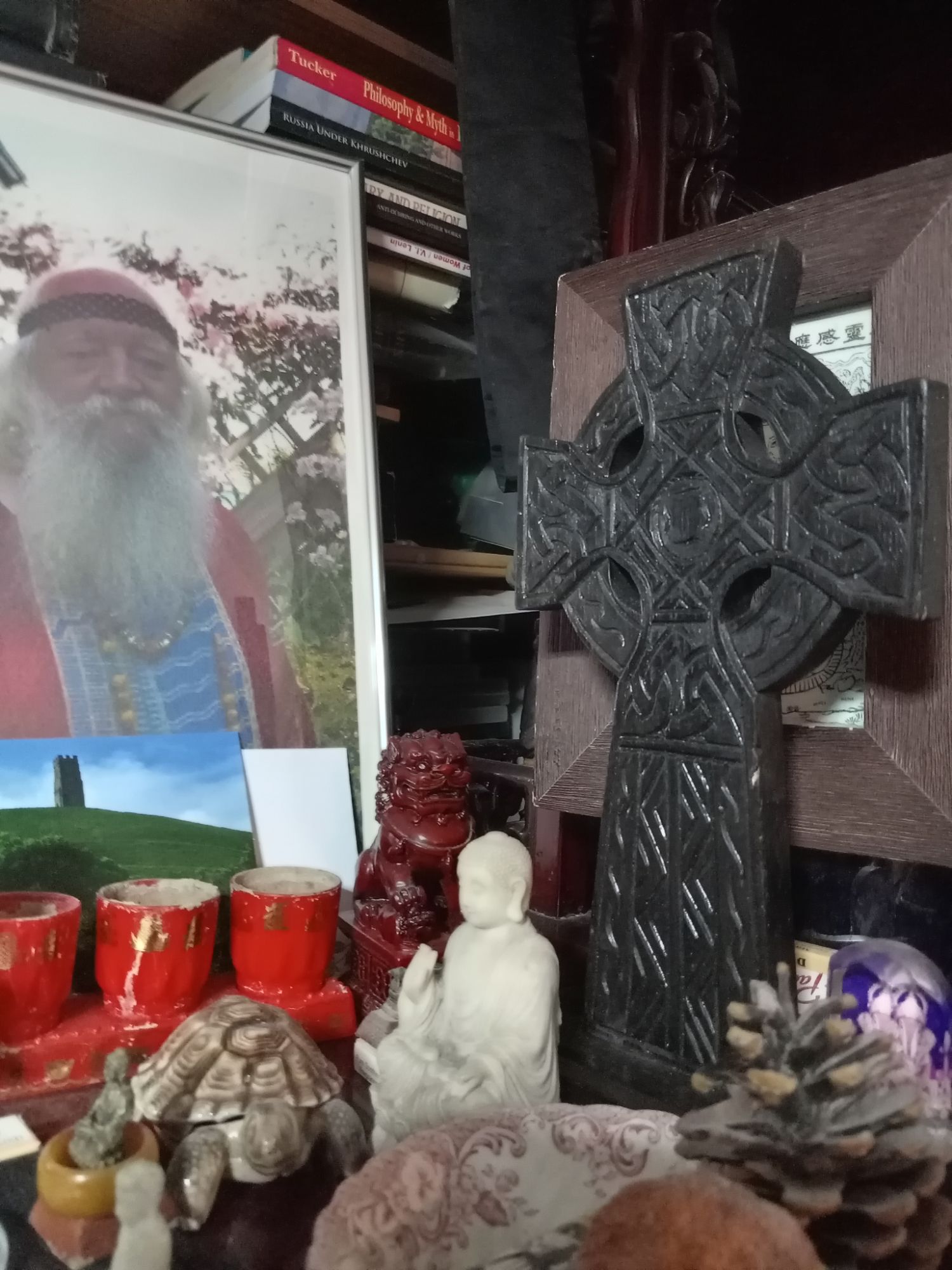
I ordered this sometime ago from a small business in the UK – who sent me a wonderful postcard of Glastonbury and a bundle of free incense. Although we are modern people – and not religious – we may be described as “spiritual”. The Celtic Cross, I believe, is pre-Christian, and that the Christians may have encountered it amongst the Pagans – and decided to co-opt it into their religion. All the Celtic Cross means is that the seasons (in the Western-world) are separated into four-seasons. The cross represents this – and this only. A cross like this can be found within Viking and Anglo-Saxon cultures. Christians, for centuries, used two-fishes, a set of scales, a dove in flight, and an “X” with a “P” (a Greek character – the first two letters of the Greek term “Christ” – or “Chi-Rho”, meaning *Messiah”) – and various other symbols (Christ is depicted as using a Pagan “wand” at one-point) – but never a “cross”. Remember, the early Christians (first three centuries) were Jews who followed a troublesome reformer. They were not “Christians” in the contemporary sense. It was only after the Rabbis passed the “anathema* on these Jews that they were cast out. The Celtic Church in the UK is monastic-based, and far older than the Catholic, Orthodox, or Protestant variants. It was tolerant to non-Christians as its monastics were gnostic and rejected a physical world they viewed as thoroughly corrupt. Tolerating difference really did not matter if what was being tolerated was to be spiritually transcended. However, the Pagan (Egyptian-Greek) school of Hermeticism also advocated isolatory training, the stilling of the mind, and the perceiving of the underlying essence that unites reality. I reject divisive religion – but support a spirituality that unites humanity.

